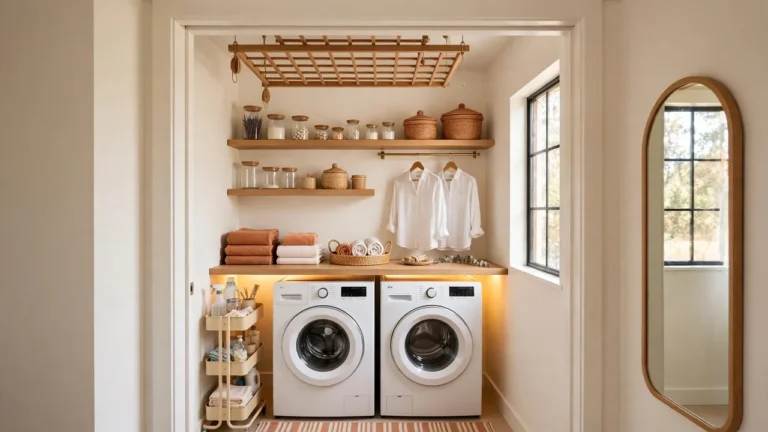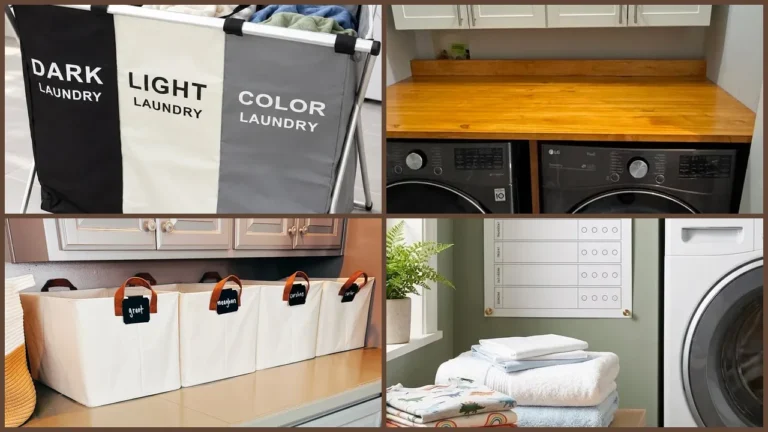
20 Laundry Room Ideas for Renters That Don’t Require Renovations
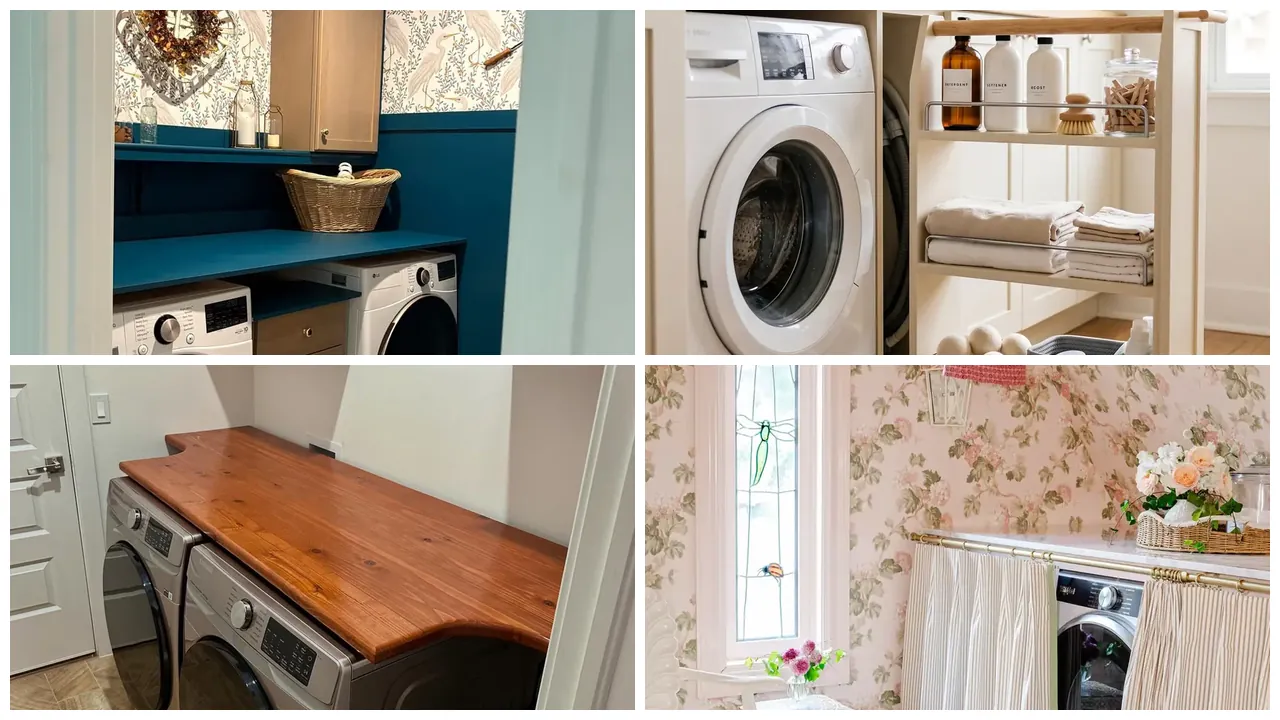
Everyone wants a laundry room that feels calm. A spot where the detergent has a home, the clean towels stay folded, and walking in doesn’t feel like a chore before the chore even starts.
When you rent, getting there feels harder than it should. You can’t paint without asking. You can’t drill shelves into the wall. And you’re stuck with the same bare walls, wire shelf, and dim bulb someone else picked years ago.
Most of what makes a laundry room work has very little to do with the walls, though. It’s about using the space around your machines: the tops, the sides, the gaps, the door, and the floor.
These laundry room ideas for renters that don’t require renovations all come with you, or come down, when you move. No nails, no paint, no arguing over your deposit. Some take ten minutes, and a few take an afternoon. Start with the corner that bugs you most.
1. Add Peel-and-Stick Wallpaper to One Wall
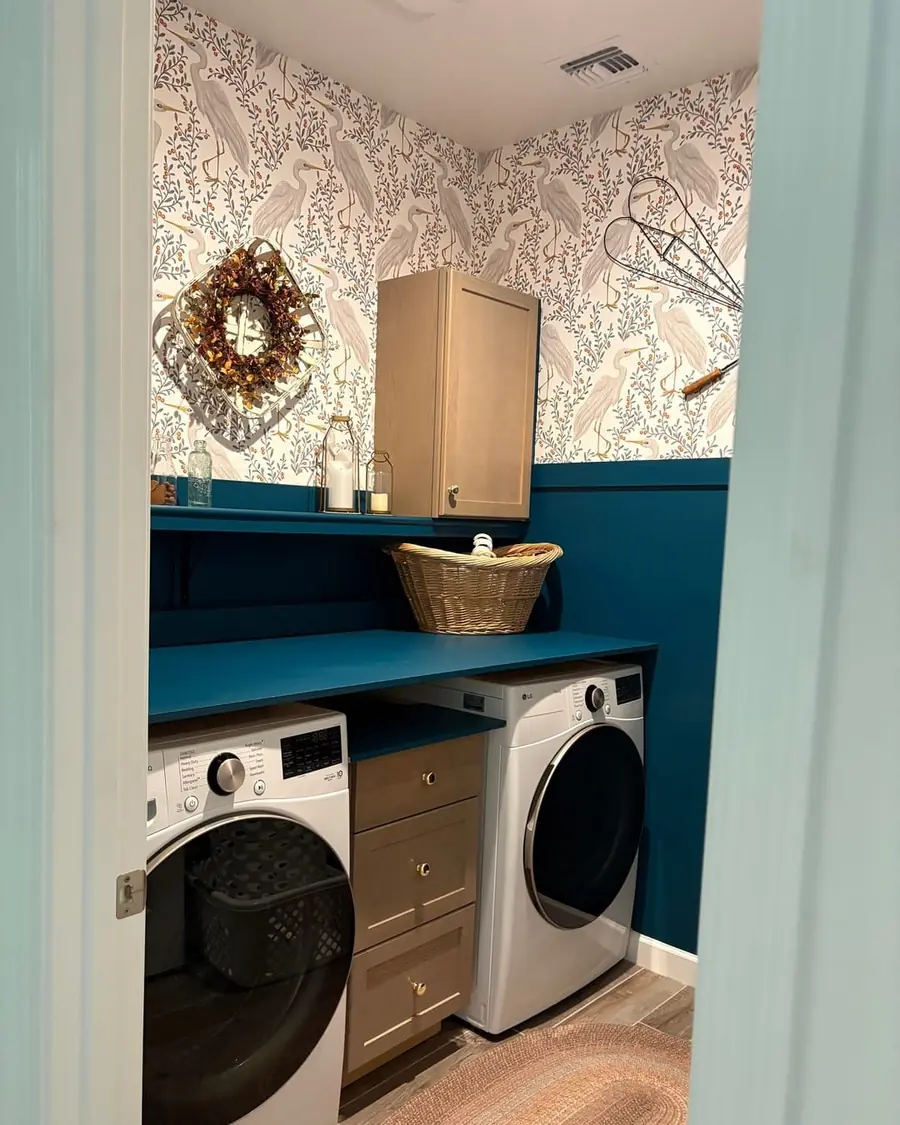
Soft gray herons, thin branches, and tiny red berries on a cream background. One wall like that gives a plain laundry room real personality, and it only takes an afternoon.
Peel-and-stick wallpaper is made to come off, which is why it works so well for renters. Put it on the wall behind the machines, since that’s the one you see first from the doorway.
For a clean finish:
- Wipe the wall and let it dry completely.
- Hang the first strip against a level pencil line. Every strip after it follows that one.
- Smooth out bubbles with a plastic card, working from the center out.
Test a small piece in a hidden spot first. Some flat paint lifts when the paper comes off, and it’s better to find that out behind the dryer.
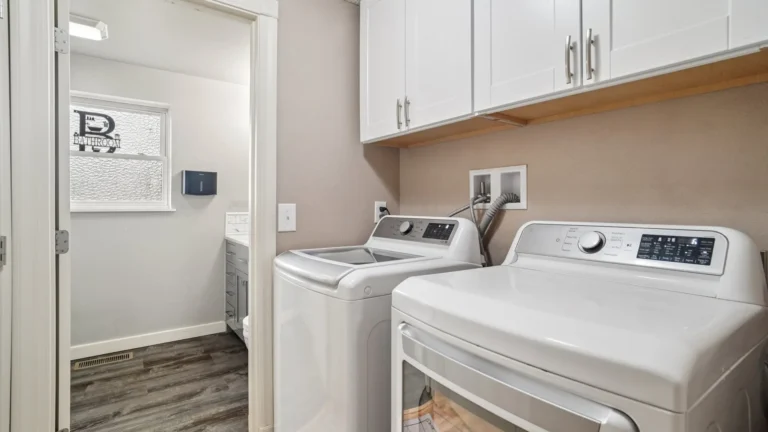
Plain beige walls, a lone wire shelf, and nothing to look at while the dryer runs. The room works, but nobody wants to spend time in it.
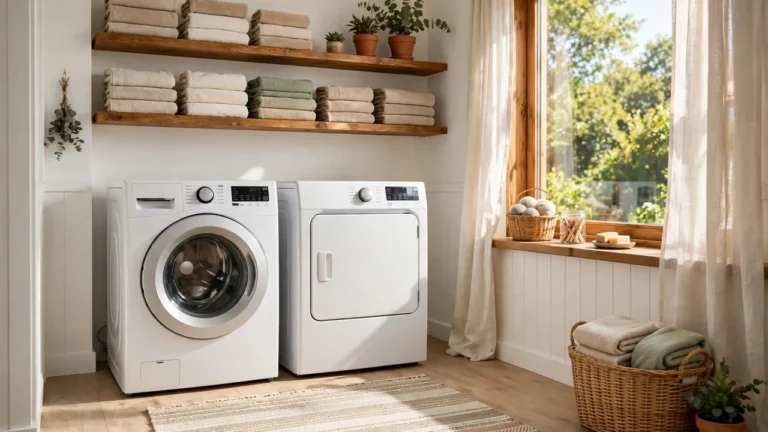
A cream botanical print behind the machines, softened by warm wood and a jute rug. The machines didn’t change. The wall did, and it all peels off on move-out day.
2. Add a Hanging Bar for Drip-Dry Clothes
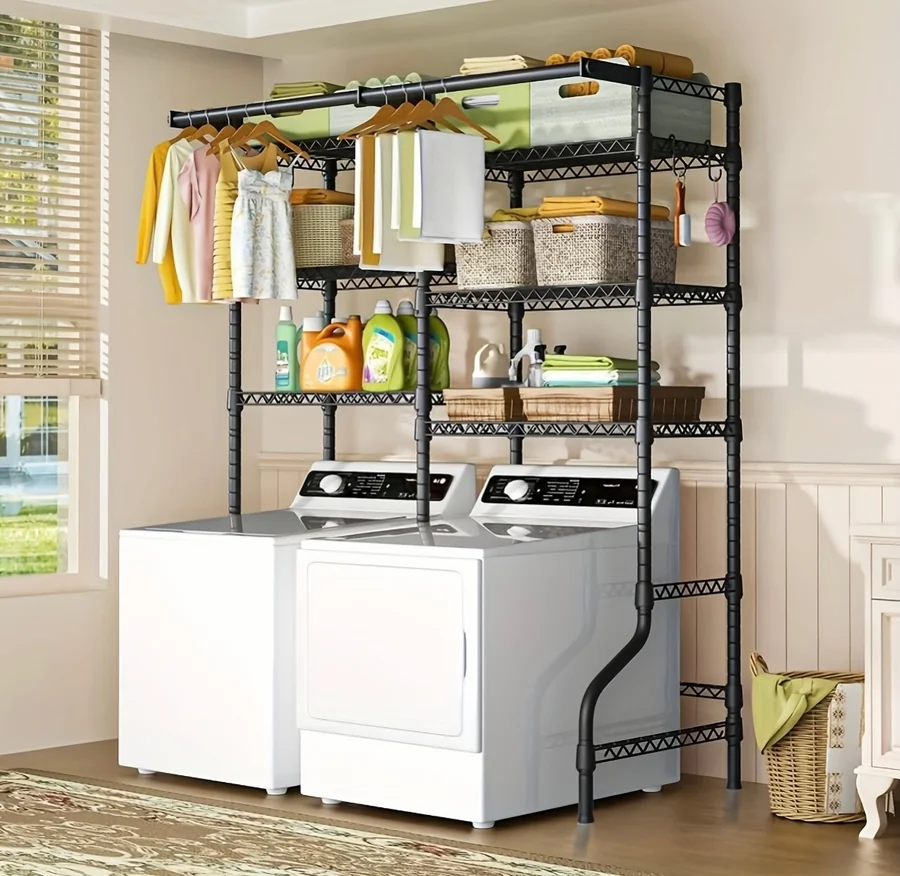
Not everything belongs in the dryer. Stretchy workout tops, nice blouses, and kids’ dresses all hold their shape longer when they hang to dry.
A freestanding rack with a bar across the top gives those clothes a home, and it stands on the floor, so the wall stays untouched. Good things to hang here:
- Leggings and gym shirts
- Button-up shirts and blouses
- Anything with a “line dry” tag
Hang them the minute the wash ends. Clothes that sit in a damp pile come out wrinkled and can start to smell musty.
Run an extra spin so clothes aren’t dripping onto the machines below.
Shake each piece out once and put it on a plastic or wooden hanger. Thin wire hangers can stretch out wet shoulders.
Button the top button and smooth the collar and seams flat with your hands.
Space the hangers a few fingers apart so air can move between them.
3. Roll a Slim Cart Into the Side Gap
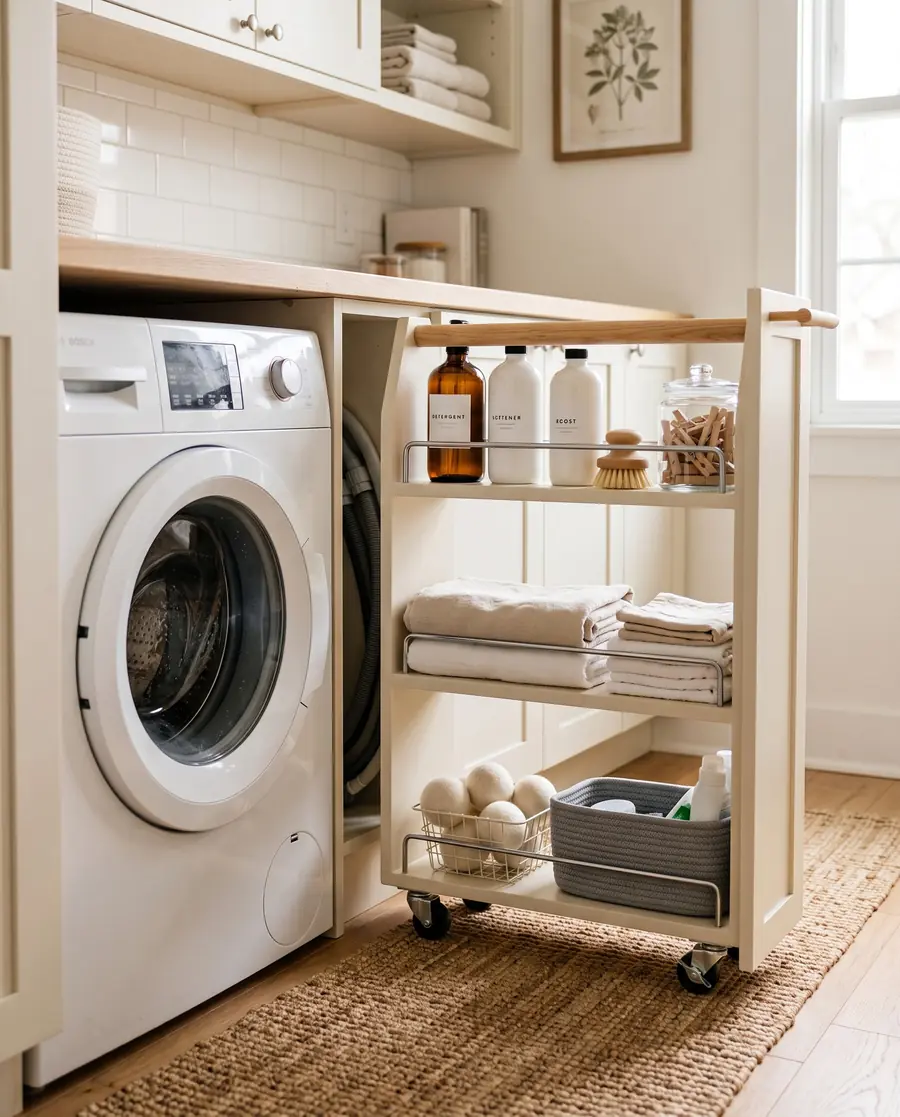
There’s a strip of floor next to almost every washer that holds nothing but dust and a lost sock or two. A slim rolling cart turns that strip into a pull-out pantry for laundry supplies.
Pick one with low rails around each shelf so bottles don’t slide off when you roll it. A handle on top lets you pull it out with one hand while the other holds a wet shirt.
Set it up in layers:
- Top shelf: daily things like detergent, softener, and a stain brush
- Middle shelf: folded hand towels or cleaning rags
- Bottom shelf: dryer balls and refill jugs
Measure the gap before you shop. Slim carts come in a few widths, and even a narrow space can fit one.
4. Stick Magnetic Baskets on Your Washer
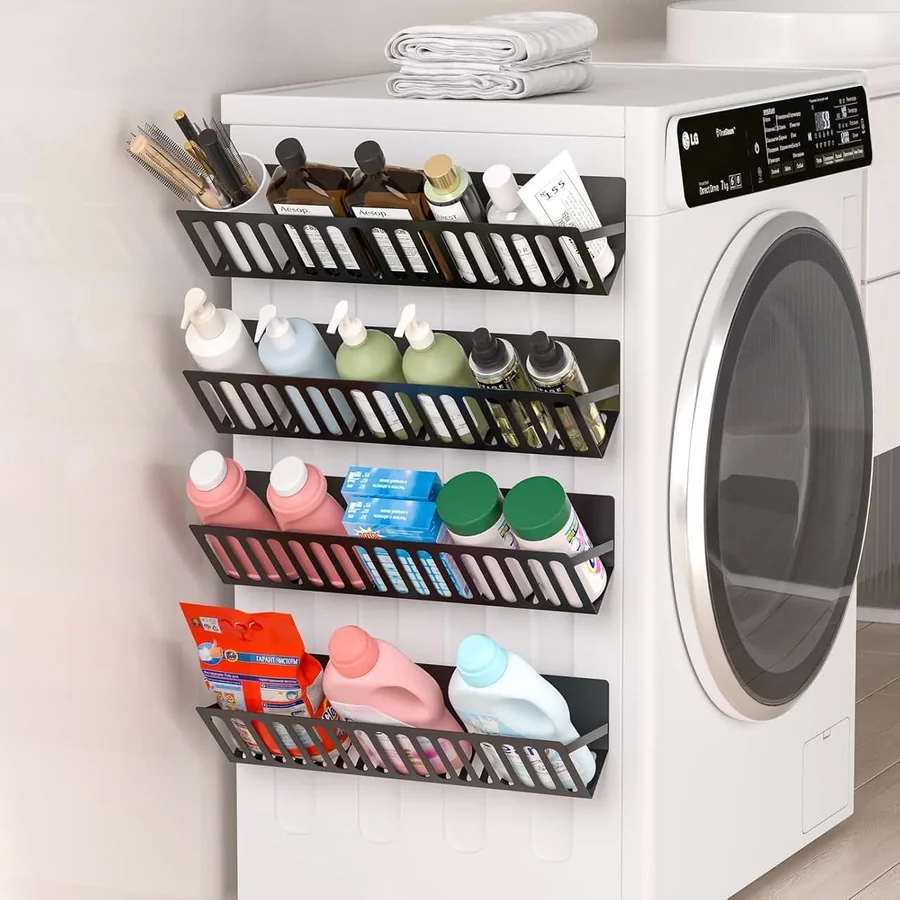
The side of your washer is a big, flat metal panel, and right now it’s probably holding nothing.
Magnetic baskets snap right on. You don’t need tools or screws, and they come with you to the next place. Stack three or four down one side and give each one a job:
- Top: small bottles and a cup of brushes you grab often
- Middle: softener, stain spray, and boosters
- Bottom: the heaviest jug or box
You’ll need a few inches of open space beside the machine for this to work. Black baskets look crisp against a white washer. On a gray or silver machine, white ones blend in better.
⚠️ Watch Out
Hold a fridge magnet against the side of your machine before you buy, since not every panel grips well. The spin cycle shakes everything, so keep heavy jugs in the lowest basket. Baskets with a rubber or felt backing are less likely to scratch the finish.
5. Lay a Countertop Over Front-Load Machines
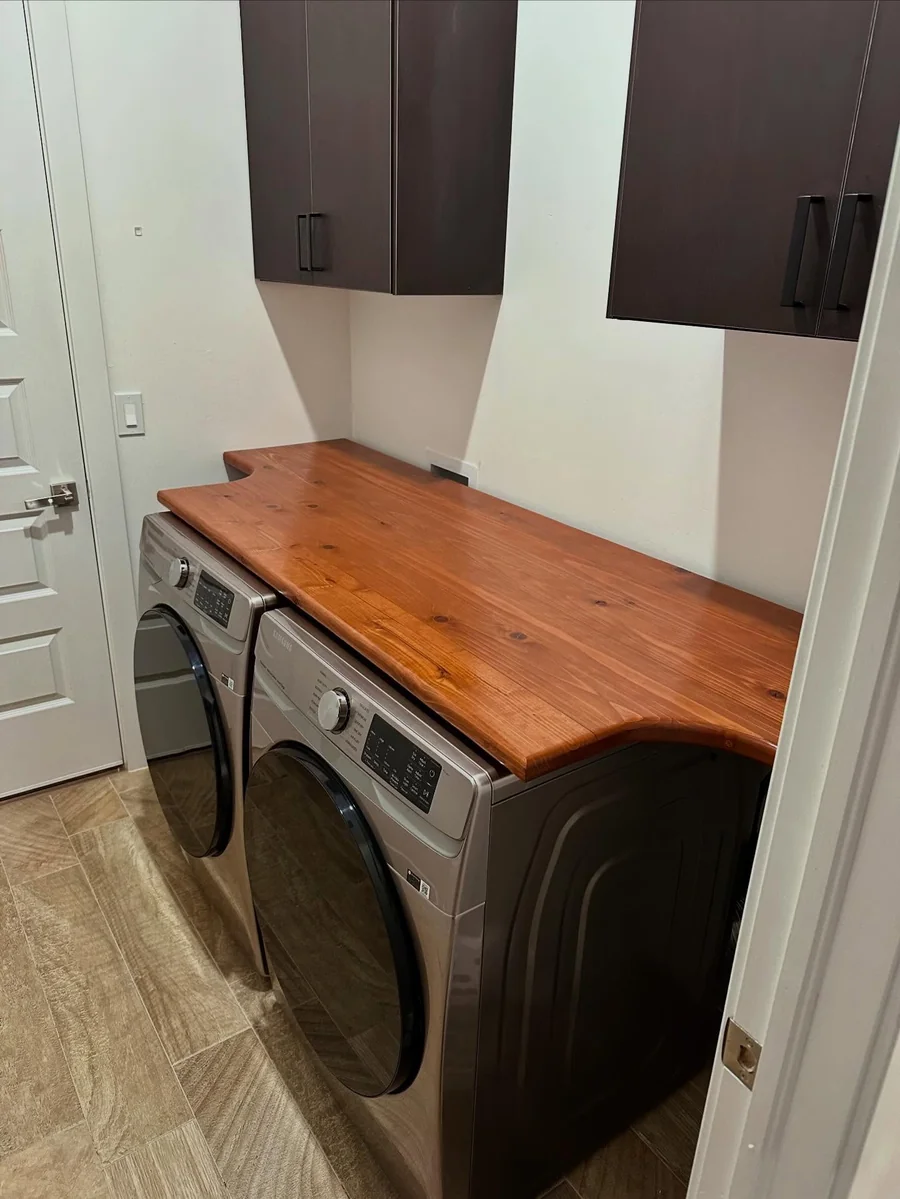
A wood top over your front-loaders gives you a real folding counter, and it rests right on the machines. Nothing gets screwed into the wall.
In a narrow room, have the board cut to fit snugly from wall to wall so it can’t slide around. Many home improvement stores will cut a board to size for you. Warm, sealed wood like cedar or pine looks rich against stainless or gray machines.
Before you buy, check two things:
- The back. Hoses and the dryer vent need room, so leave a gap or cut a notch.
- The height. The board shouldn’t cover the control panels.
It also gives the laundry basket somewhere to sit besides the floor.
Set the board on thin rubber pads or non-slip liner so it stays put during the spin cycle.
Stick felt pads on the ends where the wood touches the walls.
Seal every side, bottom included, so damp air doesn’t warp it.
Screwing support strips into the wall under the board.
Raw, unsealed wood that soaks up detergent drips.
Pushing the board so far back that it pinches the dryer vent.
6. Stand a Shelf Rack Over the Washer
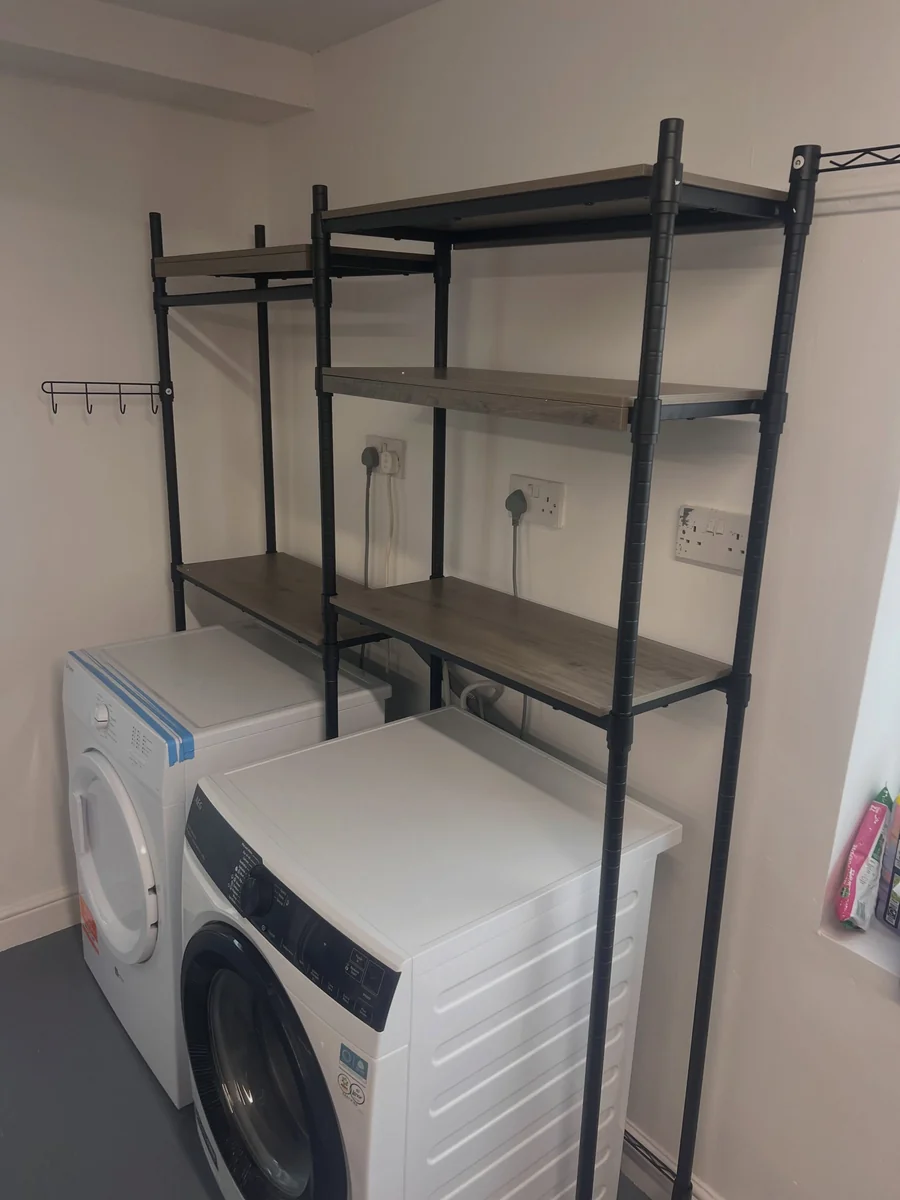
Go up, not out. When your washer and dryer sit side by side, the space above them is the biggest empty spot in the room.
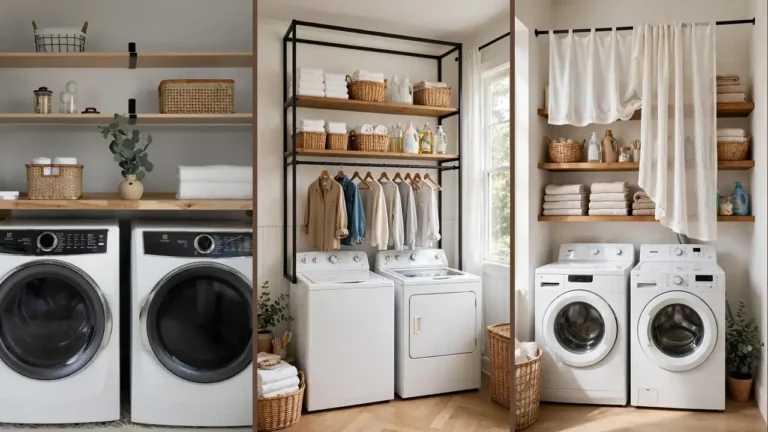
An over-the-washer rack stands on its own legs and bridges both machines. Wood-look shelves on a black frame feel more like furniture than storage, which matters in a room you walk into every day.
As you set it up:
- Keep the outlets and water valves behind it easy to reach.
- Leave a hand’s width above the machines so you can still wipe the tops.
- Use the side hook rail for a lint roller, a small dustpan, or a mop.
Front-loaders have no lid to clear, so the bottom shelf can sit lower and hold more.
| Wood-Look Shelves | Wire Shelves | |
|---|---|---|
| Look | Warm, closer to furniture | Light, open, a bit industrial |
| Small bottles | Sit flat and steady | Narrow bottoms can wobble |
| Cleaning | One wipe with a damp cloth | Dust and lint cling to each wire |
| Airflow | Solid, so air can’t pass through | Lets damp towels breathe |
| Good pick if | You want a finished look | You store anything still drying |
7. Put Down a Washable Runner Rug
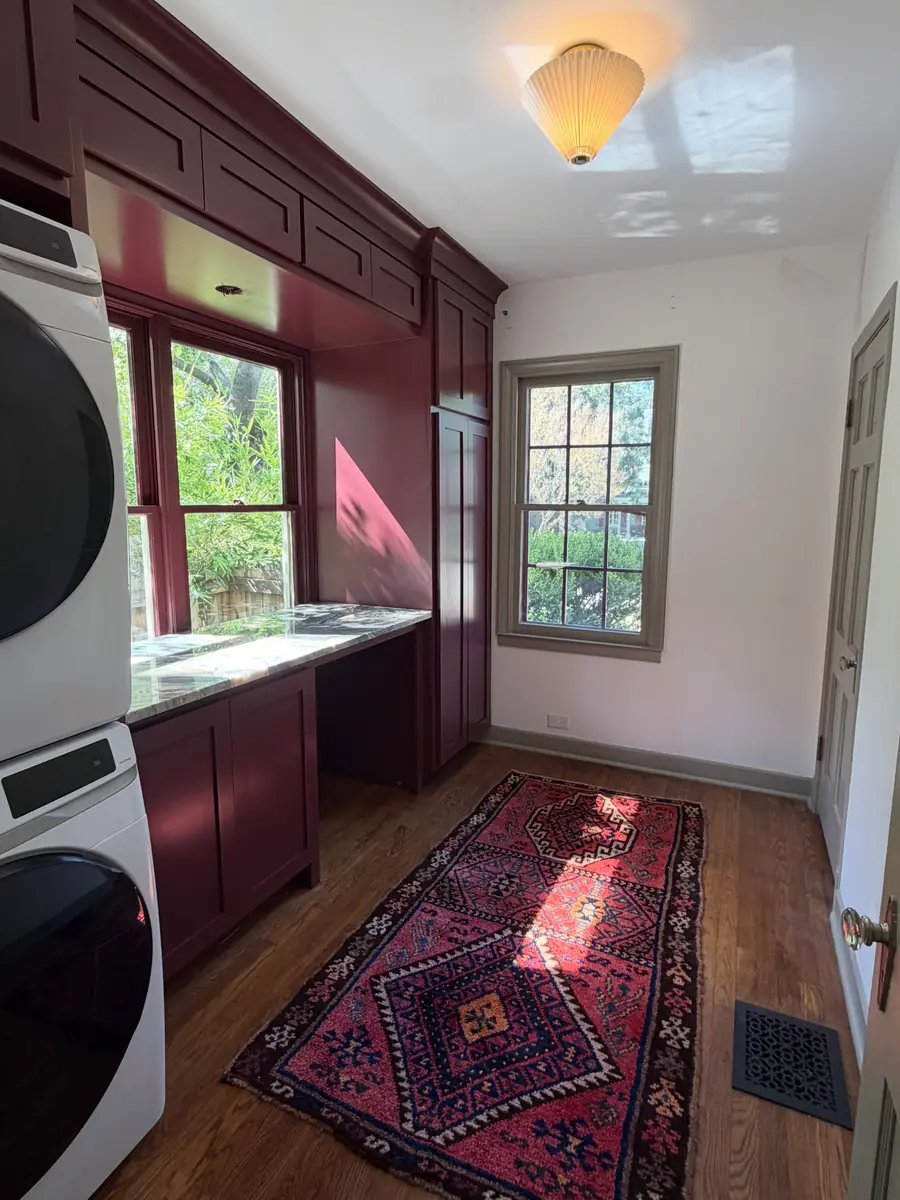
You stand in a laundry room more than you’d think. Loading, unloading, folding, hunting for the other sock.
A runner rug makes those minutes softer, and it covers a tired rental floor without changing a thing underneath. Long, narrow runners suit galley-style laundry rooms best.
Where to place it:
- Down the center of the walkway
- A few inches back from the washer door, so the door doesn’t catch the edge
Deep red, navy, and rust in an old-world pattern hide lint and drips well. A plain cream rug shows every spill. Whatever you pick, put a non-slip pad under it, since laundry floors get wet.
8. Light Dark Shelves With Stick-On LEDs
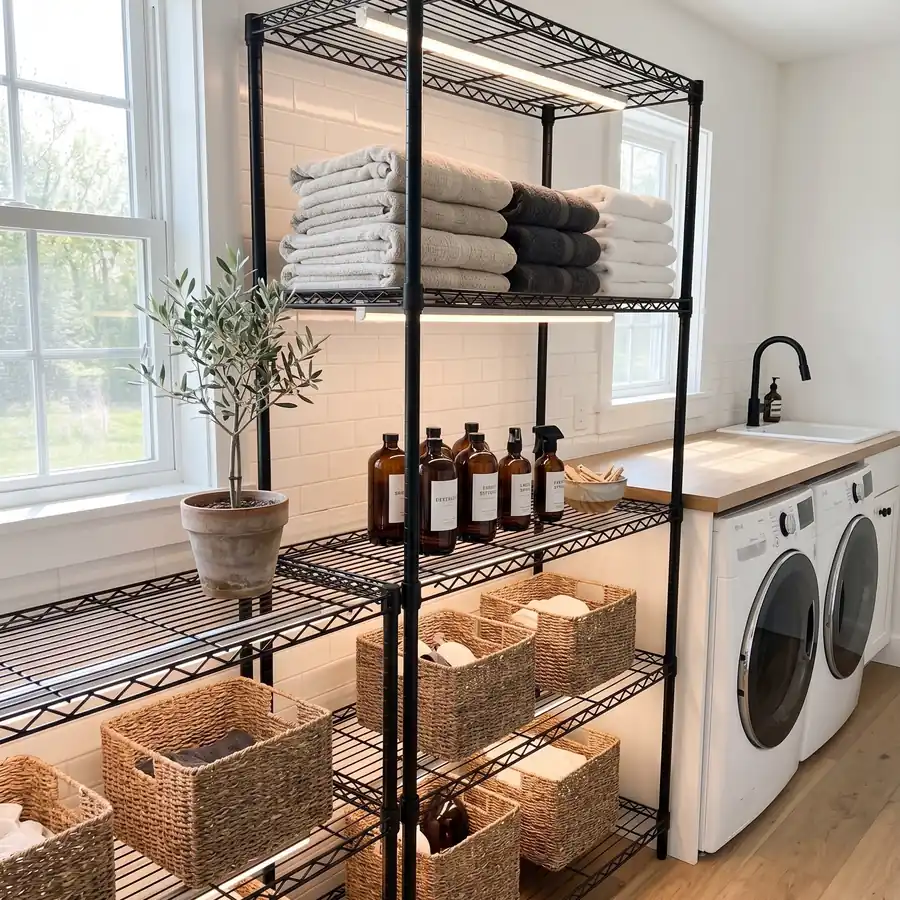
Most people try to fix a dim laundry room with a brighter ceiling bulb. The trouble is that shelves cast shadows, so everything on the lower shelves stays dark no matter what’s overhead.
LED light bars fix the problem right where it is. Run one under each shelf, and the towels, bottles, and baskets below light up. Look for bars that:
- Recharge by USB, so there’s no cord to hide
- Turn on with motion, so wet hands don’t have to find a switch
- Give off warm white light
Warm light makes wood, seagrass, and amber glass look cozy. Cool light can make the same shelf look like a storage closet.
Before you stick anything up
9. Hide the Machines Behind a Curtain
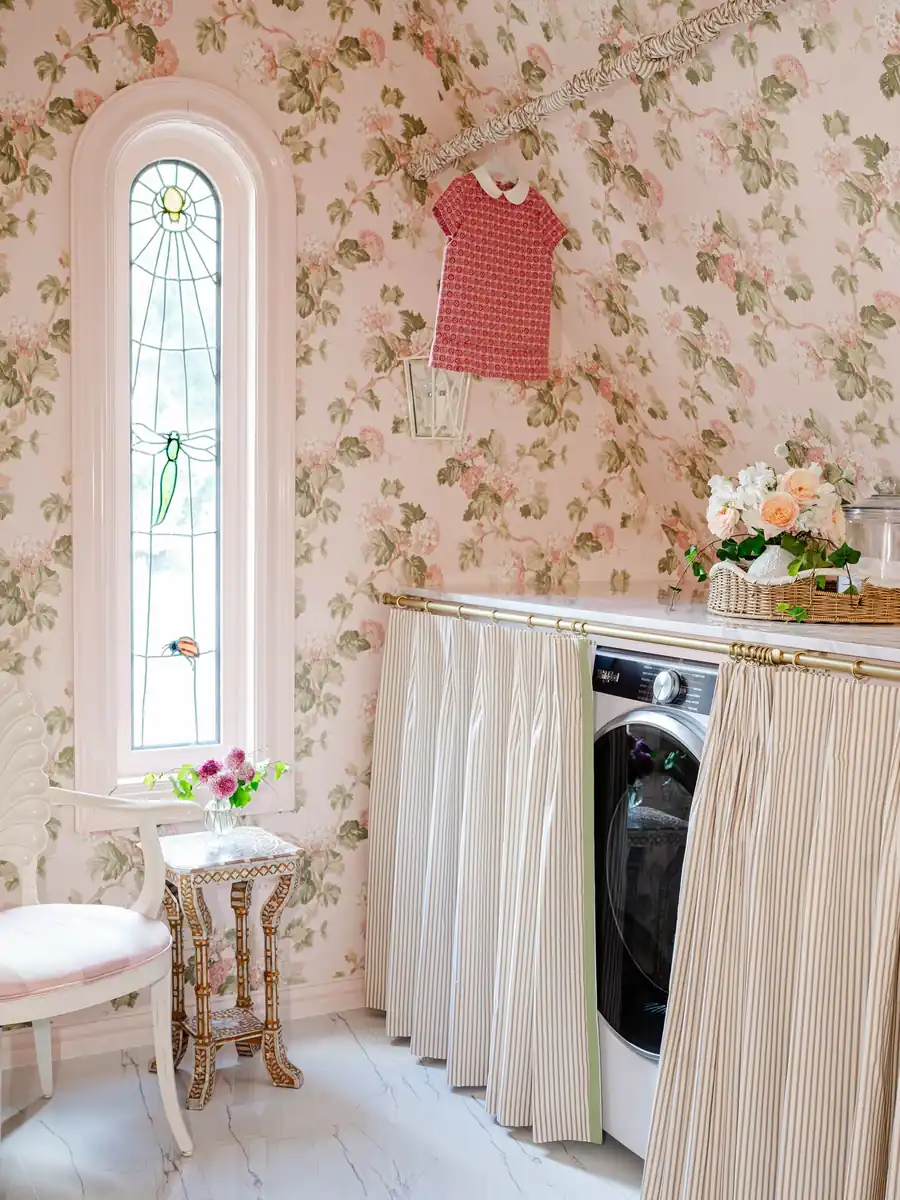
Washers and dryers are useful, but nobody would call them pretty. A fabric curtain hides them in a few minutes and softens the whole room.
Hang it from a rod just under the counter edge. Striped ticking, washed linen, or a small check all look relaxed. If your machines sit between two walls or cabinets, a tension rod holds the curtain without a single screw.
A few tips:
- Make the curtain about twice as wide as the opening so it gathers softly.
- Use clip rings. The curtain slides open fast and comes down easily for washing.
- Hem it just above the floor so it doesn’t pick up lint.
Two big white machines facing the door, with a stray sock and a dried detergent drip in plain sight.
A soft striped curtain pulled across the front. Open it to load, close it when you’re done, and the room feels like a pretty little nook again.
10. Sort Loads in a Three-Bag Hamper
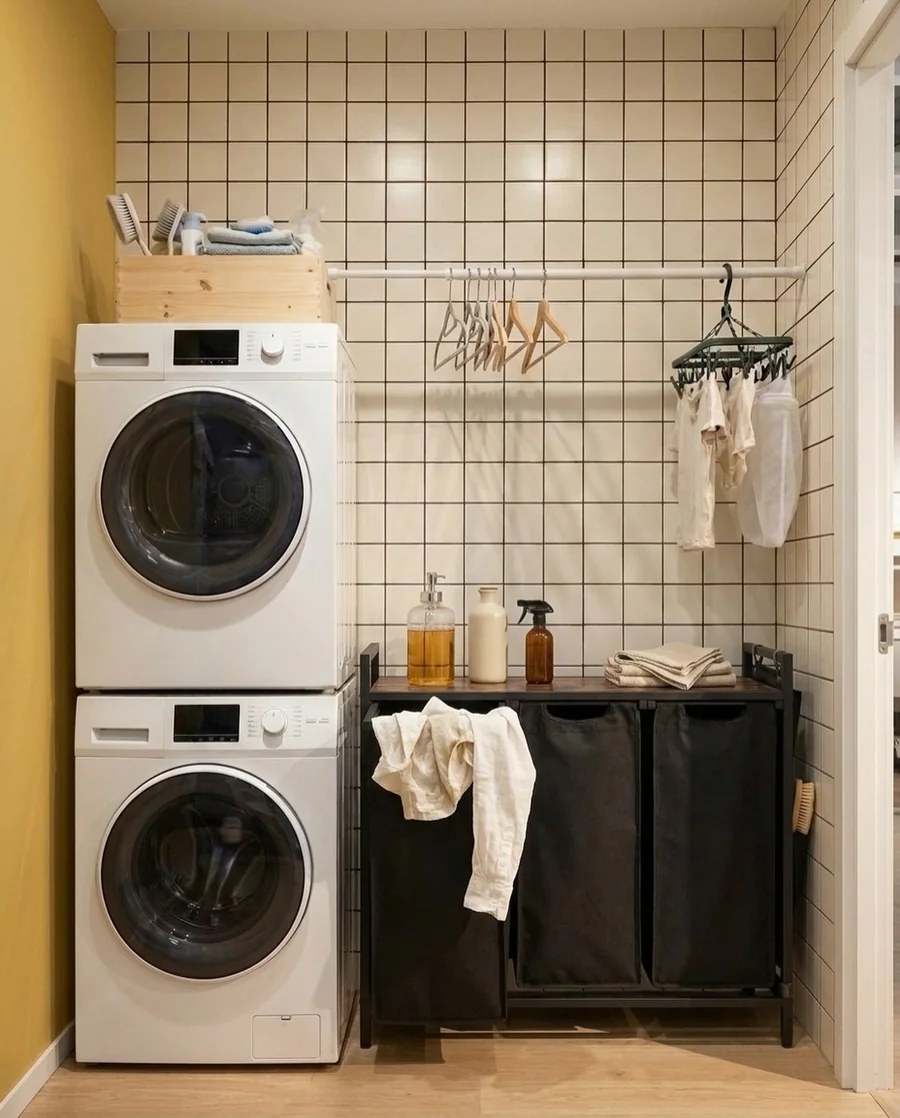
Sort as you go, not on wash day. A three-bag hamper lets everyone drop clothes in the right spot, so starting a load just means grabbing one full bag.
How it works day to day:
- Toss clothes in the right bag as you change.
- When one bag is full, lift it out and carry it to the washer.
- Put the empty bag back right away.
Pick a sorter with bags that lift out and have handles. The flat top earns its spot too. It holds a soap pump, a spray bottle, and a stack of folded towels, like a mini counter.
- ▸Darks, lights, towels: the classic split for a family that does laundry a few times a week.
- ▸One bag per person: handy for roommates who each wash their own loads.
- ▸Everyday, gym, delicates: keeps sweaty clothes away from the things that need a gentle cycle.
- ▸Small tag on each bag: a clip-on label stops guests and kids from guessing.
11. Move Detergent Into Pretty Containers
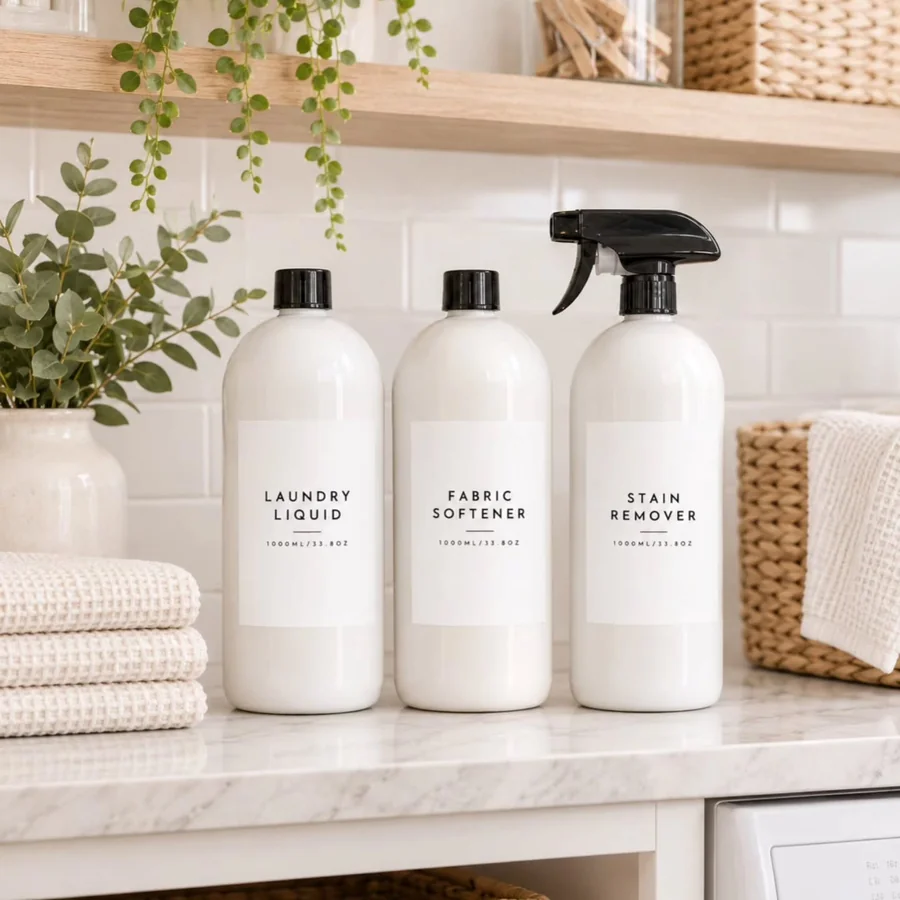
Store-bought detergent jugs are bulky, bright, and covered in loud labels. Three matching bottles with simple black type do the same job and look calm on an open counter or shelf.
Pick a top that fits the job:
- A screw cap or pump for laundry liquid and softener
- A spray top for stain remover
- Plastic instead of glass if the bottles sit above a hard floor
Label every bottle, since products look alike once they’re poured out. Leave bleach in its own jug. Keep the original jugs for refills, or take a quick photo of the back label so you still have the dosing and safety info.
Pods are the one thing to never put on display. Keep them in a closed container you can’t see through, stored up high where small hands can’t reach.
12. Pick a Drying Rack That Folds Flat
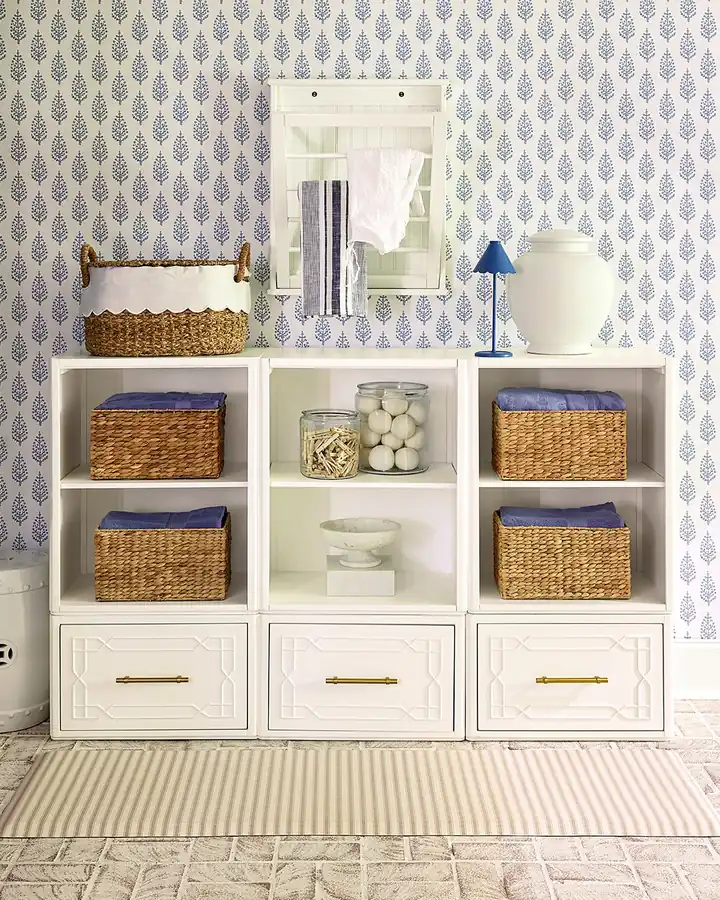
The most common drying rack mistake is buying one so big it stays open in the middle of the room all week.
A rack that folds flat solves that. Open it for a load of delicates, then fold it down to about the thickness of a book and tuck it beside the washer. Look for:
- Coated or stainless bars that won’t rust
- Feet that grip the floor without sliding
The slim kind that pulls down from the wall like a little gate needs screws. Ask your landlord first, or choose one that stands on the floor or hooks over a door.
Put heavy towels on the lowest bars so their drips don’t land on anything else.
| Freestanding | Over-the-Door | Wall-Mounted | |
|---|---|---|---|
| Setup | Just unfold it | Hooks over any door | Needs screws |
| Holds | A full load of delicates | A few shirts or towels | Towels and light pieces |
| When folded | Slides beside the machines | Stays put on the door | Lies flat against the wall |
| Renter-safe | Yes | Yes | Only with permission |
13. Use a Tension Pole Shelf in the Corner
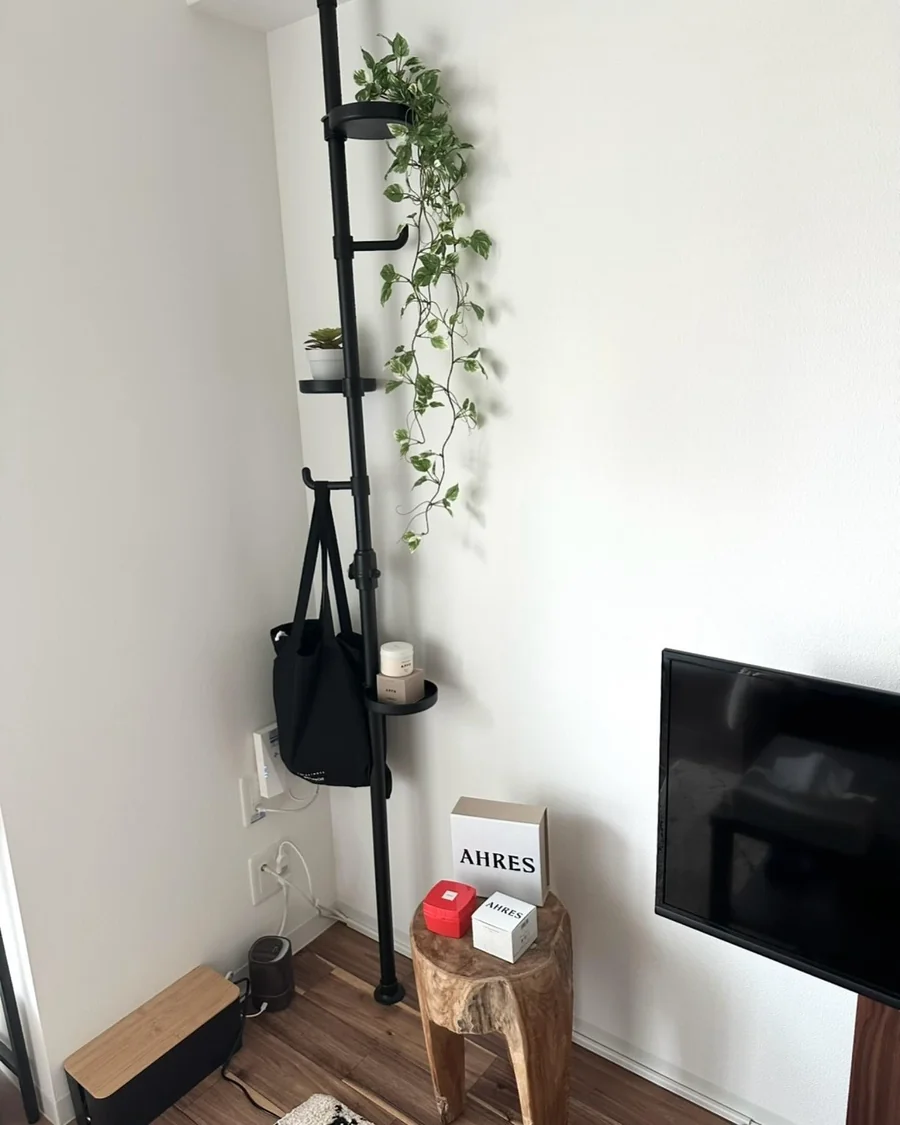
Plenty of renters think new storage needs a wall. A tension pole only needs a floor and a ceiling.
The pole twists tight between the two and holds itself up. Trays and hooks clip on wherever you want them, so an empty laundry room corner can suddenly hold:
- A trailing pothos on the top tray
- Spray bottles or a lint roller in the middle
- A mesh delicates bag or a tote on a hook
Tighten it only until it’s snug. Cranking it harder can leave a ring on a soft ceiling, which is why the rubber pad up top matters.
14. Iron on a Tabletop Mat
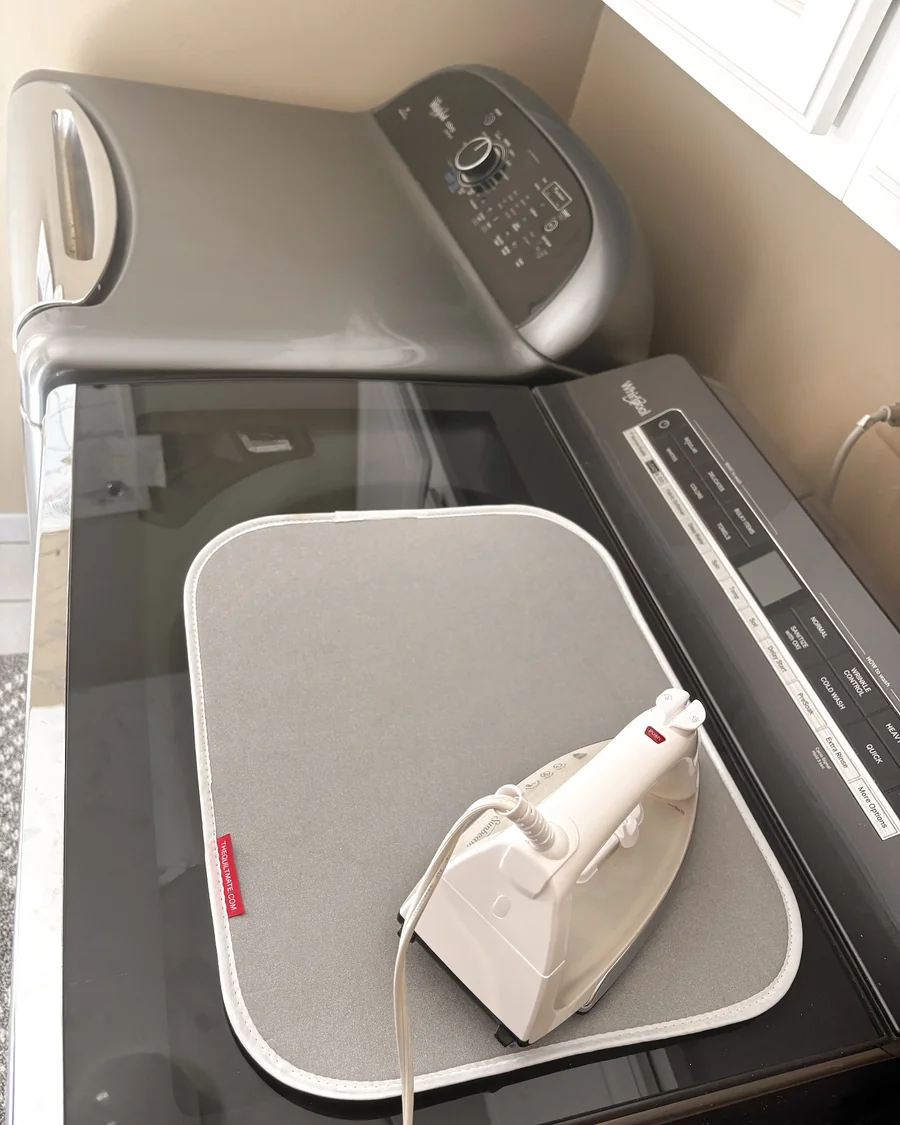
Lay a heat-resistant ironing mat on top of the washer or your folding counter, and you have an ironing station without the bulky board.
These padded mats fold or roll up and slide into a drawer or basket. They handle quick jobs well, like a collar, a pillowcase, or a pair of pants before work.
To use it safely:
- Check that the machine is off, not in the middle of a cycle.
- Keep the cord away from the edge, where it can catch.
- Let the mat cool completely before you fold it away.
For a whole basket of button-downs, a real board still wins.
💡 Quick Tip
Stand the iron on its heel between passes, never face down on a bare washer lid. Many lids are glass or plastic, and the mat is the only thing between them and the heat.
15. Bring In a Plant That Likes Low Light
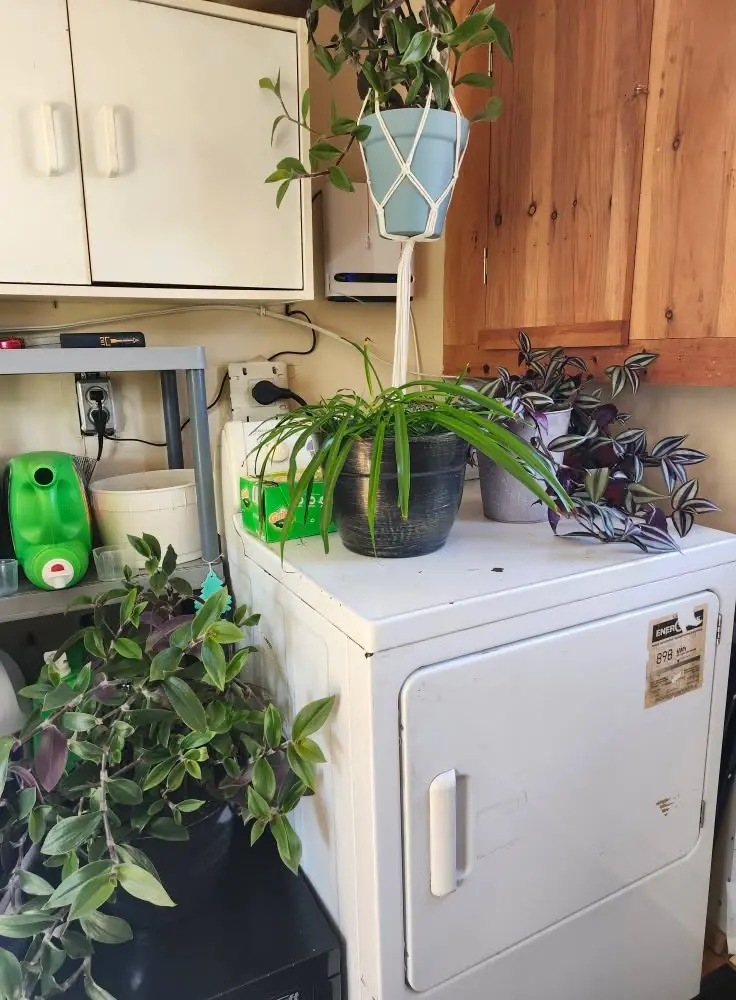
Laundry rooms tend to run a little humid, and plenty of houseplants actually like that.
Pick plants that don’t need much fuss. Trailing ones look especially good spilling over a shelf or cabinet edge, and they soften all those hard white machines.
Where to put them:
- On a shelf or cabinet top, not right on a running dryer, which shakes and gets warm
- In a macrame hanger looped over a rack bar or tension rod instead of a ceiling hook
Set every pot on a saucer. Water and machine tops don’t mix.
16. Hang an Organizer on the Back of the Door
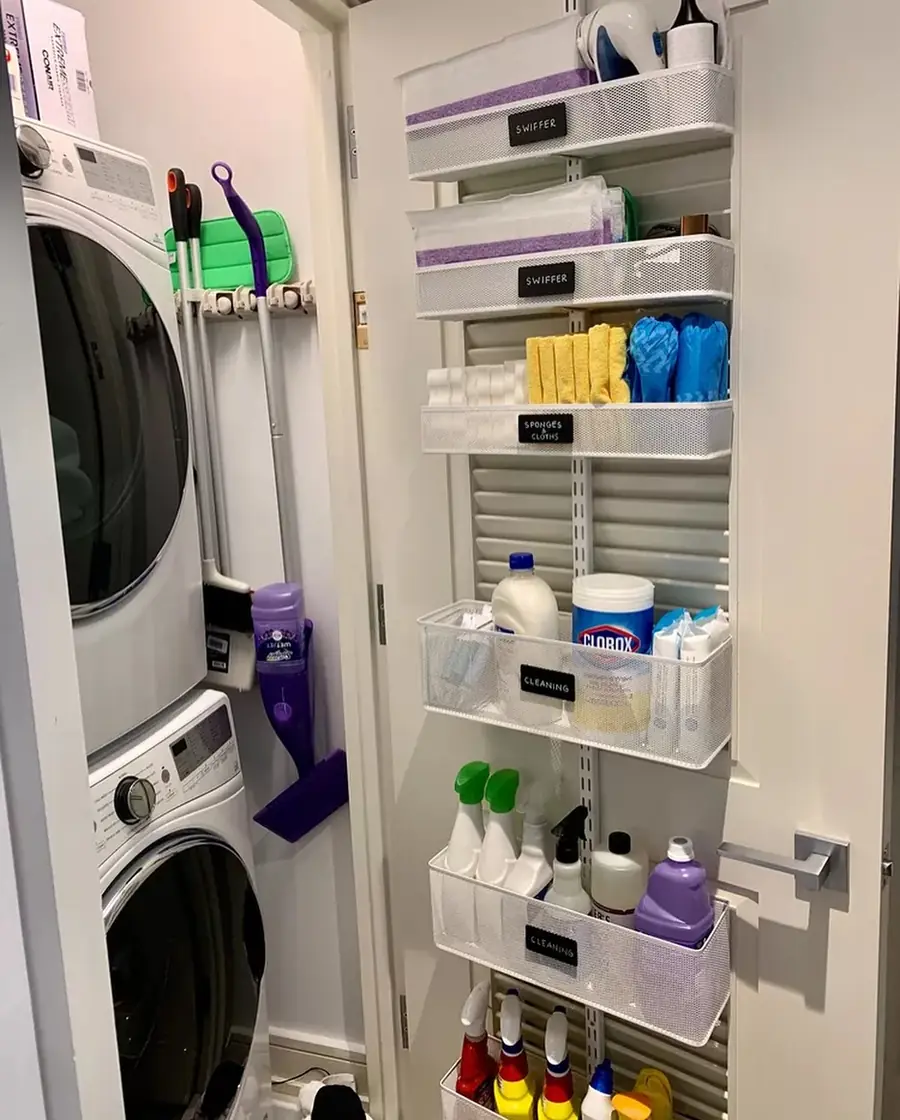
Cleaning supplies tend to end up on the laundry closet floor, where spray bottles tip over and sponges vanish behind the dryer.
The back of the door is the fix. An over-the-door organizer with mesh baskets hooks over the top, so there’s nothing to drill. Give each basket one job and label it:
- Mop pads and refills up top
- Sponges, cloths, and gloves in the middle
- Heavy cleaners and spray bottles near the bottom
Mesh lets you see what’s running low at a glance. Labels keep everyone in the house putting things back in the same spot.
Check the gap at the top of the door. The hooks need room to fit over without scraping the frame.
Hang the frame, then press small felt pads on the back wherever metal touches the door.
Clip on the baskets and load the heaviest bottles at the bottom so the door stays balanced.
Close the door slowly the first time to make sure the baskets clear the machines and shelves inside.
17. Use Removable Hooks the Right Way
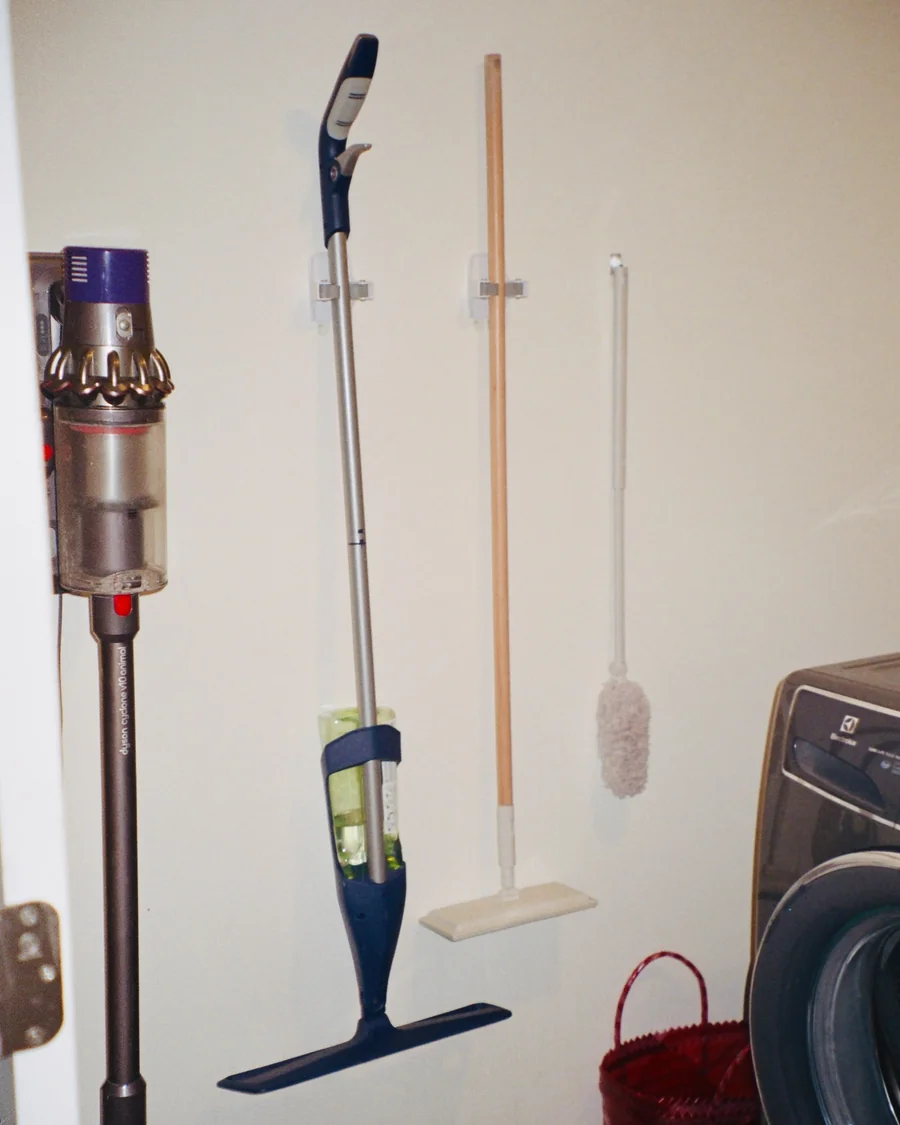
Removable hooks only stay removable if you put them up, and take them down, the right way. Most peeled paint comes from rushing one of those steps.
Done right, they’re a smart home for light, long-handled tools:
- A spray mop
- A dust mop or broom
- A long duster
A row of clear grips keeps all three off the floor and out of the corner where they used to slide down every time the door opened.
Check the weight limit on the package and stay under it. A cordless vacuum is usually too heavy for adhesive, so give it a floor stand.
Wipe the spot with rubbing alcohol and let it dry before you stick anything.
Wait the full time on the package before hanging a tool.
To remove, pull the stretch tab slowly, straight down along the wall.
Yanking the hook outward, away from the wall.
Going over the weight limit “just a little.”
Sticking hooks on freshly painted or bumpy textured walls.
18. Line Wire Shelves So Nothing Tips
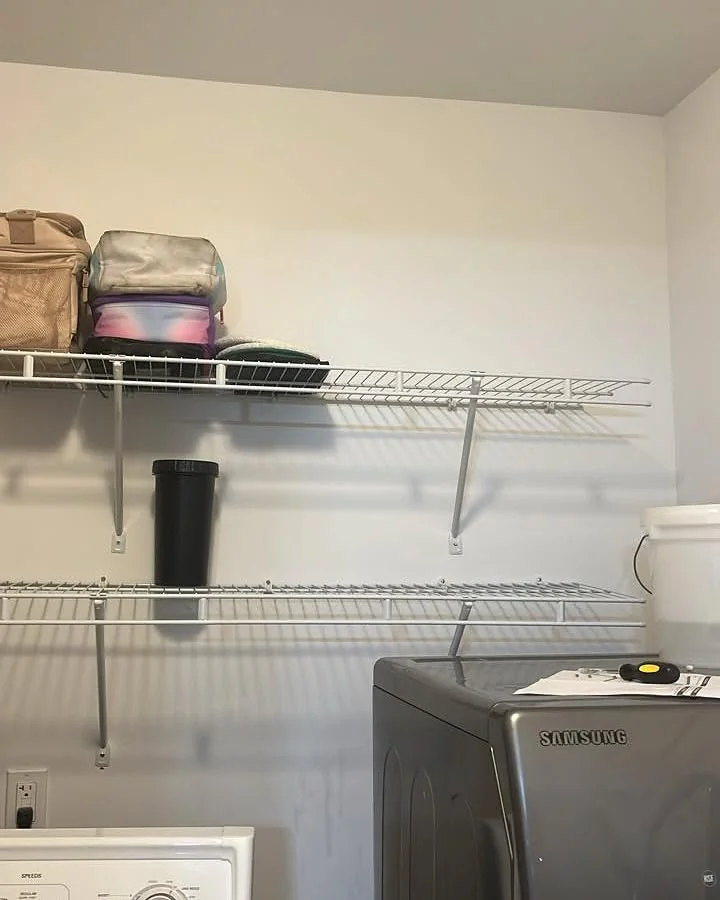
Here’s a simple rule: if it has a narrow bottom, it needs a flat shelf.
Rental laundry rooms almost always come with white wire shelves, and small bottles, cups, and jars wobble between the wires until one tips over behind the dryer. A liner gives you a flat surface in minutes and comes right off on move-out day.
Your options:
- Clear plastic shelf liner, cut to size, for a look that almost disappears
- Thin, light plastic panels for a sturdier top
- Fabric shelf liner if you want a little color or pattern
It’s a small fix, but you’ll notice it every single time you put something down.
What to grab first
19. Lean Art Instead of Hanging It
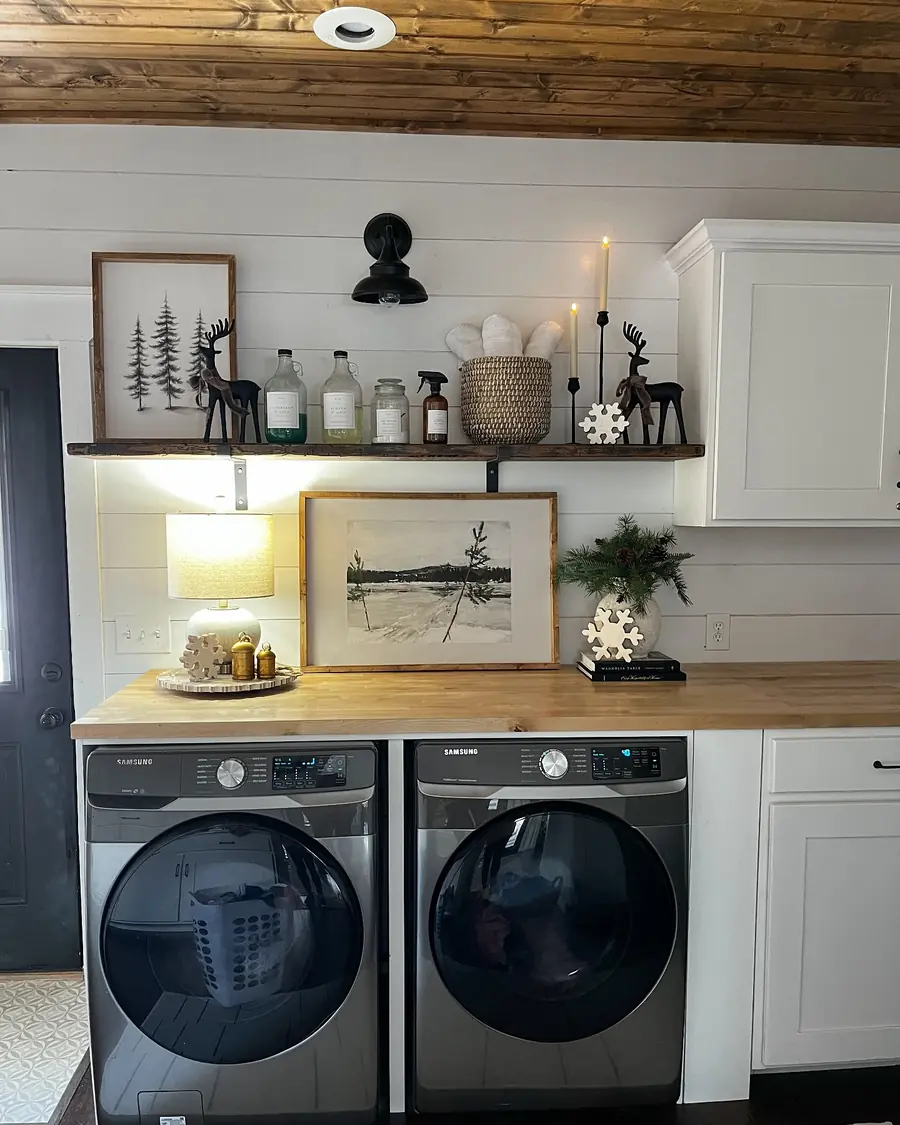
A hung picture needs a nail. A leaned one just needs a counter or shelf.
Leaning art is one of the easiest renter tricks there is, and it looks relaxed instead of temporary. Go bigger than you think. A large frame resting on the folding counter fills the wall in a way a small one never could.
Layer a little around it:
- A smaller frame on the shelf above
- A lamp on one side for warm light at night
- A vase of greenery or a short stack of books on the other
Choose calm, airy art like a landscape or a botanical print. Laundry rooms already have plenty going on.
Stick small rubber bumpers on the bottom corners of the frame. The spin cycle shakes the counter, and bumpers keep the art from creeping forward and falling.
20. Set Up a Lint and Lost Sock Station
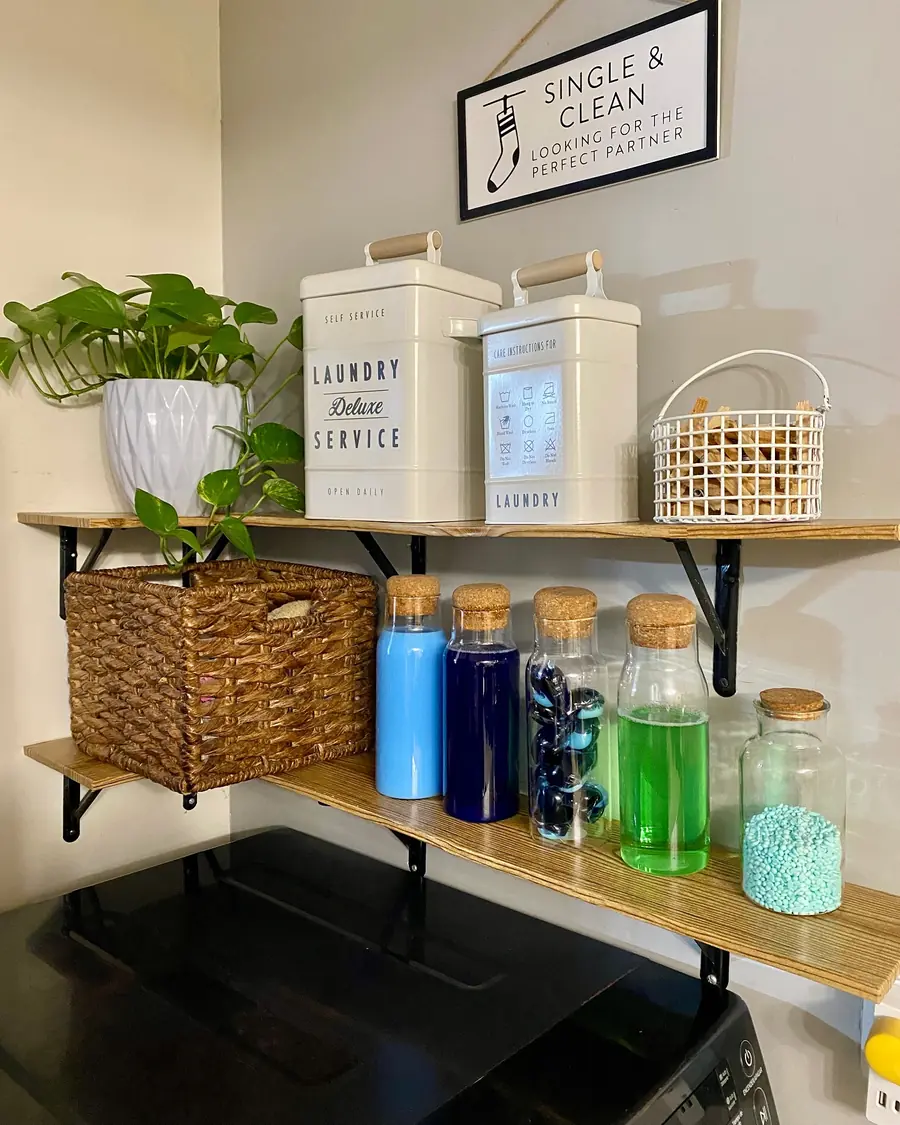
Every load seems to end with the same two things: a fuzzy handful of lint and one sock with no partner.
Give both a home right by the dryer:
- A lidded tin or small can for lint, so you’re not walking it to the kitchen trash every time
- A basket or jar for single socks, where they wait for their match
- A little wire basket of clothespins for clipping pairs together once they’re found
A funny sign about lonely socks makes the whole station feel like part of the decor. Once a month, empty the sock basket. Anything still single by then can become a dust rag.
📌 Good To Know
Clean the lint screen after every dryer load. A clogged screen makes the dryer work harder, and loose lint near a hot dryer is a fire risk, so keep the lint tin closed and empty it often.
Make It Yours, Then Take It With You
A laundry room doesn’t need new walls to feel good to walk into. It needs a few smart pieces that work around what’s already there: a rack over the machines, a cart in the gap, a curtain, a soft rug, and some warm light.
Start with whatever bugs you most. Maybe it’s the wobbly wire shelf or the pile of cleaners on the floor. Fix that first, then add another idea next weekend.
The best part about laundry room ideas for renters that don’t require renovations is that they all leave with you on moving day.
Save this list to your laundry room board so it’s ready when you tackle the next corner.