15 Bedroom Decor Ideas to Make a Room Look Bigger: Designer Tricks for Small Spaces
You want a bedroom that feels like you can breathe in it. You want space to walk around the bed, light that reaches the corners, and a calm view the second you open the door.
Most small bedrooms don’t feel that way. The bed fills the floor, the dresser crowds the wall, and every new piece makes the room look tighter. Knocking down a wall isn’t an option, and moving to a bigger place isn’t either.
Here’s what designers know. How big a room looks depends a lot on where your eye goes and what stops it. Change those two things, and the same four walls start to feel wider.
These 15 bedroom decor ideas to make a room look bigger work on exactly that. They cover the doorway, the floor, the window, the walls, the bed, and the dark corners most people forget. None of them need a renovation, and most use things you can find at a hardware store. Pick one for this weekend and see how much bigger the room feels by Sunday night.
1. Plan the View From the Door
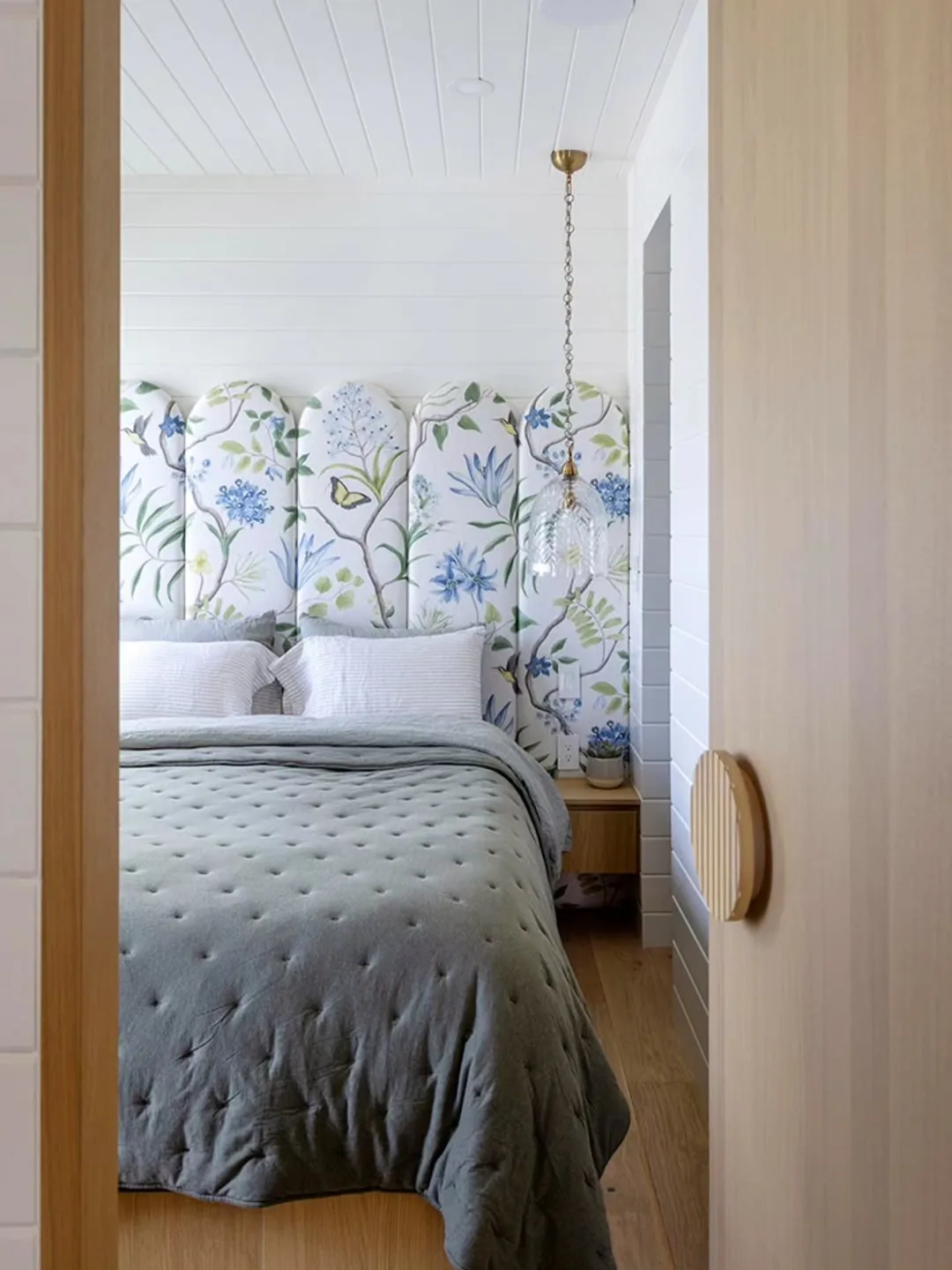
Push the door open, and the first thing you see is the bed and a row of soft floral arches. Nothing blocks the view, so the room feels deeper than it really is.
That first look sets the size of the room in your head. If it lands on a dresser corner or a pile of laundry, the room reads as cramped before you even step inside. The clear glass pendant here helps too, because light passes through it instead of blocking the line of sight.
Here’s a quick way to check yours:
- Open the door and take a photo from the hallway at eye level.
- Study the photo, not the room. Clutter shows up much faster on a screen.
- Move whatever your eye hits first, unless it’s the thing you want people to notice.
Check the view with the door half open too, since that’s how most people peek in.
2. Lighten a Dark Floor
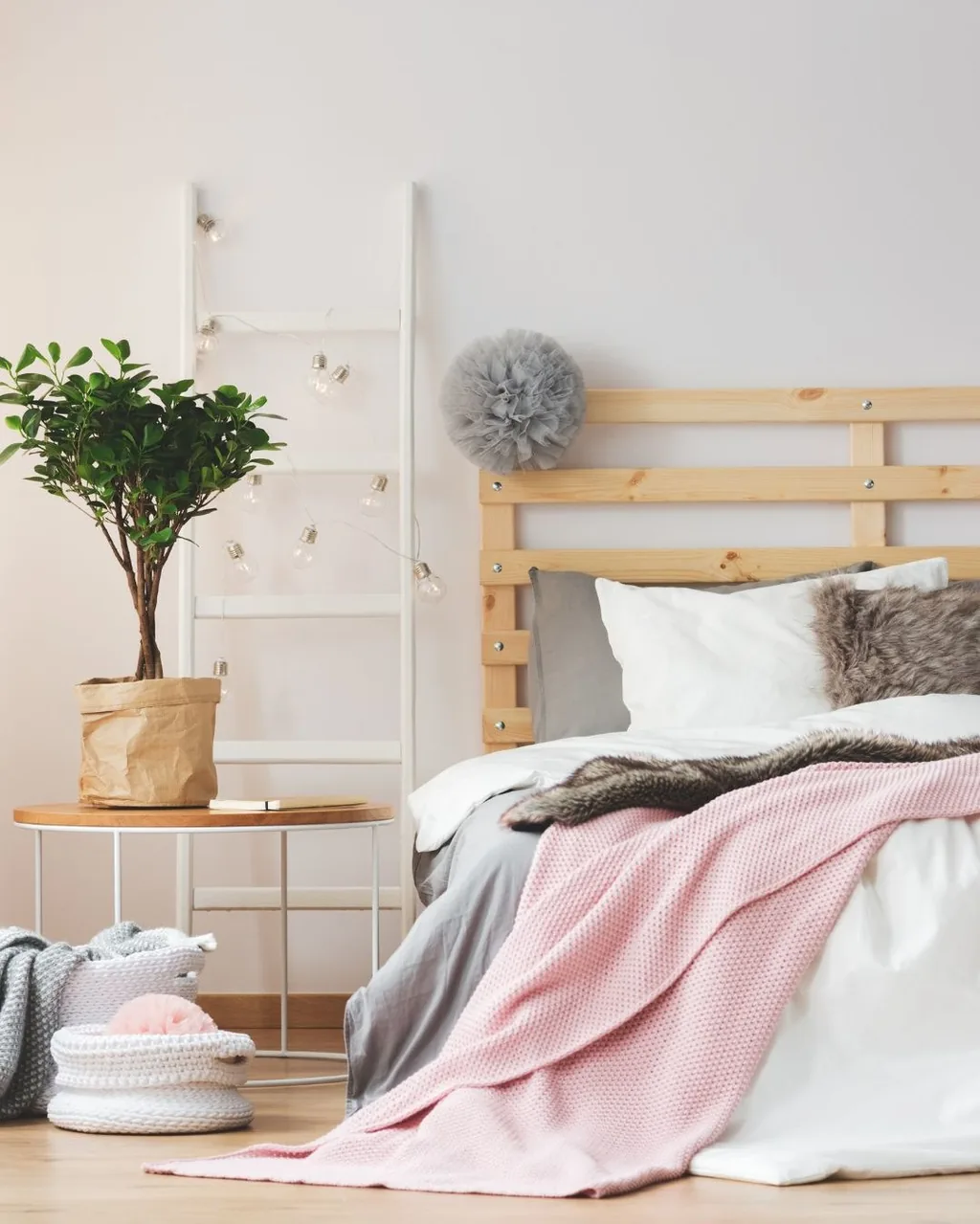
Most people work on a small room from the walls down. They paint, hang mirrors, and swap curtains, but they leave the dark floor that pulls everything inward.
You see the floor almost as much as the walls. When it’s light, like the pale wood in this room, the floor and the walls blend together at the edges, and the room looks wider.
Good light floor tones to aim for:
- Natural maple, birch, or whitewashed oak
- Warm greige, which hides dust better than white
- Soft sand, which sits nicely next to pine furniture
Keep what sits on the floor light too, like the white wire side table and the crochet baskets here. A heavy dark rug on a light floor undoes most of the effect.
| Floor Paint | Light Vinyl Planks | |
|---|---|---|
| Look | Smooth, solid color | Wood grain in a pale tone |
| Effort | Clean, sand, prime, two coats, then drying time | Click or lay in place, cut with a utility knife |
| Good choice if | You own the home and the old wood is worn | You want to cover the floor, not change it |
| Watch for | Use paint made for floors, not walls | Renters should ask first, and doors may need trimming |
3. Line Up Furniture at One Height
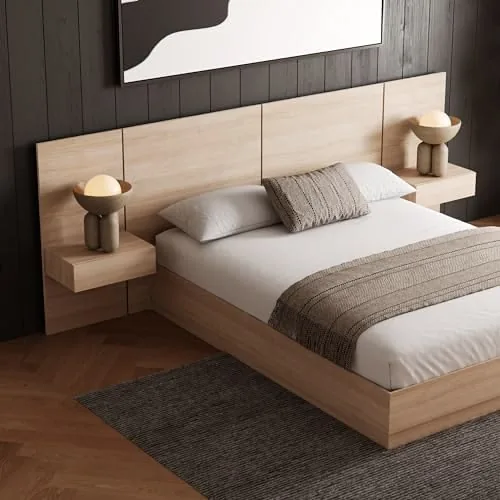
Pick one height line, and make everything meet it.
In this room, the bedside tops sit level with the mattress, and the lamps on each side match. The headboard runs in one straight band across the wall. Your eye slides from one side to the other without a single bump, so the wall looks longer.
Most bedrooms do the opposite. The nightstand is taller than the bed, the dresser is taller still, and a chair sits lower than all of them. Each jump in height is a small stop for your eye.
To line things up:
- Match nightstand tops to the mattress top, within an inch or two.
- Use the same lamp on both sides.
- Keep the gap between the headboard and the art the same all the way across.
A short stack of books can raise a table that sits a little low.
A tall nightstand on one side, a low stool on the other, and a dresser that’s higher than both. Your eye bounces up and down across the wall, and the room looks choppy.
The bedside tops meet the mattress, the lamps match, and the headboard runs in one band. The wall reads as one long, calm line, and the room feels wider.
4. Add Frosted Film to the Window
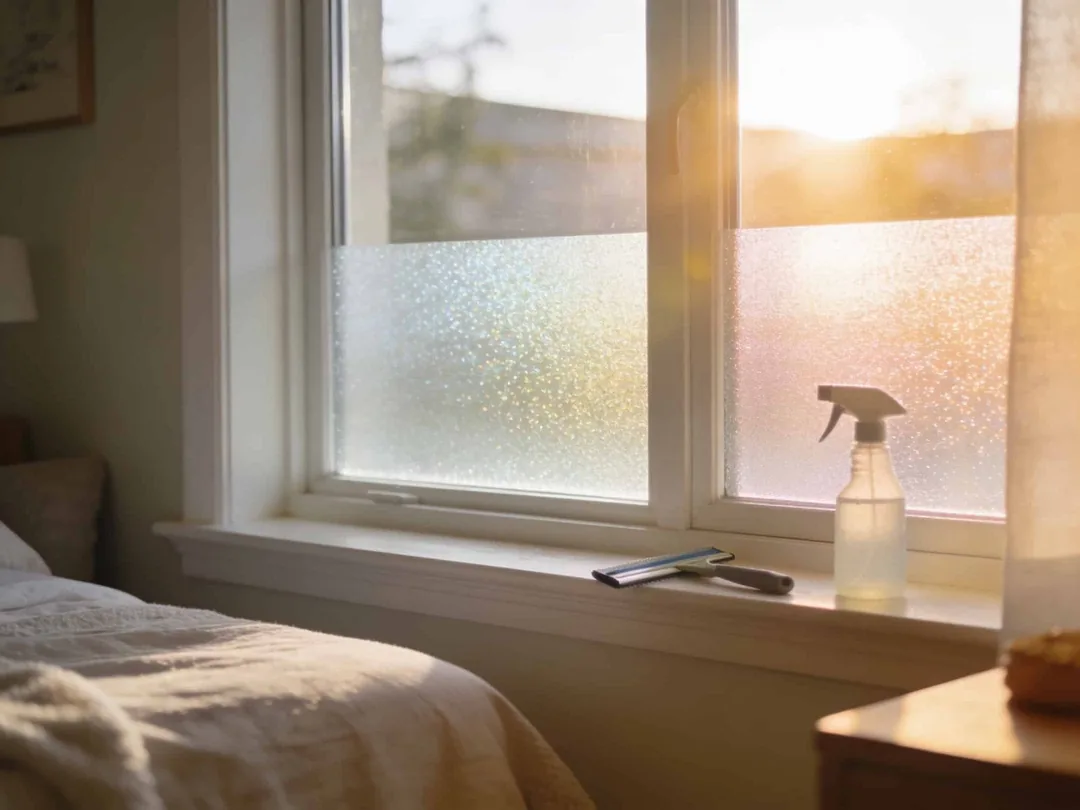
Privacy is the main reason bedroom windows stay half covered all day. The blinds stay down, the curtains stay shut, and the brightest part of the room goes dim.
Frosted film solves privacy right on the glass. Put it on the lower half only, like this window, and neighbors can’t see in, while daylight still pours through the top. Now you can push the curtains all the way open, and the window shows at its full size.
What to look for in a film:
- Static cling, so it holds with water and peels off clean when you move
- Plain frosted or a soft texture, not a busy print that pulls focus
- A label that says it’s safe for your glass, especially double-pane windows
Clean the glass well, then wipe the edges with a lint-free cloth. Any speck of dust leaves a bubble.
Spray the glass with water and a drop of dish soap, then peel the backing off the film.
Lay the film on, slide it into place, and push the water out from the center with a squeegee.
Trim the edges with a sharp utility knife, leaving a hair-thin gap at the frame so the film lies flat.
5. Mount the TV on the Wall
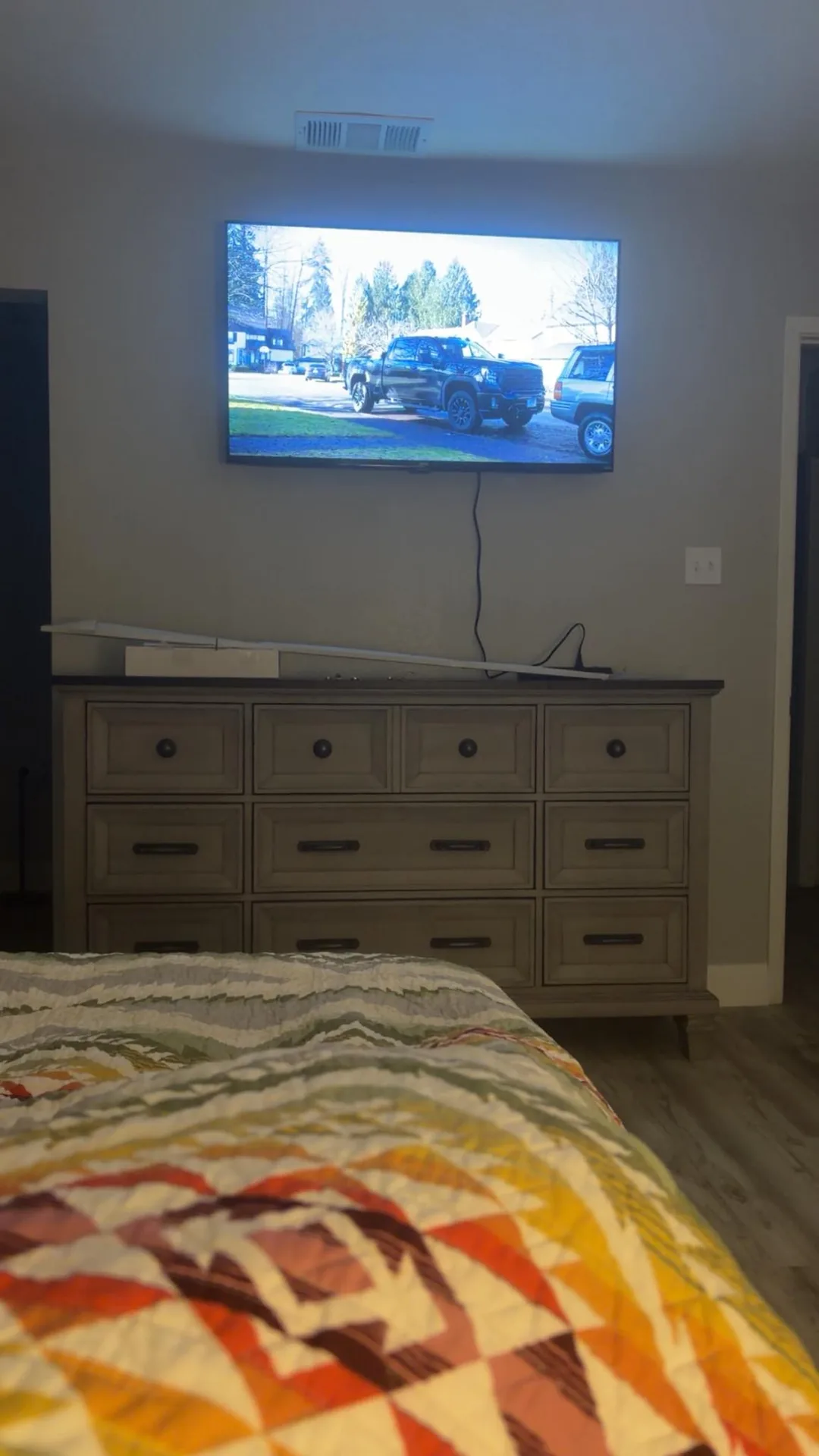
A TV on a stand eats a patch of floor or the whole top of your dresser. Lift it onto the wall, and you get both back.
This bedroom has the big part right. The TV hangs flat above the dresser, so the dresser can stay a dresser instead of a media center. The next step is the cord. A black wire running down a gray wall pulls your eye straight to it.
Finish the job with:
- A paintable cord cover in the same color as the wall
- A slim bracket or shelf for the soundbar, so the dresser top stays clear
- A tilting mount if you watch from bed, so the screen angles down toward you
Hang it so the middle of the screen sits near your eye level when you’re sitting up in bed.
6. Paint Vents to Match the Walls
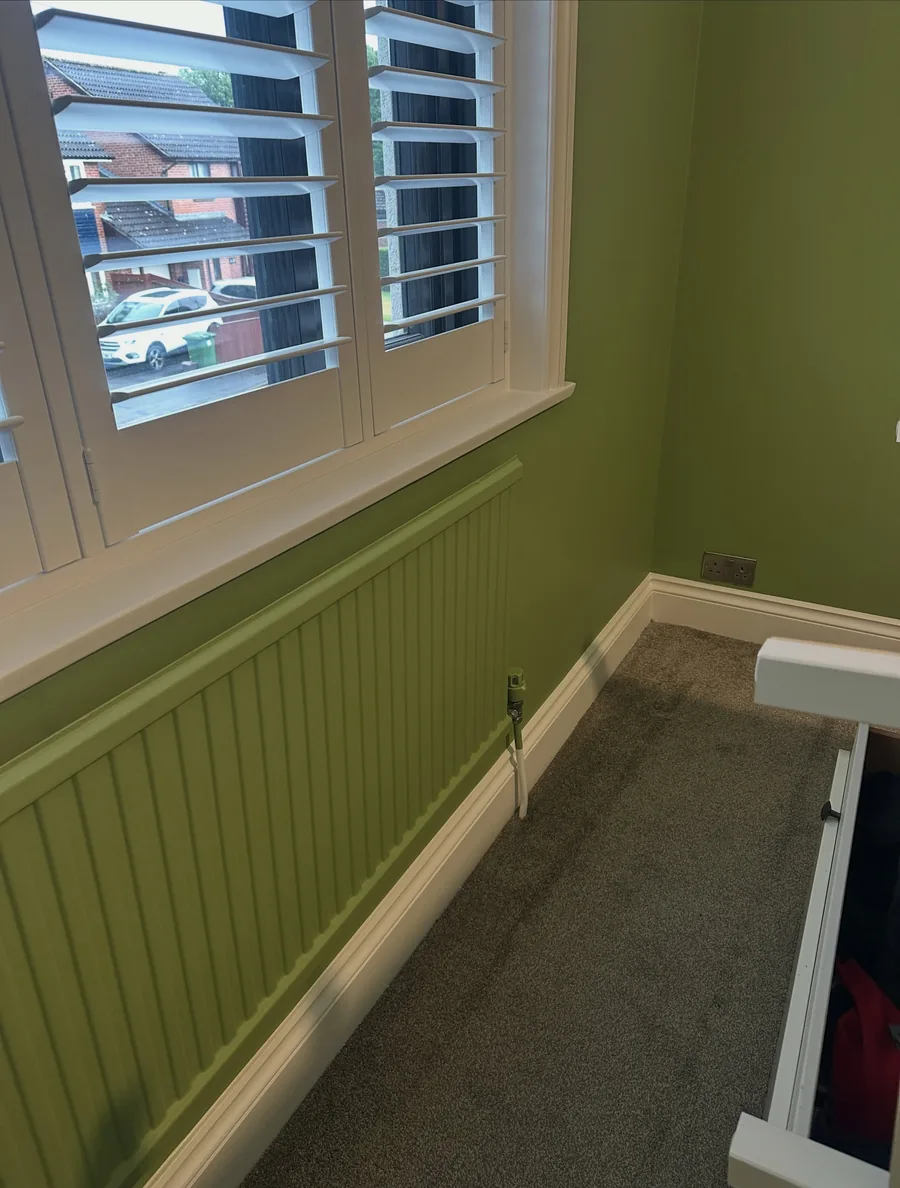
Look at the radiator under this window. It’s painted the same leafy green as the walls, so it nearly disappears. Your eye goes to the white shutters and the view outside instead.
Vents, radiators, and switch plates are small. But when they’re white or bare metal against a colored wall, they break it into little patches. Paint them to match, and the wall reads as one calm surface.
A few tips before you start:
- Turn the heat off and let the radiator cool all the way.
- Clean and lightly sand metal so the paint grips.
- Use a paint made for metal, or one labeled heat-safe for radiators.
Leave the trim white if you like the contrast. A white frame around the window still looks crisp.
What to paint, and what to skip
7. Take Out One Piece of Furniture
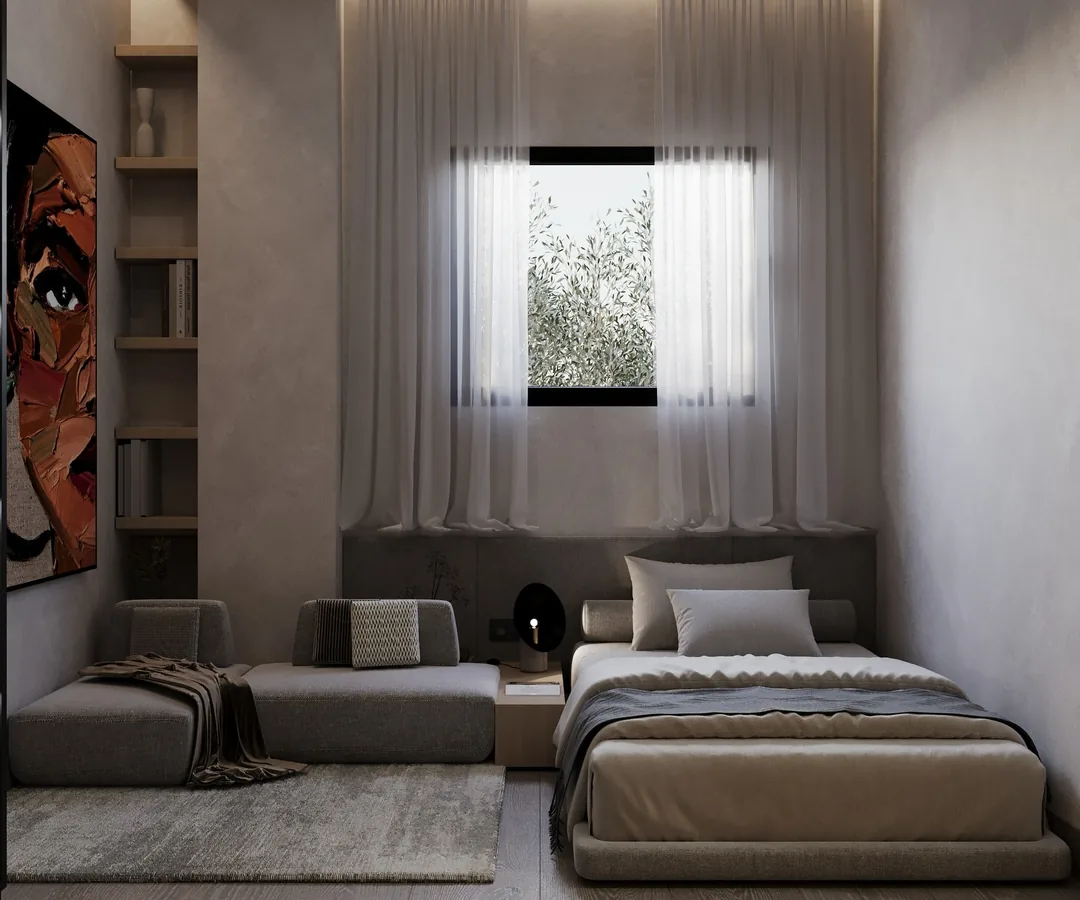
Almost every small bedroom has one piece that’s just there. It might be a chair that only holds clothes, a second side table, or a bookcase full of things nobody reads.
Look at how little is in this room. There’s a low bed, a pair of soft floor seats, and one small side table. That’s all. The floor shows between each piece, so the window and the big painting get your full attention.
Try this simple test:
- Pick the piece you walk around the most.
- Move it to another room for one week.
- If you don’t miss it, it doesn’t come back.
Most people are surprised by which piece they never think about again.
Pieces you use every single day.
Pieces that do two jobs, like a side table with a drawer.
Seating you actually sit on, not just drop things on.
A chair that has turned into a clothes pile.
Stands and pedestals that only hold one small decoration.
Furniture you kept because it came from your last home, not because it fits this one.
8. Match Big Furniture to Your Wall Color
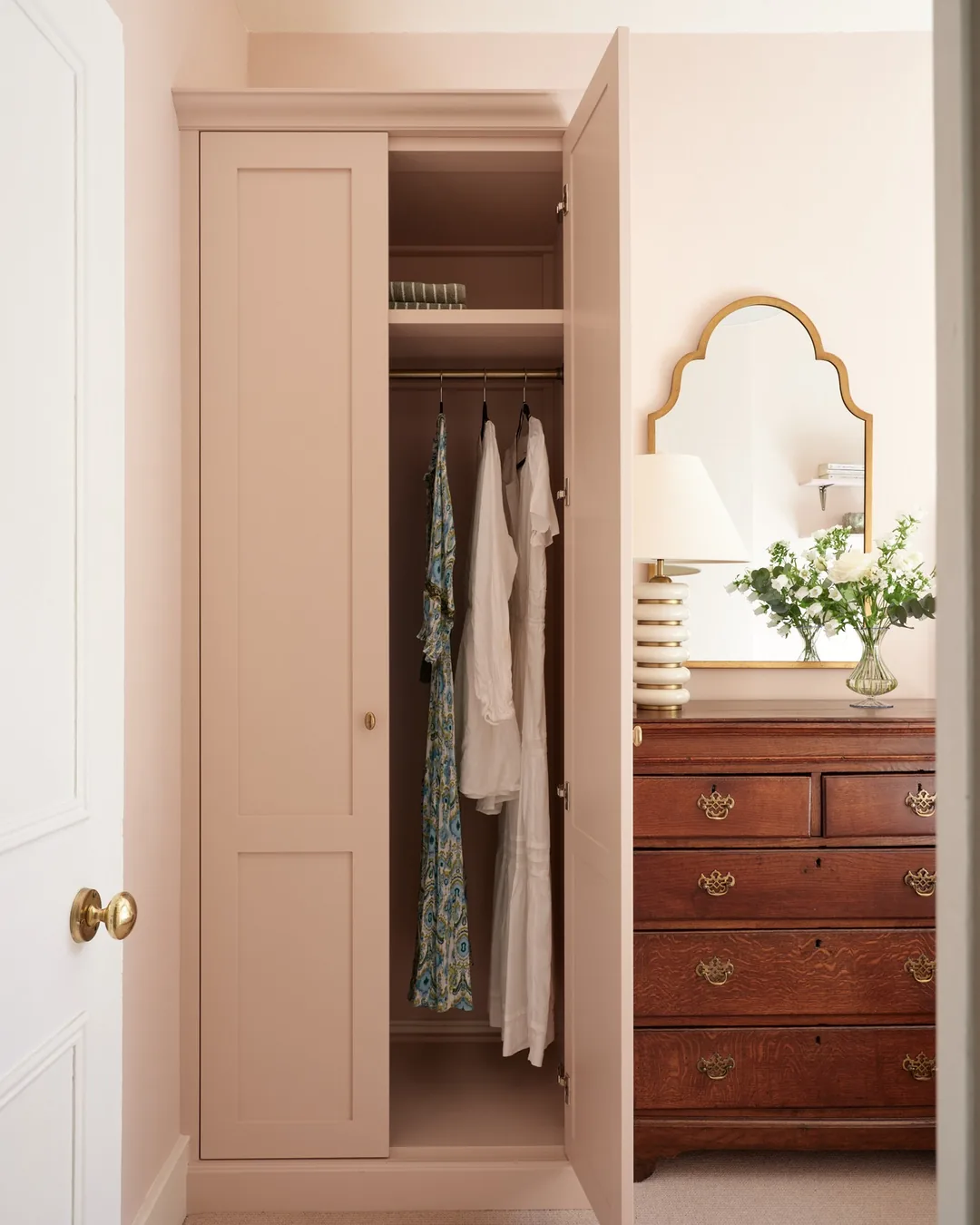
Lots of people think a big wardrobe should stand out as a statement piece. In a small room, a wardrobe that stands out mostly looks bigger.
Paint it the same color as the walls, and it melts in. This built-in wears the same soft blush as the room, right up to the molding on top. From the door, it reads more like part of the wall than a big box.
The trick works best on the largest pieces:
- Wardrobes and armoires
- Tall bookcases
- Wide dressers
Save the contrast for something smaller. Here, the old oak chest with brass pulls brings in warmth without crowding the room.
💡 Quick Tip
Take your wall paint’s color name or code to the paint store and have it mixed in a satin or semi-gloss finish for the furniture. You get the same color, and it stands up to hands and opening doors much better than flat wall paint. On laminate or shiny wood, start with a bonding primer.
9. Add a Few Shiny Surfaces
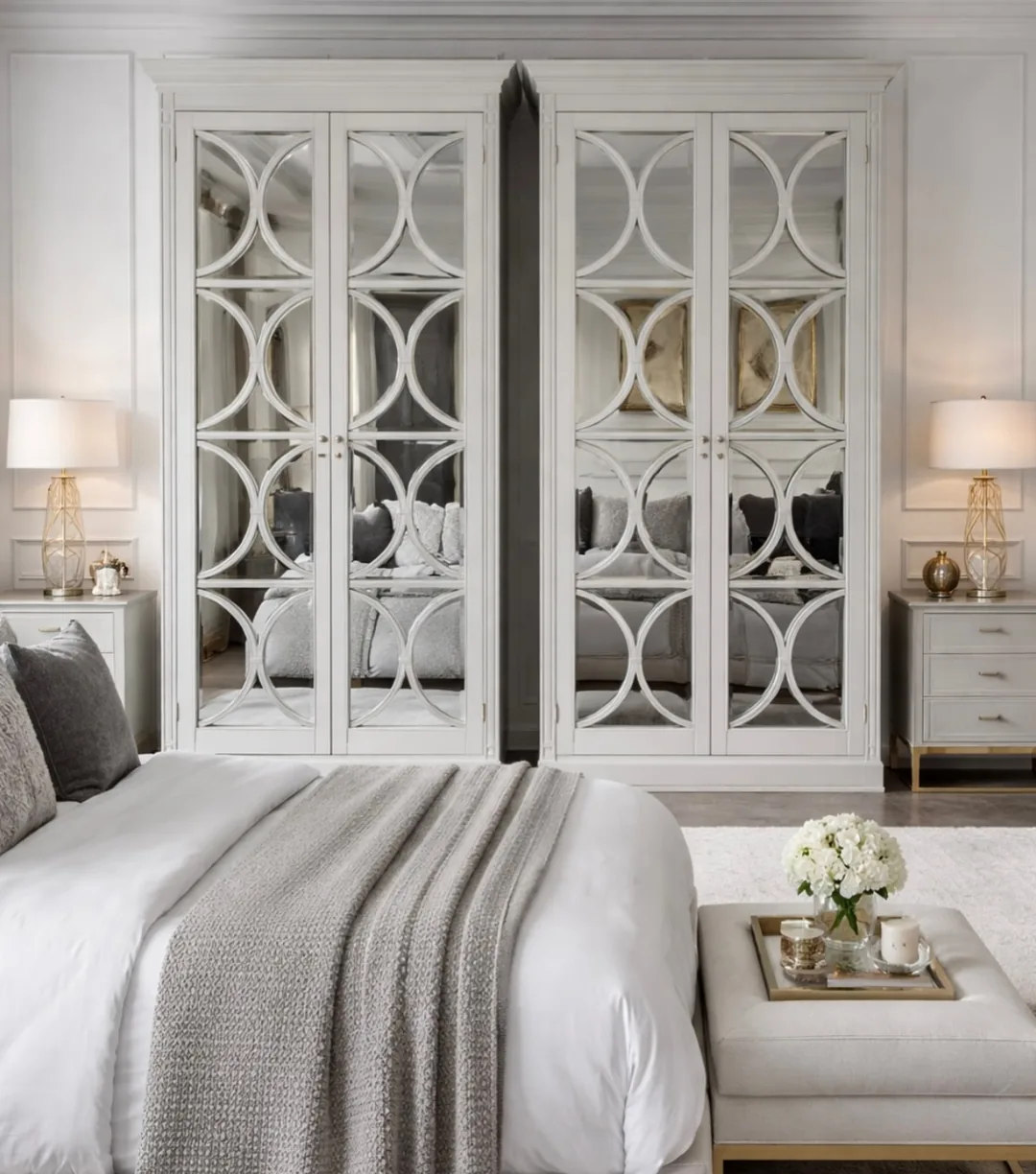
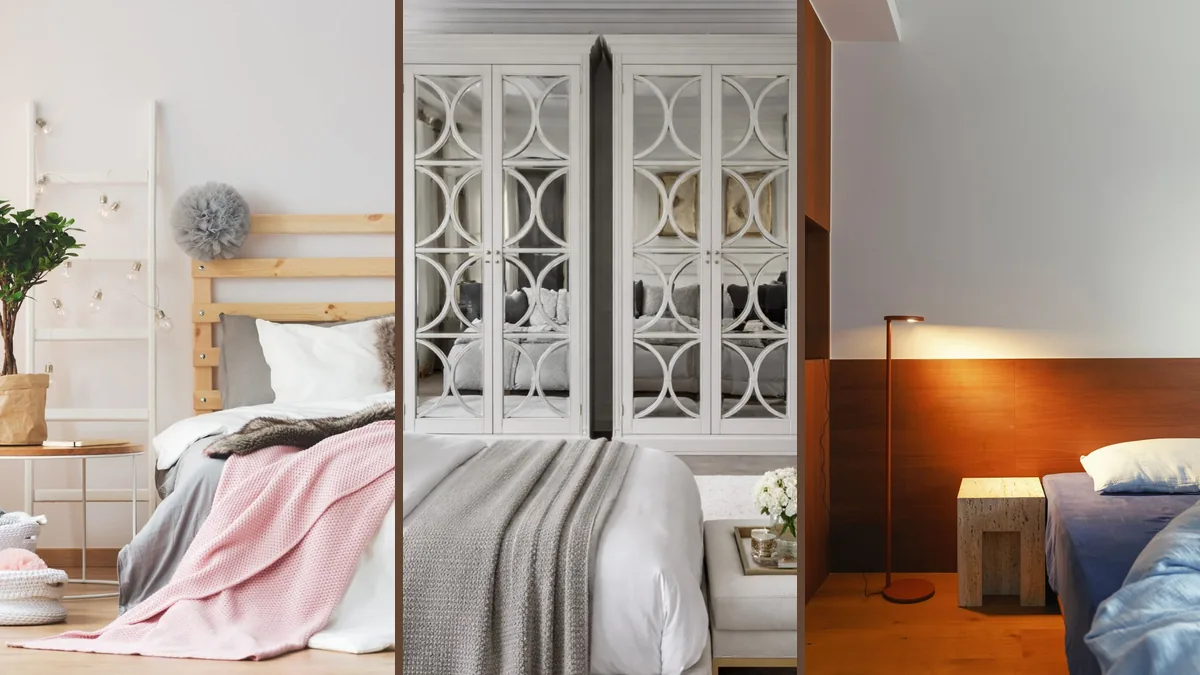
Two tall wardrobes with mirrored doors face the bed, with white circle fretwork running across the glass. Glass lamps on gold bases glow on each side, and a brass tray catches the light at the foot of the bed.
Shiny surfaces bounce light around the room, so the corners don’t go dim. A room where everything is matte can feel flat and heavy, especially when it’s small.
The key word is “few,” though. Too much shine starts to look busy. Aim for:
- One big reflective piece, like glass-front doors or a glossy dresser
- Two or three small ones, like lamp bases, a tray, or a vase
- Plenty of soft texture around them, like a knit throw and linen bedding
Glossy finishes show fingerprints, so keep a microfiber cloth handy.
Three Finishes That Catch the Light
10. Choose the Right Size Bed
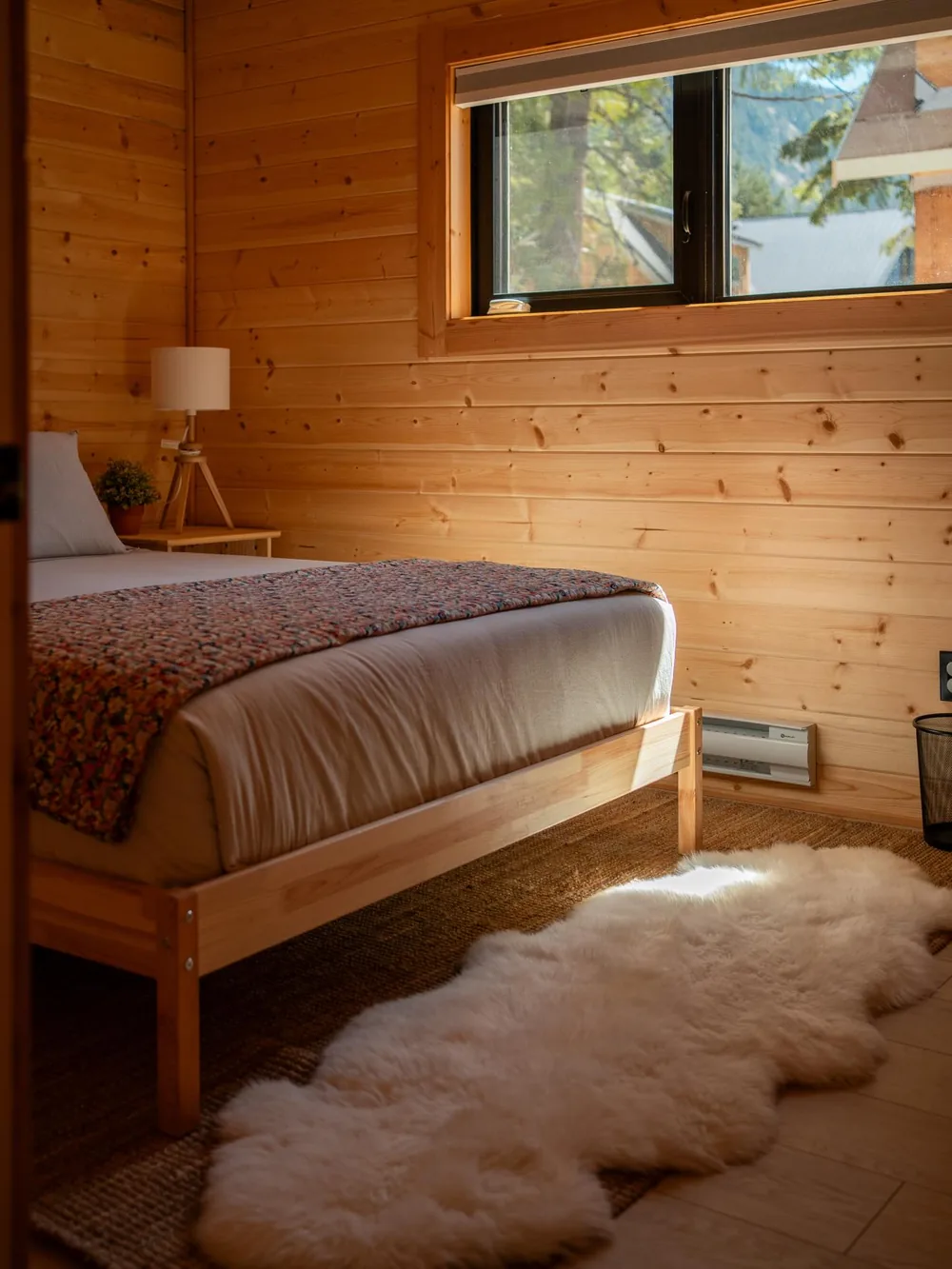
A queen bed and a full bed look almost the same in a store. In a small bedroom, the difference shows up as floor.
In US sizes, a queen is about 6 inches wider and 5 inches longer than a full. That’s a strip of floor on each side and at the foot, and in a tight room it decides whether you walk or squeeze. This full-size pine frame still leaves space for a side table, a lamp, and a sheepskin to step onto in the morning.
Before you size up, ask yourself:
- Who sleeps here most nights, one person or two?
- Can you walk around the bed without turning sideways?
- Will the closet door and dresser drawers still open all the way?
Whatever size you pick, a plain frame with no bulky trim keeps it looking smaller.
| Twin | Full | Queen | |
|---|---|---|---|
| Sleeps | One person | One with room to spread out, two snugly | Two adults |
| Room feel | Lots of open floor | Balanced in most small rooms | Fills a small room fast |
| Good choice if | It’s a kid’s room, guest room, or very narrow room | You sleep alone but like extra space | Two people share the bed every night |
| Watch for | Tall adults may hang off the end | Can feel tight for two every night | Keep a clear path on at least one side |
11. Hide Clutter Behind Closed Doors
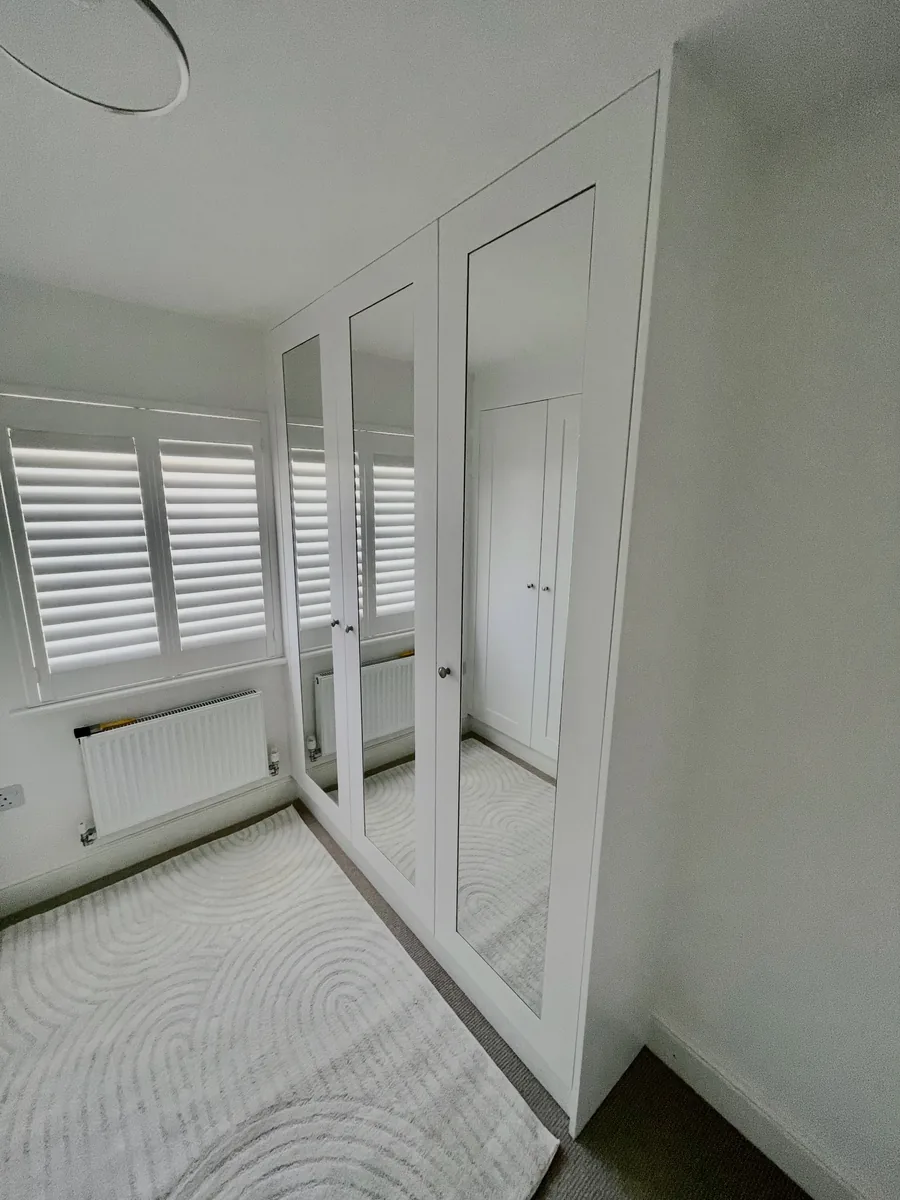
Open shelves look lovely in photos. In real life, they fill up with shoeboxes, phone cords, and the sweater you haven’t put away yet.
Every visible item is one more thing for your eye to sort through, and a small room runs out of calm fast. Closed doors fix that in one move. This built-in wardrobe runs floor to ceiling with plain white frames, so everything behind it simply vanishes. The mirrored panels also bounce some window light back into the room.
What belongs behind doors:
- Folded clothes, bags, and shoes
- Chargers, papers, and everyday odds and ends
- Anything in a color that clashes with the room
Keep open shelves for the few things you actually like looking at.
Open shelves, a crowded dresser top, and baskets on the floor beside them. Every color and shape is on show, so the room feels full even right after you tidy it.
One tall run of plain closed doors. Everything has a home behind them, the wall reads as one smooth surface, and the floor in front stays clear.
12. Skip the Footboard
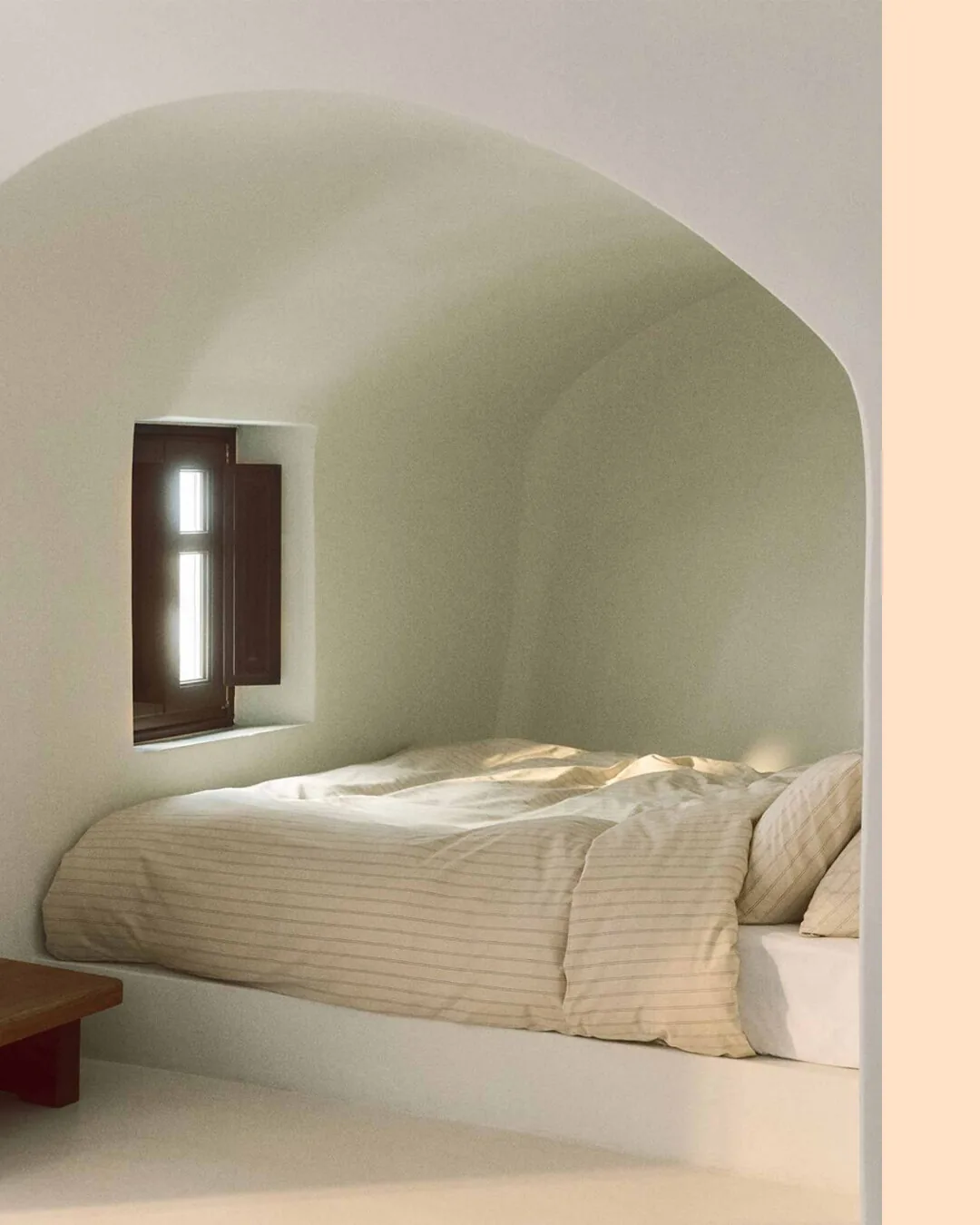
A tall footboard is often the first thing you see when you walk into a bedroom. In a small room, it acts like a short wall standing in the middle of the floor.
Without one, your eye runs straight across the bed to the far wall. This bed rests on a simple built-in platform inside an arched nook, with nothing rising at the foot. The striped bedding drapes right over the edge, and the whole alcove looks deeper.
If your bed has a footboard, check whether it unbolts. Some frames need it to hold up the side rails, so look at how yours is built before you take it off.
Keep the foot of the bed low and open.
- ▸Headboard-only frames: side rails bolt to the headboard and rest on a simple metal base at the foot.
- ▸Platform frames: a solid base with no posts or panel at the foot.
- ▸Built-in platforms: a box or plinth the mattress sits on, like the one in this nook.
- ▸Low foot rails: if you like some frame at the end, keep it below the top of the mattress.
13. Leave One Wall Bare
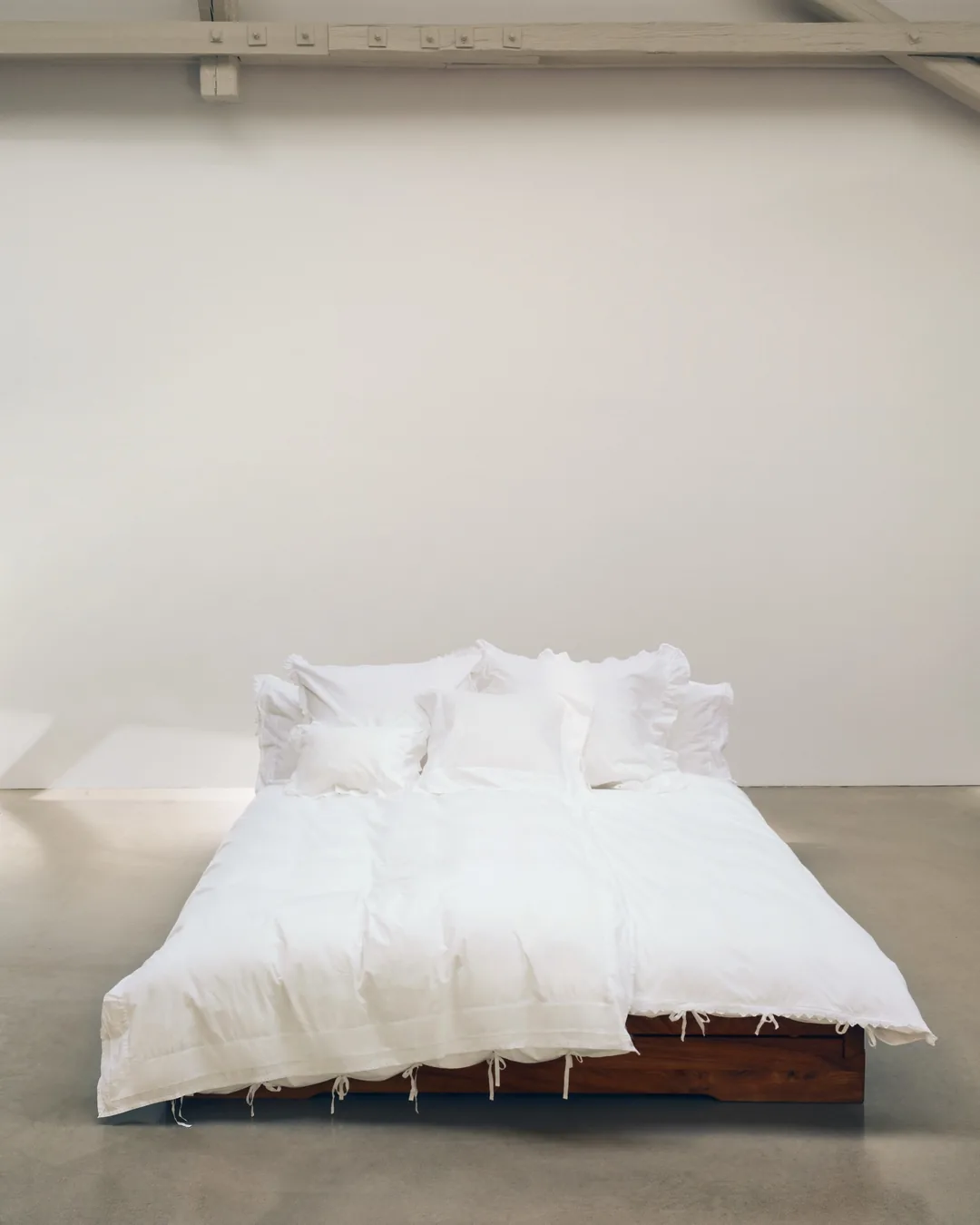
Most people treat a blank wall like a job they haven’t finished. In a small bedroom, it’s one of the hardest-working spaces you have.
A bare wall gives your eye somewhere to rest, and everything else looks more deliberate next to it. In this room, a wide white wall rises behind a low wood bed piled with soft white bedding. There’s no art, no shelf, and no clock. The sunlight sliding across the wall is the only decoration, and the room feels open and quiet.
Good walls to leave alone:
- The one you see first when you wake up
- A wall that gets nice daylight
- Any wall beside your busiest corner
Clean it up instead of filling it. Patch old nail holes so it truly reads as blank.
A bare wall isn’t empty. It’s the pause that makes the rest of the room look bigger. Out of four walls, let one stay quiet.
14. Pick Seats That Tuck Away
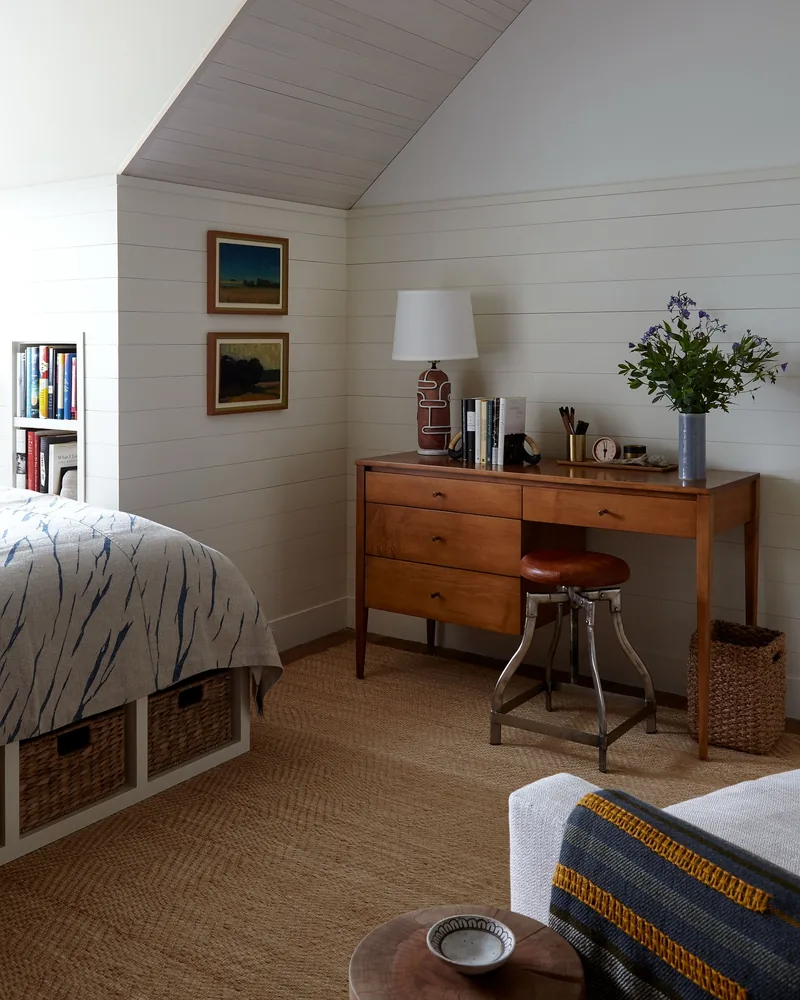
Slide the stool all the way under the desk when you’re done. That one habit gives a small room back a whole patch of floor.
In this attic bedroom, a leather-topped stool on slim metal legs fits right into the knee space of a warm wood desk. A bulky chair with arms can’t do that. It stays out in the room all day and sits in your path.
Good seats that tuck away:
- Backless stools that slide under a desk or vanity
- Small poufs that fit under a console table
- Ottomans that nest under a bench
Measure from the floor to the underside of the desk drawer, and pick a seat that clears it with a little room to spare.
📌 Good To Know
An adjustable stool solves two problems at once. Lower the seat so it slides under the desk when you’re finished, then raise it again when you sit down to work. If you sit for long stretches, check that your elbows rest level with the desktop.
15. Brighten the Dark Corners
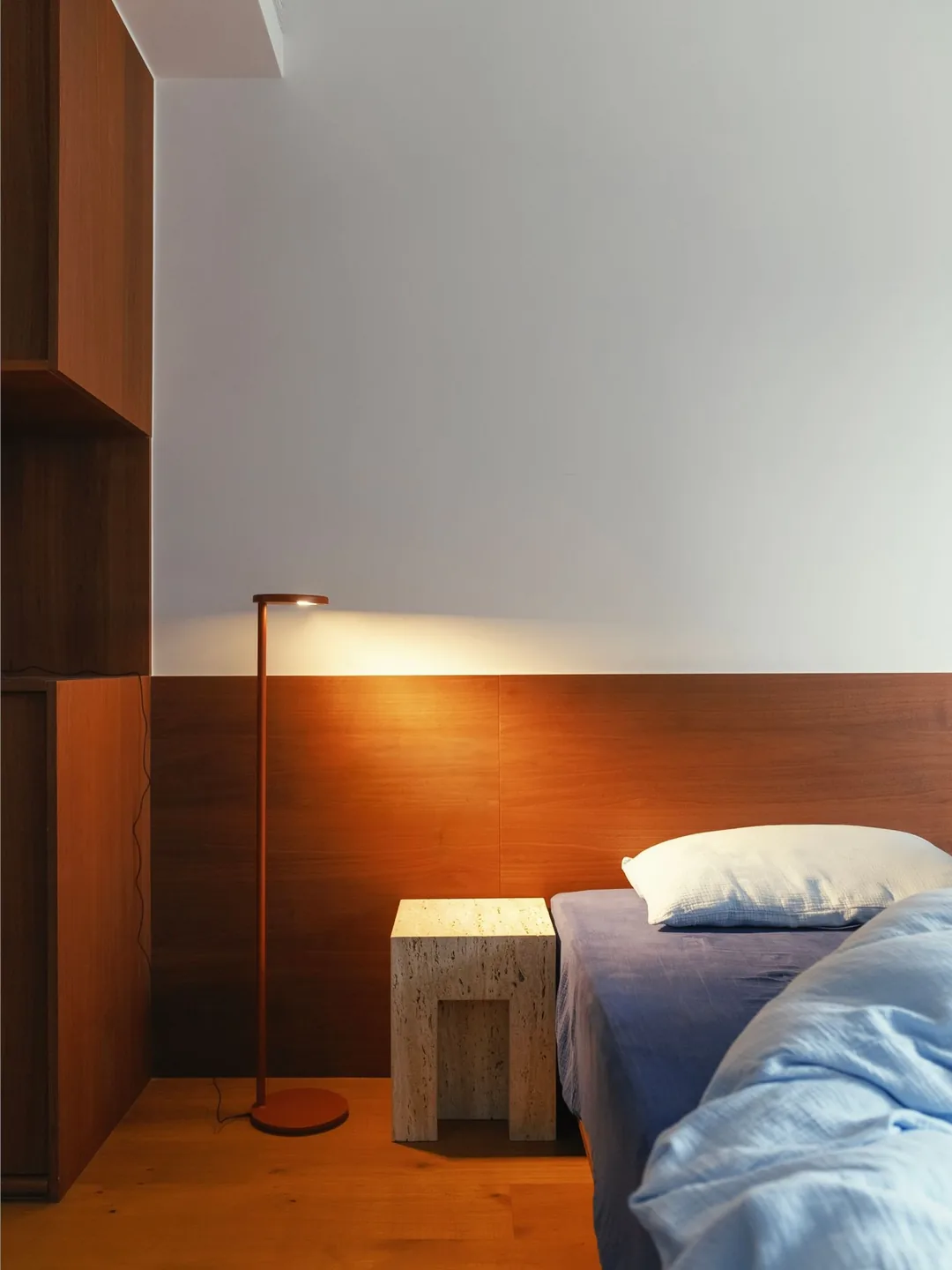
One small light in a corner can make the walls seem to step back.
Dark corners make a room look smaller because the edges sink into shadow, and your eye stops short. Light them, and the room reads all the way out to its true size. This slim rust floor lamp stands beside the bed and throws a warm wash across the wall. It barely uses any floor, and the corner glows instead of fading away.
A few tips:
- Aim the light at the wall, not at the bed, so it bounces softly.
- Pick a lamp with a thin pole and a small head for tight spots.
- Put corner lights on a smart plug so they turn on with your other lamps.
Even one lit corner changes how the whole room feels at night.
A Bigger-Feeling Bedroom, One Change at a Time
A small bedroom can’t grow, but it can stop feeling cramped. Most of these tricks change what your eye sees, not how many square feet you have. A clear view from the door, a calm line of furniture, one quiet wall, and corners that glow at night all work together.
You don’t need to try all 15 at once. Start with the easy ones, like painting a vent or moving one piece of furniture out. Live with the room for a week, then pick the next idea.
Mix and match these bedroom decor ideas to make a room look bigger until the space finally feels like yours.
Pin this list to your small bedroom board, and come back whenever the room starts to feel tight again.