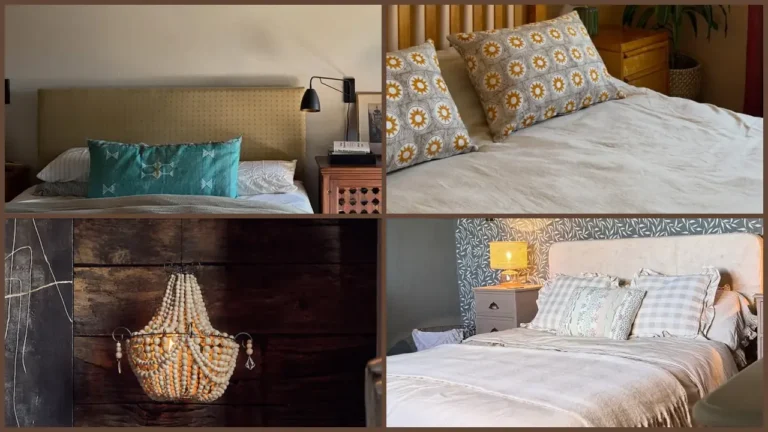
17 Long Narrow Bedroom Decorating Ideas That Fix Awkward Layouts
You want a bedroom you can walk through without turning sideways. A bed you can reach without climbing over anything, a spot for your clothes, and a little open floor that makes the room feel calm instead of crowded.
A long, narrow room makes that harder than it should be. The bed seems to fit on only one wall. The dresser ends up blocking the way to the window. And the far end turns into a dumping ground for laundry, boxes, and the chair nobody sits in. The whole space starts to feel like a hallway with a mattress in it.
Here’s the good news. The shape isn’t the problem. The layout is. These long narrow bedroom decorating ideas start with the big choices, like where the bed goes and how you move through the room. Then they work down to lighting, storage, paint, and small tricks that make a narrow room look wider.
Every idea uses furniture and materials that are easy to find. Start with the one that fixes your biggest headache.
1. Pick the Right Wall for Your Bed
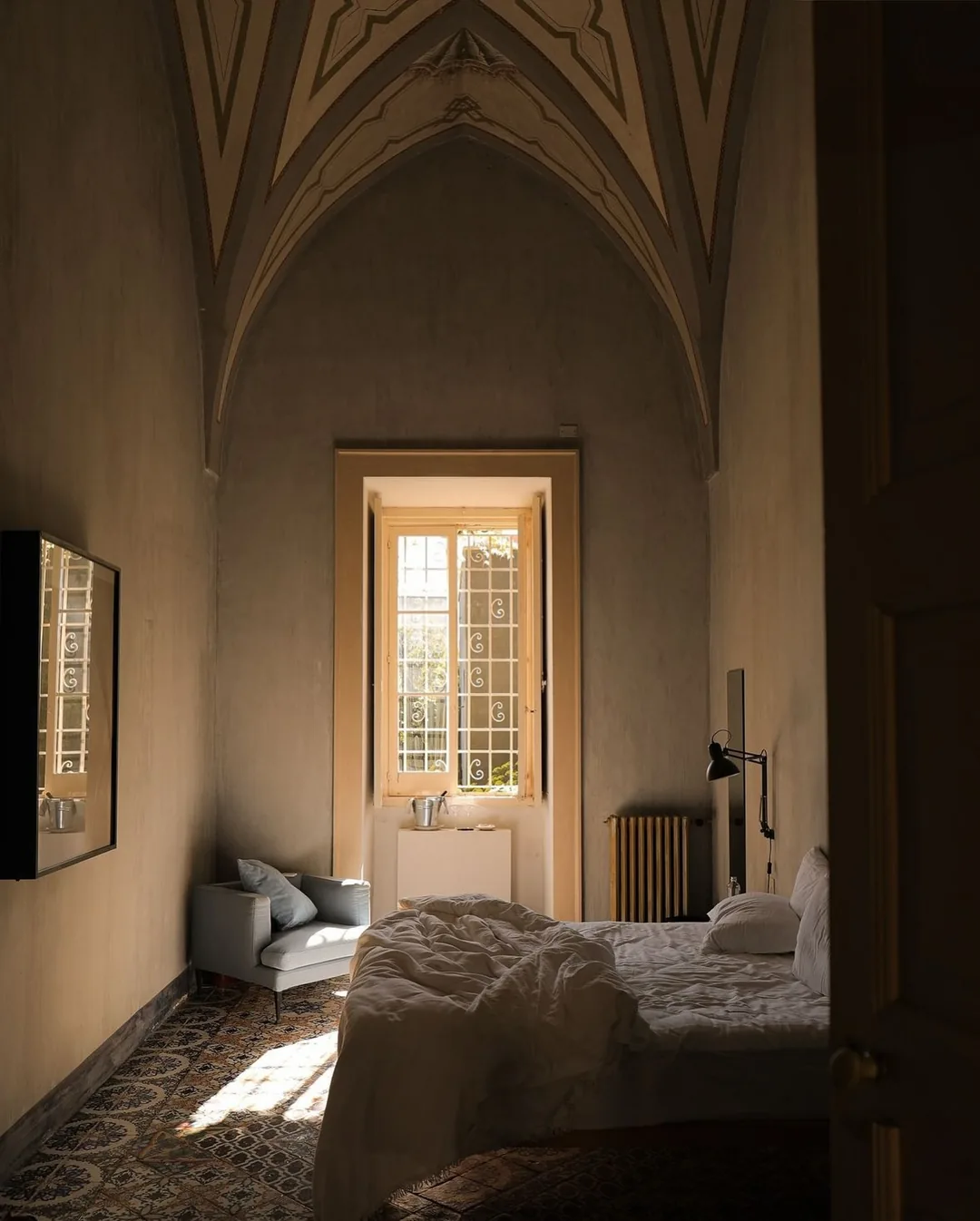
Where to put the bed in a narrow room comes down to two real choices. Each one changes how the whole room works.
Put the bed against a long wall, and the room splits into a sleep area and an open end. That open end can hold a chair by the window, like a tiny sitting spot. Put the headboard on a short wall instead, and the bed fills the width, with one long lane down the side.
Before you pick, check three things:
- Which way the door swings
- Which wall has the window
- How much floor is left past the foot of the bed
If you can’t walk comfortably past the foot of the bed, the short wall usually wins.
| Bed on a Long Wall | Bed on a Short Wall | |
|---|---|---|
| Layout | Bed sits sideways, leaving an open zone at one end | Bed fills the far end, with one long path beside it |
| Walking path | Across the foot of the bed | Along one side of the bed |
| Best for | Rooms with space for a chair or desk at the end | Very narrow rooms where the bed barely fits across |
| Watch for | Room for the door to swing fully open | One side of the bed may end up against the wall |
2. Keep a Clear Walking Path
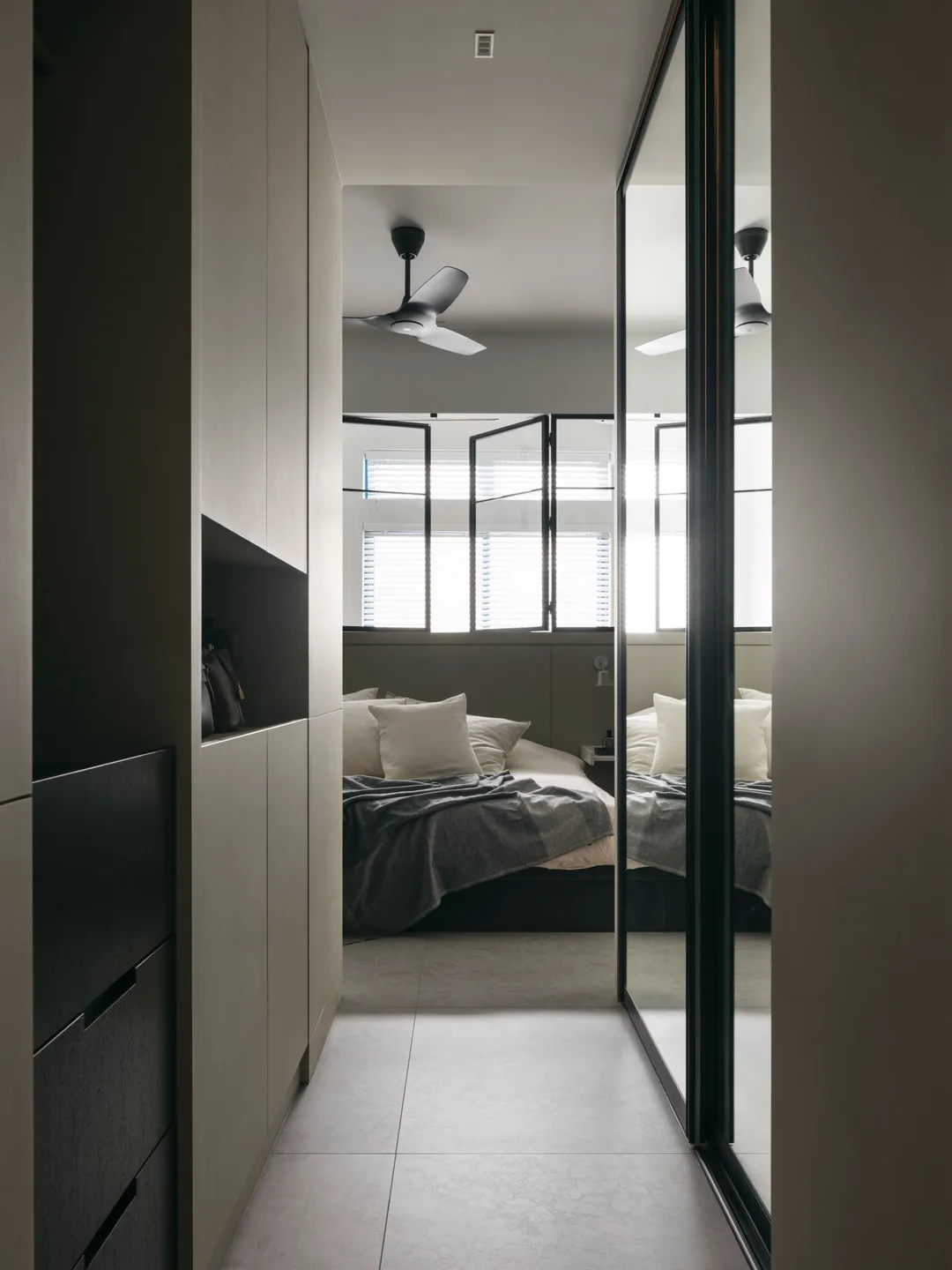
Bumping your hip on a dresser corner every morning gets old fast.
In a long room, you walk from the door to the far end all day. Treat that route like a hallway and keep it open. A handy rule of thumb is to make the path about as wide as your bedroom door.
The smart move is to line the path instead of blocking it. Flat wardrobes along one side and a mirrored slider on the other keep the lane clean, and the mirror makes it feel wider.
A few ways to protect that space:
- Choose sliding or bifold closet doors over swinging ones.
- Pick handle-free fronts so nothing snags your sleeve.
- Keep the laundry hamper inside the closet, not in the lane.
The dresser sticks out into the room, the closet door swings across the path, and a laundry basket sits right where you walk. Getting to the bed feels like a zigzag.
Wardrobes sit flat against one wall, a mirrored slider runs along the other, and the lane from door to bed stays open. You could walk it with the lights off.
3. Split the Room Into Two Zones
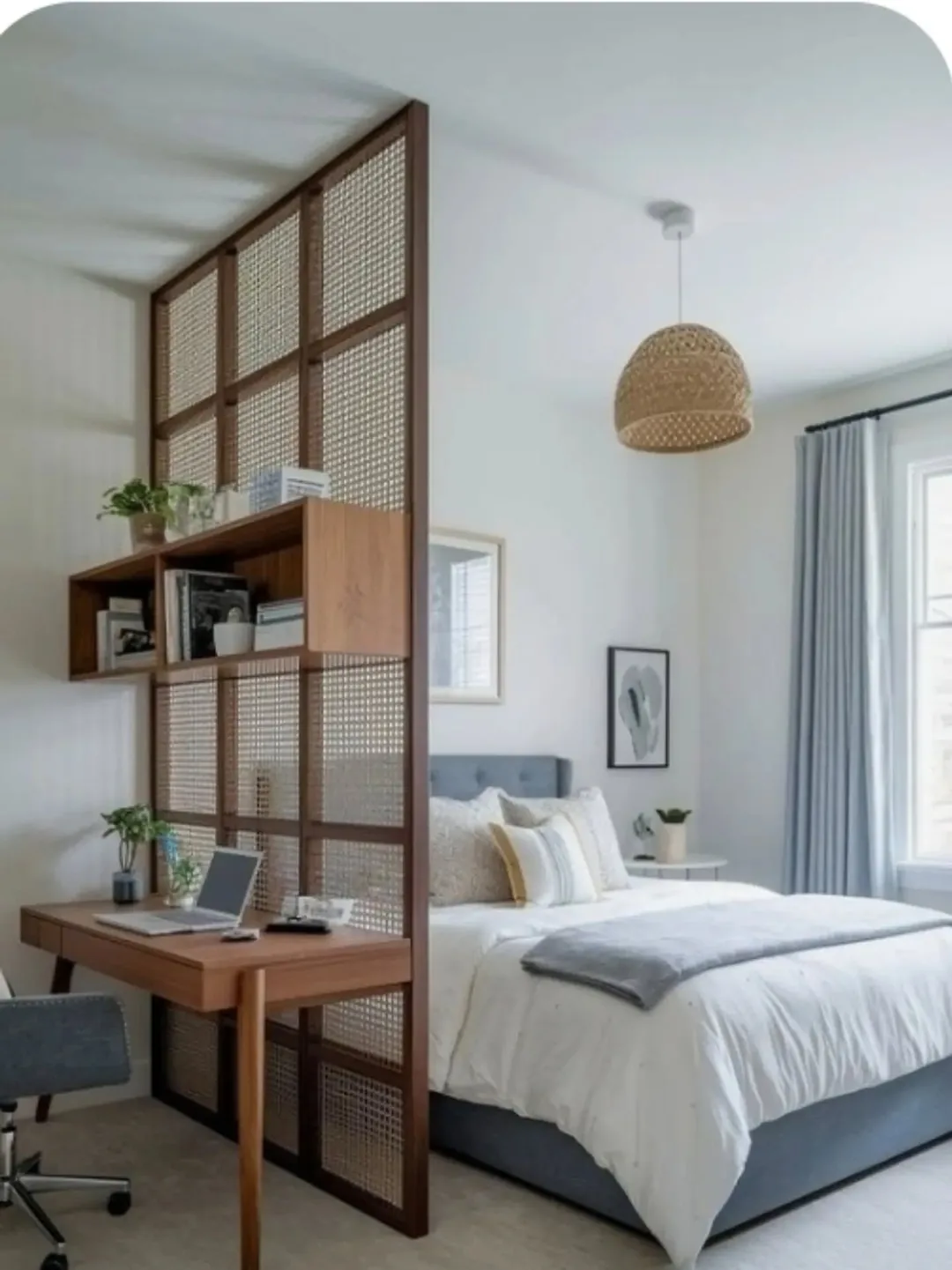
A long room has one hidden perk. There’s enough length for two rooms in one.
Bedroom zoning ideas work best when each half has one job. The bed takes the quiet end, and the other end gets a second use. Good pairings include:
- Sleep and work, with a desk on the far side
- Sleep and dressing, with a mirror and wardrobe
- Sleep and reading, with one comfy chair and a lamp
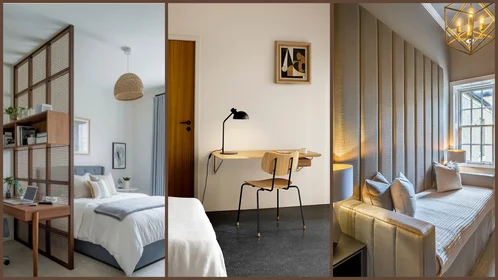
A tall screen made of wood and woven cane marks the line without building a solid wall. Light filters through the cane, so neither half goes dark. Add a shelf to the work side, and it holds books right above the desk.
Freestanding screens need no drilling, which makes them a good choice for renters.
Stand in the doorway and pick the end that feels most private. That end gets the bed.
Set the divider so the bed side gets a little more room than the second zone.
Leave an open gap at one end of the divider so you can walk between zones without squeezing.
Give each zone its own light, like a pendant over the bed and a desk lamp, so one person can work while the other sleeps.
4. Use a Low Bookshelf as a Divider
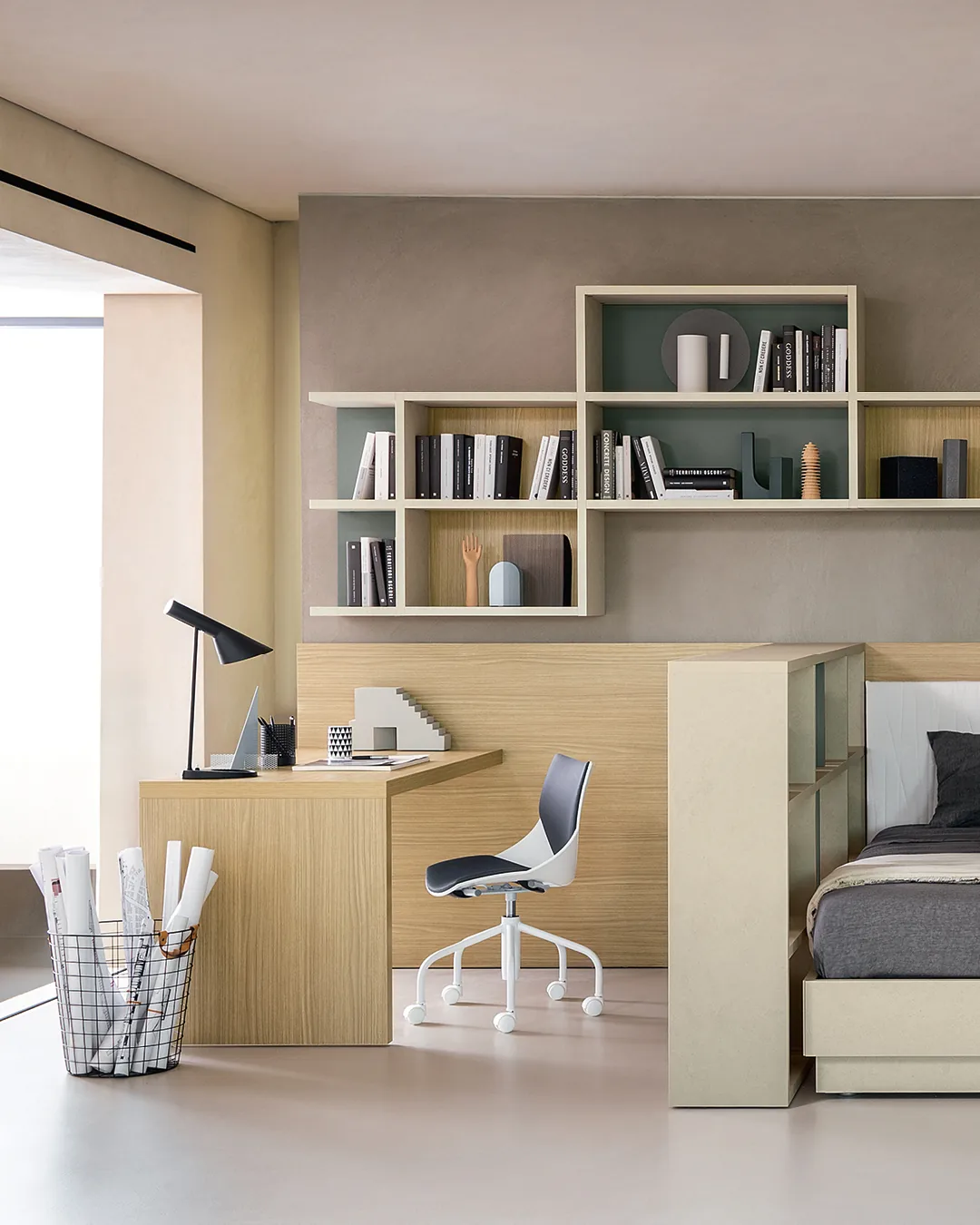
Waist-high shelves beside the bed, with a desk on the other side. From the doorway, the bed is half hidden and the work spot looks tidy.
A low bookshelf does something a tall screen can’t. It keeps the sight line open, so the long room still feels airy and daylight reaches both ends. Of all the bedroom room divider ideas, it’s also the one that adds the most storage.
Set it up so it works on both sides:
- Choose an open-backed unit so you can reach books from either side.
- Pick a height close to the top of your headboard.
- Keep the top clear enough to work as a nightstand.
Anchor it to the wall or floor. A freestanding shelf can tip if someone leans on it.
5. Put Tall Furniture on the Short Walls
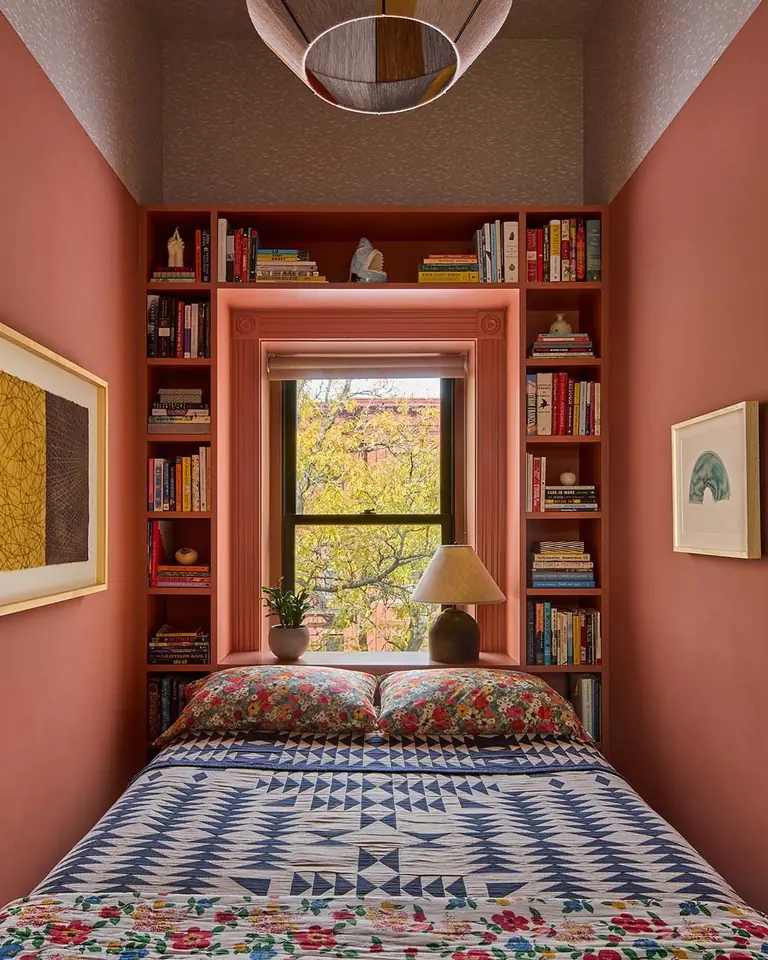
Here’s a simple rule. Tall pieces go on the short walls. Low pieces go on the long ones.
A tall bookcase on a long wall eats into the narrowest part of the room. Put it on a short end wall instead, and it squares the room off, so it feels less like a corridor. That one swap helps almost any rectangular bedroom.
Tall pieces that suit an end wall:
- Built-in shelves framing a window
- A wardrobe or armoire beside the door
- A tall, slim dresser
Paint built-ins the same color as the walls so they blend in instead of looking bulky. Then keep the long walls light, with one or two framed prints.
💡 Quick Tip
Renting? Stand two matching bookcases on either side of the window for a similar built-in look. Add a shelf board across the top to connect them, and strap both cases to the wall.
6. Swap Nightstands for Floating Shelves
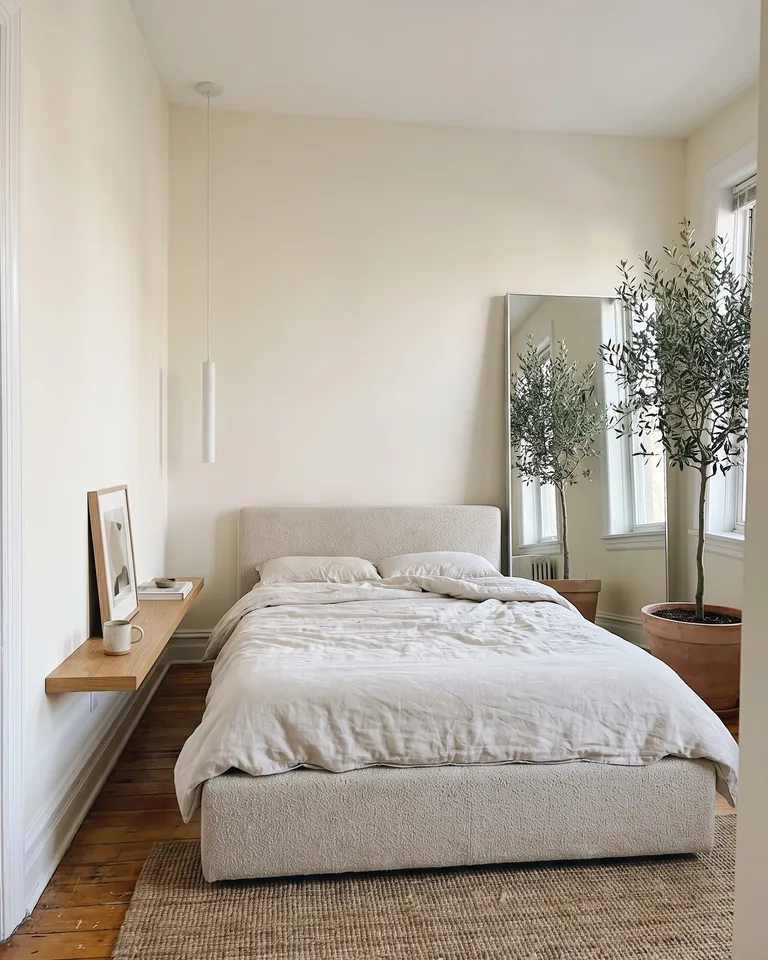
Most people squeeze a full nightstand into the gap beside the bed. In a narrow room, that box blocks the exact space you need to climb in and out.
A floating shelf fixes it. You still get a spot for your phone and morning coffee, and the floor underneath stays open. Warm oak against cream walls looks calm and clean.
How to get it right:
- Mount it at mattress height or a touch above.
- Keep it deep enough for a mug and a book, and no deeper.
- Lean one small framed print against the wall for a styled look.
Hang a slim pendant light beside it, and the shelf stays free of lamp clutter.
7. Hang Lamps on the Wall
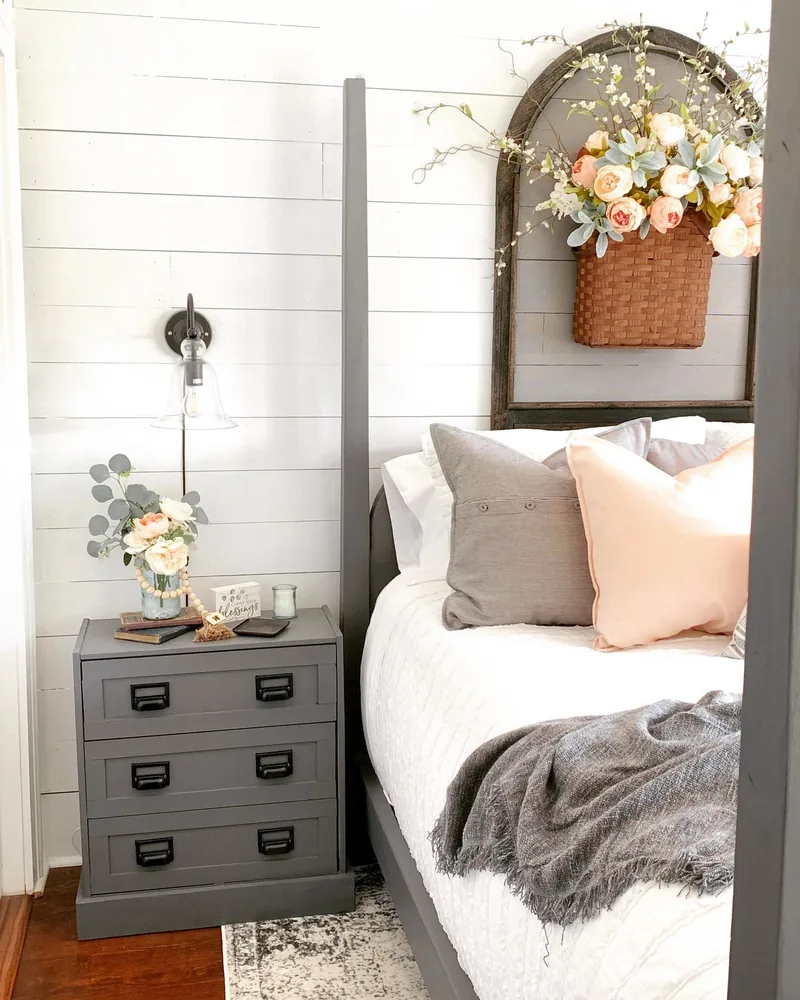
It’s late, the book is finally getting good, and the lamp wobbles every time you bump the nightstand. A wall lamp puts an end to that.
When the light moves onto the wall, the top of a small nightstand opens up, and no lampshade sticks out into the narrow walkway. A clear glass bell shade on a dark arm looks right at home on white shiplap. It also lets the light spread out instead of trapping it inside a fabric shade.
Plug-in sconces don’t need an electrician. Run the cord straight down the wall so it looks like part of the design.
Sit up in bed and hang the shade just above your shoulder.
Check these before you hang it
8. Paint the Short Walls a Darker Color
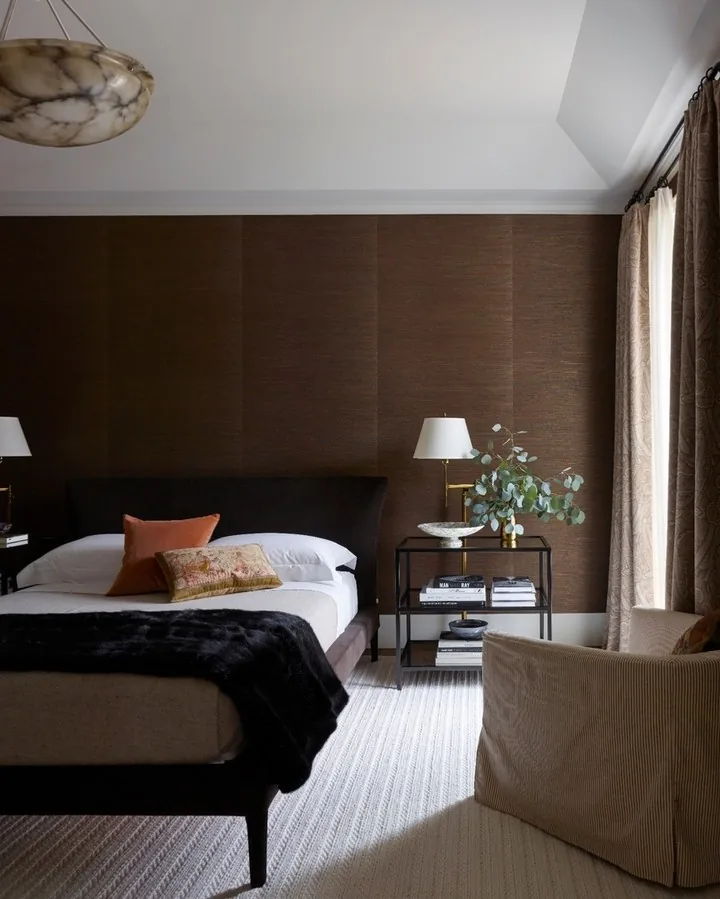
Dark paint makes a room look smaller. That’s the common belief. In a long bedroom, though, it can actually help.
A deep color on the far short wall seems to come forward a little. The room looks shorter and better balanced, and less like a tunnel. Keep the long walls and the ceiling lighter so the width still feels open.
Deep shades worth testing:
- Warm chocolate brown
- Deep olive green
- Inky navy
Want texture too? Grasscloth wallpaper in a rich brown adds a soft, woven look behind the bed. White bedding, one rust pillow, and a bright white ceiling keep it cozy instead of heavy.
Pick the short wall you see first from the door.
Use a matte or eggshell finish so the color stays soft.
Test a big swatch at night, under lamp light.
Painting both long walls dark, which squeezes the width.
Dark walls, dark floors, and dark bedding all at once.
A glossy finish that shows every bump in the wall.
9. Lay the Rug Across the Room
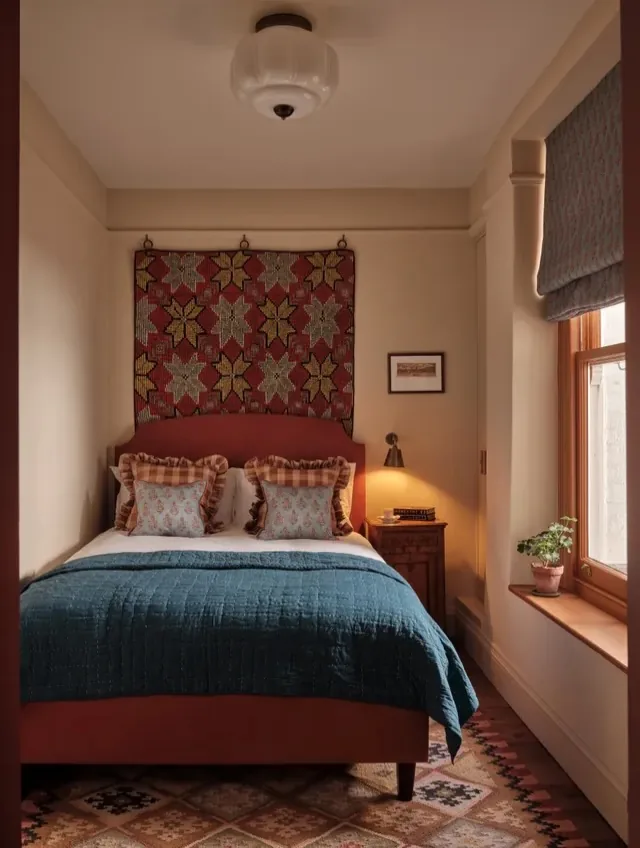
Turn the rug sideways. Run it across the room under the bed instead of down the long side.
A rug laid lengthwise points straight down the room and stretches it even more. Laid across, it pulls your eye from wall to wall, which is one of the easiest ways to make a narrow room look wider. It also gives your feet a soft landing on both sides of the bed.
A flat-woven kilim or low-pile rug works best, because the door can swing over it without catching. A busy pattern also hides the everyday dirt that builds up near the doorway.
Stop the rug a few inches short of each wall so a strip of floor frames it.
- ▸Width: long enough to reach almost wall to wall across the room.
- ▸Depth: tucked under the lower part of the bed, with a good stretch showing past the foot.
- ▸Grip: a thin non-slip pad underneath so the edges stay flat.
- ▸Color: repeat one shade from your bedding or wall art so the rug feels connected to the bed.
10. Make a Reading Nook by the Window
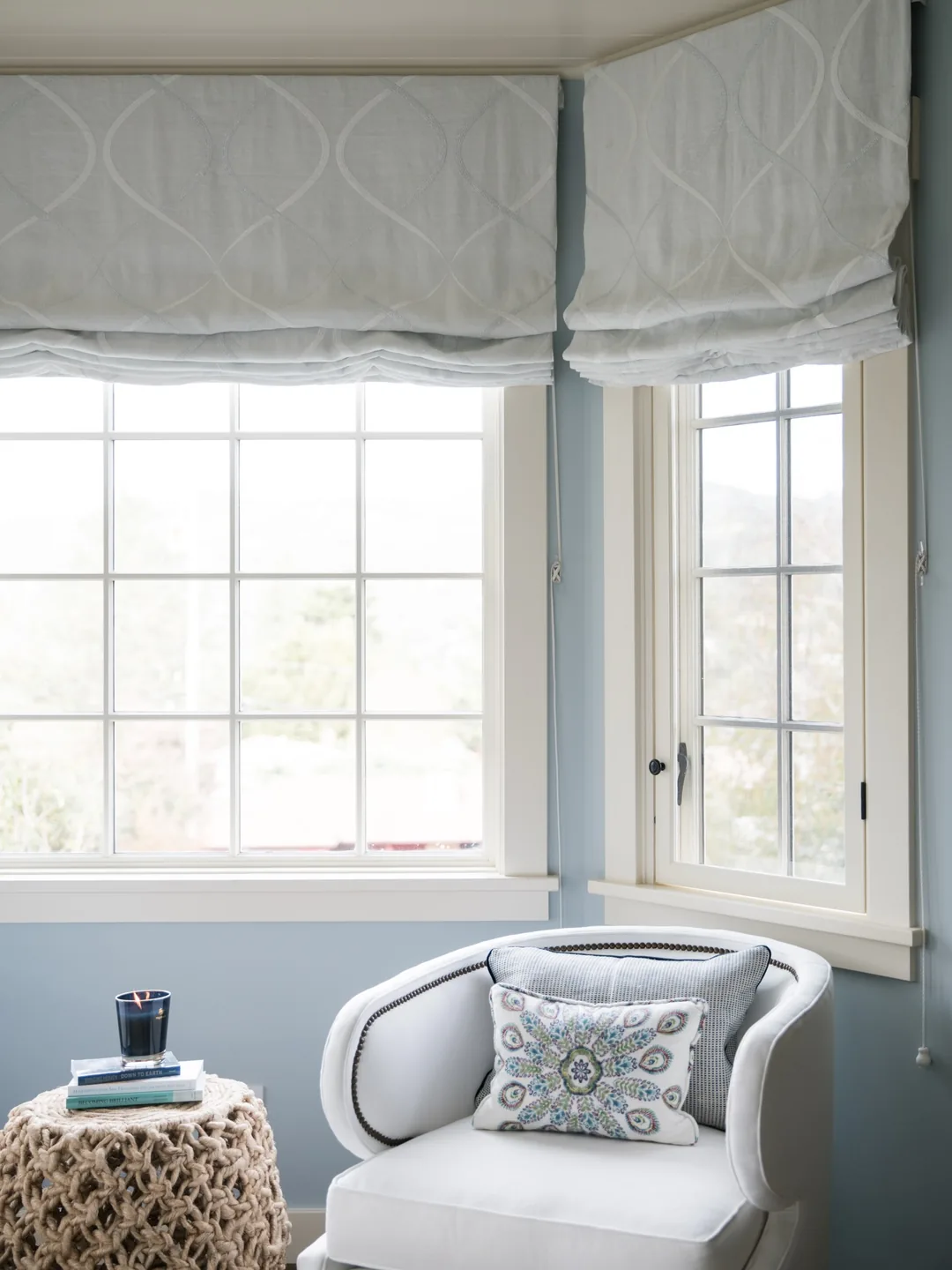
The window end of a long bedroom usually gets the best light and the least use. It’s where the spare boxes and the drying rack tend to end up.
Give it a real job instead. One comfy barrel chair angled toward the glass, a small side table, and a pillow you love are all it takes. A chunky rope or woven stool makes a soft side table that sits nicely beside the chair.
For the window, relaxed Roman shades in a light fabric cut the glare during the day. They fold up neatly when you want the view back.
Pick a chair with a rounded back. It fits a corner better than a boxy armchair, and there’s no sharp edge to catch your knee on.
11. Add a Slim Desk at the Far End
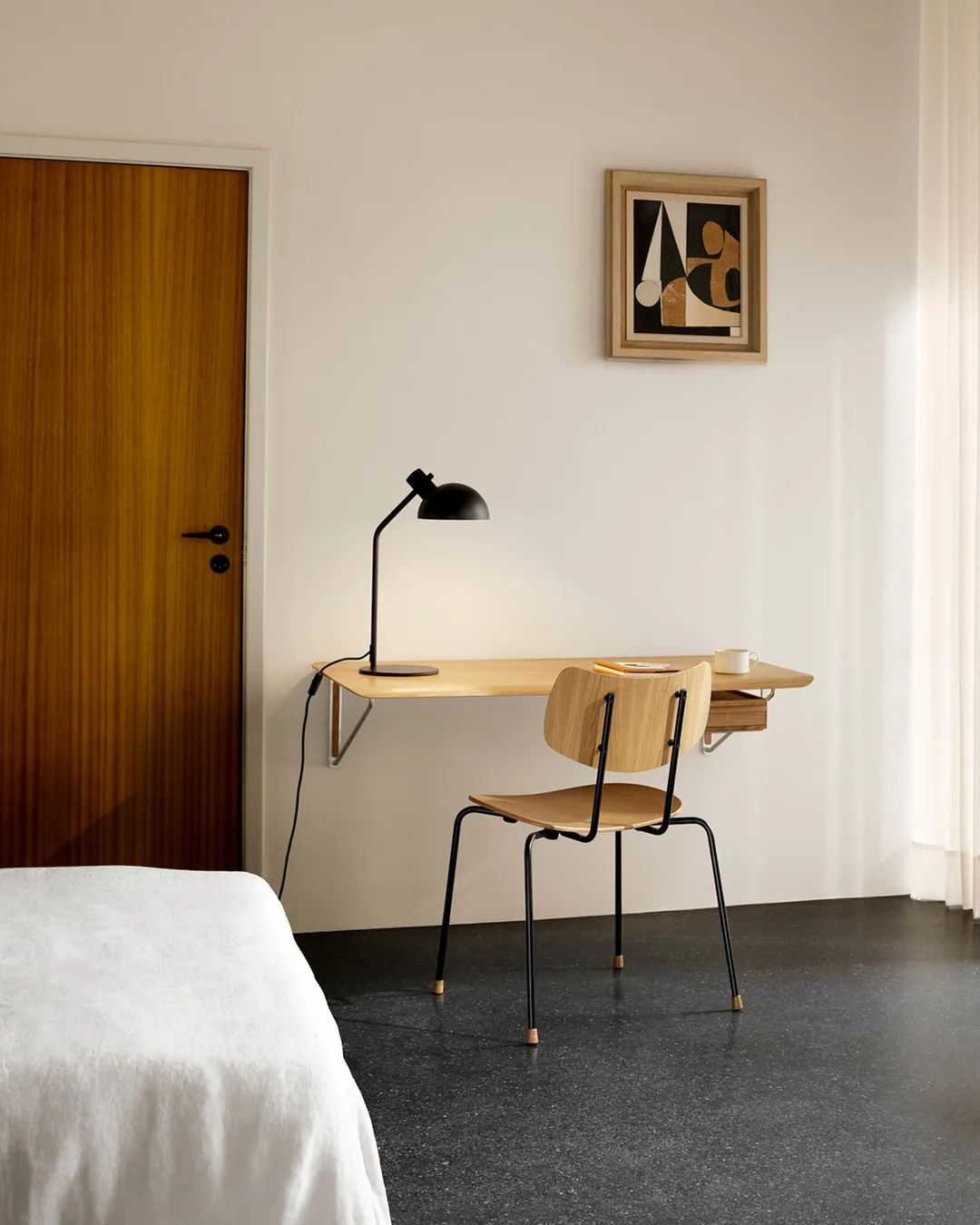
A desk on the wall gives you a real place to work without putting one more leg on the floor.
That matters in a long room, where the end away from the bed often has room for a chair and little else. A wall-mounted oak top on simple brackets, with one small drawer underneath, holds a laptop, a lamp, and a coffee cup. When you’re done, the chair slides right under.
To make it feel calm next to the bed:
- Keep the top only as deep as a laptop and a notebook need.
- Pick a lamp with a dark shade that points light down onto the desk.
- Hang one framed print above it so it looks like decor, not an office.
Clip the lamp cord to a bracket and run it straight down the wall.
| Wall-Mounted Desk | Console Table | |
|---|---|---|
| Floor space | Floor stays open underneath | Four legs, but slim ones |
| Setup | Drill brackets into wall studs | Just set it in place |
| Best for | Homeowners who want the lightest look | Renters, or anyone who rearranges often |
| Watch for | Staying within the brackets’ weight limit | Some tops are too shallow for a laptop and mouse |
12. Choose a Bed With Drawers Underneath
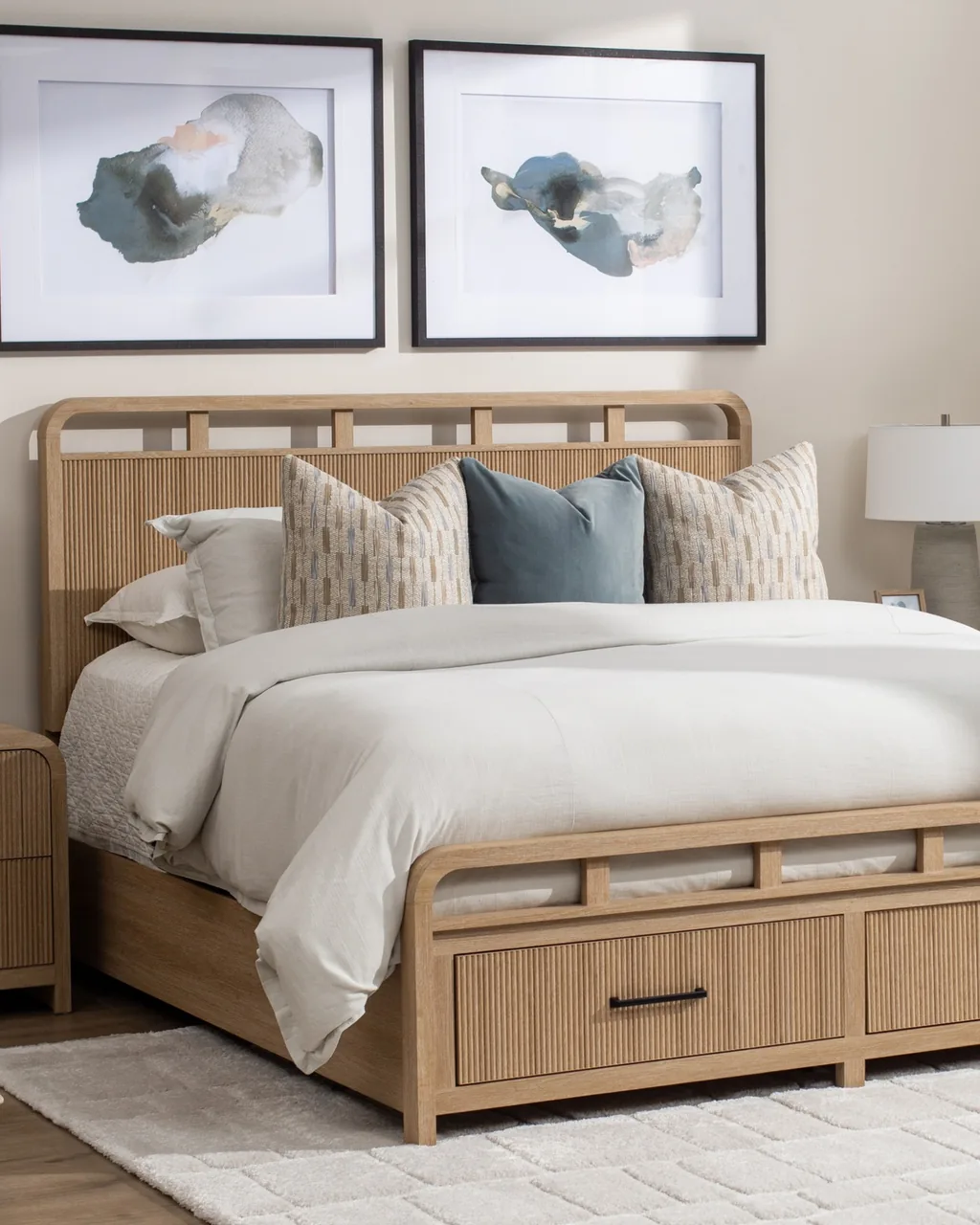
Two wide drawers sit right in the footboard of this oak bed, with fluted fronts and a slim black pull. In a narrow room, that one detail makes a big difference.
Drawers on the side of a bed need open floor to pull out. If your bed sits close to a long wall, they may only open halfway. Drawers at the foot open toward the end of the room, where there’s usually more space.
Fill them with things you don’t reach for every day:
- Spare sheets and pillowcases
- Winter blankets
- Off-season sweaters
Light oak and soft white bedding keep a storage bed from looking bulky.
Drawers only help if they open all the way. Measure the floor in front of them before you buy, and leave enough room to kneel down.
13. Put a Bench at the Foot of the Bed
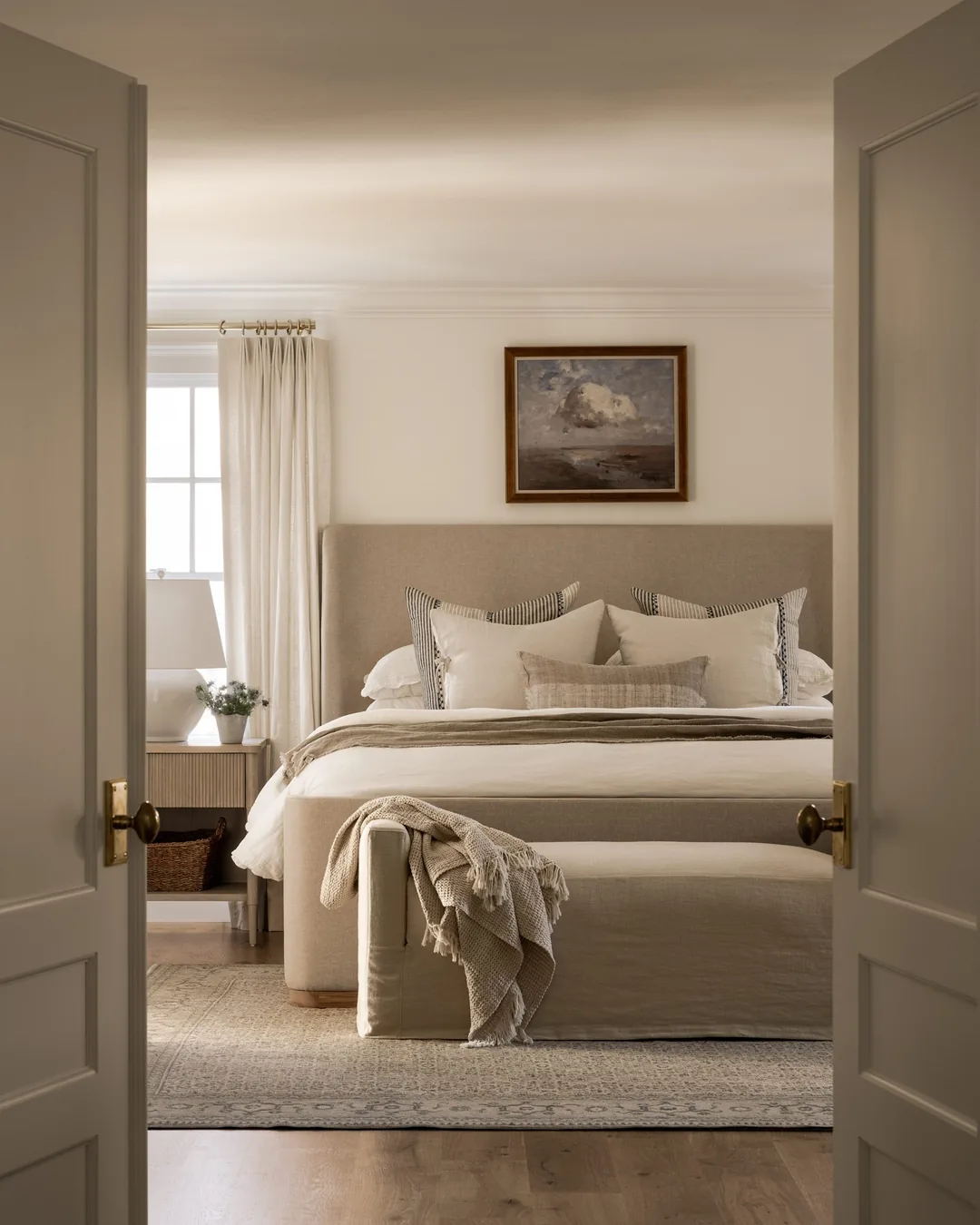
Throw pillows on the floor every night. Shoes kicked off in the walkway. A narrow room has nowhere for these little things to go.
A bench at the foot of the bed gives them a home. It’s a seat for putting on shoes, a place to drop a bag, and a spot for the throw at bedtime. When you’re arranging furniture in a long bedroom, a bench also marks where the sleep area ends and the walkway begins.
Go slim and backless so it never sticks out into the path. A slipcovered linen bench in the same soft tone as the headboard looks calm and blends into the bed, so it doesn’t read as one more piece of furniture.
Drape a chunky knit throw over one end to finish it.
Pick a bench that fits
14. Hang a Big Mirror on the Long Wall
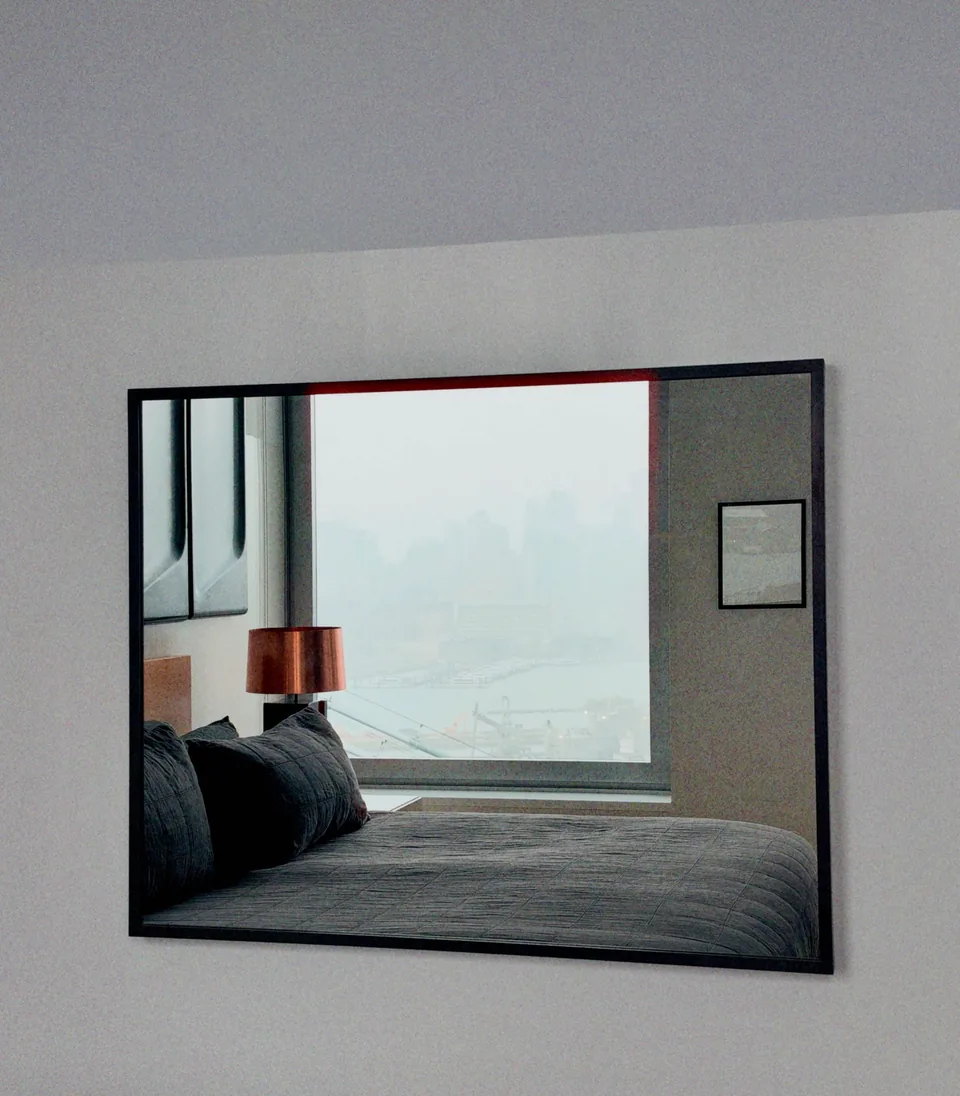
Lots of people hang their biggest mirror on the far short wall. In a long room, that makes the tunnel look twice as long.
Hang it on a long wall instead, ideally across from a window. The reflection then opens the room sideways, so it looks wider, and daylight reaches farther in. A simple rectangle with a thin black frame keeps the look clean and lets the view do the work.
Before you drill, check what it will reflect from the bed and from the doorway. A window, a lamp, or a calm stretch of bedding beats a pile of laundry every time.
Mirrors this size are heavy. Use a French cleat or hooks rated for the weight.
A mirror on the end wall faces the door and reflects the hallway. The room looks longer, and the bed seems even farther away.
The mirror hangs on the long wall across from the window. It catches daylight and the bed, so the room looks wider and brighter from every spot.
15. Hang Curtains Wider Than the Window
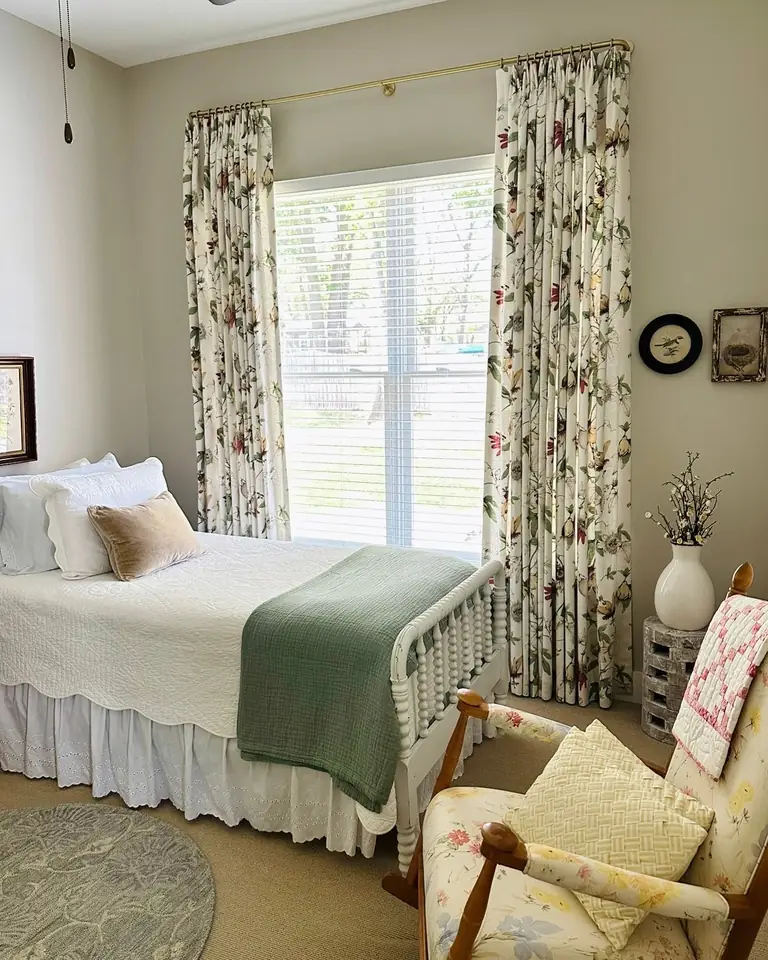
Mount the curtain rod higher and wider than the window frame. It’s a small change that makes the window, and the wall around it, look much bigger.
With the curtains open, the panels rest against the wall instead of covering the glass, so more light comes in. In a narrow room, the extra width also helps balance out the long shape.
Patterned curtains work nicely here. A soft floral on a cream background, hung from a brass rod, adds color without blocking the view. Repeat one color from the print somewhere else, like a sage throw on the bed.
Hang a slim blind behind the panels if you need daytime privacy.
Mount the rod a few inches below the ceiling or crown molding.
Extend it past the frame on both sides, far enough that open panels cover wall, not glass.
Choose panels long enough to just kiss the floor.
Use pinch-pleat or ring tops so the panels slide easily and fold into neat columns.
16. Choose Round Pieces for Tight Spots
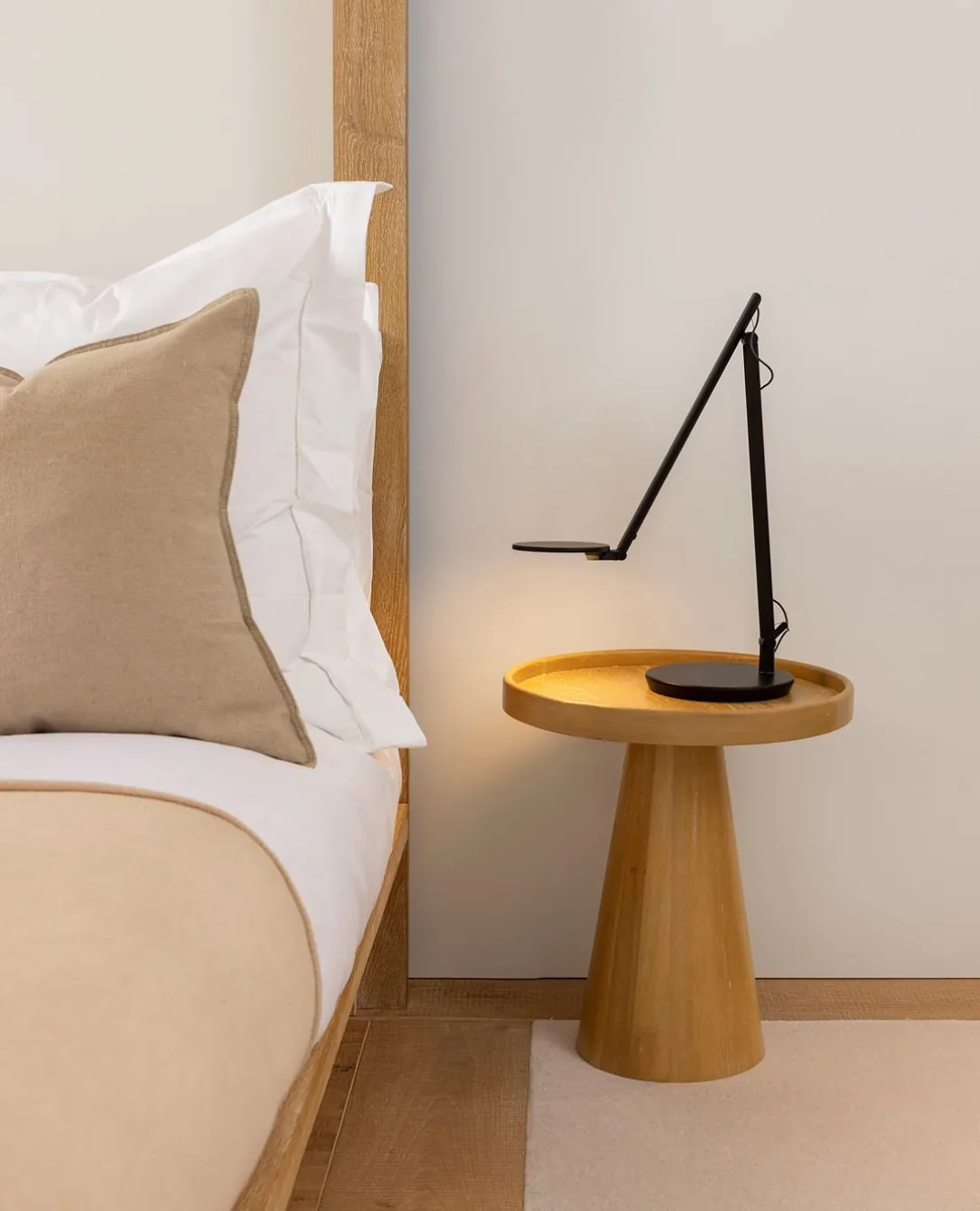
A square side table and a round one can hold the same lamp and the same book. Only one of them catches your hip on the way to bed.
In a narrow room, almost every piece sits close to a walkway. Round shapes have no sharp corners, so you can slip past them easily, even half asleep. A pedestal base helps even more, because one center post leaves more open floor than four legs.
This oak table with a raised tray edge is a smart pick beside the bed. The lip keeps your phone or a ring from sliding off, and a slim task lamp fits on top without crowding it.
Curves also soften all the straight lines in a long, boxy room.
Use round side tables where the path is tightest.
Repeat the shape with a round mirror, pouf, or rug.
Pick a pedestal base so feet and the vacuum glide around it.
Square tables with sharp corners right beside the walkway.
Wide round tables that stick out past the edge of the bed.
Flat tops with no lip if things often slide off your nightstand.
17. Try a Daybed in Very Narrow Rooms
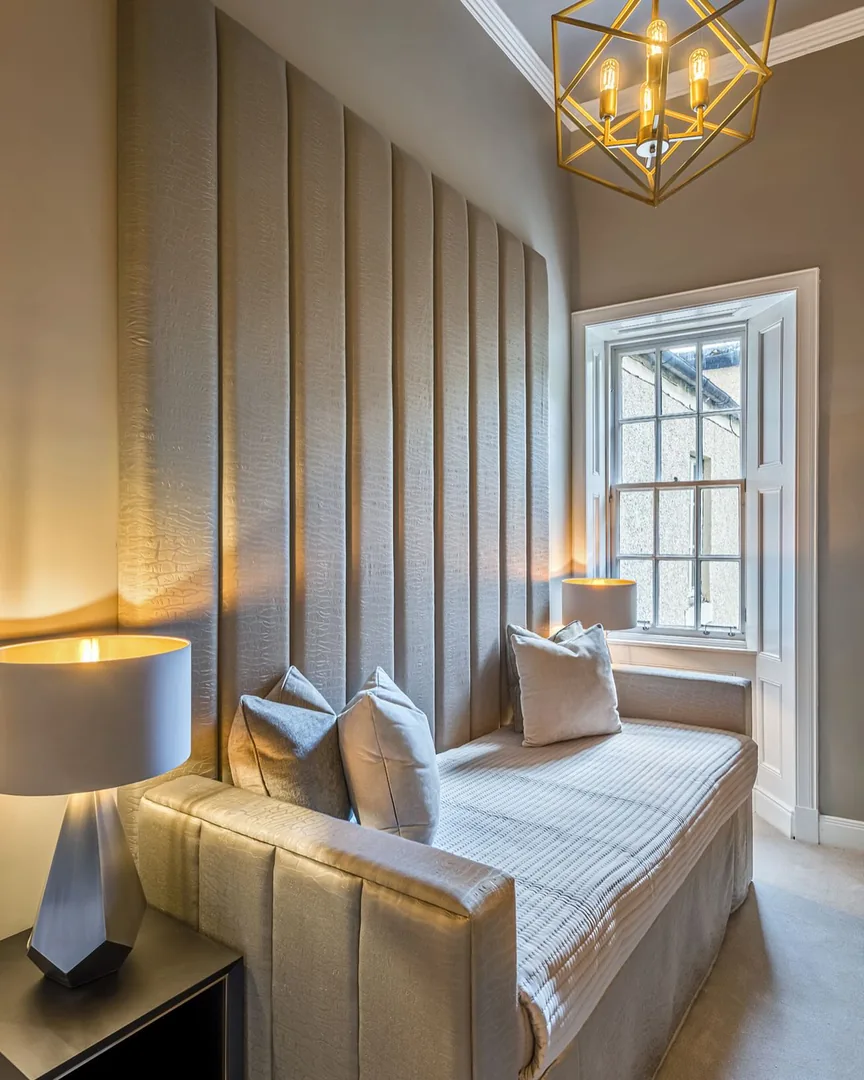
A guest room barely wider than a hallway. A full bed would swallow it, and you’d have to climb over the mattress to reach the window.
A daybed solves that. It sits flat against the long wall, works as a sofa during the day, and turns into a bed at night. Line a few pillows along the back, and it looks like a cozy lounging spot instead of a bed squeezed into a room.
A tall upholstered panel behind it adds softness and height. Channel tufting in soft gray or taupe keeps the look calm. Hang one statement pendant above, and the room gets a clear focal point.
If you host guests often, choose a daybed with a trundle that rolls out underneath.
📌 Good To Know
Most daybeds take a twin mattress, but the frame adds extra length and depth. Measure the wall and the room’s width before you order, and leave space in front for a trundle to roll out.
Small Changes, a Better Layout
A long, narrow bedroom doesn’t need more space. It needs a plan. Once the bed is on the right wall and the walking path is clear, the rest of the room gets much easier to figure out.
You don’t have to try all 17 at once. Start with the layout ideas near the top, then add the softer touches over a few weekends. Even one change, like turning the rug sideways or moving a mirror, can make the room feel different by bedtime.
Come back to these long narrow bedroom decorating ideas whenever you’re ready for the next step.
Save this list to your bedroom board so it’s easy to find when you start rearranging.