20 Modern Farmhouse Living Room Decor Ideas That Feel Warm and Fresh
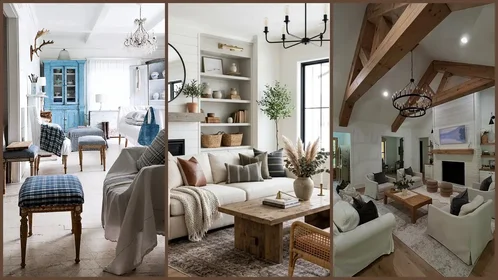
You want a living room that feels like a deep breath. Soft white walls, warm wood, a sofa you can sink into with a blanket, and a little glow from the fireplace when the evenings turn cool.
Getting there is the tricky part. Lean too rustic and the room starts to feel heavy and dated, all dark stain and wordy signs. Lean too modern and it goes cold, like a showroom nobody sits in. Modern farmhouse sits right in the middle. It keeps the old wood, linen, and iron you love, then lightens them with clean lines, fresh white, and more breathing room.
These modern farmhouse living room decor ideas cover the whole room. You’ll find ideas for the walls, the ceiling, the mantel, the sofa, the floor, and that empty corner you never know what to do with.
Most are weekend projects, and a few cost next to nothing. Start with the one that fits your room best, then build from there.
1. Start With Warm White Walls
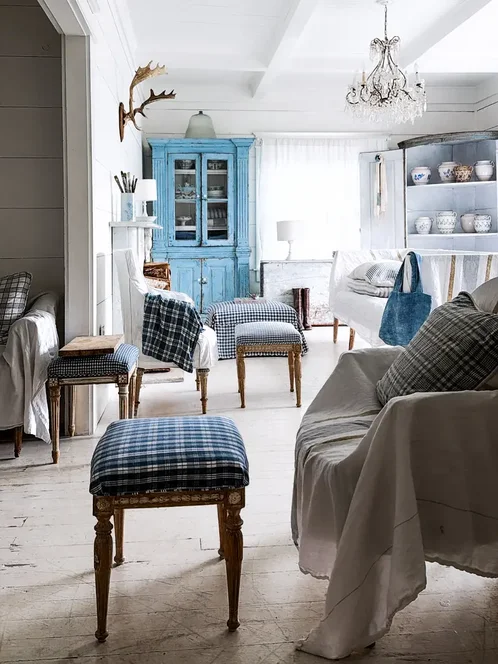
White walls make every bit of wood in the room look warmer. Old pine, wide floorboards, and dark rustic beams all stand out against them.
The catch is picking the right white. Stark, bright white can look cold and a little clinical next to rustic wood. A warm white with a hint of cream feels softer and more lived in.
Before you buy a gallon:
- Paint big swatches on two or three walls, not one small square
- Check them in morning light and again with lamps on at night
- Hold each one next to your floor and your largest wood piece
Warm white is the quiet base of a neutral color palette. Every other idea on this list sits on top of it.
Pick your white by the light in your room
2. Build a Shiplap Accent Wall
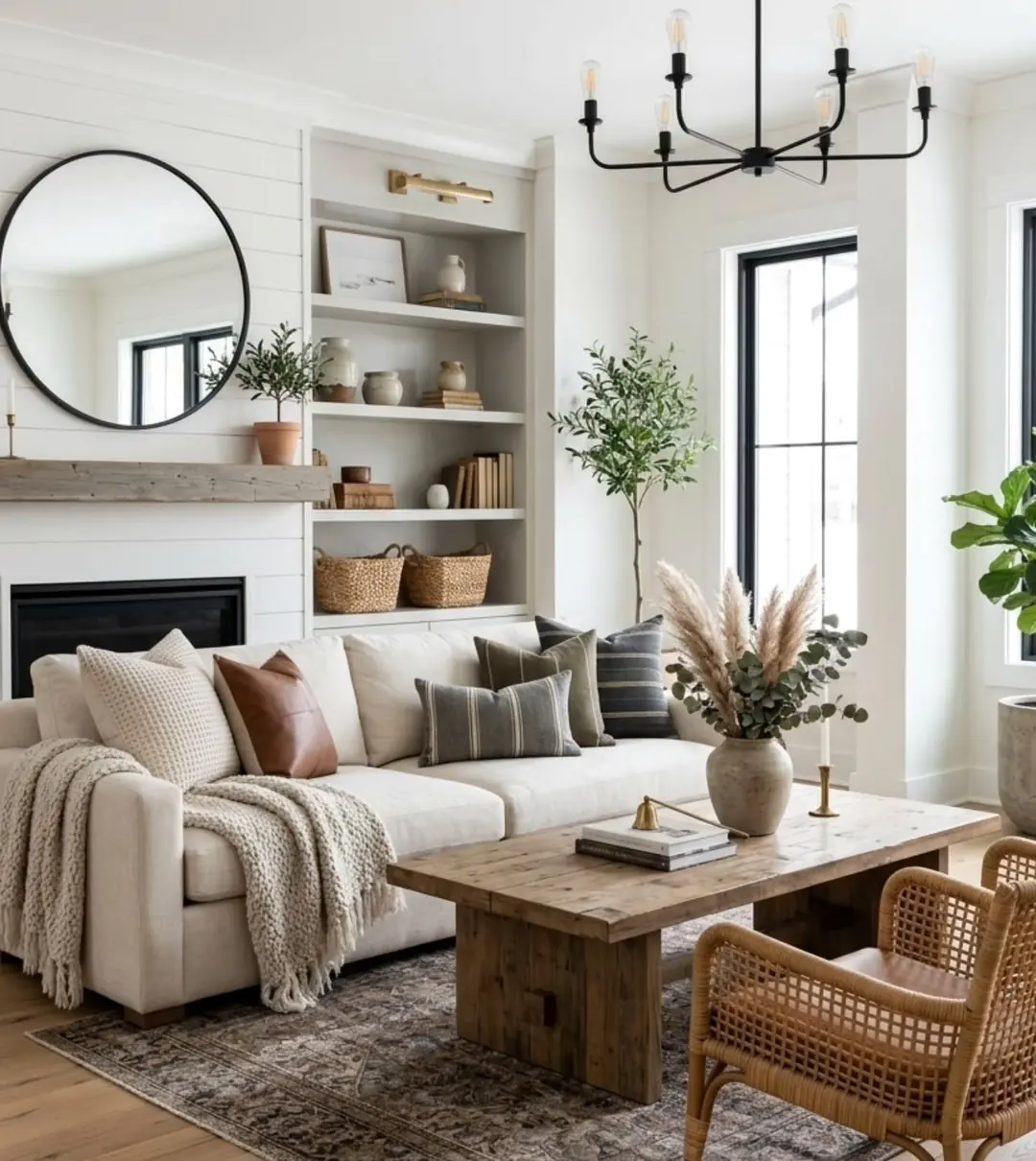
One wall. Boards running sideways. That’s all a shiplap accent wall needs to bring farmhouse texture into the room.
Choose the wall your eye lands on first, which is usually the fireplace wall or the one behind the sofa. Horizontal boards make a wall look wider, so they suit smaller rooms too.
Two ways to get the boards:
- Pre-primed shiplap with a built-in overlap, ready to nail up
- Plywood sheets cut into 6 or 8 inch strips, the budget route
Paint the boards the same white as the rest of the room. The shadow lines between them do the work. A round black mirror on top adds a clean, modern shape against all those straight lines.
How to put it up
Find the studs with a stud finder and mark them in pencil. Draw a level line near the floor for your first board.
Nail each board into the studs, working from the bottom up. Slip a coin or thin spacer between rows so every gap stays even.
Fill the nail holes and caulk where the boards meet the corners and ceiling. Paint the gaps with a brush first, then roll the flat faces.
3. Add Faux Wood Beams Overhead
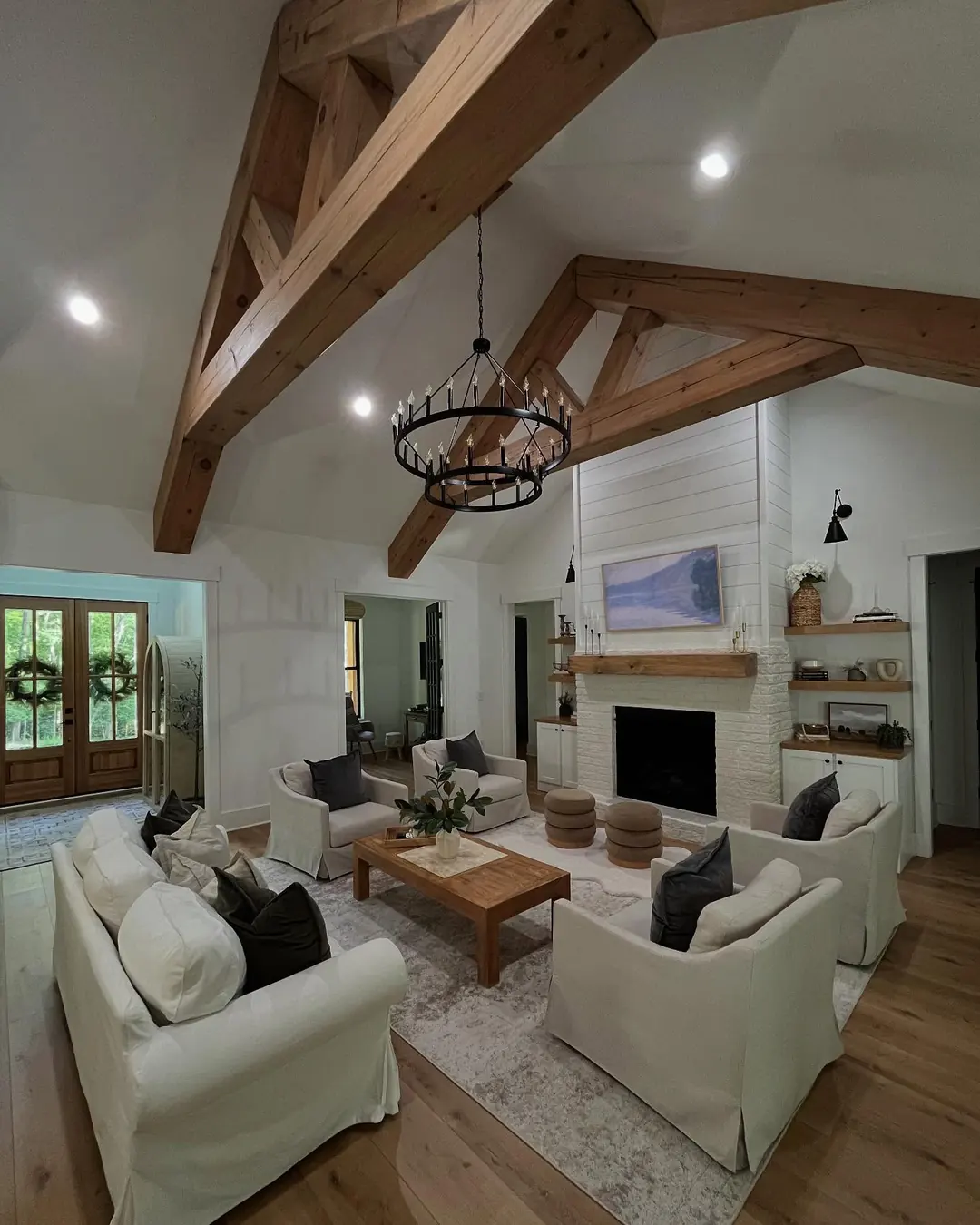
Tall, plain ceilings can make a living room feel a bit like a gym. Echoey, bright, and hard to cozy up in.
Wood beams fix that. They pull the eye up and make the room feel like it has a history. Faux beams are hollow three-sided boxes made from light wood or foam, stained to look like old timber. They slip over wood blocks screwed into the ceiling joists, so nobody has to lift a heavy log.
Get the wood beam ceiling look right:
- Match the stain to your mantel, coffee table, or floor
- Line the beams up with the joists and space them evenly
- On a standard 8 foot ceiling, choose slimmer beams so the room doesn’t feel lower
4. Style the Mantel in Layers
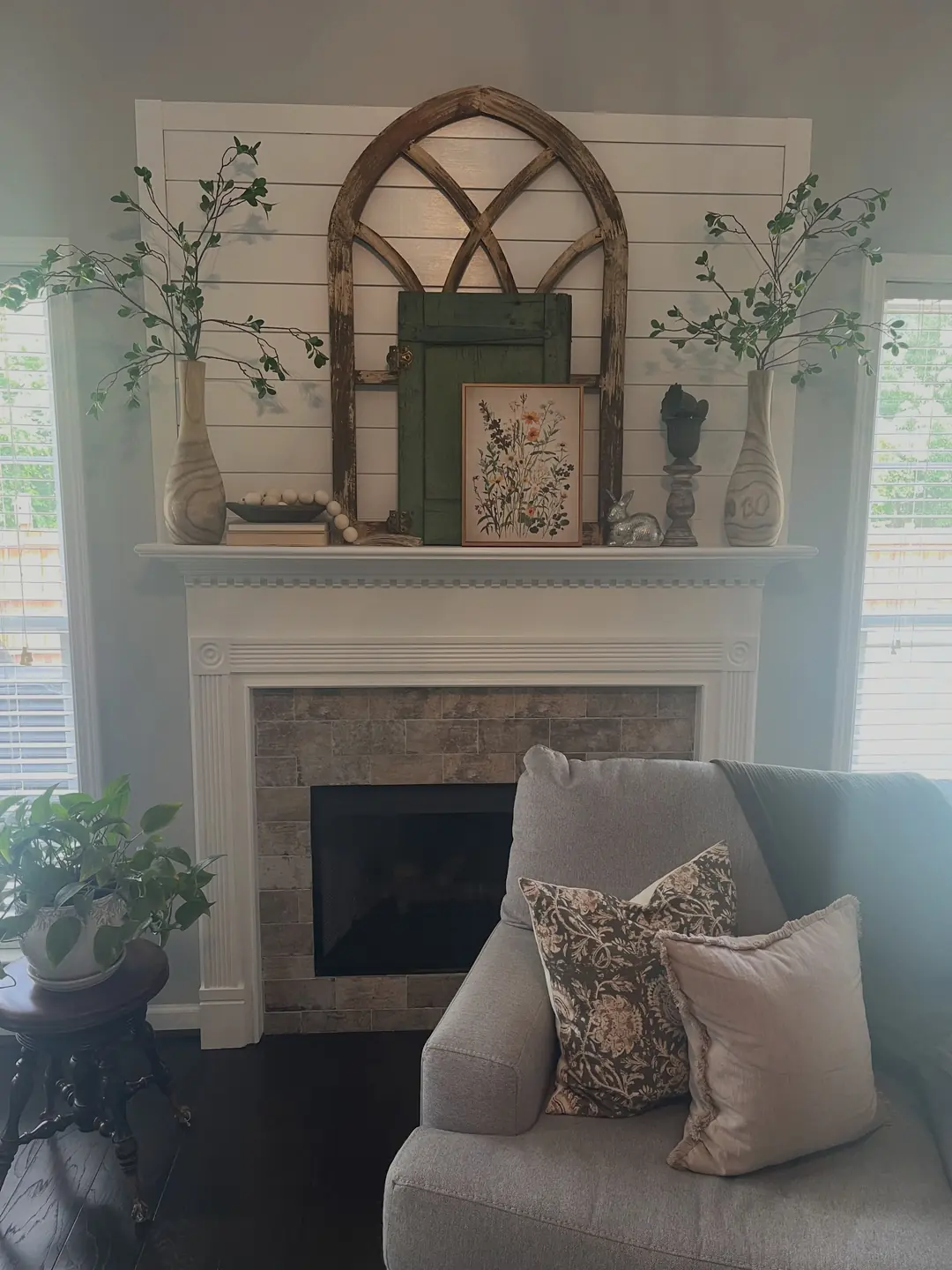
An old arched window frame at the back. A chippy green shutter in front of it. A small flower print leaning in front of that. Three flat pieces stacked in layers give a mantel real depth.
A few rules keep it from looking crowded:
- Lean everything instead of hanging it, so you can swap pieces each season with no new nail holes
- Set the middle layer a little off center
- Let tall vases of loose stems close off each end, like bookends
Leave some bare mantel showing between groups. That empty space is what lets each layer stand out.
What to gather for a layered mantel
5. Pick a Slipcovered Sofa
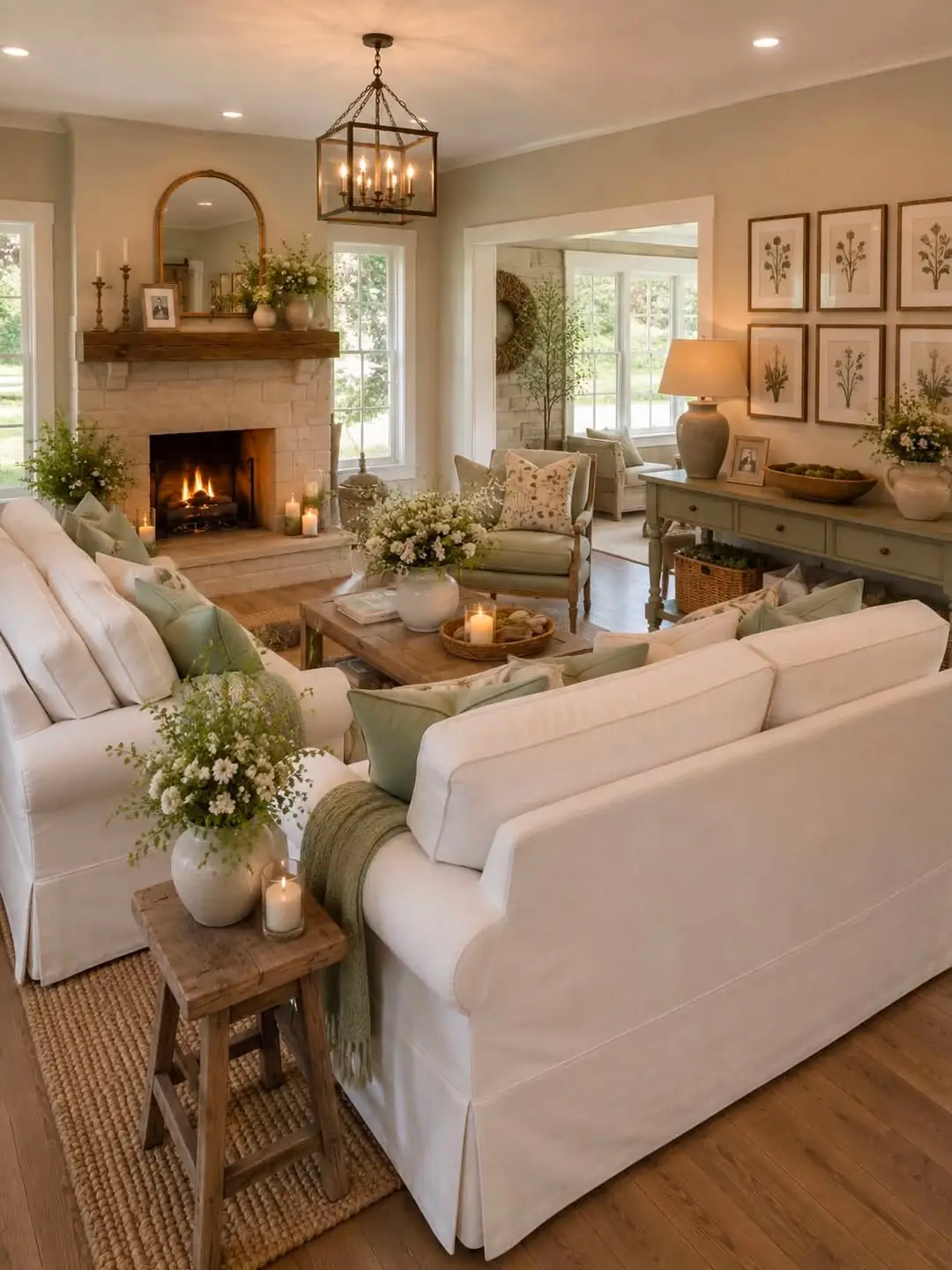
Kids, dogs, and movie night snacks make a white sofa sound like a bad idea. A slipcovered one is actually one of the easiest sofas to live with. Spill something, and you just unzip the cover and wash it.
The loose fit also gives that relaxed, slightly rumpled look that modern farmhouse is known for.
Look for:
- Heavy cotton, linen, or a cotton and linen blend
- A skirted or loose style that covers the legs
- Covers labeled machine washable, not dry clean only
Add color with pillows and a throw in one soft shade, like sage or faded blue, so the white looks fresh instead of plain. After washing, put the cover back on while it’s still slightly damp. It stretches into place and dries smooth.
| Slipcovered | Fixed Upholstery | |
|---|---|---|
| Cleaning | Unzip and wash (check the label first) | Spot clean or call an upholstery cleaner |
| The look | Relaxed, soft, a little rumpled | Crisp, neat, and tailored |
| Kids and pets | Easy to reset after a spill | Safer in darker or stain resistant fabric |
| Changing color later | Buy a new cover | Reupholster or replace the sofa |
| Daily upkeep | Tuck and smooth the cover now and then | Fluff the cushions |
6. Mix Black Metal With Warm Wood
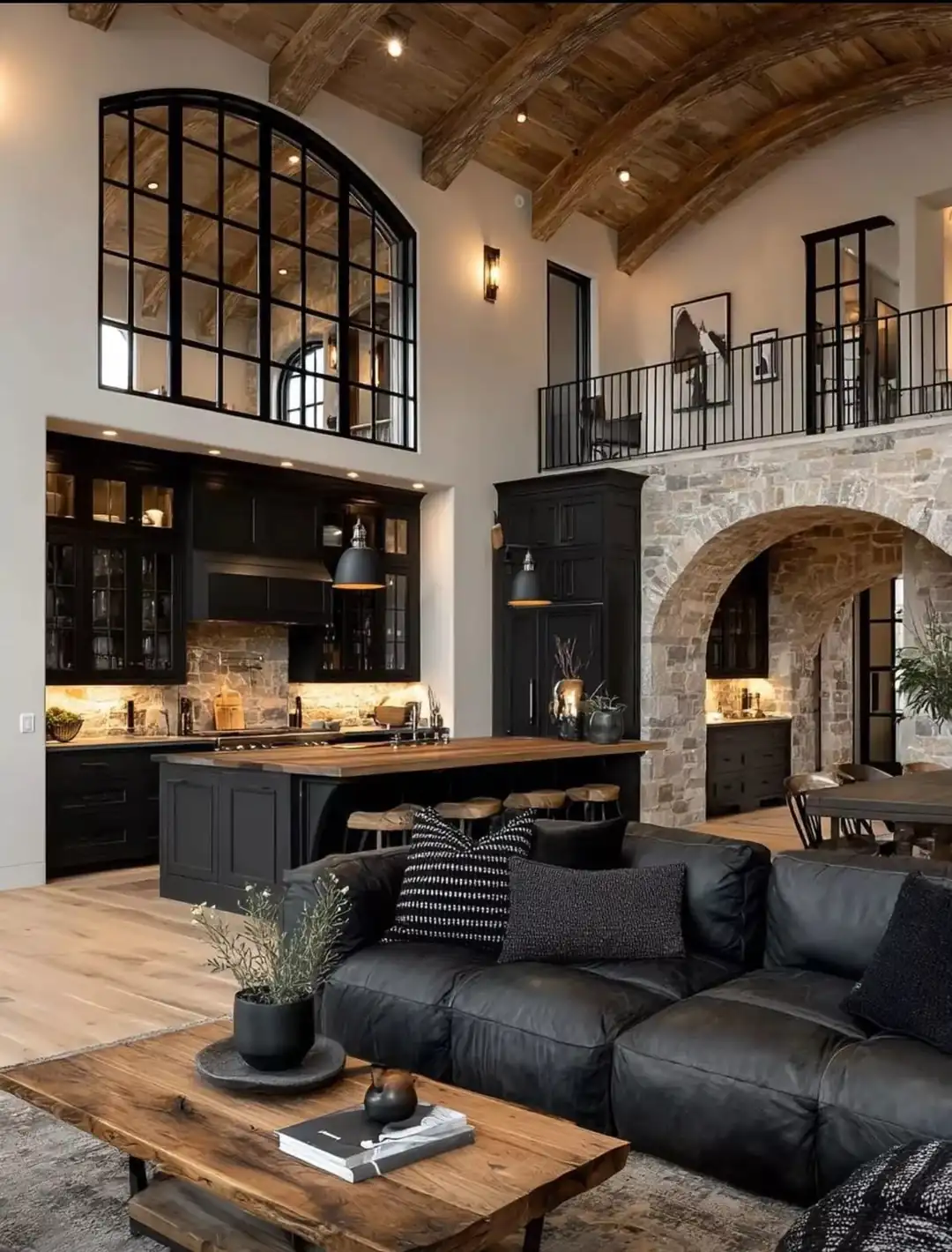
All warm wood can start to feel a little sleepy. All black can feel heavy. Put them together, and each one makes the other look better.
Black metal gives a room crisp lines, almost like an outline on a drawing. Warm wood softens those lines back down.
Easy places to bring in black:
- Window frames and grids
- Pendant lights and wall sconces
- A stair or loft railing
- Metal legs under a wood table
Then repeat the wood in at least two other spots, like ceiling beams and an island top. The live edge coffee table in this room does both jobs at once, with chunky wood on top and black steel underneath.
Repeat black at least three times around the room so it looks planned.
Pick one main wood tone and keep the others close to it.
Use black on thin things like frames, legs, rods, and rails.
One lone black lamp with nothing else in the room to match it.
Shiny, glossy black next to rough wood. Matte or satin black looks more natural.
Black on every big piece in a small, dim room. It can start to feel like a cave.
7. Layer a Jute Rug Under a Soft Rug
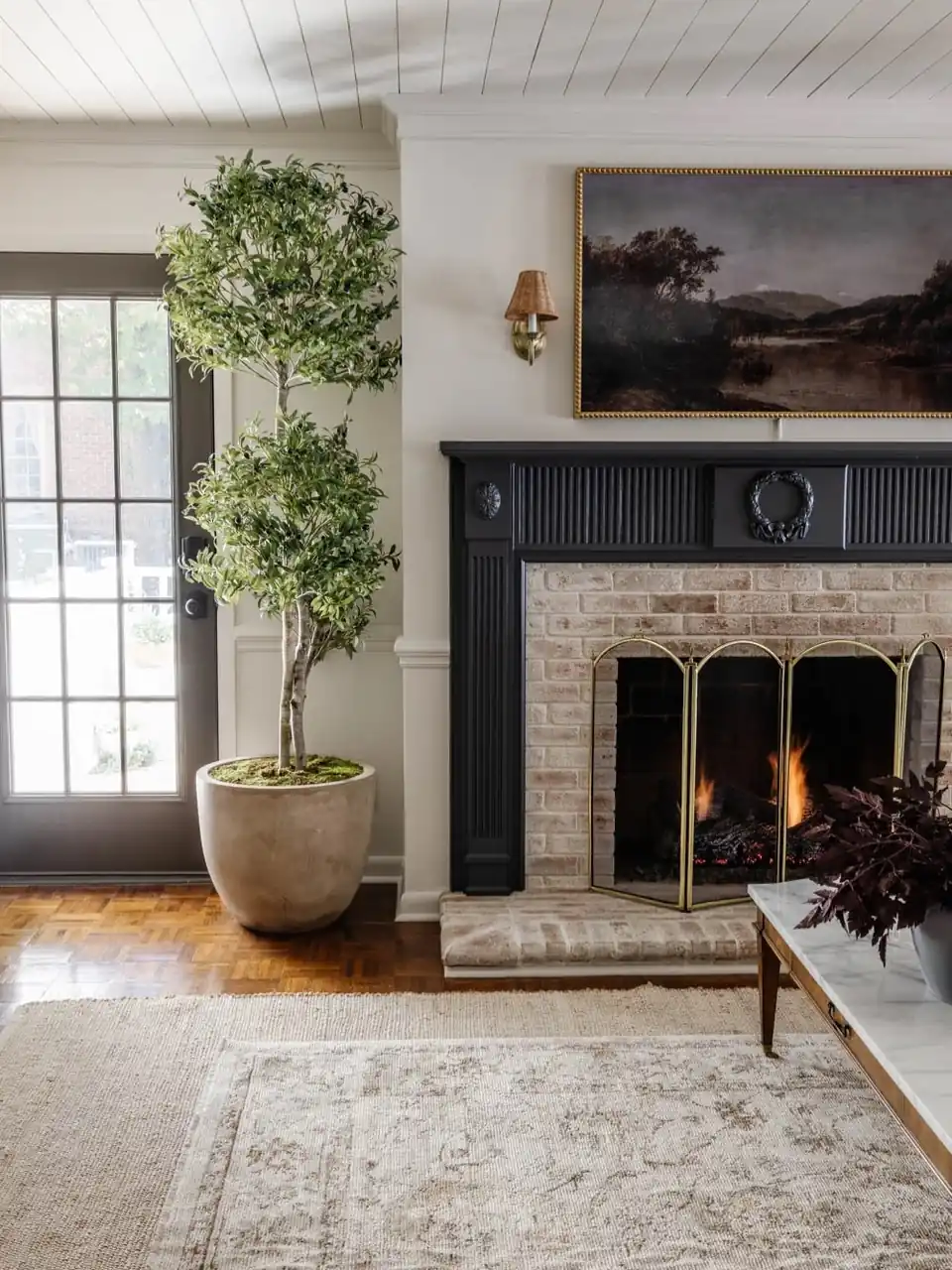
Put a big, plain jute rug down first. Then set a smaller, softer rug on top.
The jute fills the floor and brings that natural, earthy texture. The top rug adds comfort under bare feet and a faded pattern that hides crumbs. It’s also an easy way to save, since a large jute rug usually costs less than a soft rug in the same big size. That means you only have to buy the soft one small.
Sizing that works:
- Leave about 8 to 12 inches of jute showing around the top rug
- Keep both rugs in one color family, like cream and oatmeal
- Pick a low pile top rug so the edges lie flat and don’t trip anyone
One small rug floats in the middle of the floor. None of the sofa legs touch it, bare floor shows on every side, and the seating area looks like it’s drifting apart.
A large jute rug catches the front legs of every seat and pulls the room together. The soft rug on top sits right where feet land, with a faded pattern that adds warmth.
8. Use an Old Trunk as a Coffee Table
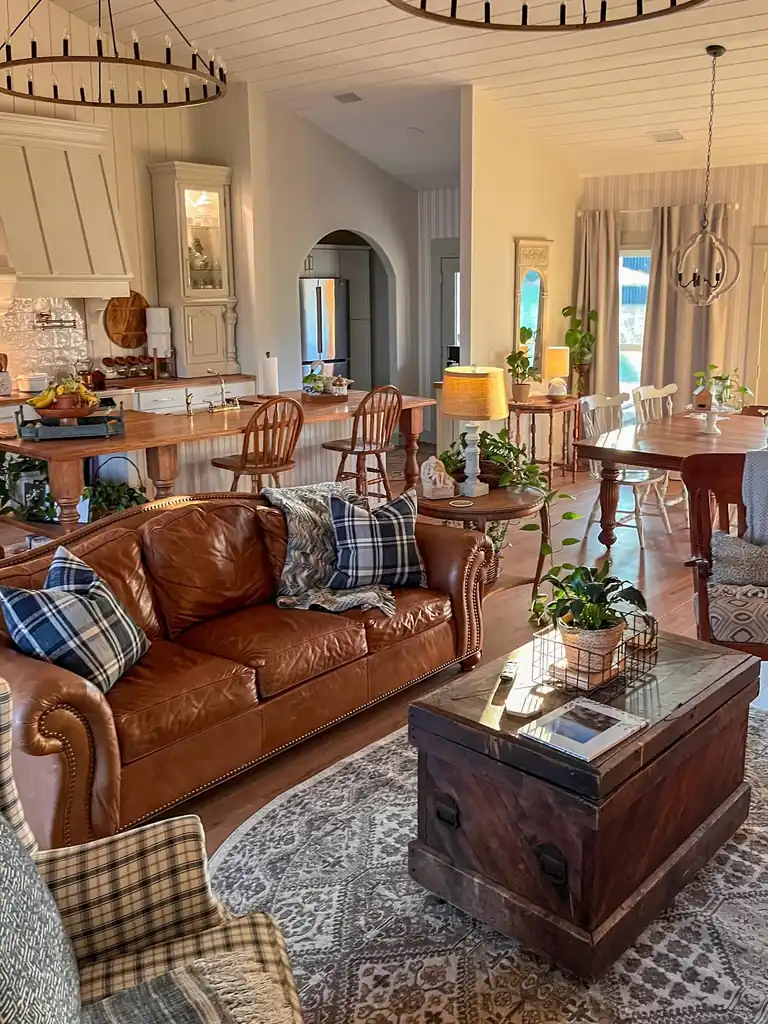
Board games, spare throws, and the remote that always goes missing. An old wooden trunk gives all of them one home and still works as a coffee table.
Look for a trunk about as tall as your sofa seat, or a little lower. A flat lid matters more than you’d think, since a domed top won’t hold a cup of coffee.
Where to find one:
- Thrift stores and estate sales
- Online listings for blanket chests
- The back corners of antique malls
Keep the farmhouse coffee table decor light. A plant in a wire basket and a book or two leave plenty of room for drinks. The worn wood and iron handles do the rest.
💡 Quick Tip
Old trunks often smell musty inside. Wipe the inside with a mix of water and a little white vinegar, leave it open in the sun for a day, then tuck a cedar block in the corner. Stick felt pads under the feet so metal corners don’t scratch your floor. If little ones live with you, add lid support hinges that hold the lid open, so it can’t slam on small fingers.
9. Hang Linen Curtains High and Wide

Curtains hung right at the top of the window frame make the window look small and the ceiling look low. It’s one of the most common living room mistakes, and one of the easiest to fix.
Move the rod up toward the ceiling and let it run past the frame on both sides. When the panels are open, they cover wall instead of glass, so you keep all the daylight.
For the farmhouse look:
- Linen or a linen blend in cream, oatmeal, or soft white
- Pinch pleats or back tabs for neat, even folds
- A slim black or brass rod with simple ends
Let the hems just touch the floor. Puddled curtains look romantic but collect dust and pet hair fast.
How to measure before you buy
Mark the rod height about 4 to 6 inches below the ceiling or crown molding. If that feels too high, go halfway between the window frame and the ceiling.
Let the rod reach 8 to 12 inches past the frame on each side, so open panels rest on the wall.
Measure from the rod rings to the floor for length. For full, soft folds, choose panels that add up to about twice the width of the window.
10. Keep Open Shelves Simple
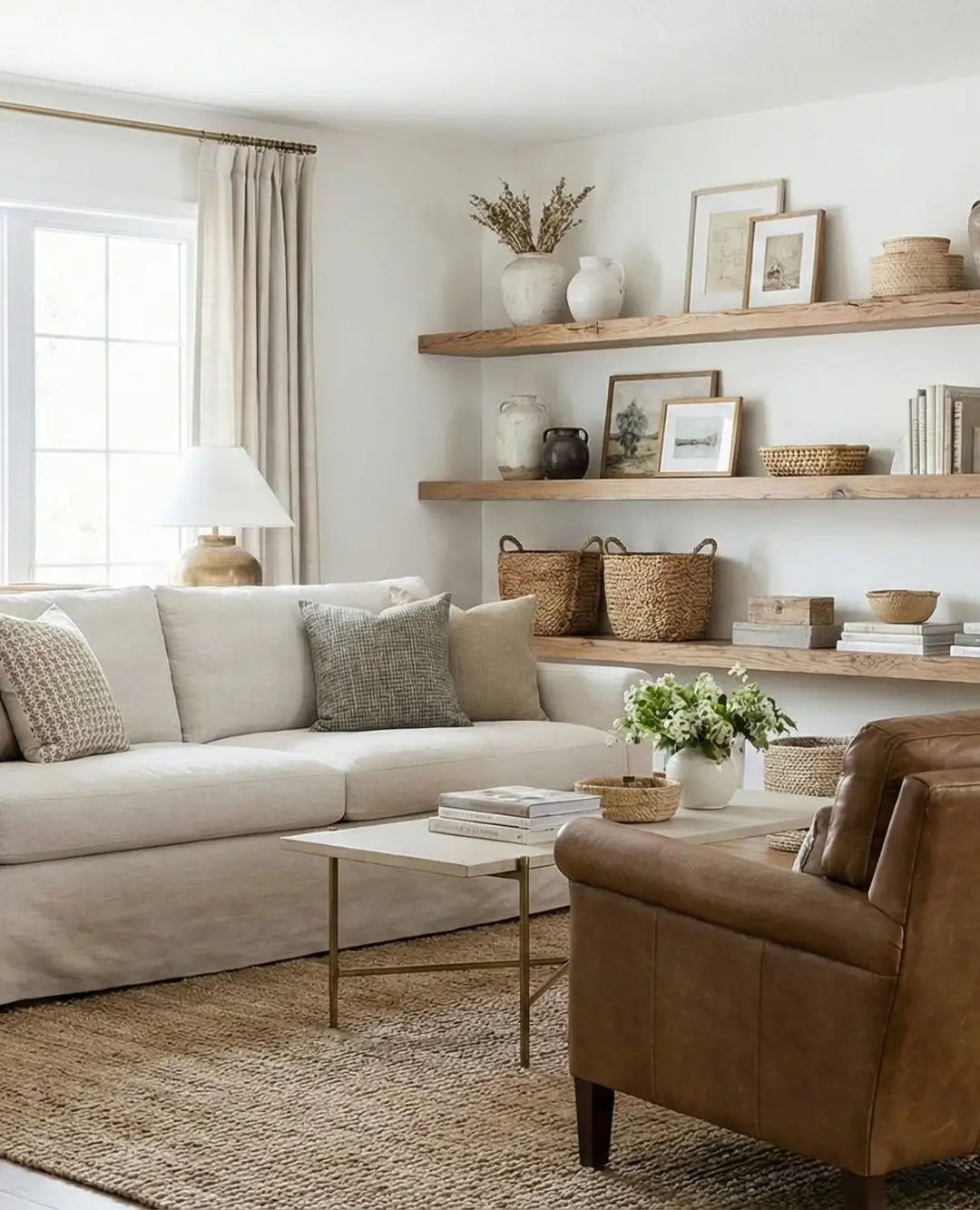
Shelves always look their best right after you style them. Then mail, chargers, and random odds and ends slowly move in. The fix is fewer, bigger pieces.
Chunky wood floating shelves like these already carry a lot of weight on their own, so they don’t need much on them. Long planks that run into a corner also make the wall feel built in.
Ways to keep them calm:
- Group things in twos and threes, then leave a gap
- Mix heights, like a tall vase beside a short stack of books
- Repeat each material on more than one shelf
- Save the bottom shelf for baskets that hide clutter
Creamy pottery, light wood, and woven texture keep the shelves at home in a neutral room.
The shelf formula: four kinds of things
11. Light the Room in Three Layers
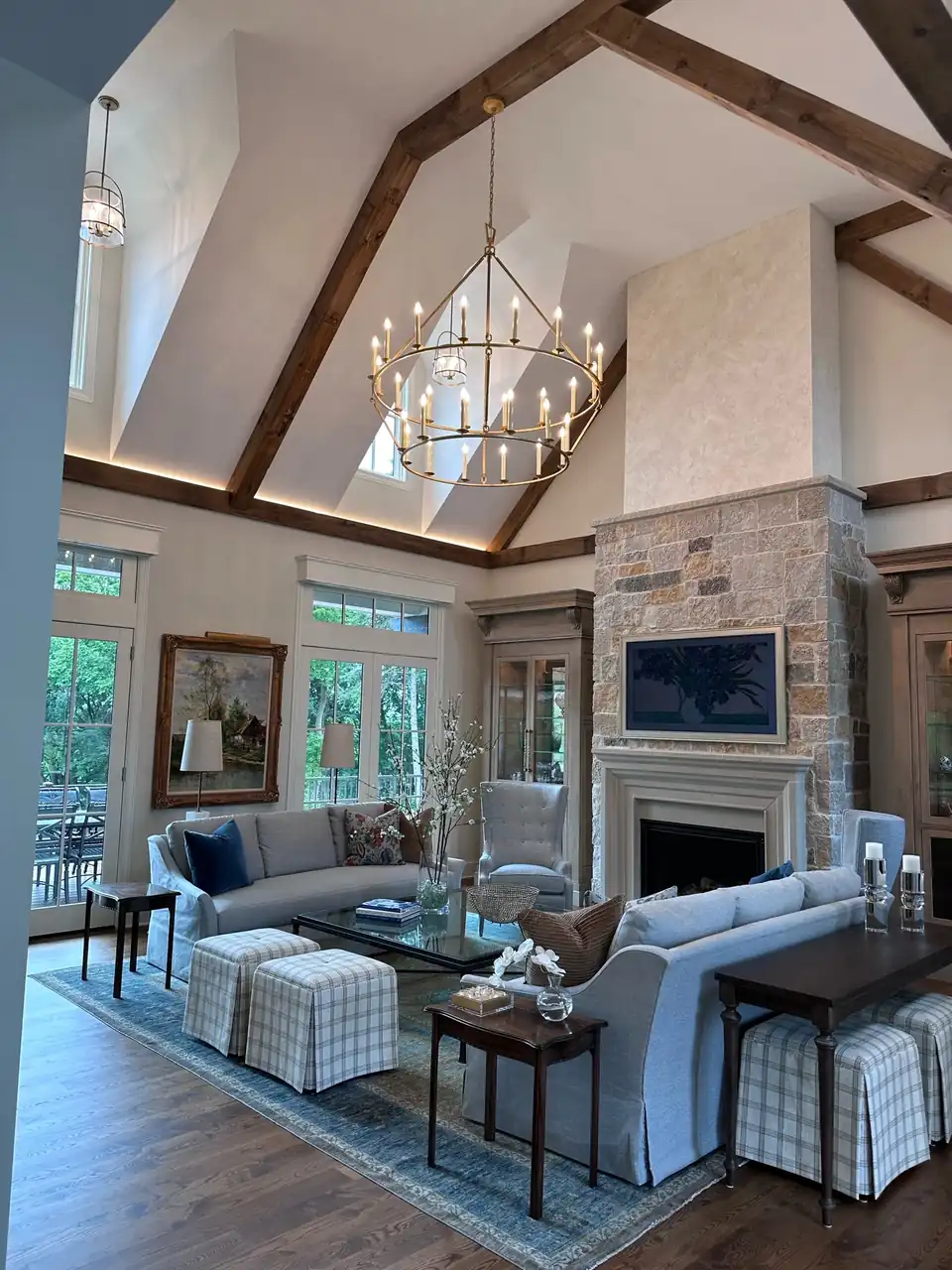
One ceiling light can’t make a room cozy on its own. Cozy rooms have light at three different heights.
Up high, a chandelier or pendant lights the whole room. At eye level, table and floor lamps make reading and talking easy. Down low and tucked away, small glows like candles, a picture light, or LED strips along a beam ledge add warmth after dark.
This room uses all three:
- A big brass candle-style chandelier in the center
- Table lamps with white shades beside the windows
- Strip lighting along the beams and a small light over the painting
Use warm white bulbs in every layer, around 2700K, so no corner looks blue.
Your three layers, plus one helper
12. Fill Old Crocks With Greenery
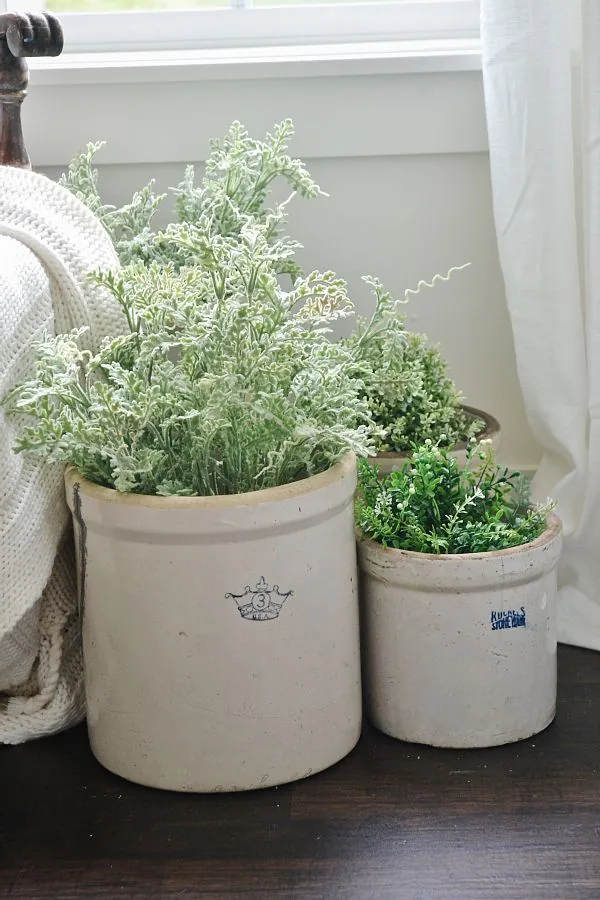
Chalky white stoneware crocks, a little stained at the rim, filled with soft green leaves. They look like they came straight out of an old farmhouse cellar.
Crocks were made for jobs like pickling and storing butter, so they’re thick, heavy, and hard to knock over. That makes them a sturdy base for greenery right on the floor.
Group them in mixed sizes:
- One big crock as the anchor
- One or two smaller ones tucked in front
- Pale, silvery greens in the big one and darker leaves in the small ones
Set the group beside a window or a chair, wherever a bare patch of floor needs some life.
⚠️ Watch Out
Old crocks have no drainage hole, and drilling one can crack it. For live plants, leave the plant in its plastic nursery pot and set it inside the crock on a layer of pebbles. Lift it out to water it in the sink, let it drain, then slip it back in. Faux greenery skips the problem completely.
13. Make a Gallery Wall With Thrifted Frames
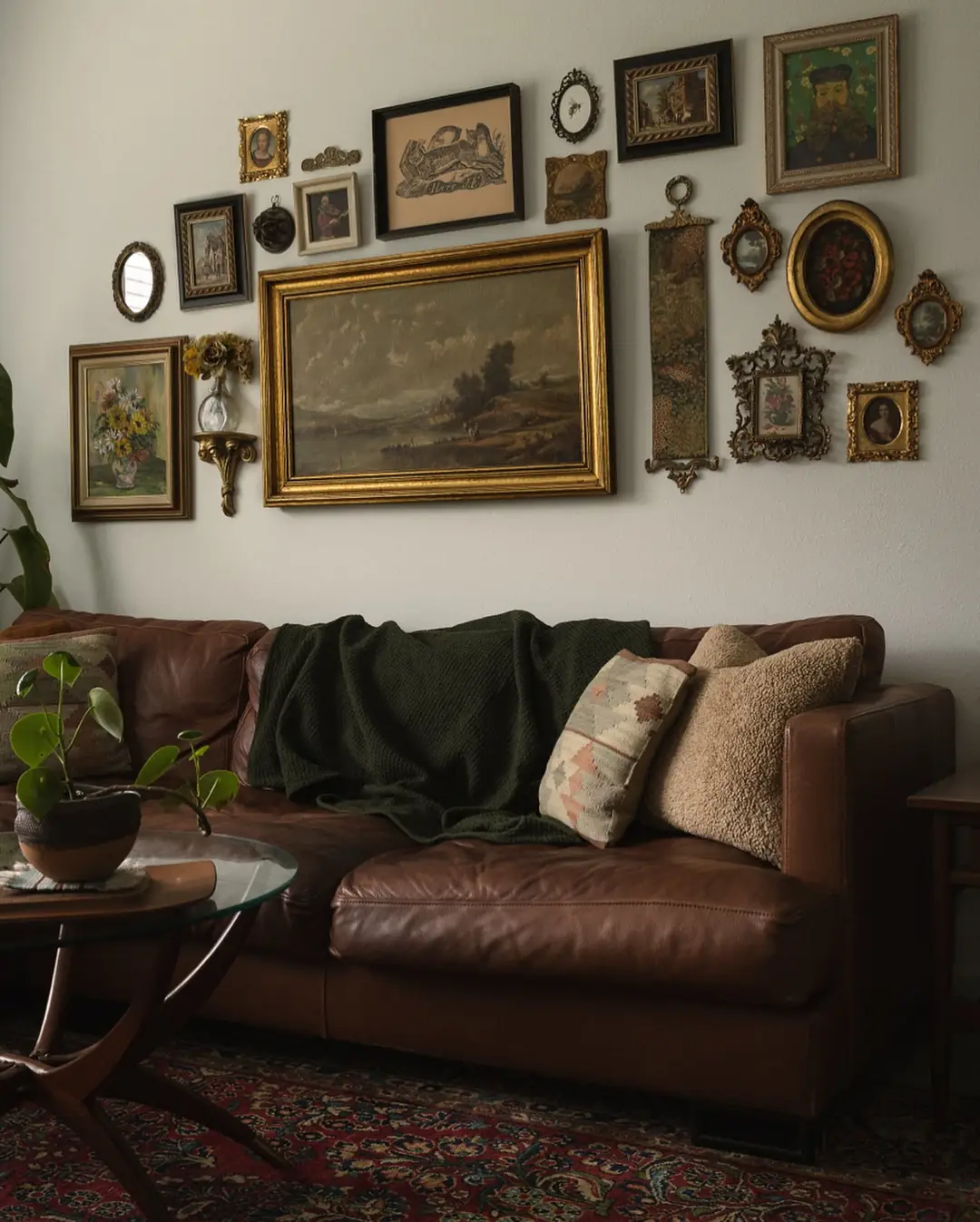
Matching frames aren’t a rule. Some of the most charming gallery walls mix thrifted gold, carved wood, and tiny oval frames that all came from different homes.
A mix like this holds together through a few common threads:
- One color family, like gold and dark wood
- One large piece near the center to anchor the rest
- Gaps of about 2 to 3 inches between frames, kept fairly even
Thrift stores and yard sales are full of old frames. Swap the art inside for vintage prints, postcards, or small paintings. Then tuck in a small mirror, a wall shelf, or a hanging textile so the wall reads as collected farmhouse wall decor, not a frame shop display.
Trace every frame on kraft paper, cut the shapes out, and tape them to the wall. Mark the nail spot on each one. Live with the layout for a day, then hammer right through the paper and tear it away. No extra holes.
14. Mix Plaid, Stripe and Linen Pillows

A check, a stripe, and a plain linen. That trio is the easy recipe for pillows that look collected instead of bought as a set.
Each pillow has a job. The check brings the pattern, the stripe links it to the plain one, and the linen gives your eye a rest. Here, a pink gingham with a ruffle, a ticking stripe, and a buttoned natural linen all share the same oatmeal base. That’s why they get along so well.
Keep these in mind:
- Pull every pillow from one or two colors
- Vary the pattern size, like a small check beside a wider stripe
- Mix textures such as washed linen, cotton, and a soft ruffle
Two or three pillows on each end of the sofa is plenty.
| Pillow | Its job | Look for |
|---|---|---|
| Plaid or check | Brings the pattern and most of the color | Gingham, windowpane, or a soft buffalo check |
| Stripe | Links the busy pillow to the plain one | Ticking stripe or grain sack stripe |
| Plain linen | Gives the eye a resting spot | Washed linen with buttons, a flange, or a frayed edge |
15. Turn a Corner Into a Reading Nook
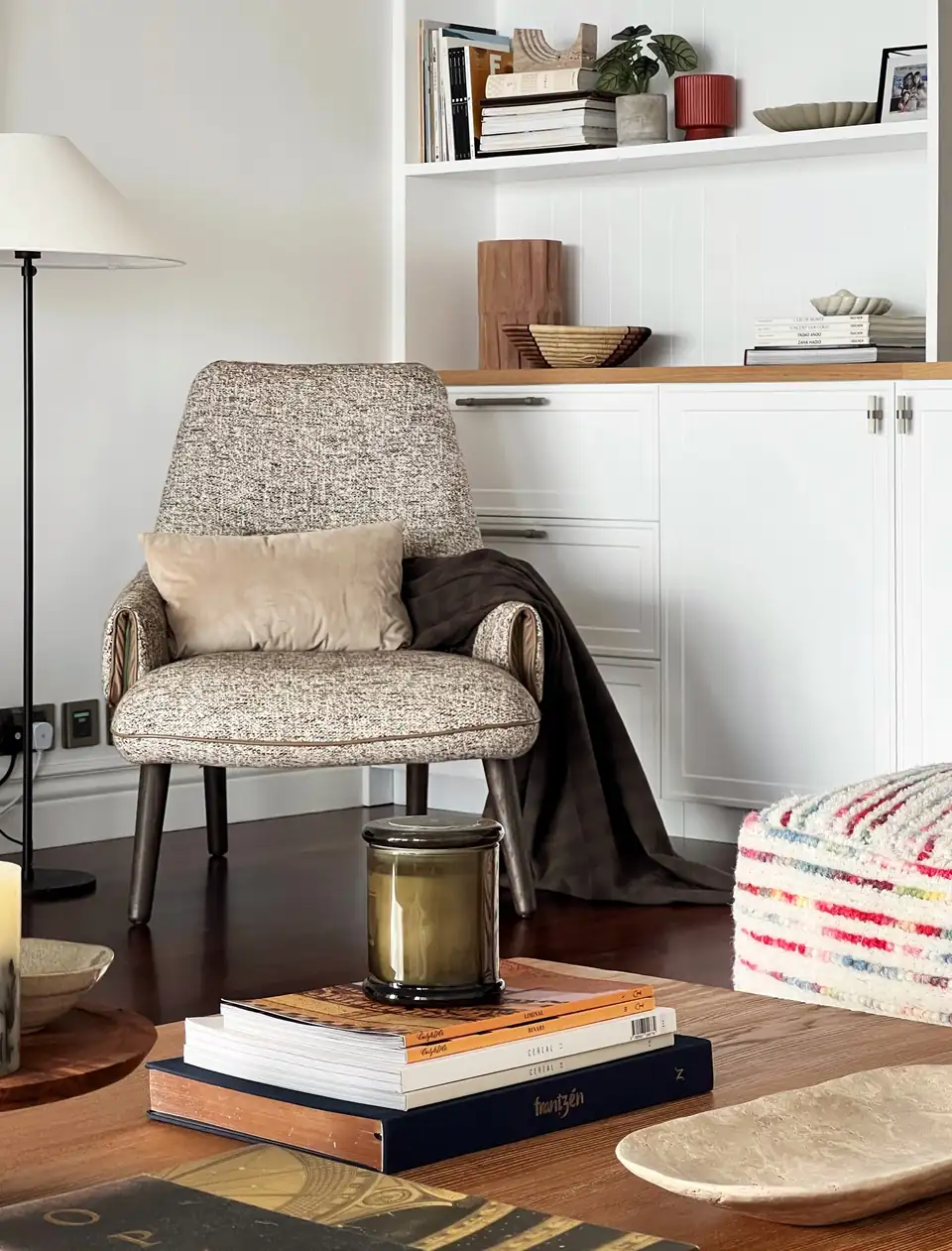
Most living rooms have one corner that just sits there. It’s too small for a sofa and too big to ignore. Give it one good chair and a reason to sit down.
The chair is the whole idea. Pick one that hugs you a little, with arms and a back high enough to lean into. Nubby tweed or bouclé hides wear and feels soft against your arms.
Then build around it:
- A floor lamp beside or just behind the chair
- A lumbar pillow for your lower back
- A throw over one arm for chilly nights
It’s one of the simplest cozy living room ideas. If you have built-ins nearby, keep the books you’re actually reading on the closest shelf.
Test the nook before you commit
16. Lean a Ladder for Throw Blankets
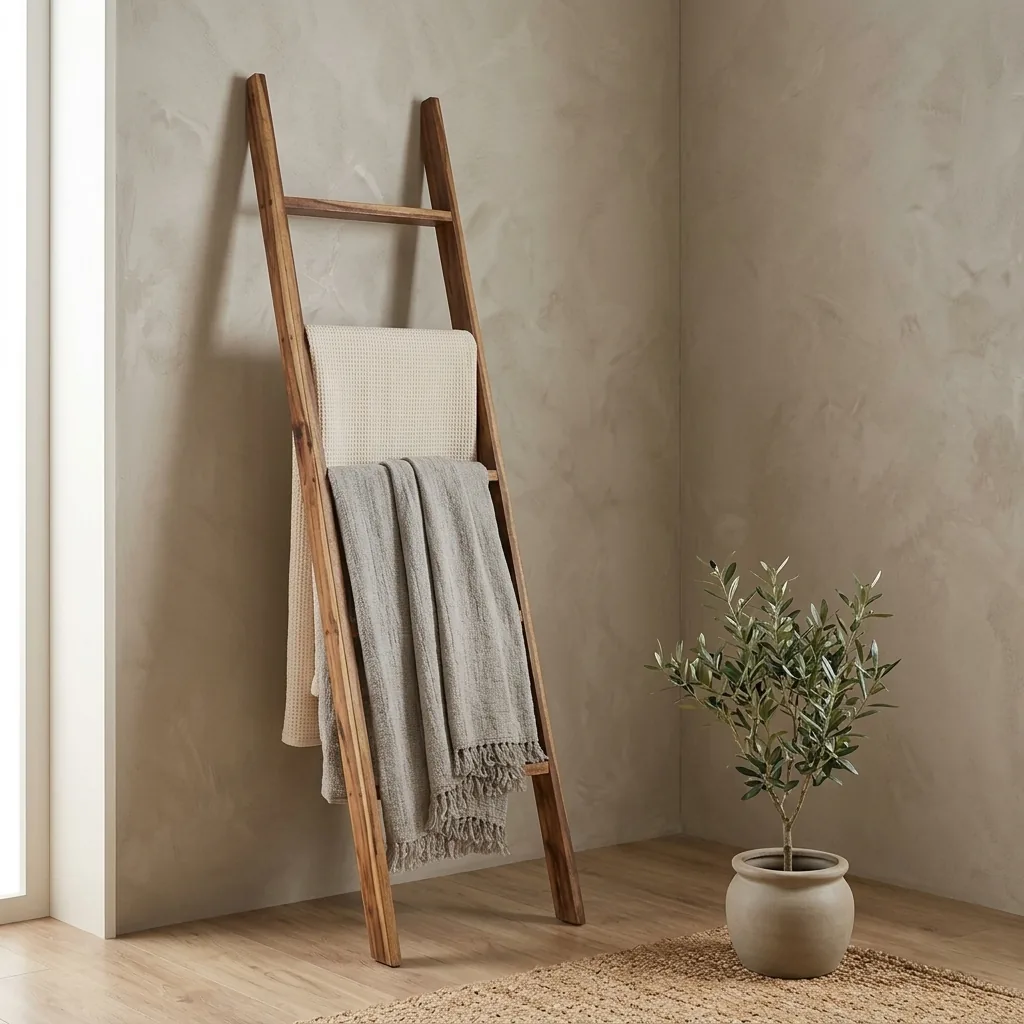
A leaning ladder gets throw blankets off the sofa arm and keeps them close enough to grab without getting up twice. It also fills a bare stretch of wall without a single nail.
Look for a blanket ladder with smooth, flat rungs so the fabric doesn’t snag. A warm wood ladder is one of the simplest pieces of rustic living room decor you can add, and it shows up best against a plain or plaster wall.
How to style it:
- Two or three throws, not one on every rung
- Fold each throw in thirds the long way before you drape it
- Mix textures, like a waffle weave above a fringed knit
A small potted tree or a basket beside it finishes the corner.
Lean it at a gentle angle, with the feet about 12 to 18 inches from the wall.
Add rubber pads under the feet on wood or tile so it can’t slide.
Keep the heaviest blanket on a lower rung.
Filling every rung until it looks like a drying rack.
Letting kids climb it. It’s decor, not a real ladder.
Placing it behind a door or in a busy path where it can get bumped over.
17. Put a Console Table Behind the Sofa
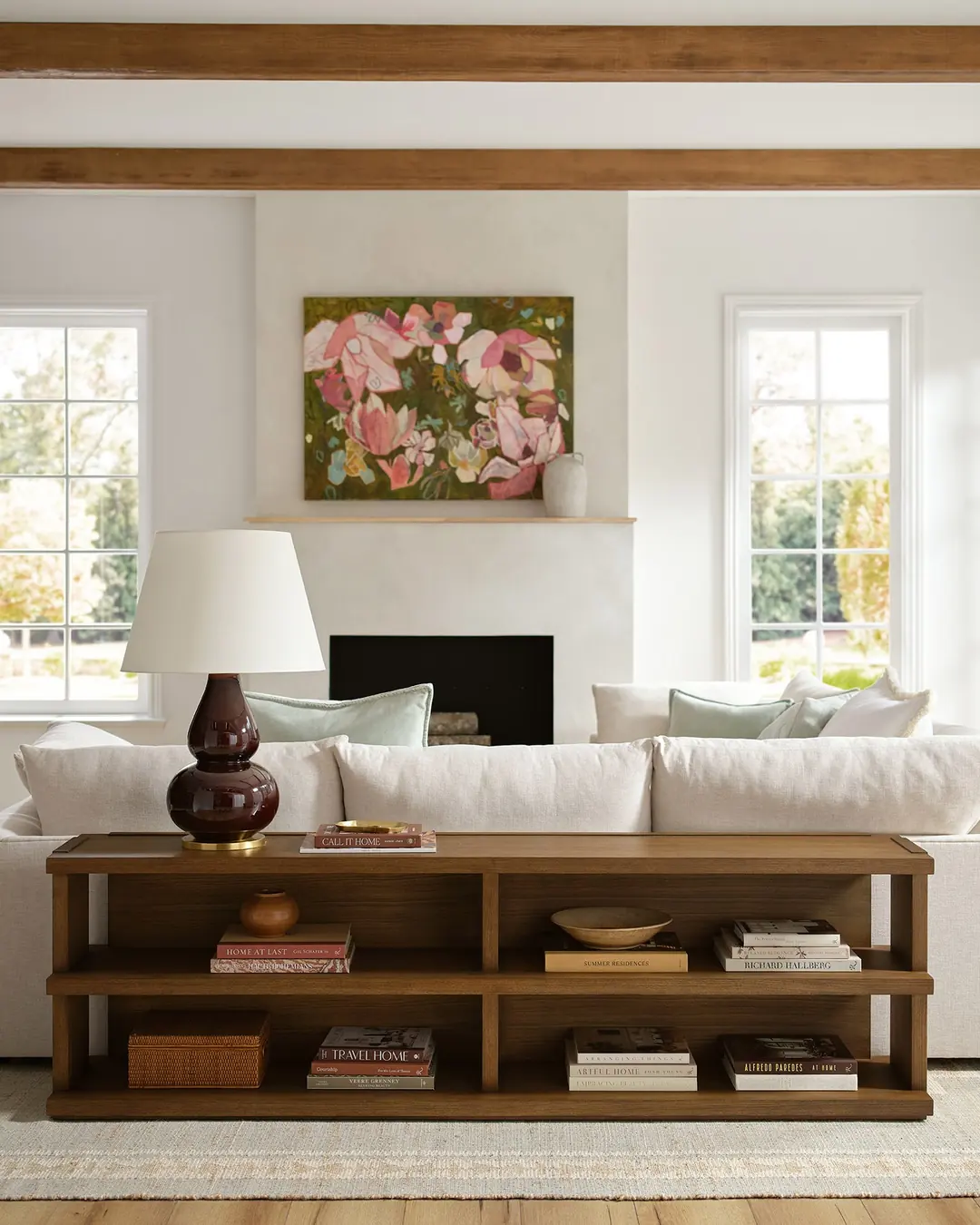
Pull the sofa a few inches off the wall, or float it in the room, then slide a long console table behind it. The back of the sofa goes from bare to finished.
Choose one about the same height as the sofa back, or a little lower, and nearly as long. Warm wood repeats the tones in your floor and beams, so it looks like it belongs.
Keep it from looking crowded:
- One lamp at one end, not a matching pair
- Books stacked flat in short piles, some topped with a small bowl or pot
- Leave part of the top bare
Open shelves like these give you two extra levels to style without adding another piece of furniture.
Three jobs a sofa console does
- ▸Holds a lamp that lights the sofa when there’s no room for a side table
- ▸Hides remotes, chargers, and cords in a lidded basket on the bottom shelf
- ▸Draws a soft line in an open room, so the living area feels like its own space
18. Paint One Old Cabinet a Muted Color
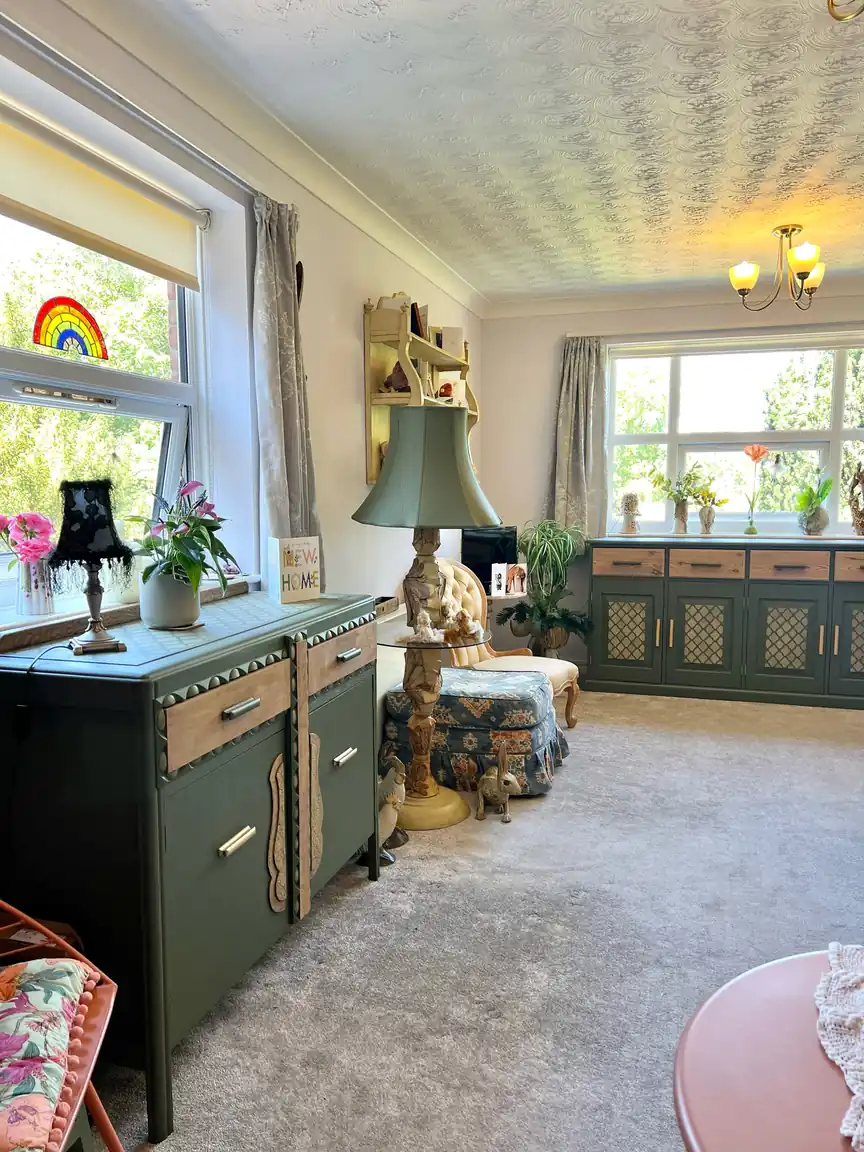
Almost every family has one old sideboard or dresser that nobody loves but nobody wants to throw out. Paint gives it a second life.
Deep, muted greens like sage, olive, or forest feel right at home in a modern farmhouse room. They read as real color but still sit calmly beside wood and white.
For a two-tone look like these cabinets:
- Paint the frame and doors green
- Sand the drawer fronts back to bare wood and seal them with a clear matte finish
- Swap old knobs for simple brass or nickel bar pulls
Clean it, scuff sand it, and prime before you paint. Shiny old finishes won’t hold paint otherwise. Done right, that forgotten sideboard turns into one of the best vintage farmhouse accents in the room.
An orange-toned wood sideboard with a scratched top and dated knobs. It blends into the wall, and nobody looks at it twice.
A deep green body, warm bare wood drawers, and slim metal pulls. Now it’s the piece people notice first, and the room gets color without painting a single wall.
19. Add a Leather Accent Chair
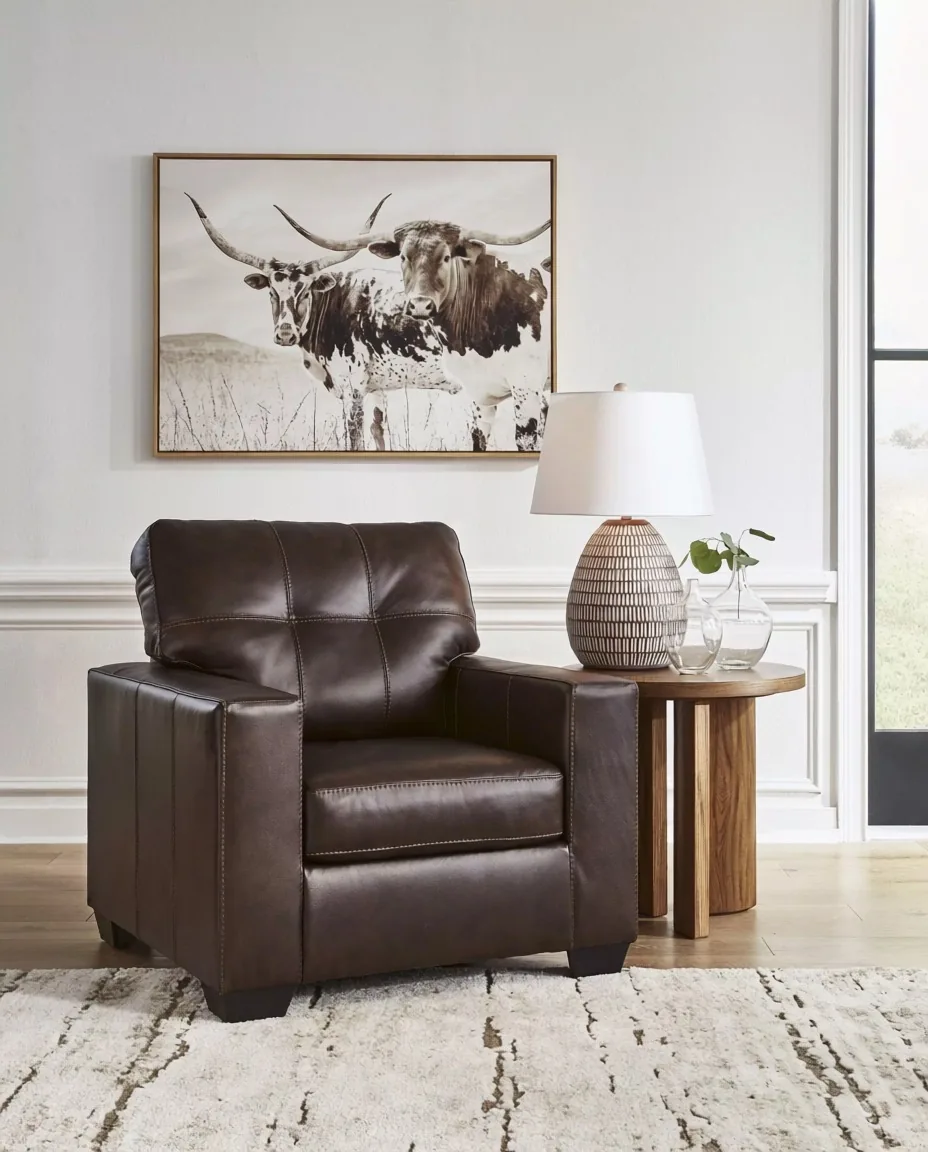
Linen and slipcovers keep a room soft. One leather chair gives it weight. Put the two side by side, and each one makes the other look richer.
Brown leather in chocolate, cognac, or saddle tones looks the most farmhouse. Square, simple arms keep it modern, while rolled arms and nailheads lean more traditional.
Style it as a small vignette:
- A round wood side table on one side
- A lamp with a textured ceramic base
- One rustic piece of art above, like a cattle or landscape photo
Angle the chair slightly toward the sofa so it joins the conversation instead of staring at a wall.
📌 Good To Know
Real leather softens and darkens a little with use, and those small marks are part of its charm. Keep it out of strong direct sun so it doesn’t fade or dry out, and rub in leather conditioner a couple of times a year. Faux leather costs less and wipes clean, but it won’t build that worn, lived-in look over time.
20. Change Small Things Each Season
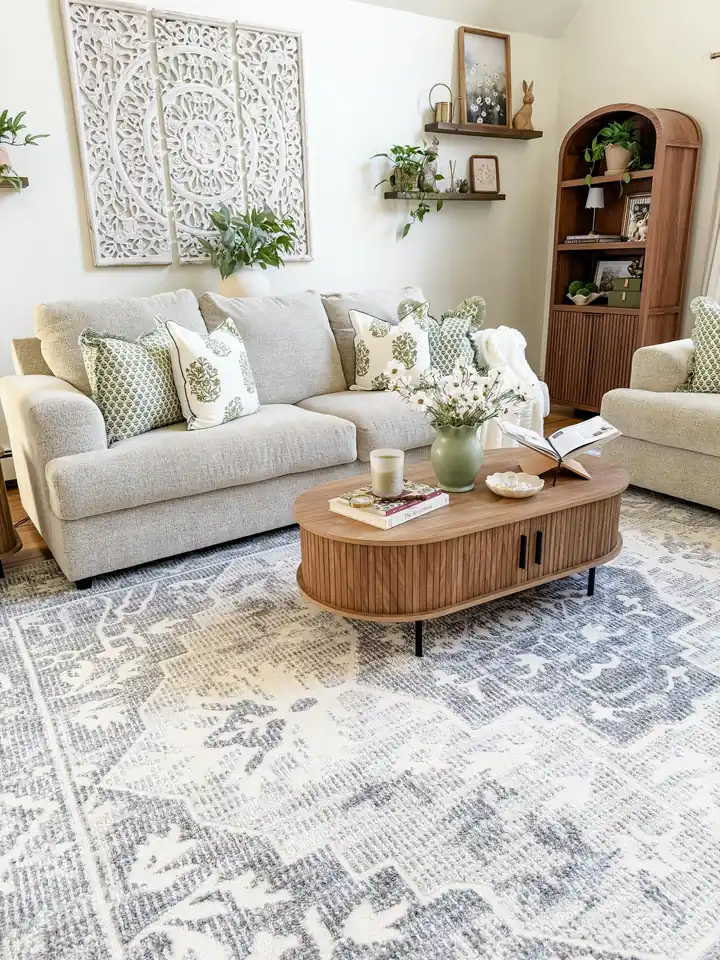
A ceramic bunny on the shelf, daisies in a sage vase, and fresh green block print pillows. Spring arrived in this room without anyone moving a single piece of furniture.
That’s how you keep a modern farmhouse room feeling fresh all year. Leave the big pieces alone and swap only the small things.
Easy things to rotate:
- Pillow covers, keeping the same inserts
- Stems or flowers on the coffee table
- One or two small figures on a shelf
- The throw on the sofa arm
Keep one labeled bin for each season. The next swap takes about twenty minutes instead of a whole Saturday.
Simple swaps for every season
Conclusion
A warm living room doesn’t come together in one weekend, and it shouldn’t. The best ones grow slowly, one piece at a time. A white wall here, a thrifted frame there, a leather chair that softens a little more every year.
Pick the idea that fixes the spot that bugs you most. Maybe it’s the bare ceiling, the crowded shelf, or the corner nobody ever sits in. Start there, live with it for a bit, then come back to these modern farmhouse living room decor ideas when you’re ready for the next one.
Pin this list to your living room board so it’s easy to find on your next free weekend.