How to Decorate a Small Living Room: 21 Ideas That Make It Feel Bigger
You want a living room where you can stretch out on the sofa, set your coffee down without moving three things first, and still have room for a friend to sit.
In a small space, that gets hard. The sofa fills one whole wall. The coffee table sits so close you bump your knees. Mail, a basket of throws, and the TV stand all fight for the same few feet of floor. By evening, the room feels smaller than it did that morning.
The good news is that how big a room is and how big it feels are two different things. Learning how to decorate a small living room really comes down to light, height, shape, and where your storage goes. Get those right and a compact room feels open, even though the walls stay put.
These 21 ideas cover the whole room: the walls, the windows, the seating, the floor, the lighting, and the corners that never seem to get used. Start with the one that fits your space, and keep adding from there.
1. Paint the Walls and Trim the Same Light Color
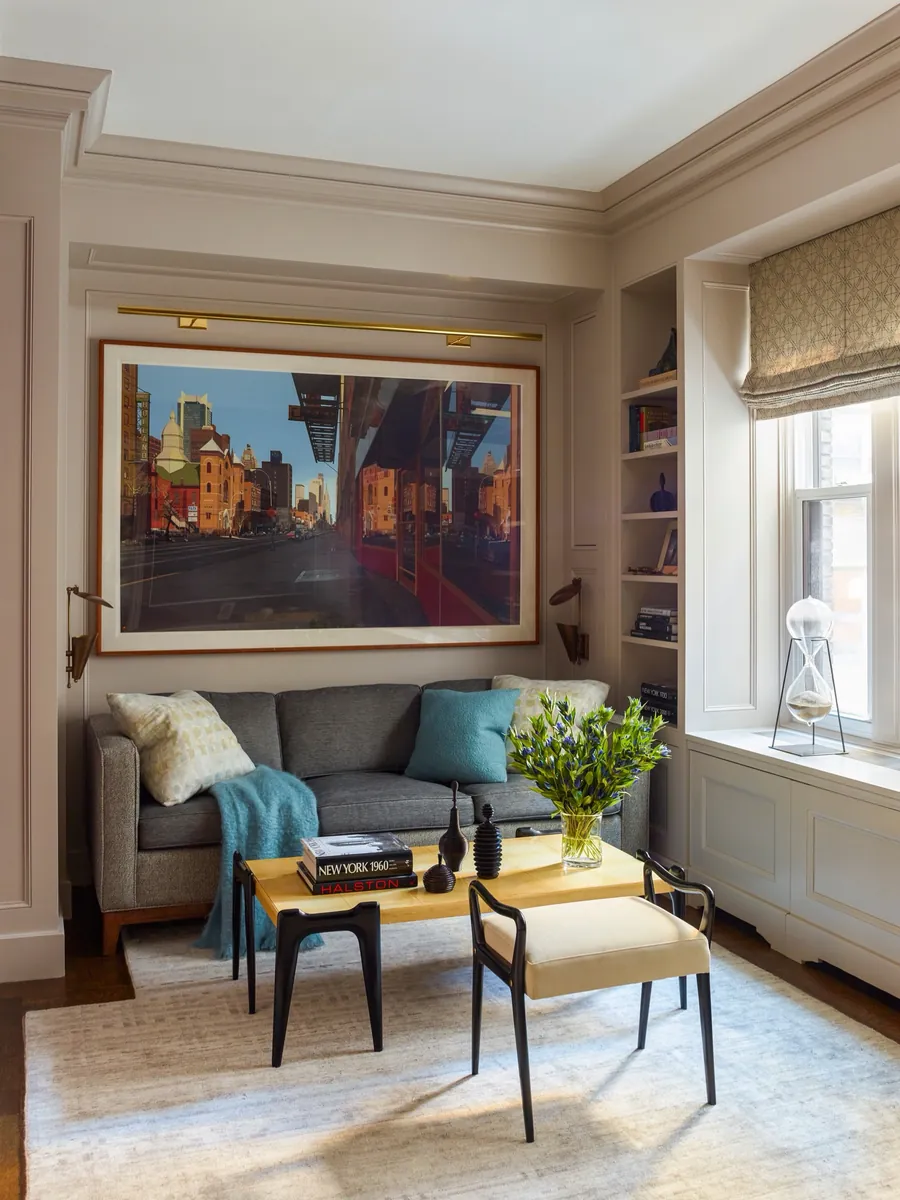
Look closely at a room that feels calm, and you’ll often notice the walls, trim, and molding are all one color.
White trim on a colored wall draws a frame around every door, window, and corner. Your eye stops at each edge, and the room looks chopped up. When the trim matches the walls, those lines fade and the room reads as one smooth space.
A soft greige or warm putty shade works well here. It feels cozier than stark white and hides scuffs better.
A few tips:
- Use eggshell on the walls and satin on the trim. It’s the same color with a slightly different sheen.
- Carry the color onto built-in shelves and radiator covers too.
- Paint the ceiling a shade or two lighter so it doesn’t feel low.
Beige walls with bright white baseboards, door frames, and crown molding. Every edge stands out, and the room feels boxed in by outlines.
Walls, trim, and molding share one soft greige. The edges blur, the paneling looks rich instead of busy, and the art and sofa become the focus.
2. Pick a Sofa With Raised Legs
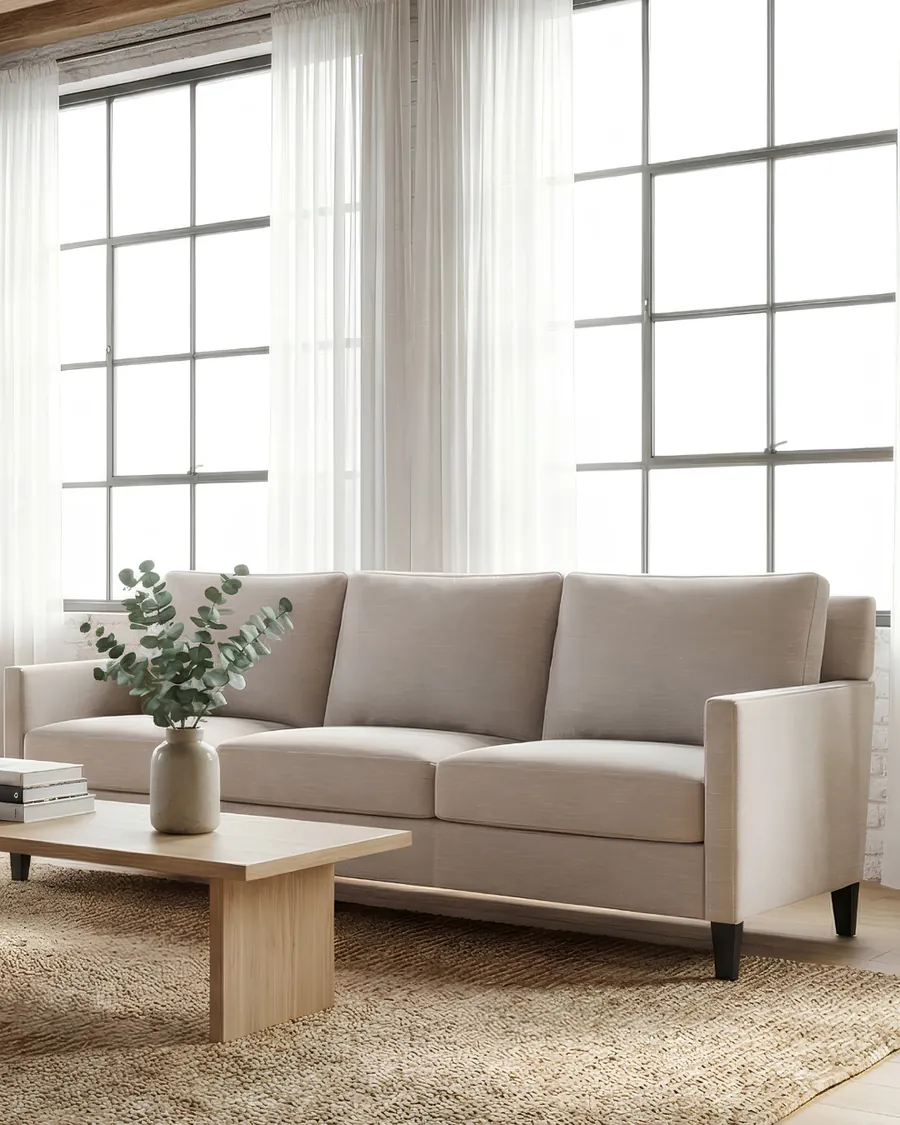
A skirted sofa sits on the floor like a solid block. A sofa on legs lets the floor run right underneath it, and that little gap makes the whole piece look lighter.
The sofa is usually the biggest thing in the room, so this is one of the small living room furniture ideas with the most payoff.
Look for:
- Legs tall enough that you can clearly see under the frame
- Slim, straight arms instead of puffy rolled ones
- A light fabric like oatmeal linen or soft sand
Dark tapered legs give a pale sofa a crisp outline. Light wood legs blend in better on light floors.
💡 Quick Tip
Check the seat depth, not just the width. A deep lounge-style seat pushes the sofa farther into the room than you’d expect. In a tight space, a standard depth leaves more walking room in front.
3. Hang Curtains High and Wide
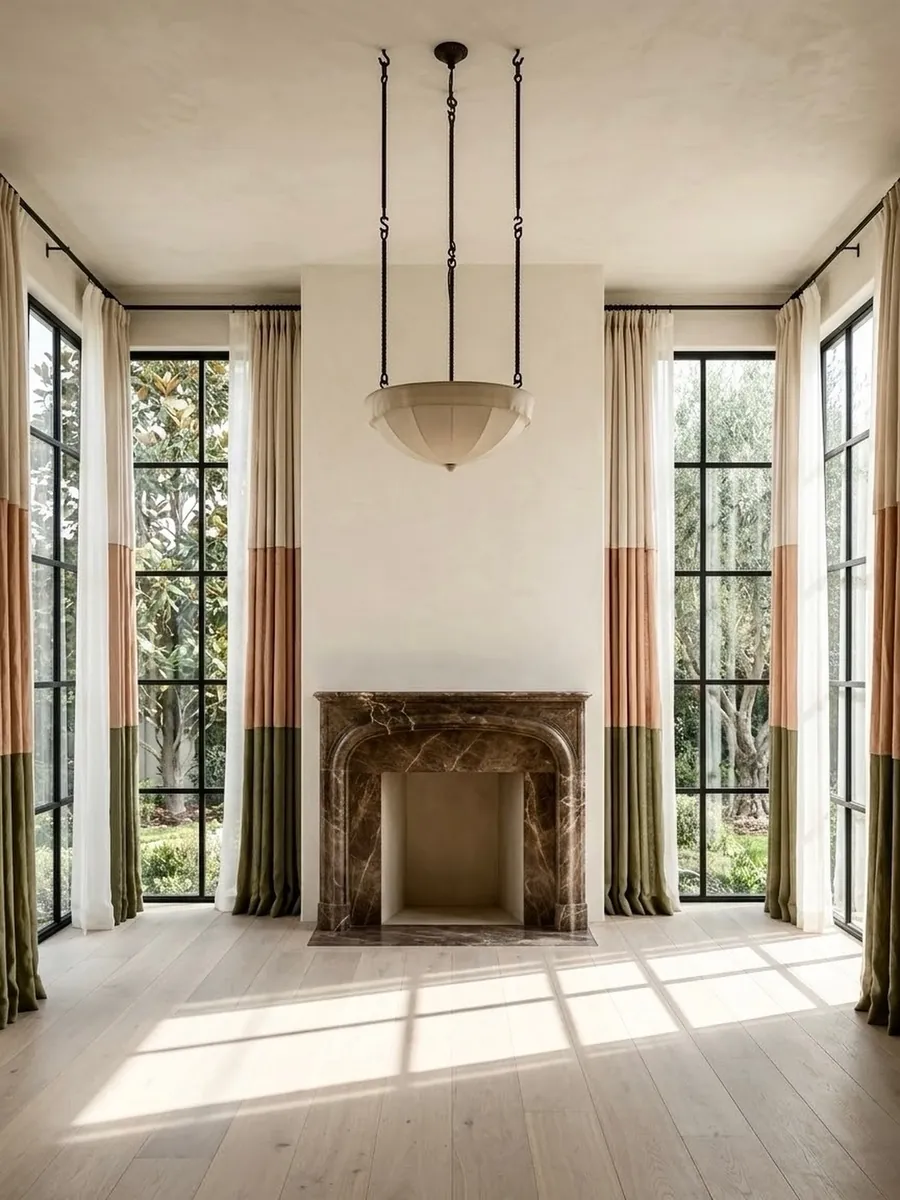
The most common curtain mistake is hanging the rod right on top of the window frame. It cuts the wall in half and makes the ceiling feel lower.
Move the rod up near the ceiling and let it stretch past the window on each side. The panels then hang over the wall instead of the glass. More daylight comes in, and the windows look taller than they are.
Long panels don’t have to be plain. Color-block curtains, with a light top and deeper bands toward the floor, pull the eye along the full height of the wall. Pick shades that already show up in the room, like a blush from a pillow or an olive from a plant.
Let the hems just brush the floor.
4. Lean a Big Mirror Across From the Window
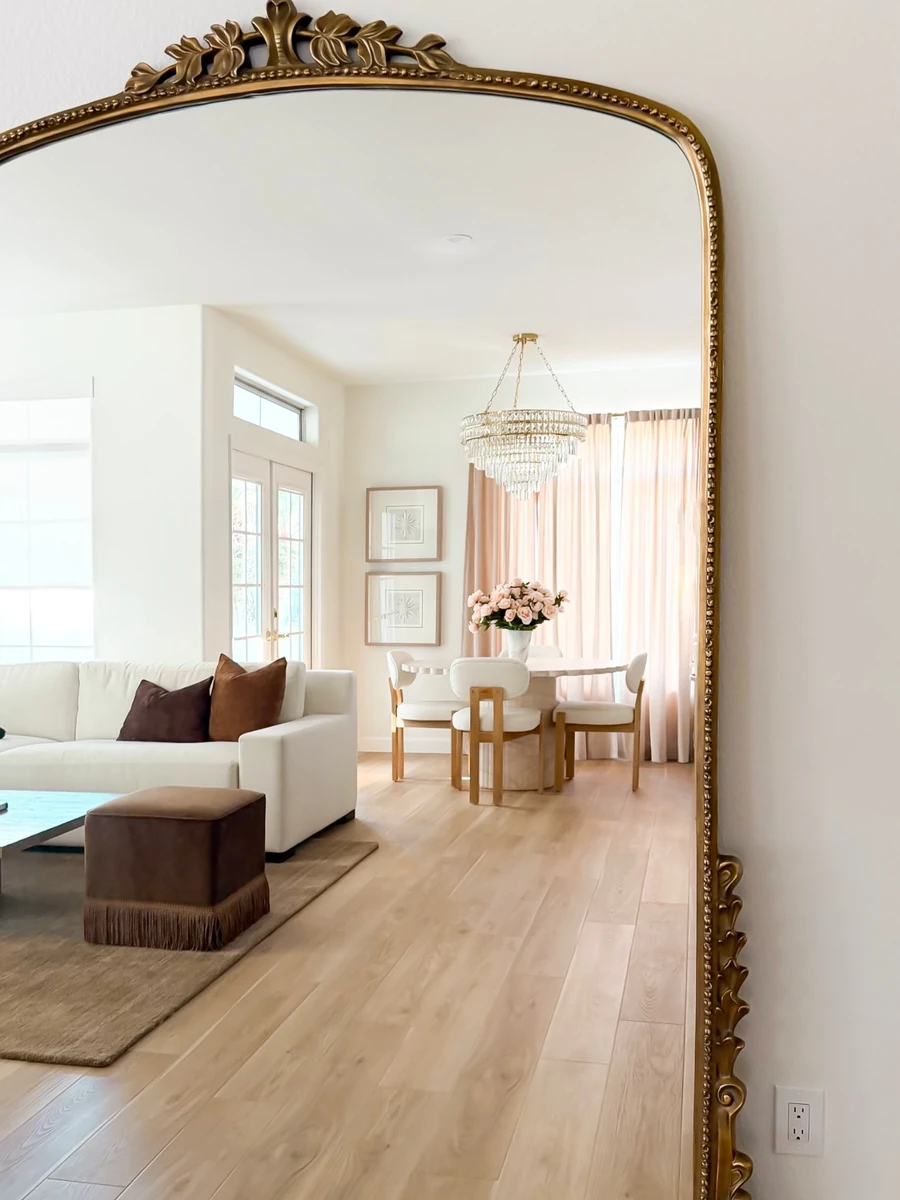
Stand beside a big mirror and the room seems to keep going on the other side of it. In a small living room, that’s exactly the effect you want.
A large mirror doubles what you see. Set it across from a window and it also catches daylight and sends it into the darker half of the room.
Size matters more than style. One tall floor mirror does more than a cluster of small ones, which tend to look busy. An arched shape with a gilded frame brings some old-world charm, and the curve softens a room full of square furniture.
Sit on the sofa and check what the mirror shows from there. That’s the view you’ll see most.
Face it toward a window, a lamp, or a pretty corner. Avoid aiming it at the TV or a crowded shelf.
Strap the top to the wall with an anti-tip kit, even if it feels steady. Leaning mirrors are heavier than they look.
5. Choose a Rug That Fits Under the Furniture
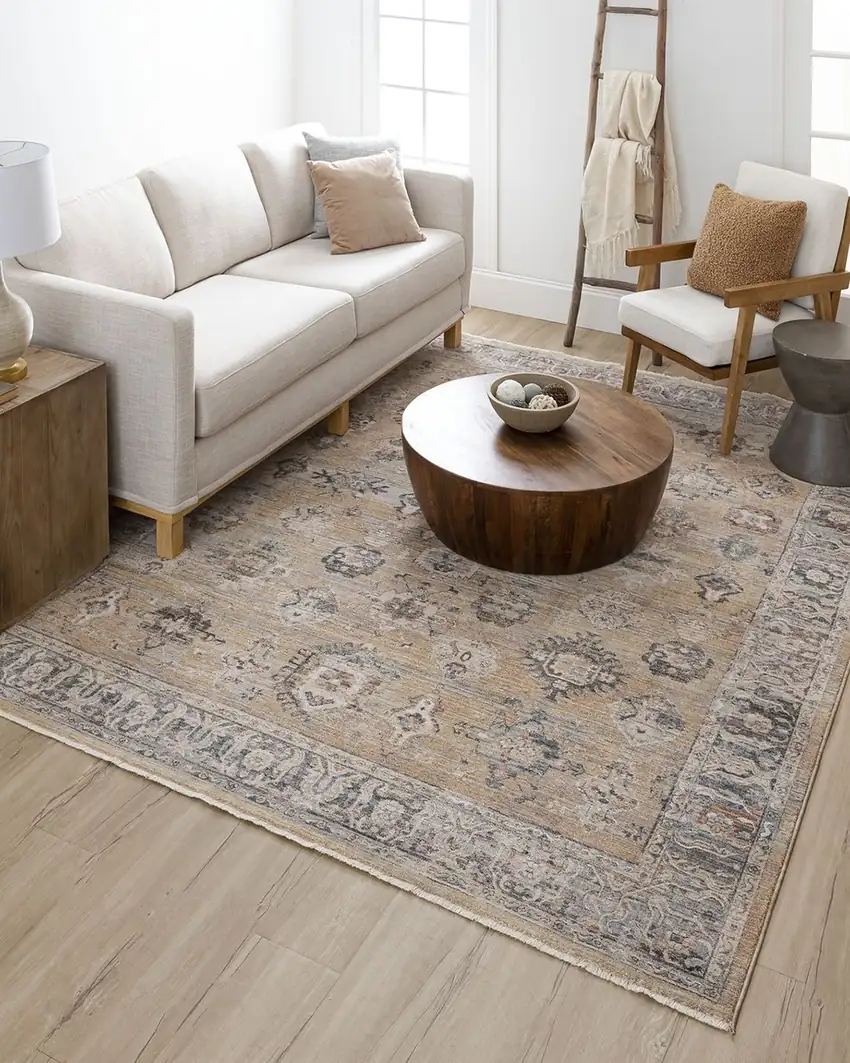
Here’s a simple rule: every piece of seating should touch the rug, at least with its front legs.
When the sofa and chairs share one rug, they look like a group. The floor reads as one zone instead of a scatter of little islands. A rug that’s too small floats in the middle and makes the furniture look pushed against the walls.
For a cozy small living room, a soft vintage-style rug in faded taupe, sand, or gray is easy to live with. The washed pattern hides crumbs and paw prints, and the muted colors keep the floor calm.
Leave a strip of bare floor around the edges so the room still has a frame.
Tape the rug size on the floor with painter’s tape before you buy.
Slide the front legs of the sofa and chairs onto the rug.
Add a thin rug pad so it lies flat and stays put.
A small rug that only sits under the coffee table.
Bold, high-contrast patterns that make the floor look crowded.
Thick shag near a door that has to swing over it.
6. Go Round With the Coffee Table
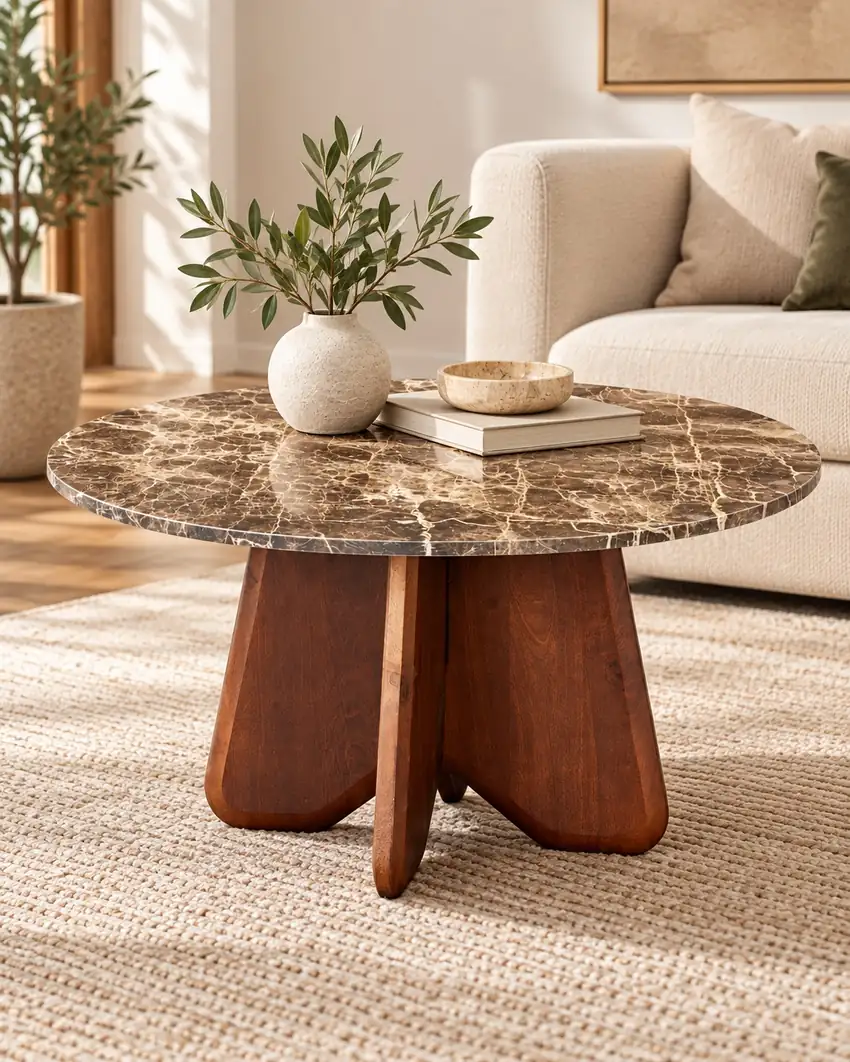
Square corners and shins don’t get along, and in a small room you run into those corners a lot.
A round coffee table has no sharp edges to bump on your way past. It also leaves more open floor around it, so the path from the sofa to the door feels wider.
Pick a top that suits how you live:
- Stone or marble for weight and a bit of drama
- Warm wood for a softer, cozier look
- A pedestal or sculptural base, so fewer legs crowd the floor
Keep the styling low. A vase of olive branches, one book, and a small bowl are plenty.
| Round Table | Rectangle Table | |
|---|---|---|
| Walking past | No corners to bump | Corners catch knees and bags |
| Room shape | Square rooms and tight paths | Long, narrow rooms with a long sofa |
| Reaching it | Easy from the sofa and side chairs | Easy from the sofa, farther from chairs |
| Surface space | Smaller, keeps clutter in check | More room for trays and board games |
7. Layer Three Kinds of Light
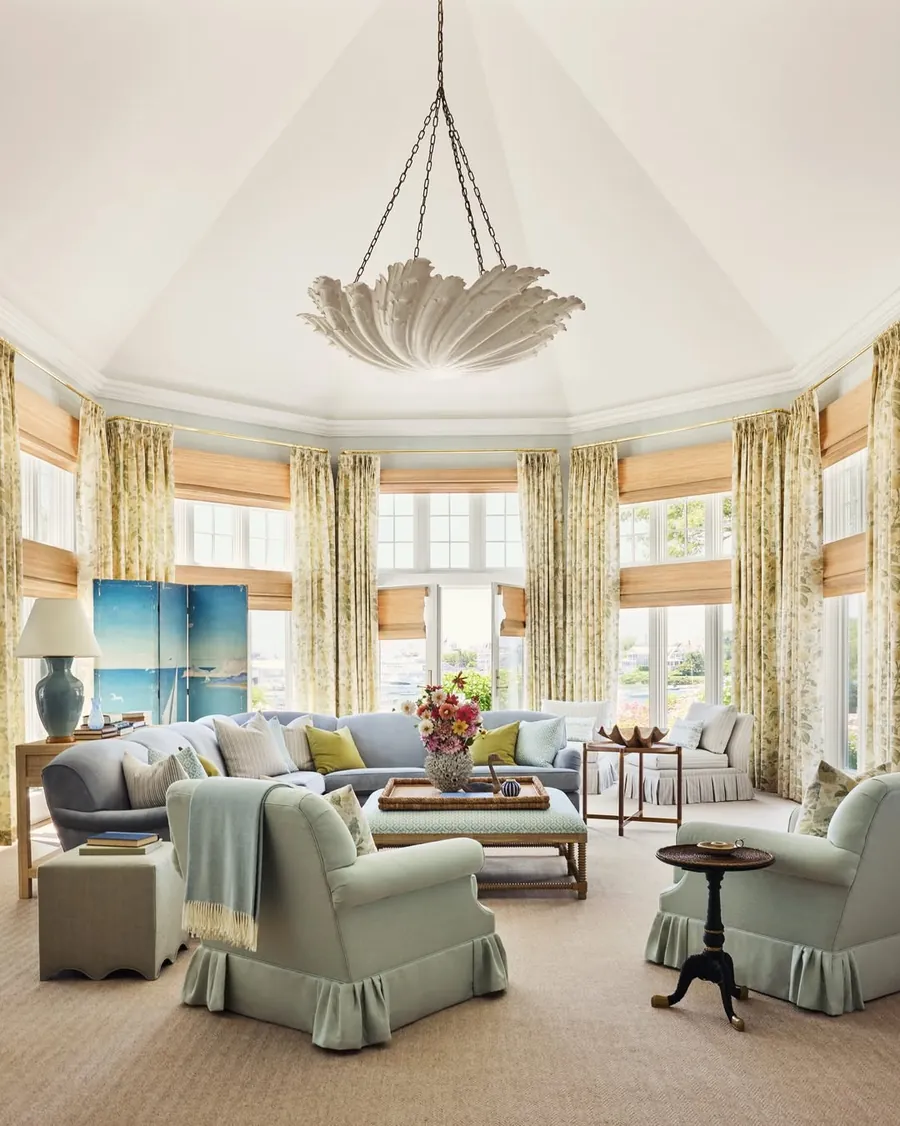
A single ceiling light is rarely enough, even in a small room.
It lights the middle, flattens everything, and leaves the corners dim. Dim corners make the walls feel closer. When light comes from a few different heights, the edges of the room glow and the space feels wider after dark.
Think in three layers:
- Overhead: a pendant or chandelier for general light. A plaster or fabric shade spreads the glow without glare.
- Lamps: a table lamp on a side table or console, close to seated eye level.
- Accent: a picture light over art, or a small lamp tucked on a shelf.
Use warm white bulbs in every layer so the colors match.
8. Mount the TV and Skip the Bulky Stand
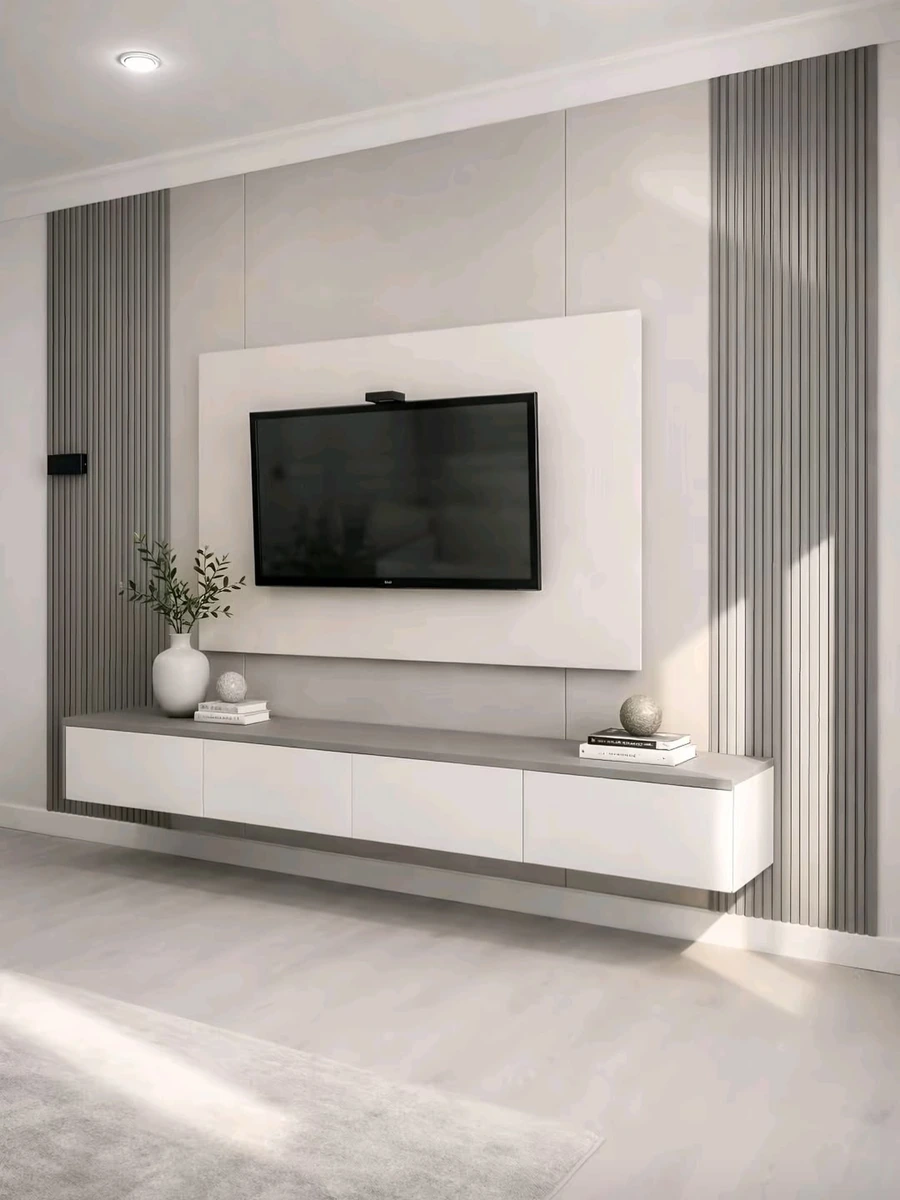
Get the TV off the stand and onto the wall. That one move frees up the floor and makes the whole wall look tidier.
Pair it with a floating media cabinet. Drawers hide the remotes, game controllers, and router, and the open floor below keeps the wall feeling light. It’s one of the most useful small apartment living room ideas, because you get storage without giving up any floor.
To make the wall look finished:
- Add a pale backing panel behind the screen so it doesn’t read as a big black square.
- Center the screen at seated eye level, not up near the ceiling.
- Keep the cabinet top simple, with a vase of greenery and a short stack of books.
What to have on hand
9. Build Storage Up, Not Out
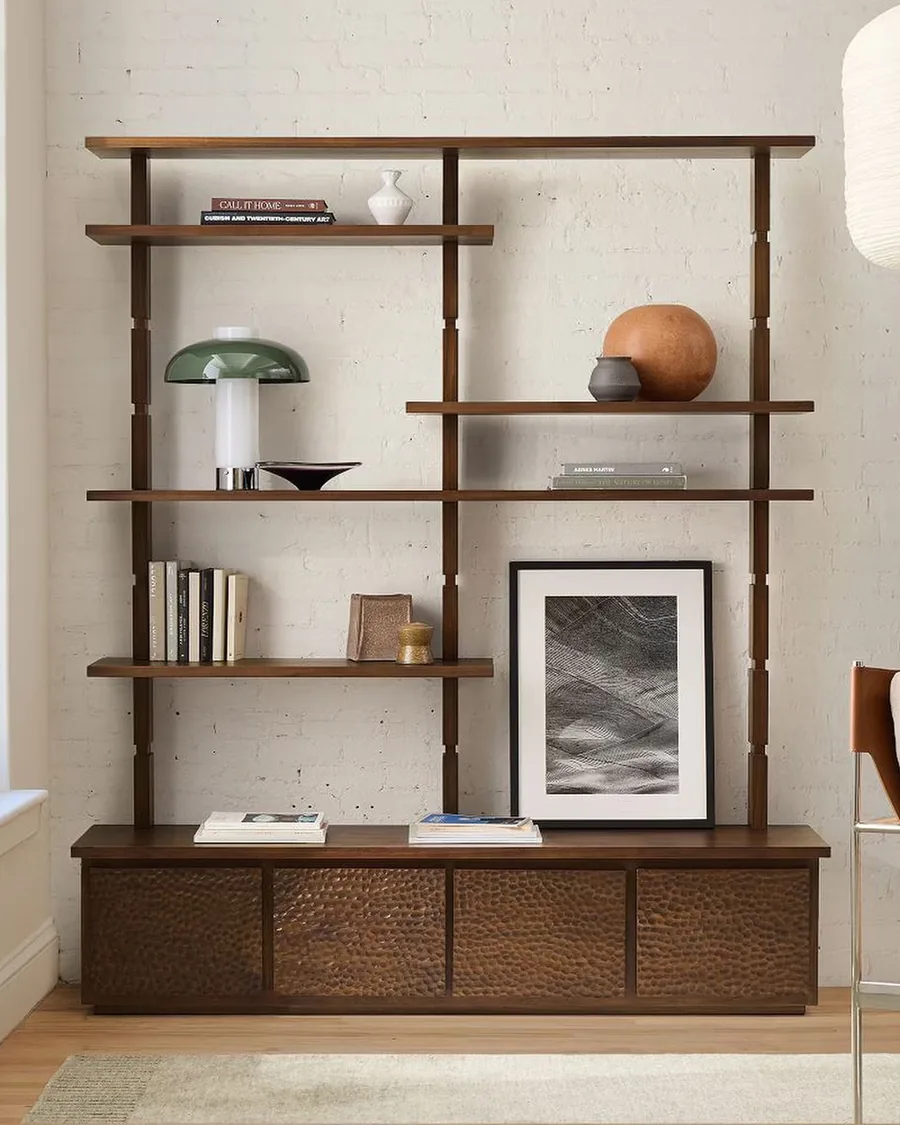
A tall shelving unit holds as much as a full bookcase, but at floor level it only takes up the space of a low cabinet.
That’s the idea behind most good small living room storage ideas. Floor space is tight, but the wall above your waist is usually empty.
A wall-mounted system works well here. Rails go on the wall, and the shelves hang at whatever heights you like. Put a low closed cabinet at the bottom for the messy stuff, and keep the upper shelves open for things you enjoy seeing.
Style it lightly:
- Stagger the shelf lengths so it doesn’t look like a grid.
- Lean one framed print instead of hanging it.
- Mix books with a small lamp and one or two rounded pieces.
Closed storage at the bottom, open shelves on top. The heavy, messy things hide down low, and the wall above stays light and easy on the eye.
10. Add an Ottoman That Hides Things
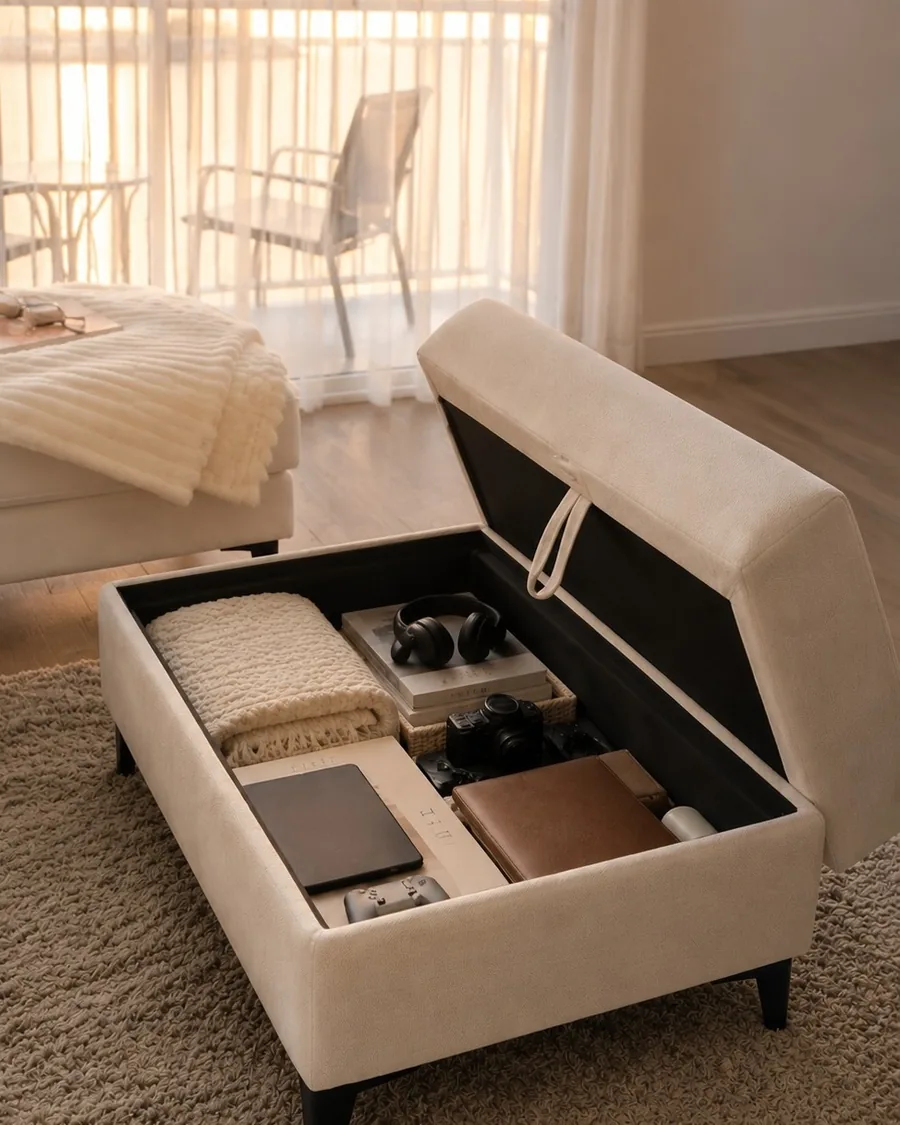
Movie night ends, and the throw, the controller, and the headphones all land on the sofa cushions. A storage ottoman gives every one of them a home.
Lift the lid, drop everything in, and close it. The room looks tidy in seconds. With the lid down, the same piece works as a footrest, an extra seat, or a coffee table with a tray on top.
Look for:
- A pull loop or hinge that holds the lid open
- Firm padding so it works as a seat
- Short legs, which keep it from looking heavy
Cream or oatmeal fabric blends right into a pale room.
📌 Good To Know
Set a shallow basket or two inside. Small things like chargers and remotes stay sorted, instead of sinking to the bottom under the blanket.
11. Try See-Through Furniture
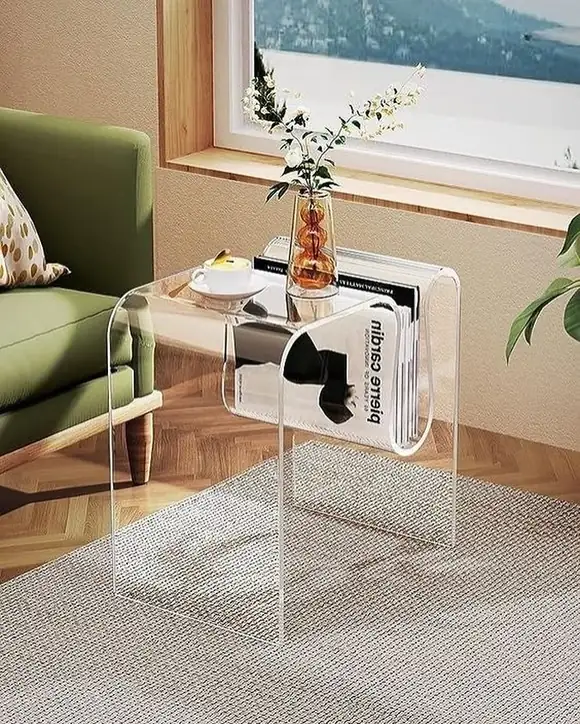
A clear acrylic side table almost disappears. You notice the coffee cup, the vase, and the magazines, but the table itself barely registers.
That’s why see-through pieces help make a small living room look bigger. Your eye goes right through them to the floor and wall behind, so the room doesn’t feel stuffed.
Use them where you need a surface but not more bulk:
- A side table squeezed between the sofa and the window
- A coffee table in a narrow room
- A slim desk or bar cart in a tight corner
One or two clear pieces is enough. A whole room of acrylic can feel cold, so pair them with warm wood floors and soft fabrics.
12. Turn an Empty Corner Into a Reading Nook
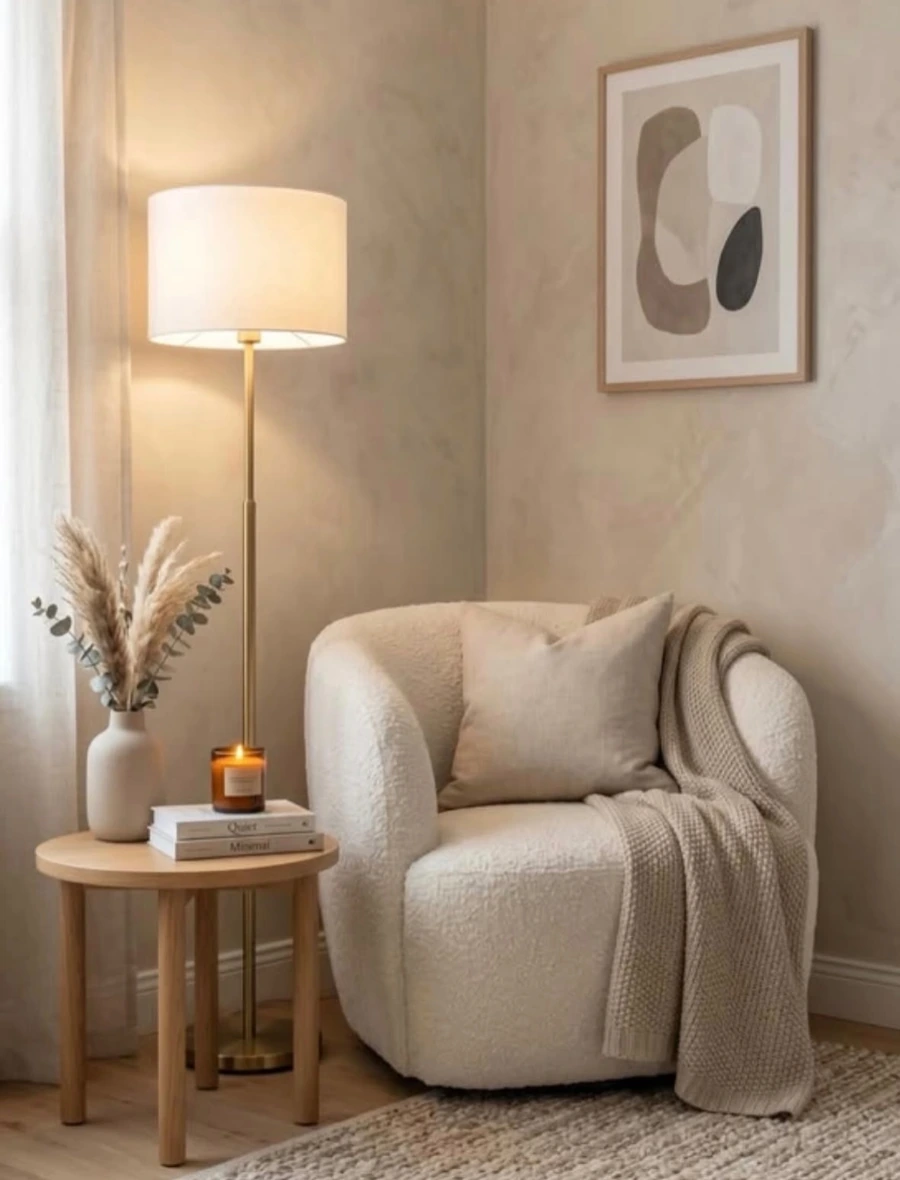
Every corner in a small room should have a job. The empty one by the window makes a great reading nook.
You only need three pieces: a chair, a lamp, and a small table. A rounded barrel chair in bouclé tucks neatly into a corner, because it has no sharp back edges poking out. A floor lamp with a slim pole takes almost no floor space and puts light right over your shoulder.
Keep the colors soft. Cream, oatmeal, and light wood make the corner feel calm instead of crowded.
One framed print on the wall above pulls it all together.
Small extras that make it cozy
13. Hang One Big Piece of Art
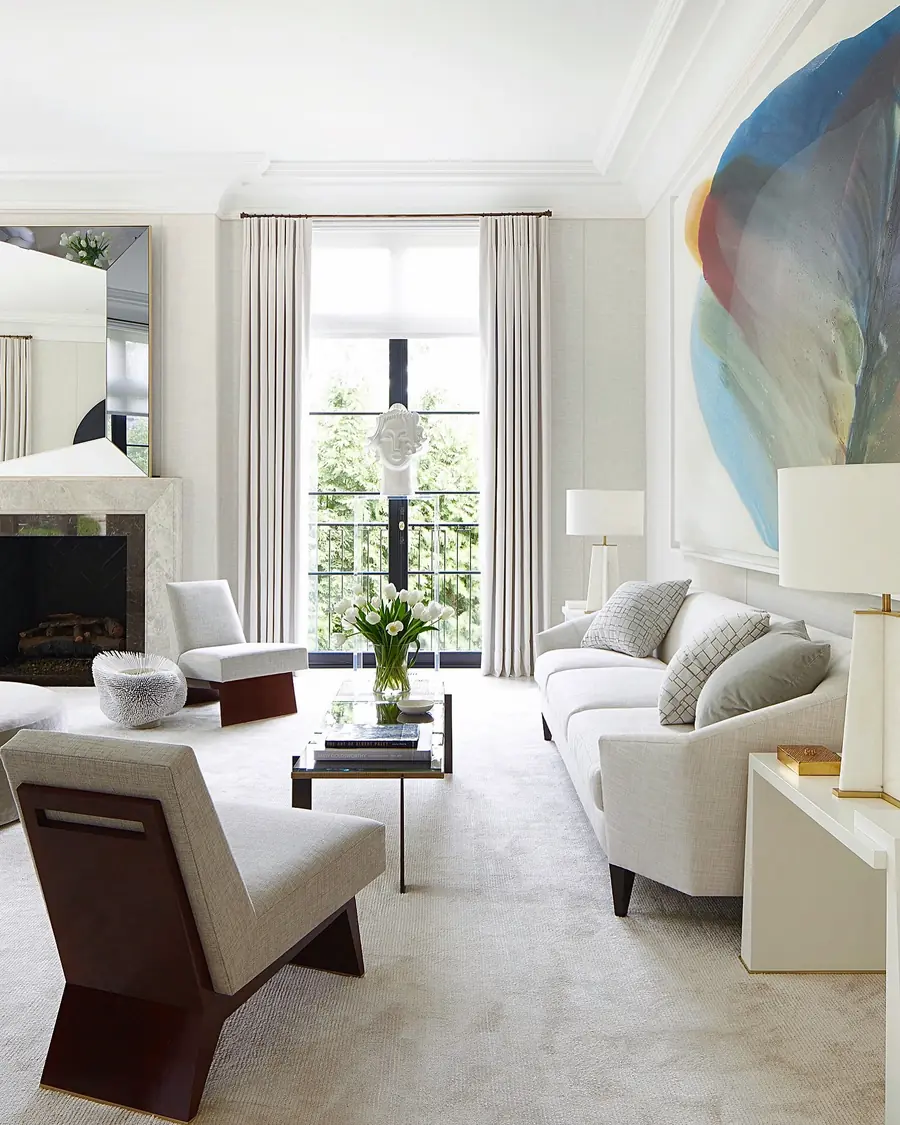
Small rooms don’t need small art. A row of little frames actually makes a wall look busier and the room feel more crowded.
One big piece does the opposite. It gives your eye one place to land, and the wall around it stays calm. A tall canvas can even make the wall seem higher than it is.
Above a sofa, aim for art about two-thirds as wide as the sofa. Hang it low enough that it looks connected to the furniture, not floating up near the ceiling.
In a light room, soft, watery abstracts in a few colors work well. You get color without it shouting at you.
Pull one or two colors from the art into pillows or a vase.
Leave about a hand’s width between the sofa back and the frame.
Try a large print in a simple frame if a canvas is out of budget.
A tiny frame centered on a big, empty wall.
Hanging art up at the height of the door tops.
Heavy, ornate frames that crowd the art itself.
14. Use Nesting Tables Instead of End Tables
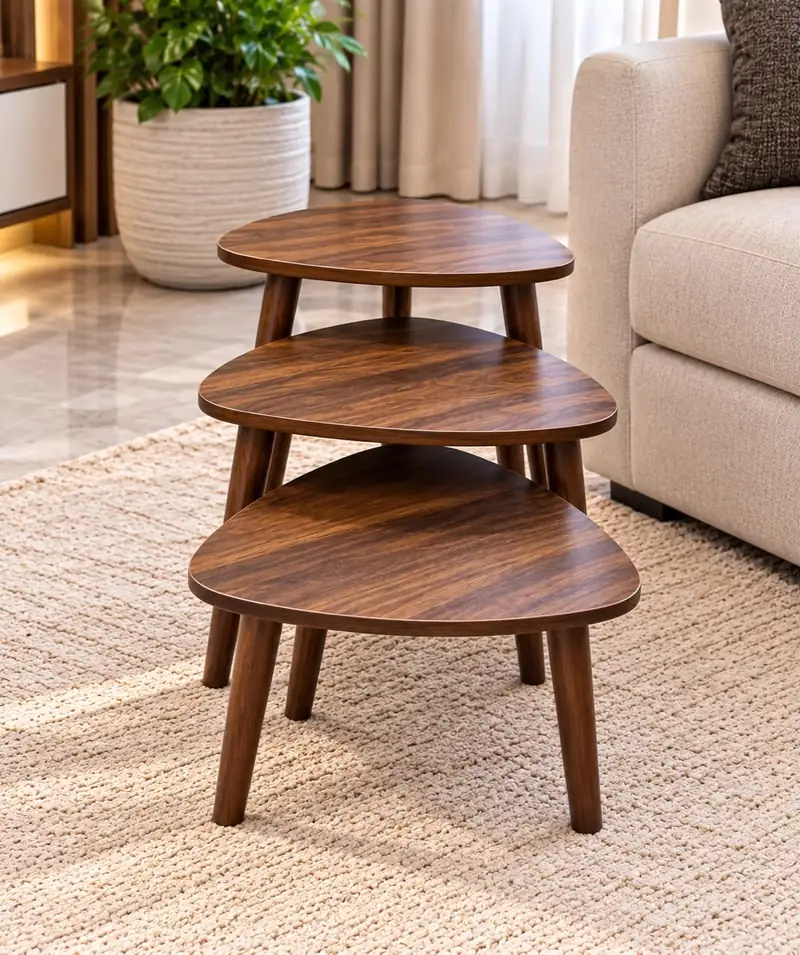
An end table stays the same size all day. Nesting tables change with you.
Most of the time, the set tucks together into the footprint of one small table beside the sofa. When friends come over, pull them apart and everyone gets a spot for a drink. When they leave, slide them back.
Look for:
- Rounded or soft triangle tops, which are easy to move around
- Tapered wood legs that keep the stack looking light
- A warm wood like walnut for depth next to a pale sofa
Set a small plant on the top table so it doesn’t look bare when stacked.
| Nesting Tables | Fixed End Table | |
|---|---|---|
| Floor space | One footprint, several surfaces | One footprint, one surface |
| Guests over | Extra tables in seconds | One spot everyone shares |
| Storage | None, so keep the top tidy | Some have a drawer or shelf |
| Good choice if | You host often in a small room | You need a place to hide remotes |
15. Add Long Lines to Stretch the Room
A striped shirt can make someone look taller. Lines do the same thing to a room.
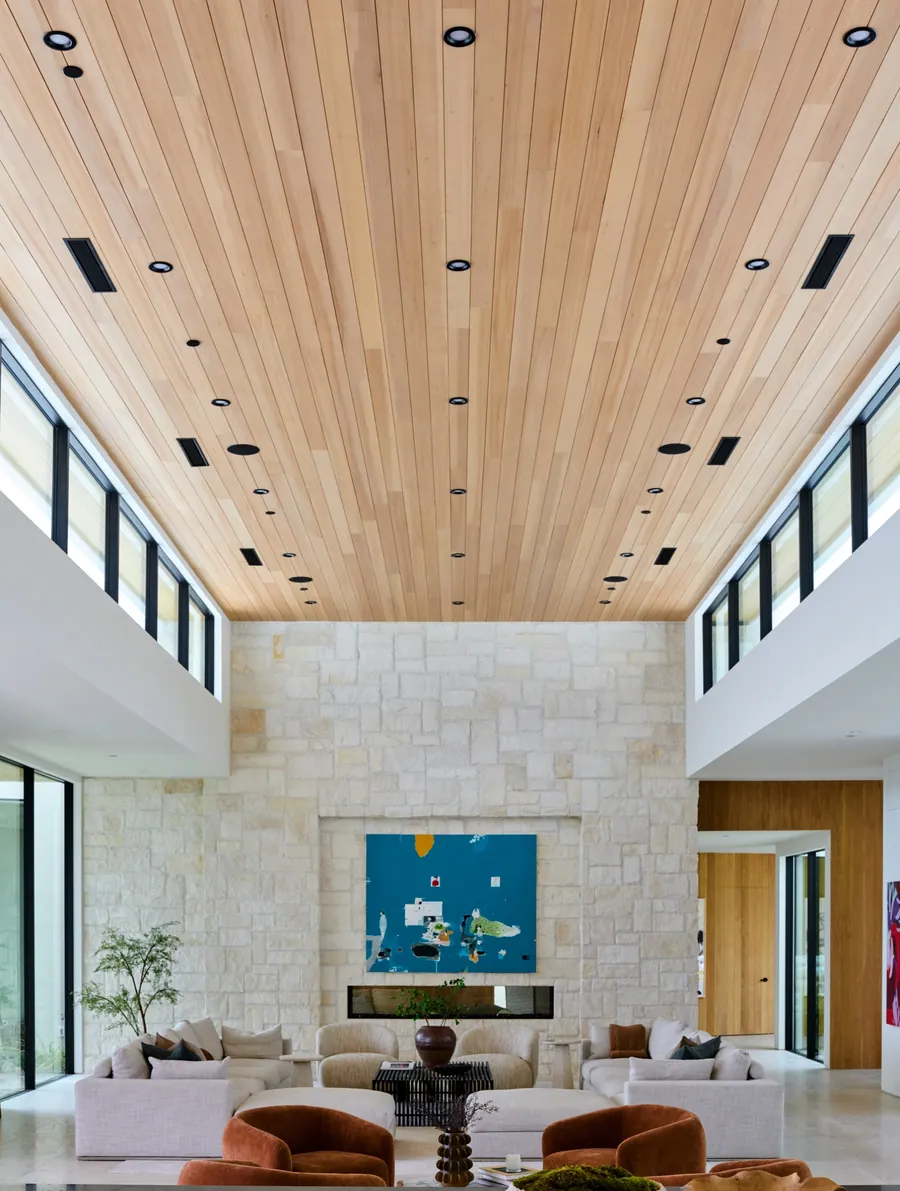
Your eye follows a line all the way to its end. Lines that run up a wall make the ceiling feel higher. Lines that run the long way across the ceiling or floor make the room feel longer.
You can add them in a few ways:
- Vertical slat paneling behind the TV or sofa
- Wood planks or painted boards on the ceiling, set the long way
- Floorboards or a striped rug running in the direction you want the room to stretch
Light wood and soft paint keep the lines quiet, so they shape the room without taking it over.
A flat white ceiling and plain walls. Nothing leads the eye anywhere, so the room reads as a short, square box.
Wood planks run the long way overhead, and slim vertical slats frame one wall. The eye moves up and across, and the room feels taller and deeper.
16. Put a Slim Console Behind the Sofa
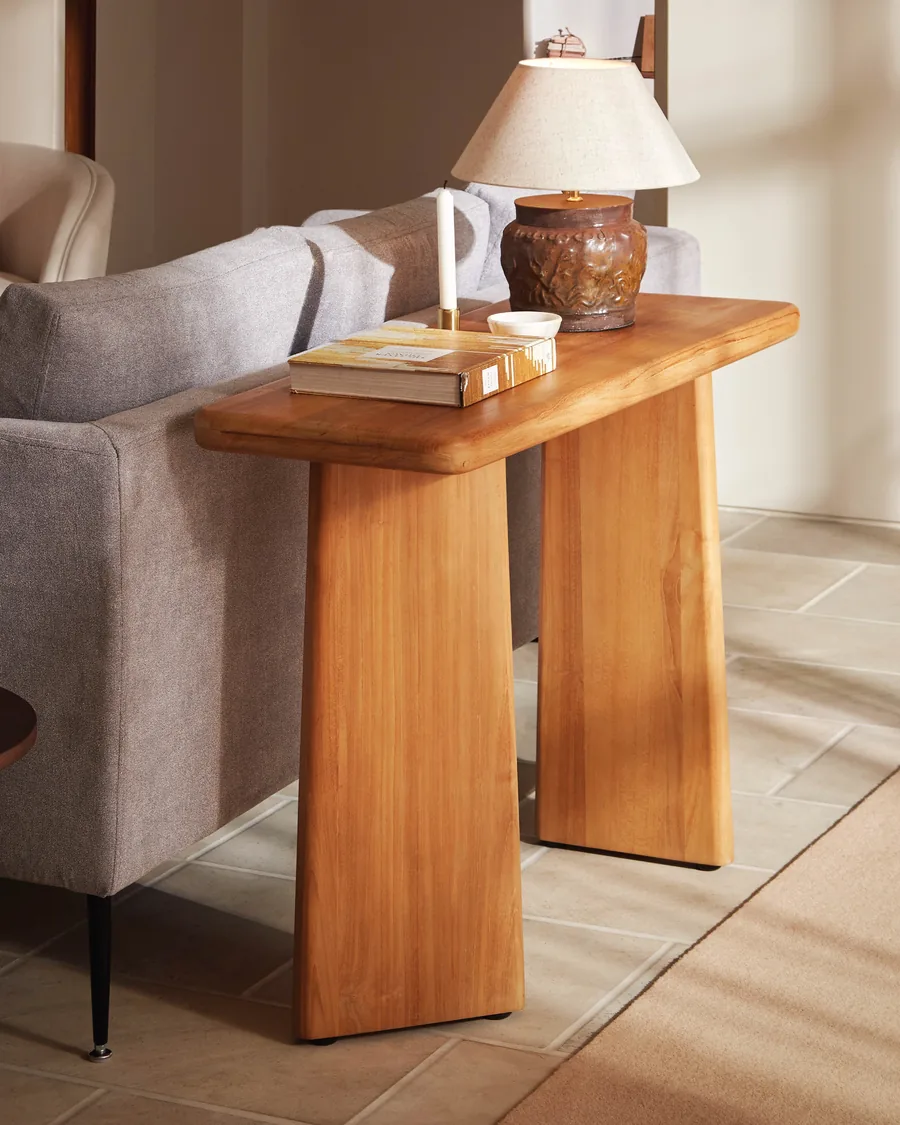
Pull the sofa away from the wall just enough to slide a narrow console table behind it.
It sounds like you’re giving up space, but you’re adding a surface without putting anything in the walkway. The console holds a lamp, a book, and a dish for keys. If your sofa floats in the room, it also gives the back of the sofa a finished look.
Solid wood with chunky slab legs feels warm and grounded next to a soft gray sofa. A narrow top keeps it from poking out into the room.
Pick a console the same height as the sofa back, or just a little lower.
Choose one a bit shorter than the sofa, so it doesn’t stick out past the arms.
Run the lamp cord down a back leg and under the sofa to the nearest outlet.
Style it low, high, low: a book, then the lamp, then a small bowl.
17. Stick to Three Calm Colors
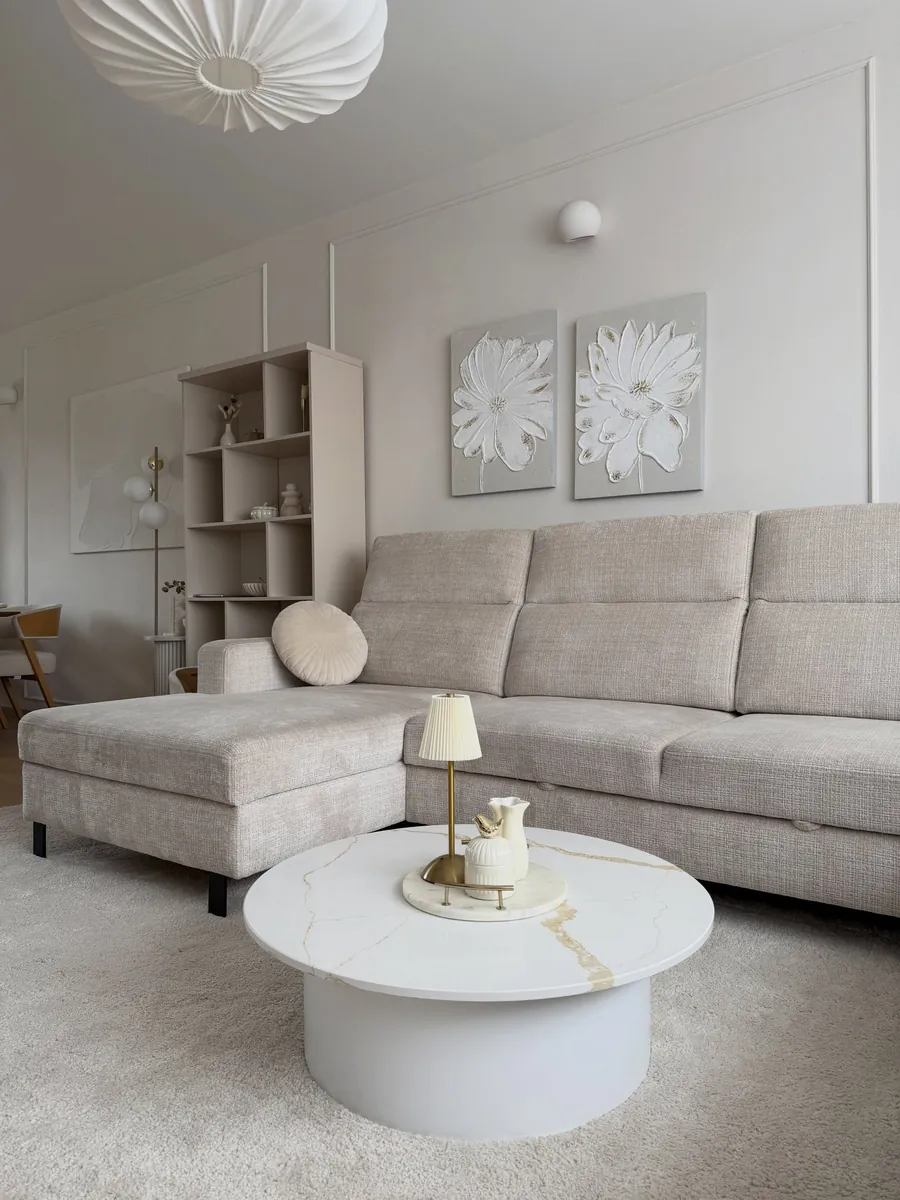
Keep the whole room to three colors, and it instantly feels calmer.
When every piece shares a short color list, nothing fights for attention. The sofa blends into the walls, the walls blend into the rug, and the room reads as one open space instead of a lot of separate things.
A tonal mix works well: warm greige walls, a sand sofa, and creamy white for the coffee table, lamp, and art.
To keep it from looking flat, change the texture instead of the color:
- Nubby woven fabric on the sofa
- A smooth marble tabletop
- A pleated paper pendant overhead
- Raised, textured paint on the canvases
18. Keep a Clear Walking Path
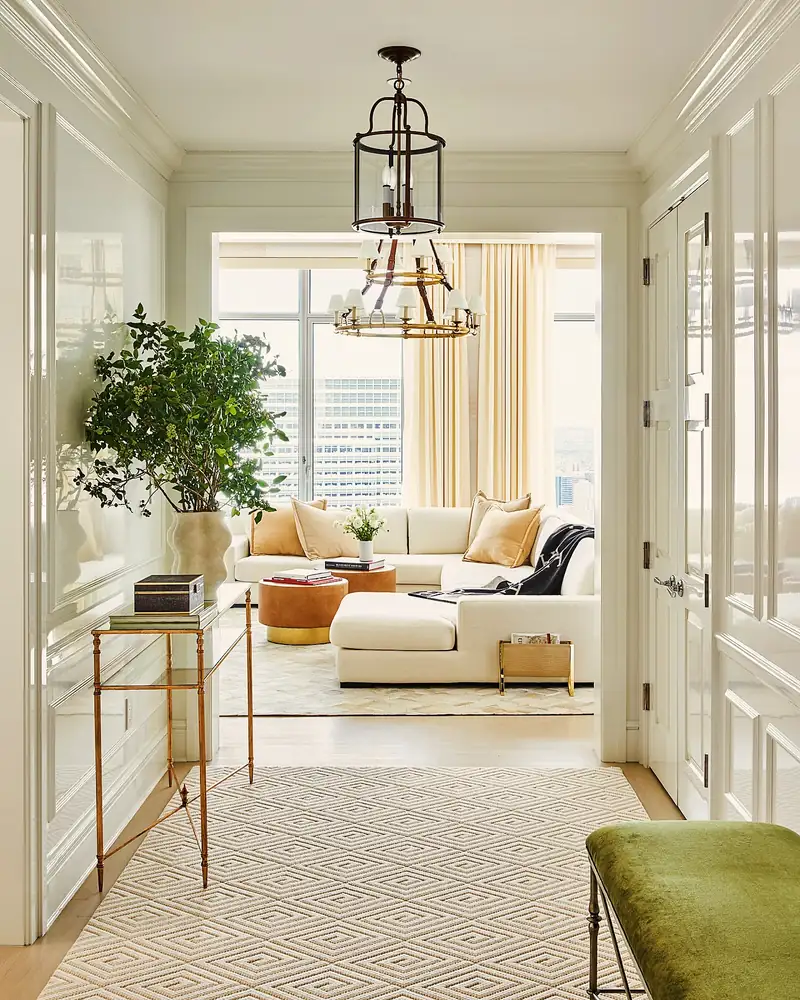
The quickest way to make a room feel cramped is to block the path through it.
If you have to turn sideways to get past the coffee table, or step around a chair to reach the window, the room feels smaller than it is. A clear path lets your eyes, and your feet, travel straight through.
Stand in the doorway and trace how you walk to the sofa, the window, and the next room. Then:
- Move anything that sits in that line.
- Choose slim pieces, like a narrow metal console, for the edges of the path.
- Lay a runner along the route to show the way.
An open view from the door to the window makes the whole room feel deeper.
⚠️ Watch Out
Doors and drawers need room to swing, too. Check that the front door, closet doors, and media cabinet drawers can all open fully without hitting furniture.
19. Bring In One Tall Plant
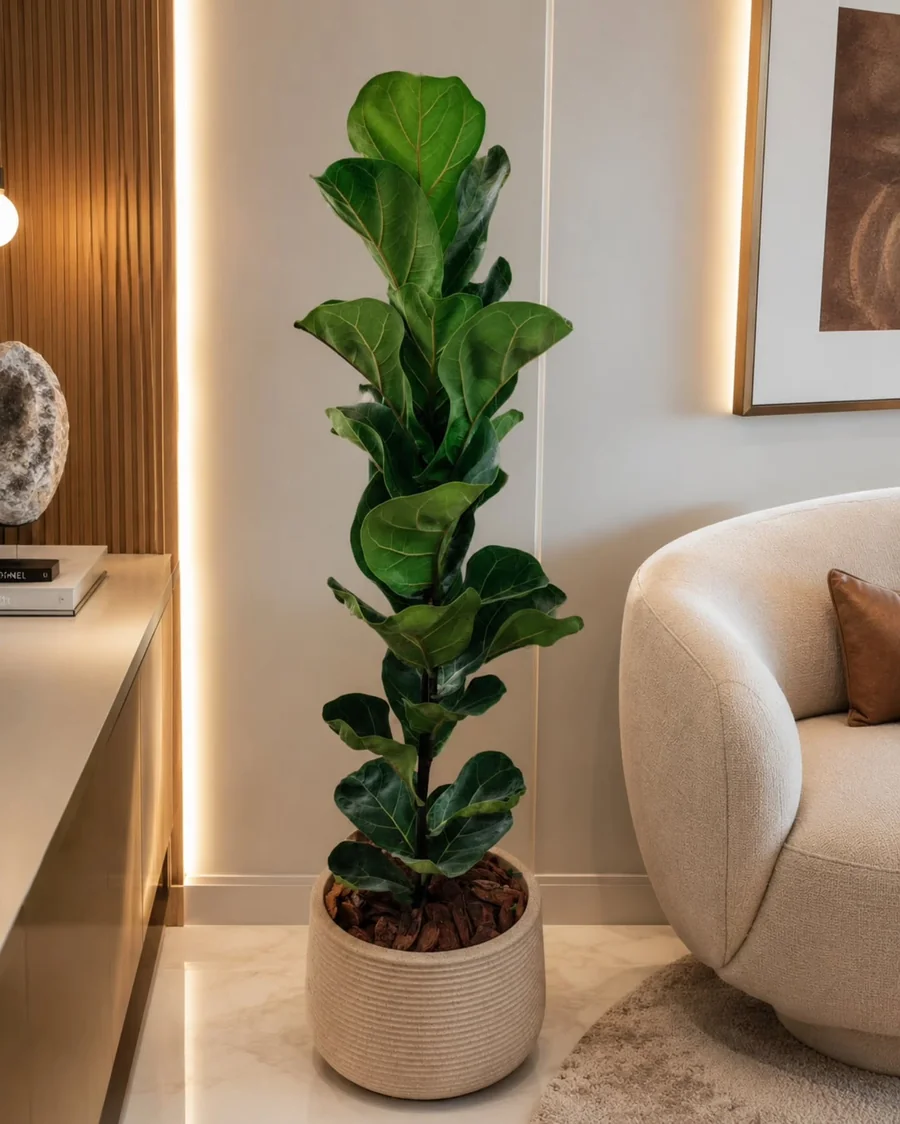
Five small plants on a windowsill look like clutter. One tall plant on the floor looks like a choice.
A tall plant pulls the eye upward, the same way a floor lamp or tall shelf does. It fills an empty corner with something living, and it only takes up the space of its pot.
A fiddle leaf fig with big, glossy leaves is a classic pick. Snake plants, rubber plants, and olive trees are other upright options.
Set it in a ribbed or woven pot in a neutral shade, so the green does the talking. The gap between a chair and a cabinet, or the corner near a window, works well.
20. Build a Window Seat With Storage
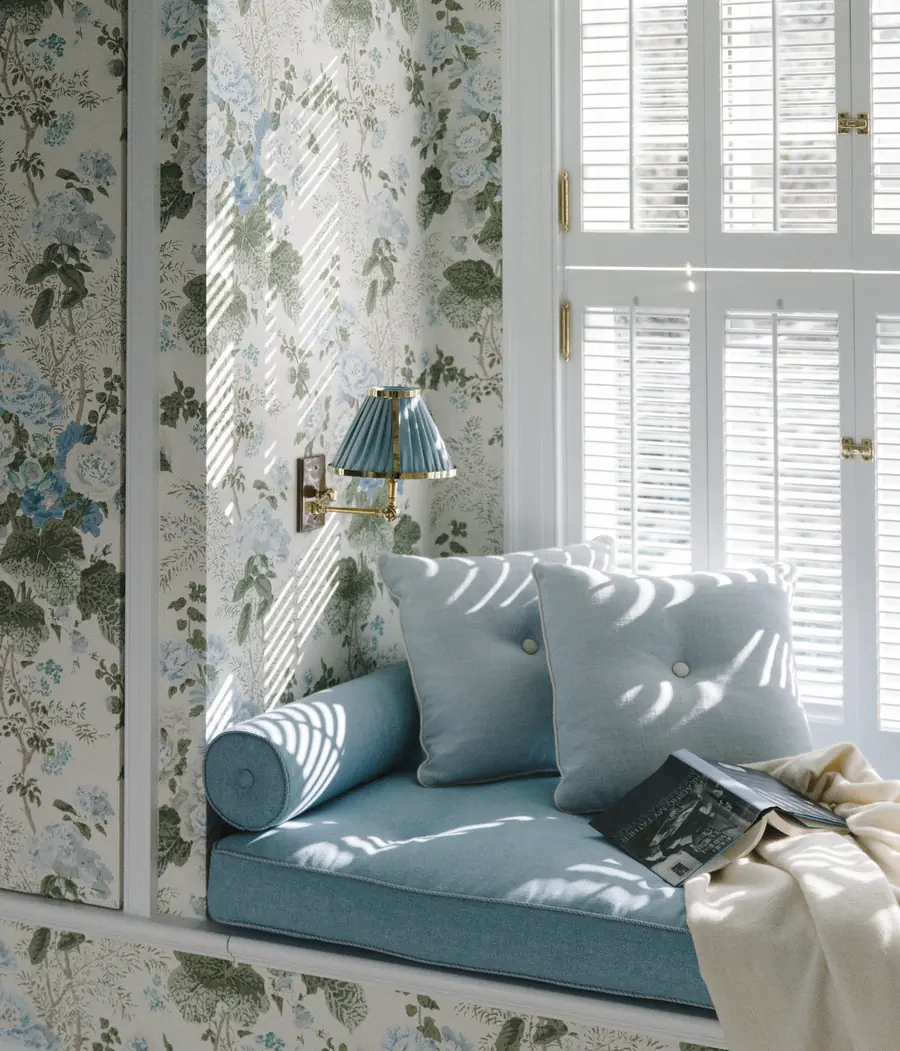
A deep window with nothing under it is wasted space. Turn it into a seat, and you get extra seating, storage, and the best light in the room all in one spot.
If you can, build a simple bench with drawers or lift-up lids underneath. It’s a smart home for board games, spare pillows, or kids’ toys. A ready-made storage bench slid under the window works too.
Then make it comfortable:
- A thick cushion in a sturdy linen or wool blend
- A bolster at one end and two square pillows against the wall
- A swing-arm wall lamp for reading after dark
Indoor shutters let you control the glare without giving up the seat.
Check before you build
21. Clear Off Your Flat Surfaces
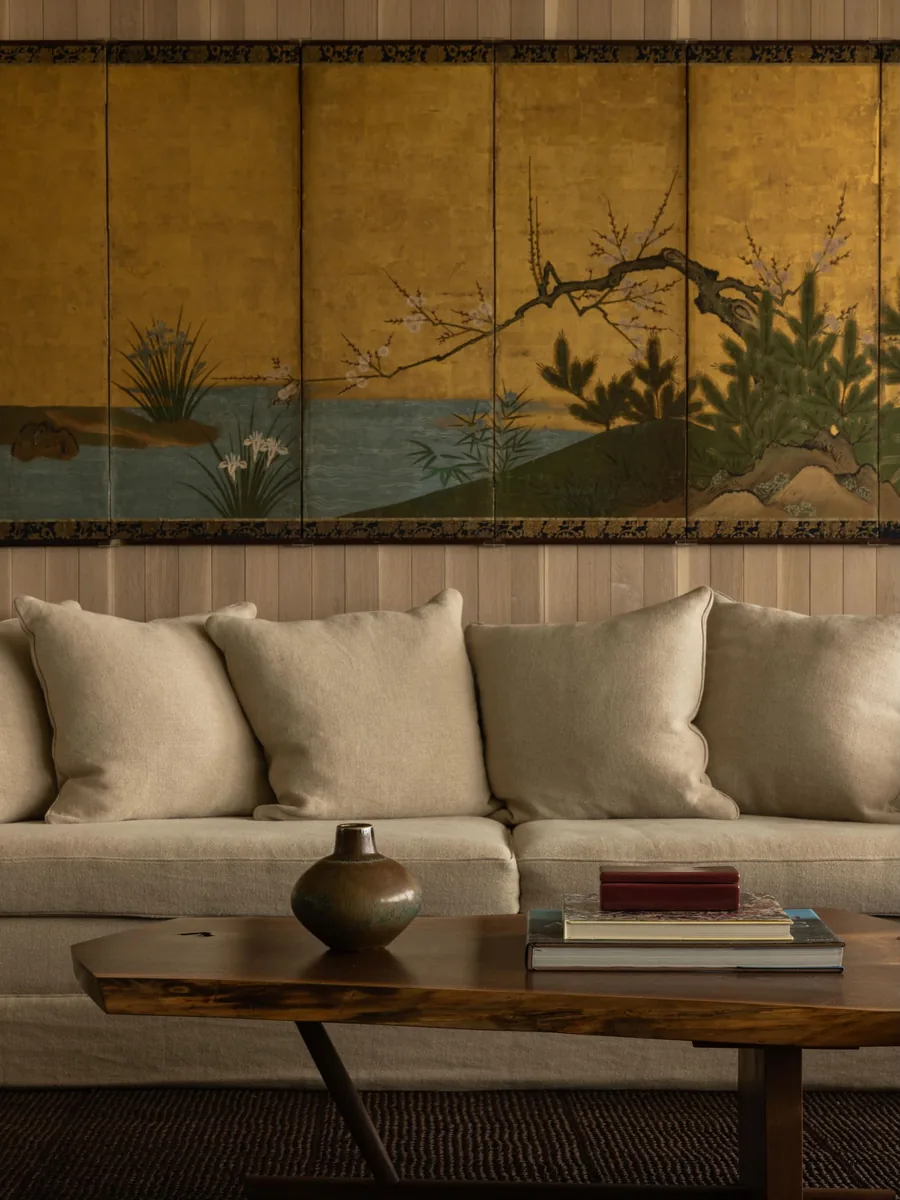
Clear the coffee table completely, then put back just two or three things.
Crowded surfaces are one of the biggest reasons a small room feels busy. Every tray, candle, remote, and stack of mail is one more thing your eye has to read. When tables are mostly bare, the room can breathe.
Choose pieces with some weight and meaning, like a handmade ceramic vase, a short stack of books you actually love, and a small lidded box to hide the remotes. Let the wood grain show between them.
Then do the same on the console, side tables, and shelves.
Leave more of every surface bare than covered. If a table looks a little empty to you, it’s probably just right.
Make Your Small Living Room Feel Like More
A small living room doesn’t need more square feet to feel open. It needs light that reaches the corners, furniture that lets the floor show, and storage that keeps the daily mess out of sight.
You don’t have to try all 21 at once. Start with whatever bugs you most, maybe the TV stand eating up floor or the coffee table you keep bumping into, and fix that first. Add another idea next weekend.
That’s really how to decorate a small living room: one smart change at a time, until the space feels open, calm, and like yours.
Save this list to your Pinterest board so it’s ready when you want your next idea.