


Brazilian lemonade is a creamy, tangy drink made by blending fresh limes with water, sugar, and sweetened condensed milk. Despite its name, this drink contains no lemons at all. It gets its name from a translation quirk in Portuguese, where the word for lime and lemon overlap. In Brazil, this drink is called limonada, and outside the country it became known as Brazilian lemonade even though limes are the star ingredient.
Most people come across this drink one of two ways: they taste it at a Brazilian steakhouse and want to recreate it at home, or they see it online and wonder why a lime drink is called “lemonade.” A third group has already tried making it and ended up with something surprisingly bitter instead of the smooth, sweet version they were expecting.
This article covers all three situations. It explains what Brazilian lemonade actually is, why the name doesn’t match the fruit, why it sometimes turns bitter and how to prevent that, the different methods people use to make it, popular variations, and whether it fits into a healthy diet — along with a full nutrition breakdown and answers to common questions.
What Is Brazilian Lemonade?
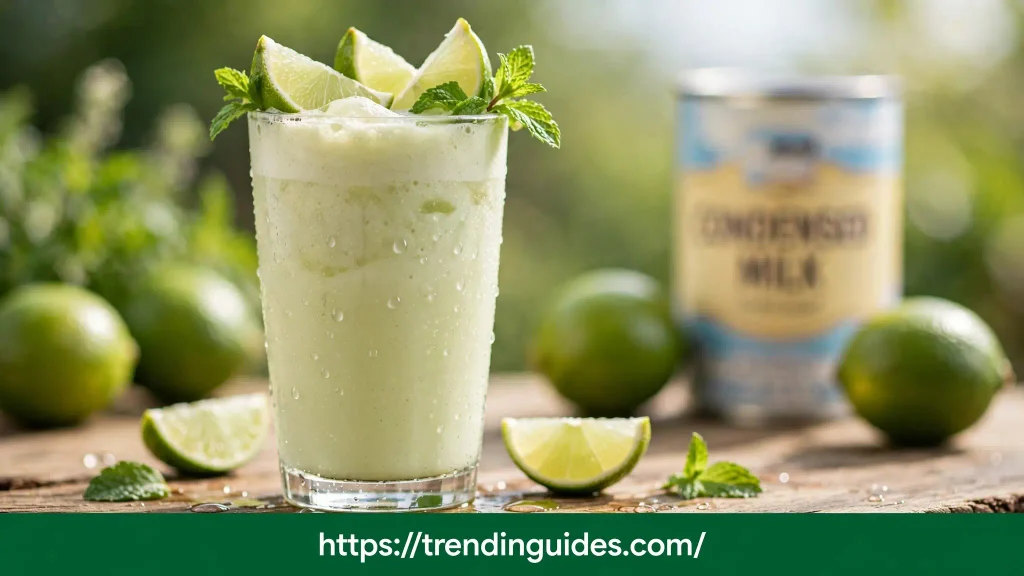
Brazilian lemonade is a blended drink made from whole limes, water, sugar, and sweetened condensed milk. The limes are blended briefly with their skin still on, then strained to remove the bitter pulp before the drink is sweetened and served cold. The result is a pale green, creamy beverage with a tart and sweet flavor.
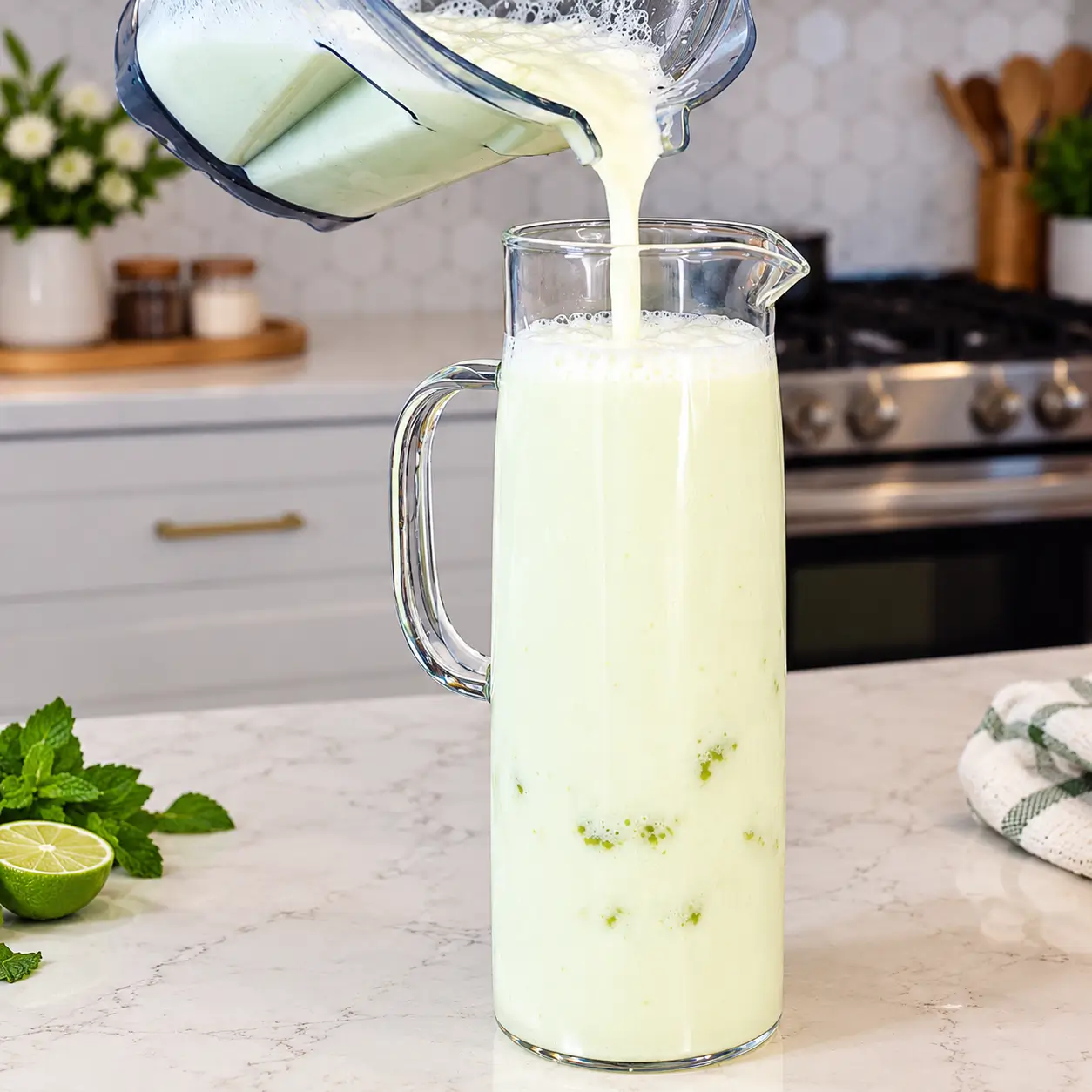
Brazilian Lemonade
Ingredients
Equipment
Method
Notes
Why Is It Called Lemonade When It’s Made With Limes?
The name comes down to how Portuguese groups citrus fruit. In Brazil, the word limão covers both lemons and limes as a general category, with more specific names used to tell them apart: yellow lemons are limão siciliano (Sicilian lemon), while green limes are limão taiti (Tahitian lemon). Because both fruits fall under the umbrella term limão, juice made from either one gets called limonada — which translates directly to “lemonade” in English. When the recipe crossed into English-speaking countries, the translated name stuck even though the fruit used is a lime.
You’ll also see this drink called limonada suíça, or “Swiss lemonade,” on Brazilian menus. That nickname comes from the sweetened condensed milk in the recipe — a product long associated in Brazil with the Swiss company Nestlé, which has manufactured condensed milk there for over a century. Condensed milk is what gives the drink its creamy texture and mellower sweetness compared to a version made with sugar alone; not every recipe uses the “Swiss” label, but it’s common enough that you’ll run into it.
What Does Brazilian Lemonade Taste Like?
Brazilian lemonade tastes tart, sweet, and slightly creamy at the same time. The lime gives it a sharp citrus bite, similar to a limeade, while the sweetened condensed milk smooths that sharpness out with a rounded, milky sweetness. Right after blending, the texture is light and frothy, with a pale green color that comes from the lime skin. Compared to traditional lemonade, it feels richer and less one-dimensional because of the dairy component.
Why Is Brazilian Lemonade So Bitter? (And How to Stop It)
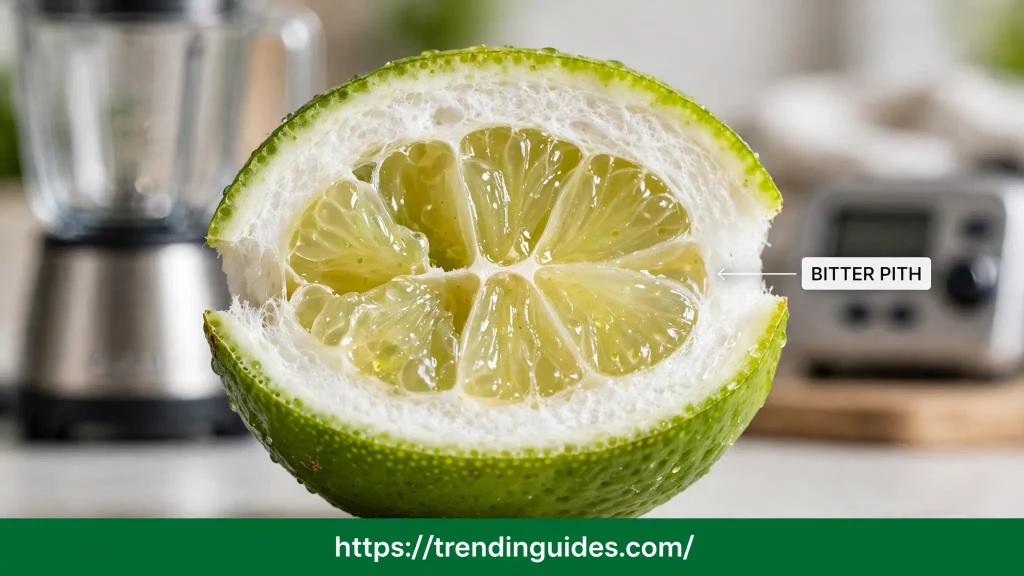
Almost all bitterness problems with this drink come down to one thing: the white pith under the lime’s skin. If you understand that, the rest is just prevention and damage control.
The cause. The pith — the spongy white layer just beneath the lime’s green skin — contains bitter compounds that release into the liquid when a blender’s blades tear through it. The longer the pith spends being blended, the more of those compounds end up in your drink. This is also why the type of blender matters more than people expect: a high-powered blender (like a Vitamix) shreds the pith much faster than a basic countertop blender, so the same blend time can produce very different results depending on what’s in your kitchen. If your batches keep turning out bitter even at 10–15 seconds, your blender is probably stronger than the recipe assumed, and you should cut the time down further.
Two ways to prevent it:
- Remove the pith before blending. Slice the limes and cut away the white layer with a knife before they go in the blender. This takes a few extra minutes but removes the problem at the source rather than racing against the clock.
- Limit blend time. If you’re blending whole limes, skin and pith included, keep it to 10–20 seconds — closer to 10 for a milder result. Bitterness increases sharply past the 20-second mark, so a countdown timer is more reliable than guessing. Straining the mixture through a fine mesh strainer afterward removes leftover pulp that could otherwise keep releasing bitter flavor even after blending stops.
Some cooks combine both approaches — light pith removal plus a short blend — when they want strong citrus aroma with zero bitterness.
If a batch already turned out bitter, you can usually rescue it: stir in more sweetened condensed milk, sugar, or simple syrup, since sweetness masks bitterness on the palate, and add a splash of extra water to dilute the concentration of bitter oils. A second pass through a clean strainer helps if pulp is still present. For the next batch, apply the two prevention steps above from the start.
Different Methods for Making Brazilian Lemonade
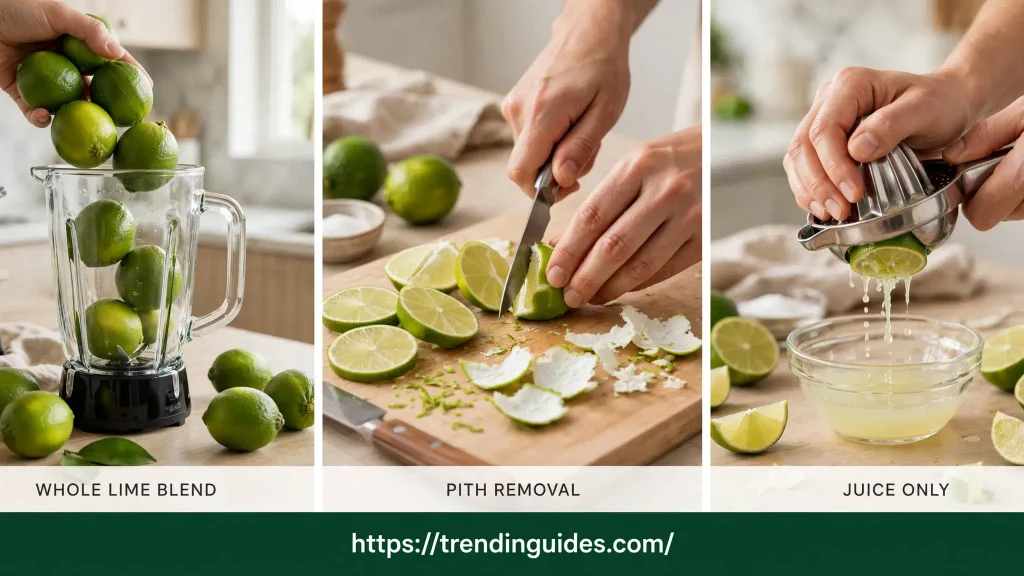
Cooks use a few different techniques, and each produces a noticeably different flavor and texture.
Whole Lime Blending Method
Limes go into the blender with skin and pith intact, then the mixture is strained afterward. This is the fastest method and needs the least prep — just wash and wedge the limes. It also produces the most intense citrus aroma, since the essential oils in the peel release directly into the water. The tradeoff is that it carries the highest risk of bitterness, so blend time has to stay short and precise.
Pith Removal Method for a Milder Taste
The white layer under the lime’s skin is cut away before blending. This adds a few minutes of prep but produces a noticeably smoother, less bitter drink, since the main source of bitterness is removed before it ever reaches the blades. Some recipes pair this with grated lime zest — just the outer green skin, no pith — added back in for aroma without the bitterness.
Juice-Only Method Without Blending the Peel
Instead of blending whole limes, this method uses freshly squeezed lime juice mixed with water, sugar, and condensed milk. It’s the mildest and most predictable option, since no pith or peel ever enters the mix, but it takes longer since each lime has to be juiced individually. It’s a good choice for guests with sensitive palates or anyone who wants full control over bitterness.
Popular Brazilian Lemonade Variations
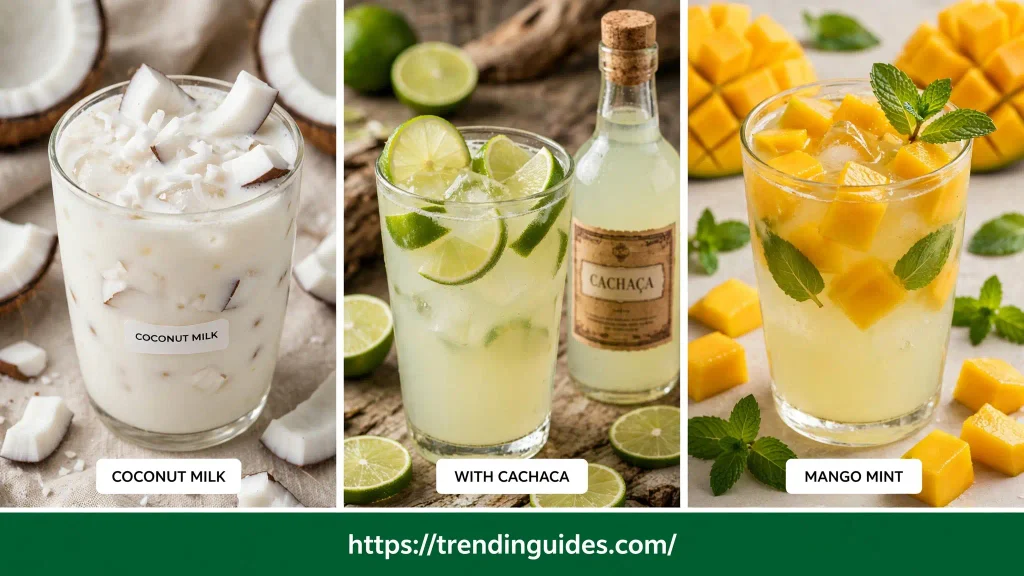
Dairy-Free Version With Coconut Milk
Swapping sweetened condensed milk for full-fat coconut milk keeps the drink creamy while making it dairy-free. Coconut milk adds a subtle tropical note that pairs naturally with lime, and maple syrup or agave often replaces the sugar for a fully plant-based version. The flavor shifts slightly from the traditional recipe but keeps the same creamy, refreshing character.
Alcoholic Version With Cachaça, Rum, or Tequila
Adding a spirit like cachaça, white rum, or tequila directly into the blender distributes the alcohol evenly through the drink instead of leaving it floating on top. Cachaça — a Brazilian sugarcane spirit — is a particularly natural pairing since it shares the drink’s cultural origin. Prosecco can also be stirred in after blending, rather than blended, for a lighter and bubbly version.
Fruit and Herb Variations: Mango or Mint
Ripe mango or fresh mint leaves can go into the blender alongside the limes. Mango adds natural sweetness and body, which pairs especially well with the coconut milk version, while mint adds a cooling, herbal note that works well in hot weather. Both follow the same core process, blend, strain, sweeten, with the extra ingredient added during the first blend.
Dairy-Free Version With Coconut Milk
Swapping sweetened condensed milk for full-fat coconut milk keeps the drink creamy while making it dairy-free. Coconut milk adds a subtle tropical note that pairs naturally with lime, and maple syrup or agave often replaces the sugar for a fully plant-based version. The flavor shifts slightly from the traditional recipe but keeps the same creamy, refreshing character.
Alcoholic Version With Cachaça, Rum, or Tequila
Adding a spirit like cachaça, white rum, or tequila directly into the blender distributes the alcohol evenly through the drink instead of leaving it floating on top. Cachaça — a Brazilian sugarcane spirit — is a particularly natural pairing since it shares the drink’s cultural origin. Prosecco can also be stirred in after blending, rather than blended, for a lighter and bubbly version.
Fruit and Herb Variations: Mango or Mint
Ripe mango or fresh mint leaves can go into the blender alongside the limes. Mango adds natural sweetness and body, which pairs especially well with the coconut milk version, while mint adds a cooling, herbal note that works well in hot weather. Both follow the same core process — blend, strain, sweeten — with the extra ingredient added during the first blend.
Is Brazilian Lemonade Healthy?
Brazilian lemonade can fit into a balanced diet in moderation, though it does contain added sugar from both the sweetener and the condensed milk. A single serving provides vitamin C from the fresh lime juice, but the condensed milk also contributes sugar and saturated fat worth accounting for if you’re watching either one.
Calories and Sugar Per Serving
A typical one-cup serving contains around 140 calories and roughly 20 grams of sugar, most of it from the added sugar and condensed milk rather than the lime itself — putting it closer to a dessert beverage than a plain citrus drink. A full pitcher serving, rather than a measured cup, can easily double those numbers, so portioning matters if you’re tracking intake. Sugar content also varies slightly by brand of condensed milk, so checking the label is worthwhile if you’re being precise.
Healthier Ingredient Swaps
Cutting the added sugar by half while relying more on the condensed milk’s natural sweetness is the simplest adjustment. Swapping sweetened condensed milk for a smaller amount of honey, or for a sugar-free condensed milk alternative, lowers both calories and sugar further. A natural low-calorie sweetener like stevia can replace sugar entirely for people managing intake more closely. Each of these swaps shifts the flavor slightly but keeps the core citrus-and-cream character intact.
How to Store Brazilian Lemonade
Brazilian lemonade is best served immediately after blending. The lime pith keeps releasing bitter compounds the longer the drink sits, even after straining, so flavor quality drops the longer it waits before serving.
Leftovers keep in the refrigerator for up to 24 hours in a sealed pitcher, though the flavor becomes noticeably more bitter and less fresh the longer it sits — drinking it within a few hours produces the best result. Stir well before serving leftovers, since the condensed milk tends to settle toward the bottom over time. Freezing isn’t recommended: the texture changes and the bitterness intensifies once thawed.
Brazilian Lemonade vs. Regular Lemonade
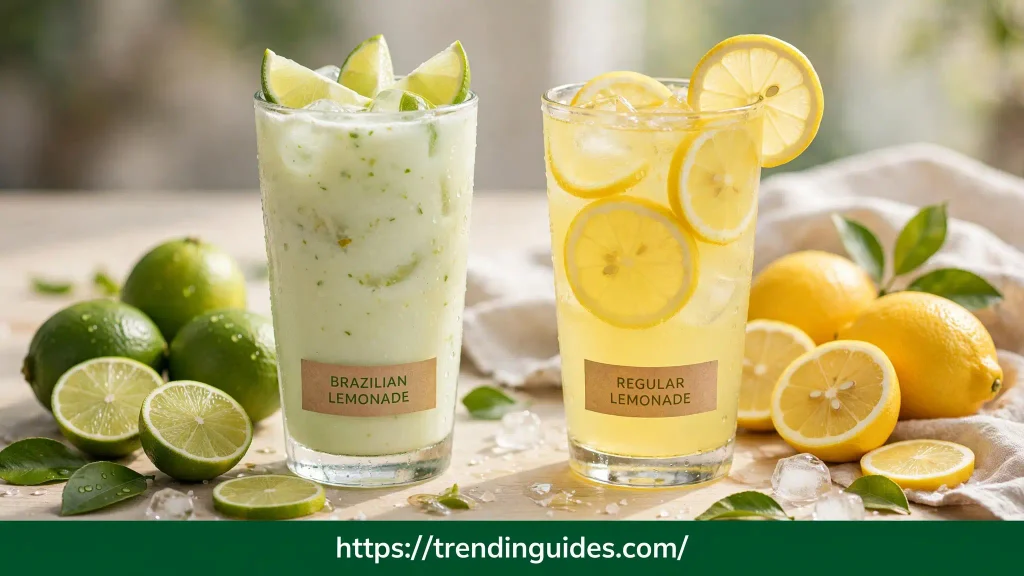
Regular lemonade is lemon juice mixed with sugar and water — clear, sharp, and purely citrus. Brazilian lemonade uses whole blended limes and sweetened condensed milk, producing a cloudy, pale green, and noticeably creamier drink with rounder sweetness. Because the blending method extracts oils from the lime peel itself, it also carries a stronger citrus aroma than a typical squeezed lemonade.
Nutrition Facts (Per 1 Cup Serving)
| Nutrient | Amount |
|---|---|
| Calories | 140 kcal |
| Total Fat | 3 g |
| Saturated Fat | 2 g |
| Sodium | 40 mg |
| Total Carbohydrates | 27 g |
| Dietary Fiber | 1 g |
| Sugars | 20 g |
| Protein | 2 g |
| Vitamin C | 20% of Daily Value |
| Calcium | 6% of Daily Value |
Values are estimates based on a standard recipe using limes, water, sugar, and sweetened condensed milk. Exact numbers vary by brand and portion size.
Frequently Asked Questions
What is Brazilian lemonade?
A blended drink made from whole limes, water, sugar, and sweetened condensed milk, known in Portuguese as limonada.
Why is Brazilian lemonade so bitter?
It turns bitter when the white pith under the lime skin is blended too long, or when leftover pulp carrying that bitterness isn’t strained out.
What does Brazilian lemonade taste like?
Tart and citrusy from the lime, balanced by a creamy, rounded sweetness from the condensed milk.
Is Brazilian lemonade healthy?
It can fit into a balanced diet in moderation, but it contains added sugar and is better treated as an occasional treat than a daily drink.
Can I make Brazilian lemonade without a blender?
Not really in the traditional sense — the blender is what extracts oil and flavor from the lime skin. If you don’t have one, the juice-only method (squeezing limes by hand and mixing the juice with water, sugar, and condensed milk) gets you a similar flavor without blending.
Where can I find Brazilian lemonade near me?
Brazilian restaurants and steakhouses are the most reliable source, along with some Latin American cafés and juice bars that feature international drinks on their menu.
Conclusion
Brazilian lemonade stands out as a creamy, tangy drink made from whole limes rather than lemons, with its name coming from a Portuguese translation quirk rather than the fruit itself. The pith is the source of almost every bitterness problem people run into, and removing it, or simply keeping blend time short, solves the issue in most kitchens. Whether made the traditional way with condensed milk or adapted into a dairy-free or alcoholic version, the drink adapts easily to different diets and occasions. With the right technique, it’s easy to get right on the first try.