
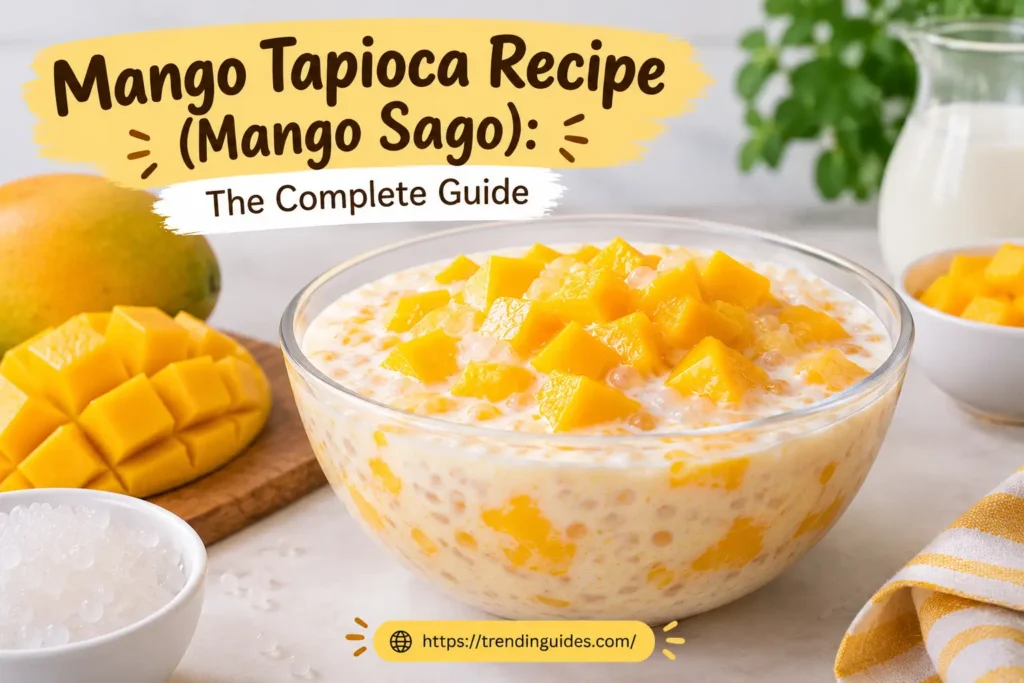

Mango tapioca, also called mango sago, is a chilled dessert made of ripe mango, creamy milk, and soft tapioca pearls. It started in Hong Kong dessert shops in the early 1980s and quickly spread across Asia, including the Philippines, and now home kitchens everywhere. The best part is that it needs no oven and no fancy tools, just a pot, a blender, and about 40 minutes.
If you love bubble tea, mango float, or coconut tapioca pudding, this dessert sits right in that same family. It pairs the natural sweetness of ripe mango with the chewy bite of small tapioca pearls, and a splash of coconut milk or condensed milk pulls everything together into a smooth, spoonable treat.
This guide gives you more than one method. You will learn the classic Hong Kong style with coconut milk, the Filipino style with cream and condensed milk, a version made with gulaman instead of pearls, and a drink style version with large boba pearls. You will also find the answers to the most common questions people search for, including whether mango sago and mango tapioca are the same thing, whether this dessert is healthy, and how to scale the recipe if you plan to sell it. Pick the mango tapioca recipe style that fits your kitchen, budget, and taste, and skip straight to the section you need.
What Is Mango Tapioca (Mango Sago)?
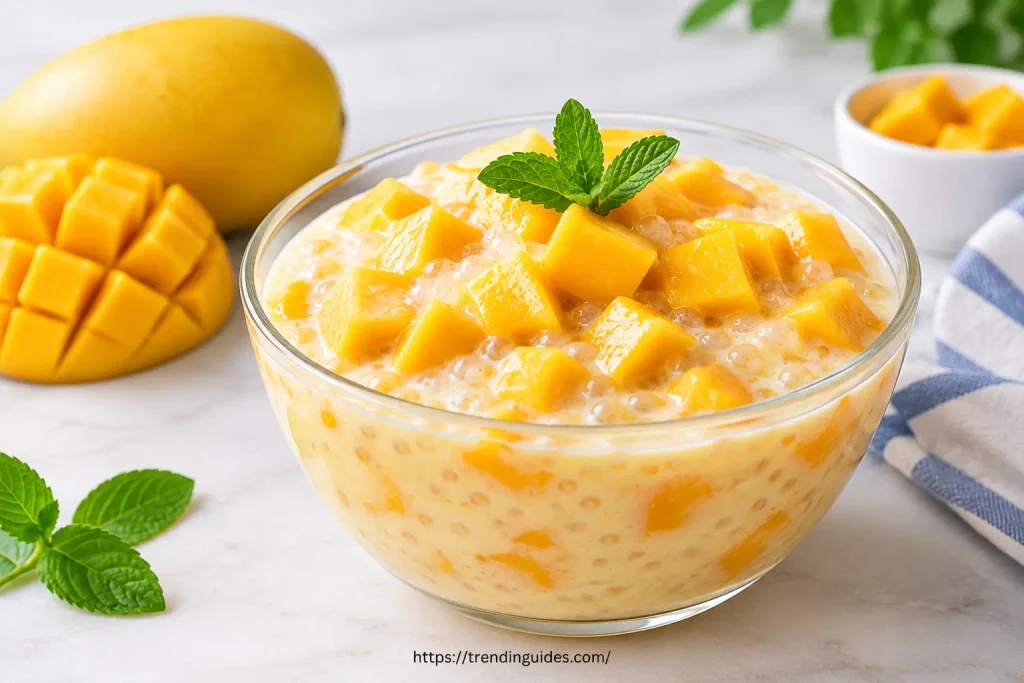
Mango tapioca is a cold dessert made with ripe mango, milk or cream, and cooked tapioca pearls. The name mango sago is used just as often, even though most recipes actually use tapioca pearls rather than true sago. People enjoy it as a light dessert after a meal or as a cooling treat on a hot day.
Where Mango Sago Comes From
Mango sago traces back to Hong Kong dessert restaurants in the early 1980s, where it became a signature item alongside sticky rice and grass jelly desserts. The original Hong Kong version, called yeung zee gum lo, combines mango puree with tapioca pearls and shredded pomelo for a tart, citrusy contrast against the sweet mango. From there, the dessert traveled through mainland China, Thailand, and the Philippines, where cooks adapted it with local ingredients like condensed milk and evaporated milk. Today you can find mango sago on the menu at Asian dessert chains, boba shops, and home tables across the world.
Are Mango Sago and Mango Tapioca the Same?
Yes, mango sago and mango tapioca refer to the same dessert in almost every recipe you will find today. True sago comes from the pith of the sago palm tree, while tapioca pearls come from cassava root starch. Cassava grows faster and costs less than sago palm, so nearly every modern recipe, including restaurant versions, uses tapioca pearls and simply keeps the traditional name sago. The two are close enough in taste and texture that recipes treat them as interchangeable. If a label says pure sago pearls, expect a slightly different texture and check the package for cooking time.
How Filipino Mango Tapioca Differs From the Hong Kong Version
Filipino mango tapioca usually swaps coconut milk for all-purpose cream, evaporated milk, and condensed milk, which gives the dessert a richer, more custard-like taste. Many Filipino recipes also add mango flavored powdered juice for extra color and sweetness, or replace tapioca pearls with gulaman cubes for a firmer bite. This version is a familiar treat at Filipino parties, canteens, and small dessert businesses, and it is often served in individual cups for easy selling.
Mango Tapioca Ingredients and Best Substitutes
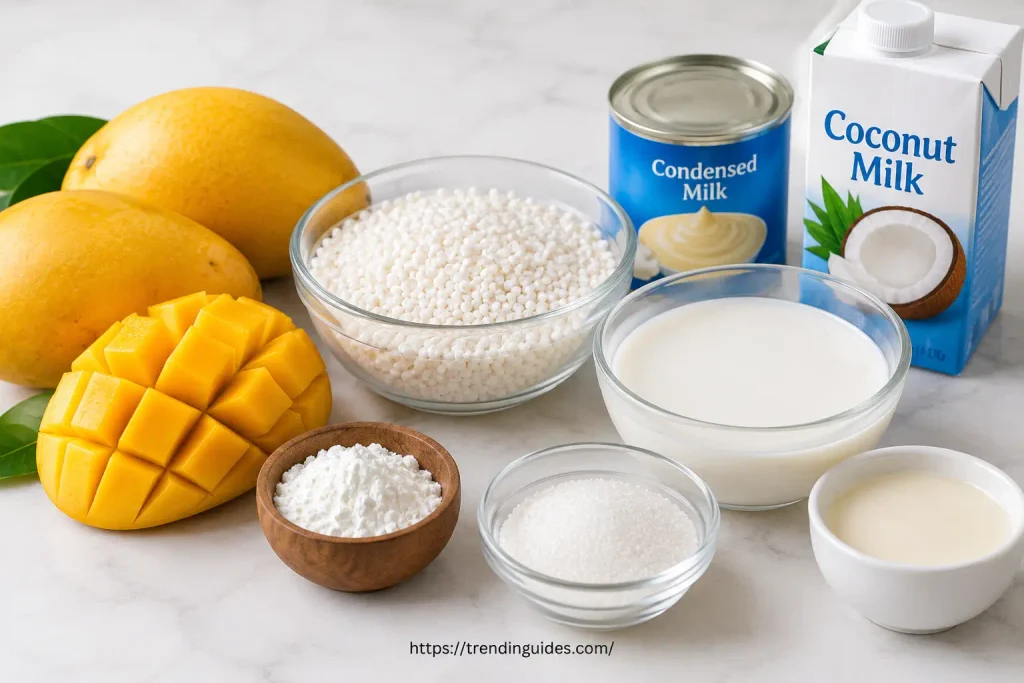
The main ingredients in mango tapioca are ripe mango, tapioca pearls, and a milk base such as coconut milk, cream, or condensed milk. Knowing the substitutes lets you adapt the recipe to what is in your kitchen.
Best Mangoes to Use
Ripe mango gives this dessert its color, sweetness, and signature aroma, so choose ripe fruit. A ripe mango feels slightly soft when you press it gently with your thumb, similar to a ripe avocado. Good varieties for this recipe include Carabao mango (also sold as Manila mango) in the Philippines, and Ataulfo or Alphonso mango elsewhere, since all of these have smooth flesh and little fiber. If your mangoes still feel firm and green, leave them on the counter at room temperature for two to three days until the skin turns from green to a deeper yellow or red and gives slightly to touch. Avoid the refrigerator for ripening, since cold temperatures slow the process down.
Tapioca Pearls Explained
Small tapioca pearls, often labeled dry sago or mini pearls, are the standard choice for mango tapioca because they cook faster and give a light, chewy bite without hours of work. Large pearls, the same kind used in bubble tea, take much longer to cook through and suit a drink style dessert better than a spoonable pudding. Instant tapioca pearls are also sold in some stores and cook in as little as 10 minutes, though they can turn softer once fully cooled. Pearl size is the biggest factor in cooking time, so always check the package for size and cooking guidance before you start.
Milk Choices
Unsweetened coconut milk is the classic base for Hong Kong style mango sago, and it adds a light, tropical richness that pairs naturally with mango. Sweetened condensed milk adds sweetness and a thicker, creamier texture, while evaporated milk and all-purpose cream give Filipino style versions their signature smoothness. Oat milk or soy milk work as dairy free substitutes, though they will taste less rich than coconut milk or cream. You can also mix two milks together, such as coconut milk with a small amount of condensed milk, to balance richness and sweetness to your liking.
Sweetener Swaps
Simple syrup, agave, honey, and maple syrup all work as substitutes for condensed milk if you want a lighter or vegan version. Because these liquid sweeteners are thinner than condensed milk, add them a little at a time and taste as you go, since the sweetness level will differ from brand to brand. Keep in mind that a vegan version made without condensed milk will also have a thinner, less custard like texture, which some people actually prefer for a fresher taste.
Mango Tapioca Recipe (Main Method)
Follow your recipe card for exact measurements and timings. This section covers the two steps where most cooks go wrong: cooking the pearls and cutting the mango.
How to Cook Tapioca Pearls Step by Step
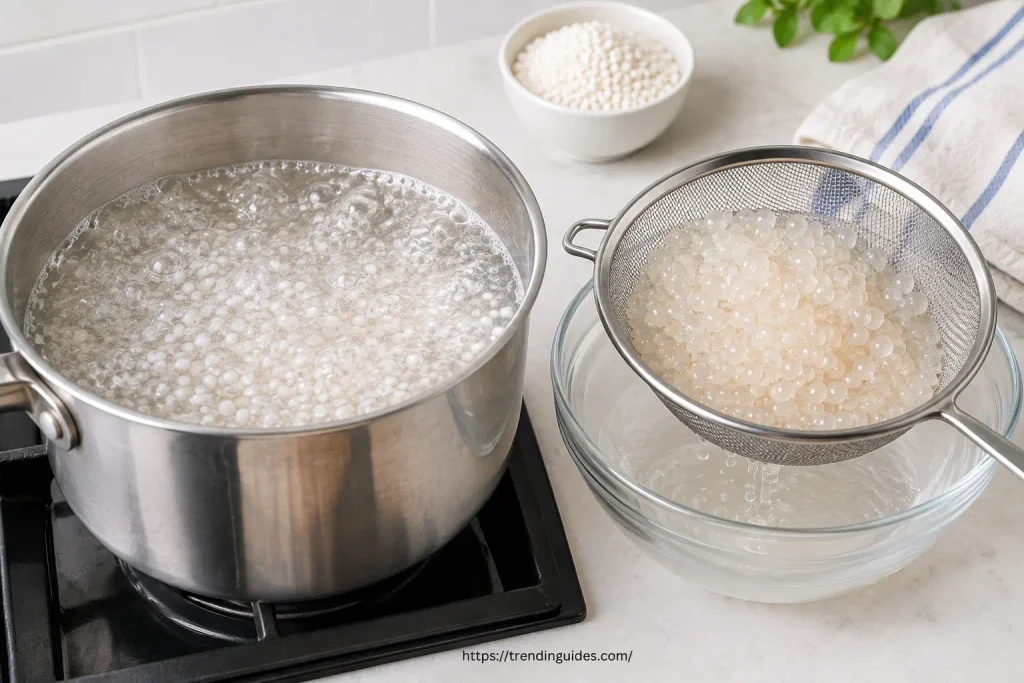
Bring the water to a full rolling boil before adding the tapioca pearls, since cold or lukewarm water causes the starch to dissolve into a gluey paste instead of holding its shape. Once the water is boiling hard, add the pearls, stir once, and let them simmer for the time listed on your package, usually around 20 minutes for mini pearls. Check for doneness by looking at the center of a pearl. If you still see a small white dot, turn off the heat, cover the pot, and let the pearls sit in the hot water for a few more minutes until they turn fully clear. Once fully cooked, drain the pearls and rinse them in cold water to stop the cooking and prevent clumping, but avoid adding ice directly, since it can harden the pearls and ruin the chewy texture.
How to Peel and Cut a Mango Without Waste
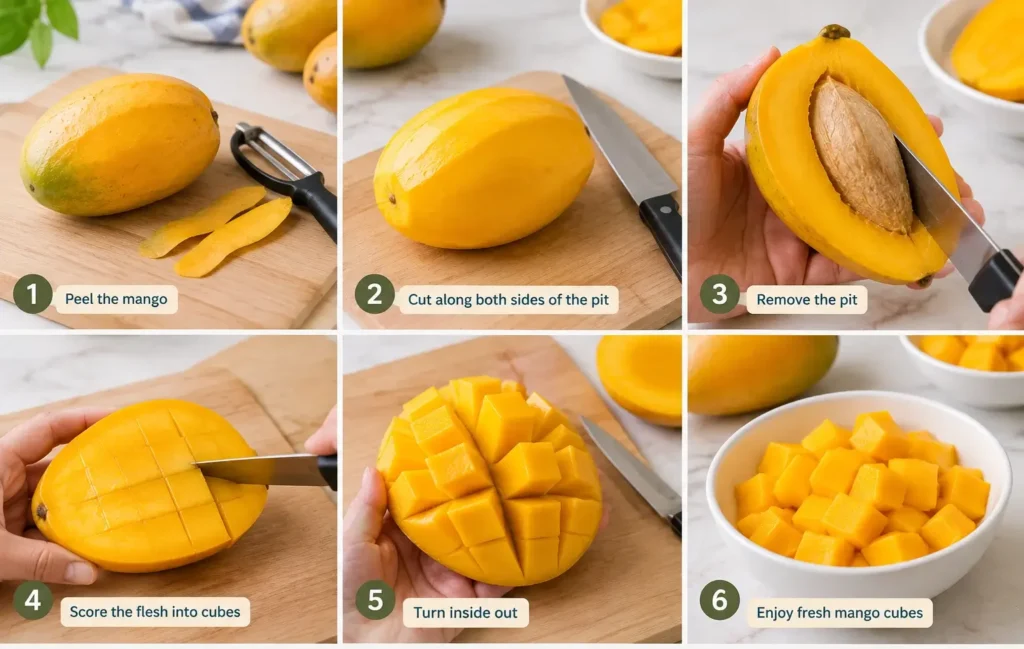
Peel the mango with a vegetable peeler and work over a bowl to catch the juice. Next, slice around the flat pit to remove two large lobes of flesh, then cut those lobes into cubes or chunks depending on your recipe. Save the fruit still clinging to the pit for blending, since a little extra mango in the puree never goes to waste. Set aside the best chunks for topping the finished dessert.
More Ways to Make Mango Tapioca
Each style below suits a different occasion, budget, or taste.
| Style | Milk base | Texture | Best for |
|---|---|---|---|
| Hong Kong | Coconut milk | Light and tropical | Classic dessert |
| Filipino | Cream and condensed milk | Rich and custard like | Parties and selling |
| Gulaman | Cream or coconut milk | Firm and jelly like | Extra bite |
| Boba drink | Milk | Chewy and sippable | Cold drinks |
Filipino Style Mango Tapioca With Cream and Condensed Milk
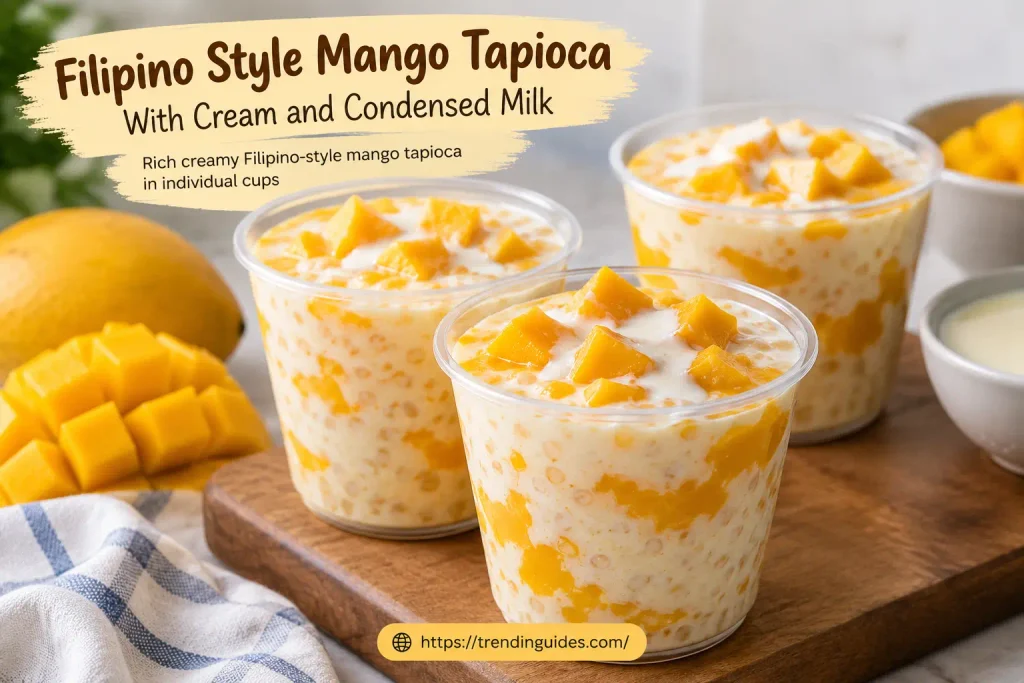
Filipino style mango tapioca blends ripe mango with all purpose cream, condensed milk, and sometimes a spoon of powdered mango juice for extra flavor and color. This version skips coconut milk entirely and leans on dairy for its rich, dessert bar taste. It is a common choice for small dessert businesses in the Philippines because the ingredients are affordable and widely available in local grocery stores. Packaged all purpose cream and condensed milk are the usual choices for consistent results.
Mango Tapioca With Gulaman or Nata de Coco
Gulaman, a Filipino agar jelly made from seaweed, can replace tapioca pearls for a firmer, jelly like bite that some people prefer over chewy pearls. Nata de coco, made from fermented coconut water, adds a similar chewy texture with a slightly different, more neutral flavor. Both substitutes work well if tapioca pearls are hard to find or if you want to offer more texture variety in a single serving. Cut the gulaman or nata de coco into small cubes before mixing so every spoonful has an even bite.
Mango Tapioca Drink and Boba Version
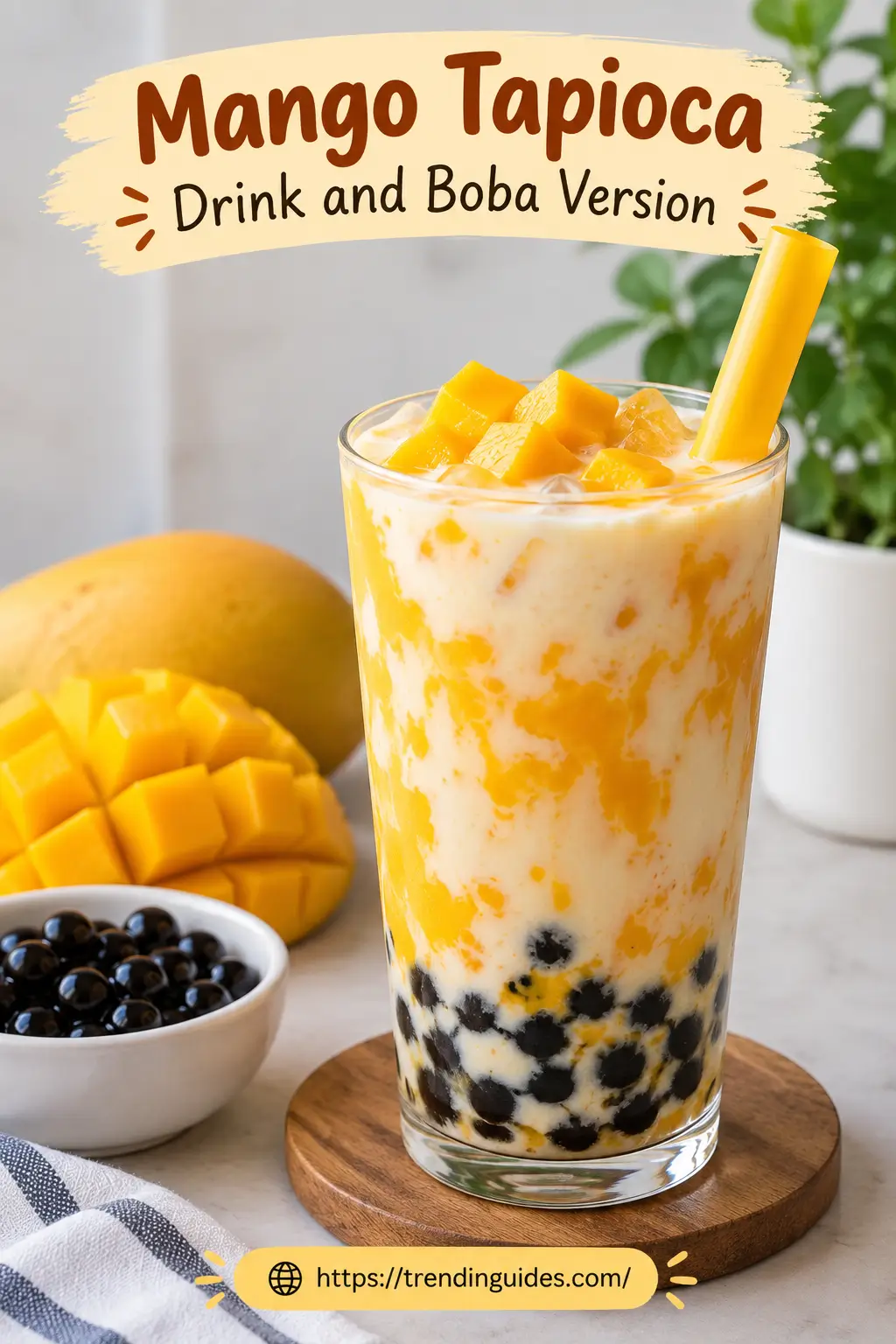
Mango tapioca boba uses large tapioca pearls, the same size used in bubble tea shops, blended or layered with mango puree and milk in a tall glass. Large pearls need a longer cooking time, often 25 to 35 minutes plus a resting period, so plan ahead if you choose this version. Serve the drink with a wide bubble tea straw so the pearls can pass through easily, and layer the mango puree, milk, and pearls for a striking visual effect. This style suits parties, drink stands, and anyone craving a mango tapioca treat they can sip rather than spoon.
Mango Pomelo Sago
Mango pomelo sago is the original Hong Kong version, and it adds shredded pomelo segments to the classic mango and tapioca base for a burst of tart citrus flavor. Pomelo, a large citrus fruit related to grapefruit, balances the sweetness of the mango and cuts through the richness of the coconut milk. If pomelo is not available, grapefruit segments make a reasonable substitute, though the flavor will be slightly more bitter. This version is worth trying if you want the closest possible match to the dessert served in Hong Kong restaurants.
Vegan and Dairy Free Mango Tapioca
A vegan version replaces coconut milk, condensed milk, or cream with plant based alternatives such as full fat coconut milk, oat milk, or coconut condensed milk. Sweeten with agave, maple syrup, or coconut sugar syrup instead of dairy based condensed milk, adjusting the amount to taste since plant sweeteners vary in intensity. This version keeps the same tropical flavor while suiting anyone who avoids dairy for allergies, lactose intolerance, or personal preference. Since coconut milk is already common in the classic recipe, going fully vegan usually only requires swapping the condensed milk.
Mango Tapioca Variations
Swap in different fruits, mix ins, and serving styles once you know the base method.
Fruit and Topping Ideas
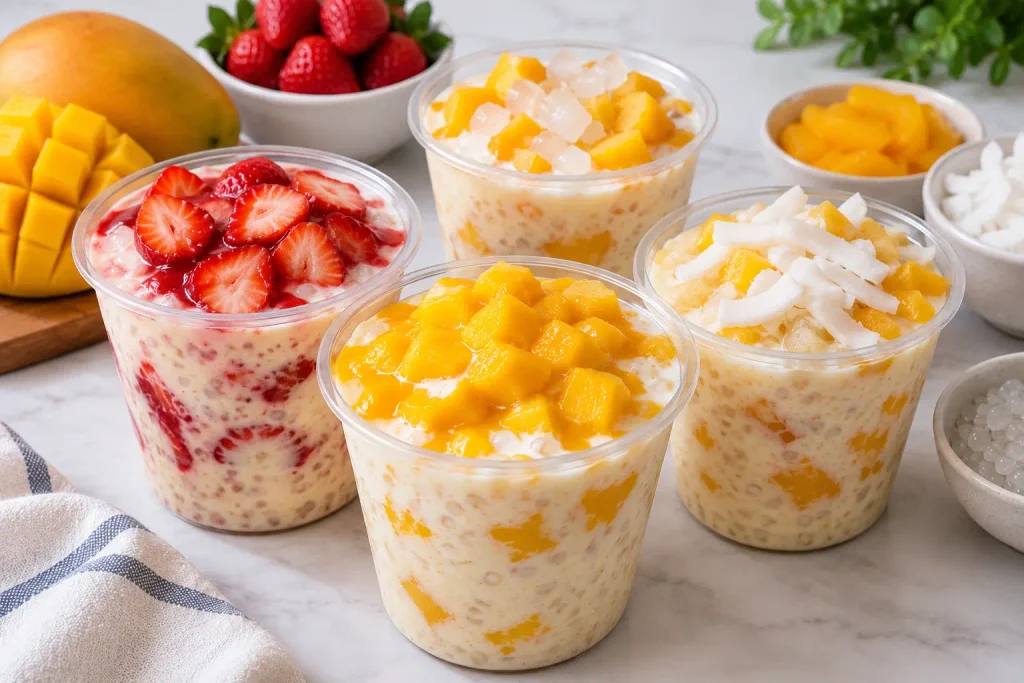
Peach, avocado, buko, and strawberry all pair naturally with mango in this dessert, adding new colors and flavors without changing the core method. Buko, or young coconut meat, blends in seamlessly with the mango cream and adds a soft, chewy bite similar to the tapioca pearls themselves. A few whole berries or diced peach on top also make the dessert more visually appealing for parties or photos. Choose fruits that are naturally sweet and soft, since firm or tart fruits can throw off the balance of the finished dessert.
Creamy Add-Ins
Cream cheese, graham cracker crumbs, and a scoop of vanilla ice cream all work as rich additions if you want a more indulgent, dessert bar style treat. Graham crumbs sprinkled on top add crunch and echo the flavor of mango float, a related Filipino dessert. A small dollop of cream cheese blended into the mango puree adds tang and thickness, similar to a cheesecake filling. These add ins are optional, so start with a small amount and taste before adding more.
Serving Ideas
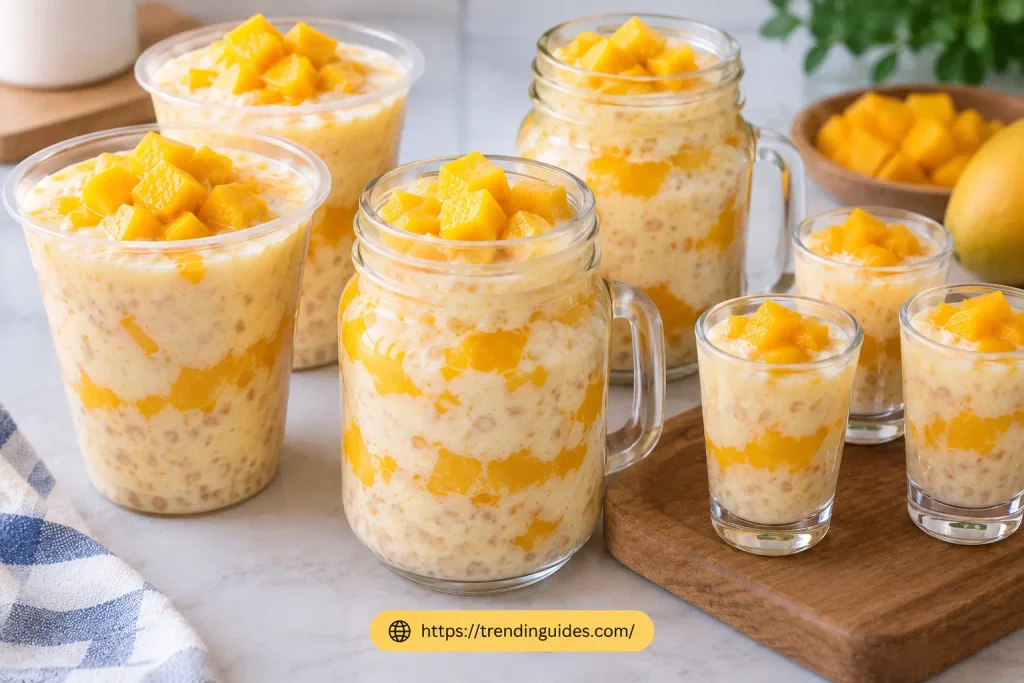
Small shot glasses, mason jars, and clear party cups all show off the layered colors of mango tapioca and make individual servings easy to hand out at gatherings. For a casual family dessert, wide bowls let everyone see the mango chunks and pearls mixed throughout. If you plan to sell mango tapioca, clear plastic cups with lids photograph well for social media and travel easily without spilling. Chill the cups for 30 minutes and add the pearls last.
Mango Tapioca Tips and Common Mistakes
These are the most common problems and how to fix them.
How to Keep Tapioca Pearls Soft and Chewy
Tapioca pearls stay soft and chewy longest when you keep them in a bit of their cooking liquid or a simple syrup rather than leaving them dry. Once drained completely and left uncovered, pearls dry out and turn stiff within an hour or two at room temperature. If you are not serving the dessert right away, store the cooked pearls separately in a covered container with a little water or syrup until you are ready to combine everything.
Why Tapioca Turns Hard in the Fridge and How to Fix It
Tapioca pearls turn hard and lose their chewy bite in the refrigerator because the cold temperature causes the starch structure to firm up, a process similar to how bread grows stale. This is why most recipes recommend assembling the dessert just before serving rather than storing it fully mixed for more than a few hours. If your pearls have already hardened, a quick reheat in hot water for one to two minutes can soften them again, though the texture will not fully match freshly cooked pearls.
How to Fix Mango Cream That Is Too Thick, Too Thin, or Too Sweet
Thin the mango cream with a splash of coconut milk or plain water if it feels too thick to pour, blending briefly to keep it smooth. If the cream turns out too thin, blend in a few more chunks of ripe mango, since natural fruit fiber thickens the mixture without diluting the flavor. For cream that tastes too sweet, balance it with a small squeeze of calamansi or lime juice, which cuts through sugar the same way pomelo does in the traditional version. Always taste the mango cream before adding the tapioca pearls, since it is much easier to adjust the base than the finished dessert.
How to Fix Clumped or Undercooked Pearls
Rinse tapioca pearls in a fine mesh strainer under cool running water immediately after draining to remove excess surface starch that causes clumping. If pearls still show a white center after the recommended cooking time, return them to hot water off the heat, cover the pot, and let them sit for a few more minutes rather than boiling them longer, since extra boiling can make the outer layer mushy. Stirring gently but regularly during the first few minutes of cooking also helps prevent pearls from sticking together in the pot.
How to Store and Make Mango Tapioca Ahead
Mango tapioca tastes best on the day it is made, but you can prepare parts of it ahead of time with a few adjustments.
How Long Mango Tapioca Keeps in the Fridge
Mango tapioca keeps in the refrigerator for about one day when the mango cream and cooked tapioca pearls are stored in separate airtight containers. Once combined, the dessert is best eaten within a few hours, since the pearls continue to absorb liquid from the cream and can turn mushy or overly soft the longer they sit together. Always use a clean spoon each time you serve from a shared container to keep the dessert fresh longer.
Storing Pearls and Mango Cream Separately
Keep the cooked pearls in a covered container with a little syrup at room temperature for a few hours, or refrigerate them and reheat briefly in hot water before serving. Store the blended mango cream in a separate airtight container in the fridge. Combine the two components only when you are ready to serve, which keeps the pearls chewy and the cream fresh tasting for as long as possible. This two container method is especially useful if you are meal prepping individual servings for the week or preparing a large batch for a party.
Can You Freeze Mango Tapioca?
Freezing is not recommended for mango tapioca, since tapioca pearls turn grainy and lose their chewy texture once thawed, and dairy based creams can separate in the freezer. If you want a make ahead frozen treat, freeze plain mango puree on its own in ice cube trays, then blend it fresh with milk and freshly cooked pearls when you are ready to serve.
Is Mango Tapioca Healthy?
Mango tapioca can fit into a balanced diet in moderation, since it contains real fruit and provides vitamin C and vitamin A from the mango, though it also carries added sugar from condensed milk and saturated fat from coconut milk or cream. A typical serving runs around 300 to 330 calories, depending heavily on your choice of milk and sweetener.
Nutrition Facts Per Serving
A serving made with coconut milk and condensed milk provides roughly 326 calories. These are estimates rather than lab tested values, so treat them as a guide for your own batch.
| Nutrient | Amount per serving |
|---|---|
| Calories | 326 kcal |
| Carbohydrates | 51 g |
| Protein | 4 g |
| Fat | 14 g |
| Vitamin C | Good source (from fresh mango) |
| Vitamin A | Small amount (from fresh mango) |
Values are estimates based on a standard recipe and will change with your choice of milk, sweetener, and mango quantity.
Health Benefits and Drawbacks
Ripe mango contributes fiber, vitamin C, and antioxidants that support immune health and skin health, making the fruit itself a genuinely nutritious ingredient. The main drawback comes from added sugar in condensed milk and saturated fat in coconut milk or cream, both of which add up quickly if you eat a large portion. Moderation matters here more than avoidance, since a smaller serving still delivers the mango’s natural benefits without excessive sugar or fat.
Lighter Swaps for Less Sugar and Fat
Replace condensed milk with a smaller amount of honey or a sugar free sweetener to lower the sugar content without losing the dessert’s sweetness. Choosing light coconut milk instead of full fat coconut milk, or using low fat evaporated milk in the Filipino style version, also reduces overall fat. Adding extra fresh mango chunks in place of some of the blended cream boosts fiber and nutrients while naturally cutting down on the richer, higher calorie ingredients.
Gluten Free and Allergy Notes
Tapioca pearls are naturally gluten free, since they are made purely from cassava starch, making this dessert a safe option for people avoiding gluten. However, always check the packaging of your condensed milk, cream, and any flavored powders, since some brands add fillers that may contain gluten. Coconut milk and dairy milk both carry their own allergy considerations, so choose plant based alternatives like oat or soy milk if you are serving guests with dairy or coconut allergies.
Mango Tapioca for Business
Mango tapioca is a popular small business item in the Philippines and other parts of Asia because it uses affordable, widely available ingredients and needs no special equipment.
Cost Breakdown Per Cup
Calculating cost per cup starts with adding up the price of your mangoes, milk products, tapioca pearls, and packaging, then dividing that total by the number of servings your batch makes. For example, add up the cost of four mangoes, canned milk, condensed milk, and tapioca for one batch, then divide by the cups it fills. Ingredient prices vary by region and season, so build your own cost sheet from local grocery prices.
Recipe Scaling for 10, 25, and 50 Servings
Scaling mango tapioca is straightforward since every ingredient increases by the same multiplier you use for servings, such as doubling every ingredient for double the servings. Your base recipe serves about 4, so multiply it by 2.5 for 10 servings, 6.25 for 25 servings, and 12.5 for 50 servings, rounding amounts to convenient measurements. Cook tapioca pearls in batches rather than one enormous pot when scaling up significantly, since very large volumes of boiling pearls are harder to stir evenly and more likely to clump. Blend the mango cream in batches as well if your blender has a smaller capacity than the full scaled recipe requires.
Pricing, Cup Sizes, and Packaging Ideas
Small business owners typically price mango tapioca based on cup size, with smaller shot style cups priced lower and larger dessert cups priced higher to reflect the added ingredients. Clear plastic cups with secure lids work well for both dine in and delivery orders, since customers can see the colorful layers before opening. Adding a simple sticker label with your business name and a short ingredient list builds trust and looks professional for both walk in customers and social media orders.
Shelf Life and Safe Handling for Selling
Prepare the mango cream and cooked tapioca pearls separately if you are selling in advance, then combine them just before delivery or pickup to keep the texture fresh for the customer. Keep both components refrigerated at all times before serving, since dairy based ingredients like cream and condensed milk should never sit at room temperature for extended periods. Label cups with a clear made on date and recommend customers finish the dessert within a day for the best taste and texture.
Frequently Asked Questions
How to make tapioca step by step?
Boil water until it reaches a full rolling boil, add the tapioca pearls, and simmer according to the package time, usually around 20 minutes for mini pearls. Check that the pearls are fully clear with no white center, then drain and rinse them in cold water before using them in your recipe.
Are mango sago and mango tapioca the same?
Yes, in almost every modern recipe. True sago comes from the sago palm, while tapioca pearls come from cassava, but both names now refer to the same popular dessert.
Is mango tapioca healthy?
Mango tapioca offers real nutritional value from fresh mango, including vitamin C and fiber, though it also contains added sugar and fat from condensed milk and coconut milk or cream. Enjoying it in moderate portions keeps it part of a balanced diet.
How to make mango tapioca boba?
Use large tapioca pearls instead of mini pearls, cook them for a longer time of about 25 to 35 minutes, and layer them with mango puree and milk in a tall glass with a wide straw.
Can you use canned mango or frozen mango?
Yes, canned or frozen mango works well when fresh ripe mango is out of season, though you should drain canned mango well and thaw frozen mango completely before blending.
Why is my tapioca still white in the middle?
The pearls need more time. Turn off the heat, cover the pot, and let them rest in the hot water for a few extra minutes until the white center disappears completely.
Can I make mango tapioca without condensed milk?
Yes, replace it with simple syrup, honey, agave, or maple syrup, adjusting the amount to your desired sweetness since these substitutes are thinner and less sweet by volume than condensed milk.
Can I make mango tapioca for a party ahead of time?
Yes. Cook the pearls and blend the mango cream up to a day ahead, store them separately, and combine them in cups just before serving.
What can I use instead of pomelo?
Grapefruit segments work, though they taste slightly more bitter, so add a little extra mango to balance the flavor.
How ripe should the mango be?
Choose mangoes that give slightly when pressed and smell sweet at the stem. Firm, green mangoes taste sour and blend into a thin, pale cream.
How long does mango tapioca last?
Stored separately, the mango cream and cooked pearls keep for about one day in the refrigerator. Once combined, the dessert is best enjoyed within a few hours for the best texture.
Conclusion
Mango tapioca, or mango sago, shows how a few simple ingredients make a rich dessert. Ripe mango brings natural sweetness and color, tapioca pearls add a satisfying chewy bite, and your choice of coconut milk, cream, or condensed milk ties everything together into a smooth, chilled treat. Whether you follow the classic Hong Kong method, try the Filipino style with cream and condensed milk, or experiment with gulaman, boba pearls, or a vegan version, the core technique stays the same and easy to repeat.
Start with the classic method, adjust the milk and sweetness to your taste, and keep the pearls and mango cream separate until serving. Once you find your favorite version, share it with family and friends who love a refreshing, no bake treat.
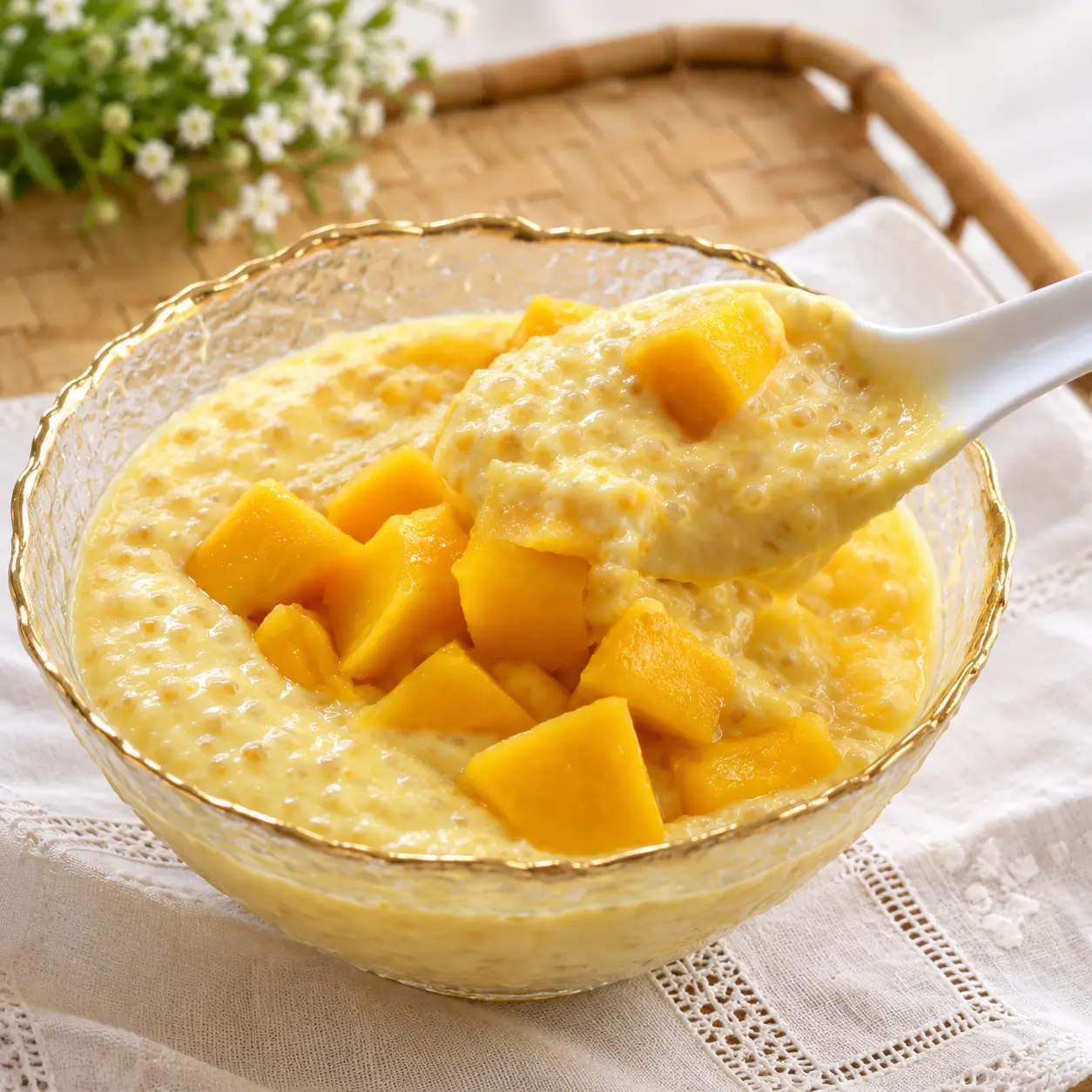
Mango Tapioca Recipe (Mango Sago)
Ingredients
Equipment
Method
- Pick ripe mangoes. Press the mango. If it feels soft, it is ripe. If the mangoes are hard, leave them on the counter for a couple of days until they turn from green to red.
- Boil the water. Bring 4 cups of water to a full rolling boil. Do not add the pearls to cold or lukewarm water, because the starch dissolves into a paste.
- Cook the tapioca. Add the pearls to the boiling water and set a timer for 20 minutes. Stir once at the start so they do not stick.
- Prepare the mangoes. While the pearls cook, peel the mangoes and cut the flesh away from the pit. Cut the flesh into chunks and trim off any fruit left on the pit. Set aside the best chunks of one mango for topping.
- Check the pearls. After 20 minutes, look for white dots in the center. If you still see white, turn off the heat and let the pearls sit in the hot water for 2 to 5 minutes. They are done when they are clear all the way through.
- Cool the pearls. Drain the pearls and transfer them to a large bowl of cold water. Swap out the warm water for fresh cold water until the pearls are completely cool. Do not use ice, because it hardens the pearls.
- Blend the mango cream. Add the remaining mango, coconut milk, condensed milk, and vanilla to the blender. Blend until smooth, then scrape it into a large bowl with a rubber spatula.
- Combine. Drain the pearls well. A little water is fine, but not too much. Stir them into the mango mixture.
- Serve. Scoop into bowls and top with the reserved mango chunks.
Notes
- Pearl size: Mini pearls cook faster and give the best chewy texture. Larger pearls need longer, and you may have to boil, rest off the heat, and repeat until they are fully clear.
- Serve cold: Everything is at room temperature when you finish, and that tastes good. For a chilled dessert, refrigerate the mango cream and the drained pearls (kept in their water) for a couple of hours, then combine them.
- Sweetness: Cold dulls sweetness, so add extra condensed milk if you serve it very cold.
- Vegan option: Replace the condensed milk with simple syrup or agave.
- Mango tip: Peeling the mango, rather than scooping out the flesh, is faster and wastes less fruit.
- Calories: The calorie count is an estimate from The Woks of Life recipe card. Brands and mango size will change it.