
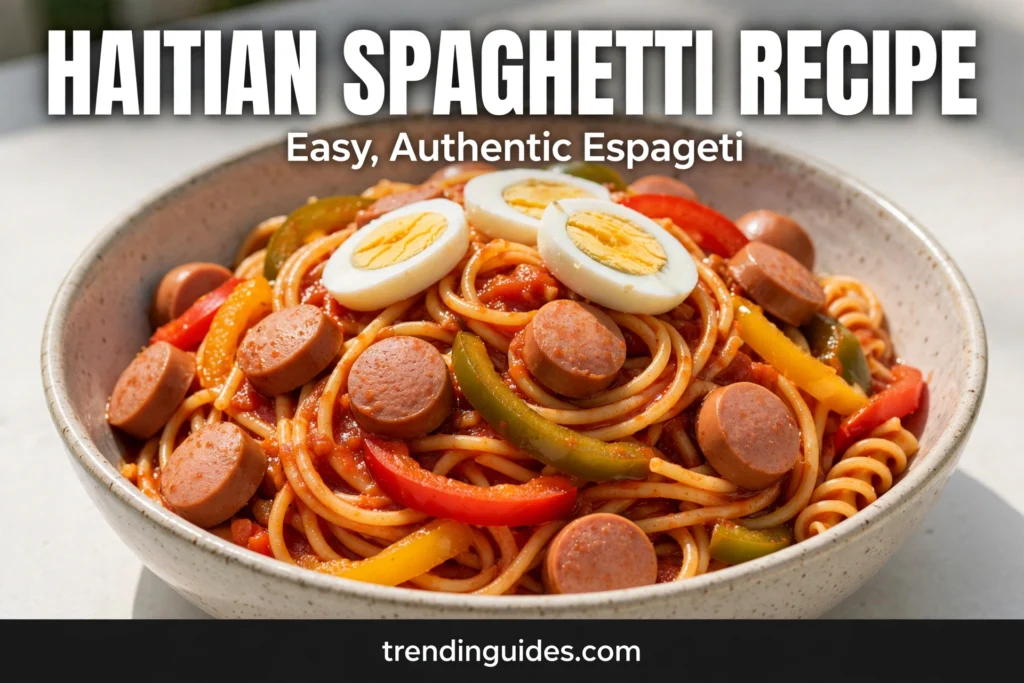

This Haitian spaghetti recipe gives you espageti the way Haitian families actually make it: spaghetti tossed in a rich tomato sauce built on epis, the green seasoning blend at the heart of Haitian cooking, with browned frankfurters, sweet bell peppers, and a sliced boiled egg on top. It takes about 30 minutes, uses one pan plus a pot for the pasta, and delivers deep savory flavor from simple budget friendly ingredients.
Espageti is comfort food in Haiti, the kind of dish that shows up at breakfast tables, family lunches, and late night cravings alike. It looks like Italian spaghetti at first glance, but one bite tells a different story. The sauce is not marinara. It is a glossy tomato coating sharpened with epis, warmed with thyme, and finished with butter so every strand shines. Hot dogs or sausage add smoky richness, and the boiled egg on top is not decoration. It is part of the meal.
In this guide you will learn what makes Haitian spaghetti different from Italian spaghetti, why Haitians proudly eat it for breakfast, and what epis is plus how to make a quick version at home. You will get a protein comparison that covers hot dogs, sausage, smoked herring, and chicken so you can pick your favorite. You will find clear step by step cooking instructions, a one pot versus two pot comparison, easy variations including a vegan version and the TikTok style build, a full troubleshooting section, a per serving nutrition table, storage and reheating guidance, and answers to the most asked questions. The recipe behind this guide comes from a Haitian home style video method, credited at the end.
What Is Haitian Spaghetti?
Haitian spaghetti, called espageti in Haitian Creole, is Haiti’s beloved pasta dish made by tossing cooked spaghetti in a savory tomato sauce flavored with epis, Haiti’s signature green seasoning. Sliced hot dogs or frankfurters are the classic protein, browned first so their smoky flavor melts into the sauce. Onion, bell peppers, garlic, tomato paste, and butter round out the base, and a boiled egg almost always crowns the plate.
The texture is what surprises first timers. Haitian spaghetti is not swimming in sauce like Italian pasta. The noodles are tossed until they absorb a glossy, lightly clinging coating. Starchy pasta water is the trick: it turns tomato paste and seasonings into a silky sauce that grips every strand instead of pooling at the bottom of the bowl.
It is also smart weeknight food. A box of spaghetti, a pack of frankfurters, and pantry seasonings feed a family for a few dollars. That humble mix is why it became everyday comfort food, not a special occasion dish.
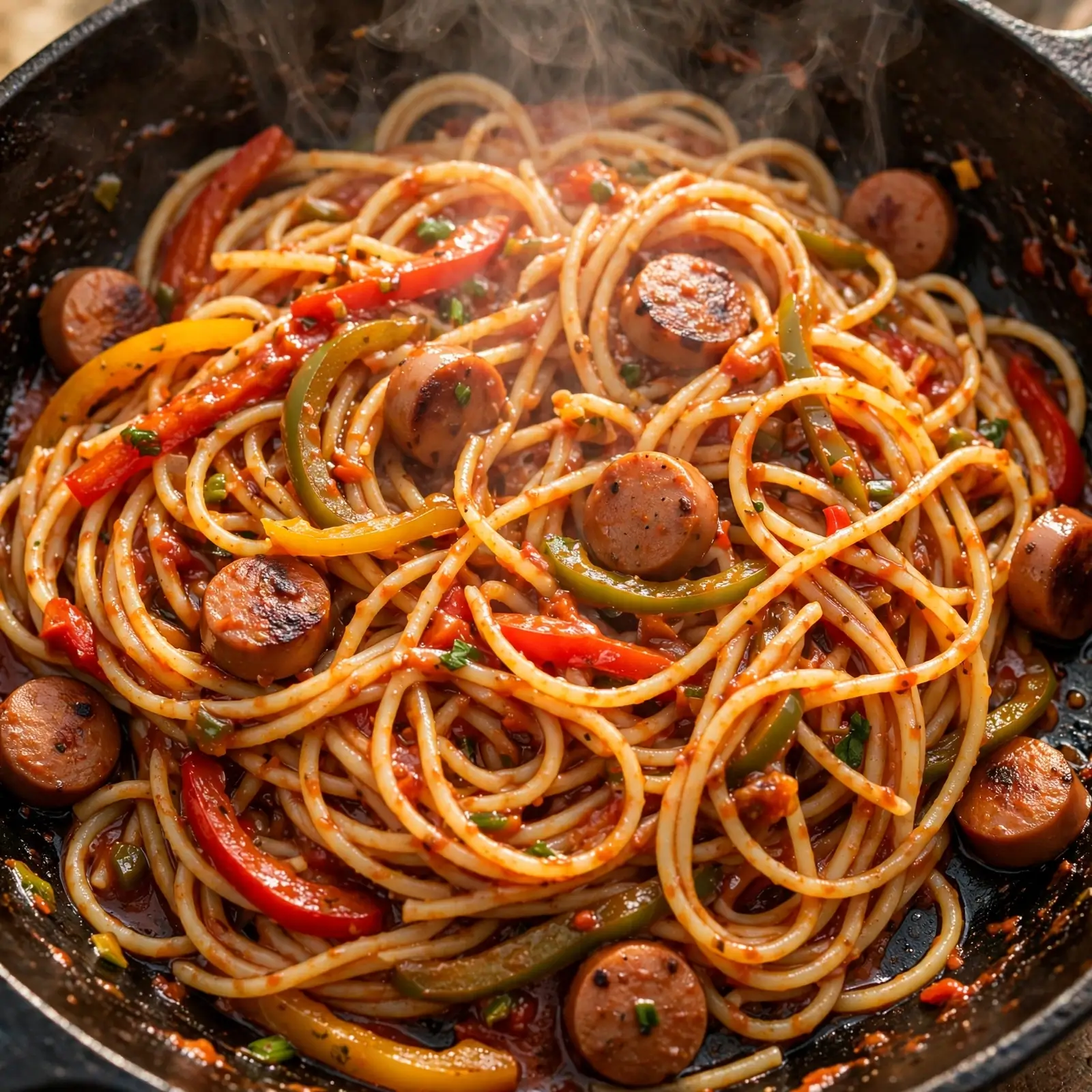
Easy Haitian Spaghetti (Espageti) with Frankfurters
Ingredients
Equipment
Method
- Boil a large pot of water with the bouillon cube. Add the egg first, then the pasta. Cook until al dente. Pull the egg out into cold water and set aside. Save about 1 cup of the pasta water, then drain the rest.
- Slice the frankfurters on an angle. Chop the onion, tomato, garlic, hot pepper, and bell peppers.
- Heat the oil and butter in a large saucepan over medium heat. Fry the frankfurter slices until lightly browned.
- Stir in the green seasoning and tomato paste. Cook about 1 minute, stirring, so the paste darkens slightly.
- Add the onion and garlic and sauté about 1 minute. Add the tomato and hot pepper and cook until the tomato softens.
- Add the bell peppers, Sazón, and complete seasoning. Mix everything well.
- Pour in about 1 cup of the reserved pasta water. Cover and simmer 2 to 3 minutes.
- Add the drained pasta and toss until every strand is coated. Slice the boiled egg and lay it on top, or mix it in. Serve hot.
Notes
- Frying the tomato paste for a minute before adding liquid removes the raw taste and deepens the color.
- Add the pasta water a little at a time; you want the noodles glossy and lightly saucy, not watery.
- Swap frankfurters for smoked sausage, hot dogs, or smoked herring to change the flavor.
Why Haitians Eat Spaghetti for Breakfast
In Haiti, spaghetti for breakfast is completely normal, and locals defend it with pride. A plate of espageti with a boiled egg and maybe some avocado gives you starch, protein, and fat in one satisfying meal. It keeps you full through a busy morning, which matters in a culture where breakfast needs to fuel real work.
The habit also reflects how Haitian meals are built around what is filling and affordable. Spaghetti stretches far, eggs are cheap protein, and the bold epis seasoning makes the simplest ingredients taste exciting before the day even starts. Visitors sometimes raise an eyebrow at pasta before 9 in the morning. Haitians just smile and offer you a plate.
If you want the full experience, serve your espageti the traditional morning way: hot, with a boiled egg on top and sliced avocado or bread on the side. It is a combination that makes perfect sense once you taste it.
Haitian Spaghetti vs Italian Spaghetti
Haitian spaghetti and Italian spaghetti share a noodle shape and almost nothing else. Italian spaghetti centers on sauces like marinara, alfredo, or aglio e olio, built from olive oil, Italian herbs, and cheese. Haitian spaghetti centers on epis, the Haitian green seasoning, plus tomato paste, bouillon, and butter. The flavor base is Caribbean, not Mediterranean.
The protein tells the second big difference. Italian recipes use meatballs, sausage with fennel, or seafood. Haitian espageti uses sliced hot dogs or frankfurters as the classic choice, a legacy of the dish’s history that surprises outsiders and delights insiders. Smoked herring, sausage, and chicken are the other traditional options.
Then there is the sauce philosophy. Italian cooking often spoons generous sauce over pasta. Haitian cooking tosses the pasta in the pan until the sauce is absorbed into a glossy coating. And where Italians finish with parmesan, Haitians finish with butter for shine and a boiled egg for substance. Same noodle, entirely different soul.
The Secret Ingredient: What Is Epis?
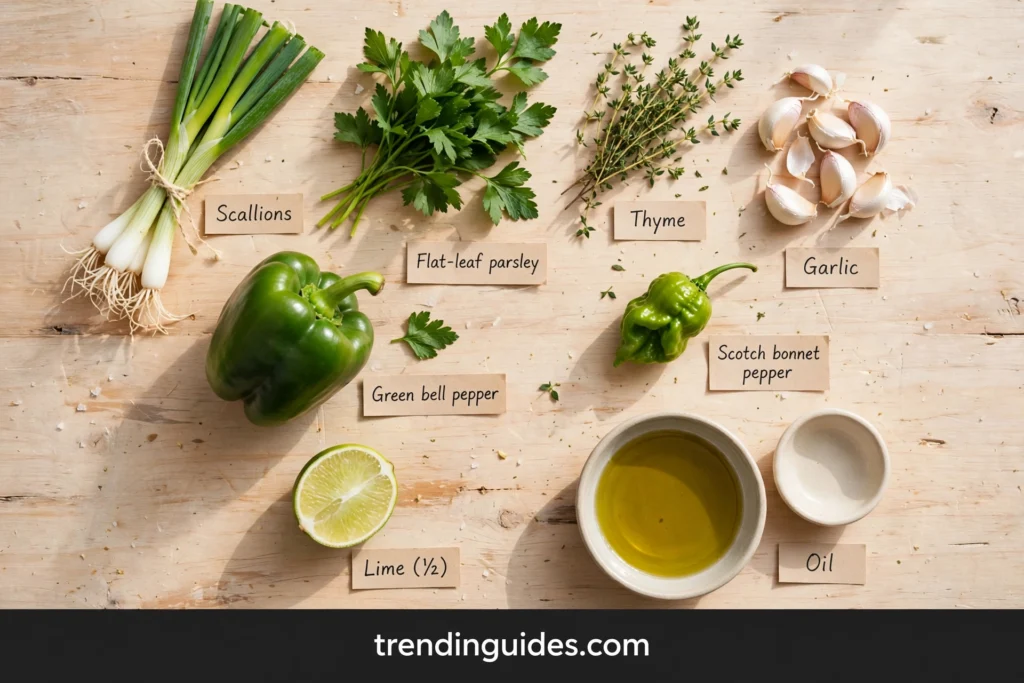
Epis (pronounced eh peace) is the green seasoning blend that powers Haitian cooking the way sofrito powers Puerto Rican cooking. It is a fresh puree of herbs and aromatics, and it is the reason Haitian spaghetti tastes like nothing else in the pasta world. Without epis, you just have tomato noodles. With it, you have espageti.
A classic epis blends thyme, parsley, scallions, garlic, bell peppers, and scotch bonnet pepper with lime juice or bitter orange juice, vinegar, and oil. Every family tweaks the mix, which is why no two pots of espageti taste exactly alike. Store bought versions exist in Caribbean markets, but homemade takes ten minutes and tastes brighter.
Quick Homemade Epis
You do not need epis from a Haitian market to start cooking. This quick version covers the essential flavor for one batch of spaghetti, and it keeps in the fridge for about ten days.
Add to a blender: 4 scallions, 1/2 onion, 4 garlic cloves, 1/2 green bell pepper, a small handful of parsley, the leaves of 3 thyme sprigs, and 1/4 scotch bonnet pepper (remove the seeds for mild heat). Pour in 2 tablespoons lime juice, 1 tablespoon vinegar, and 3 tablespoons oil, then add 1/2 teaspoon salt. Blend until slightly chunky. Use one to two tablespoons per batch of espageti, and freeze the rest in an ice cube tray so you always have epis ready.
Choose Your Protein
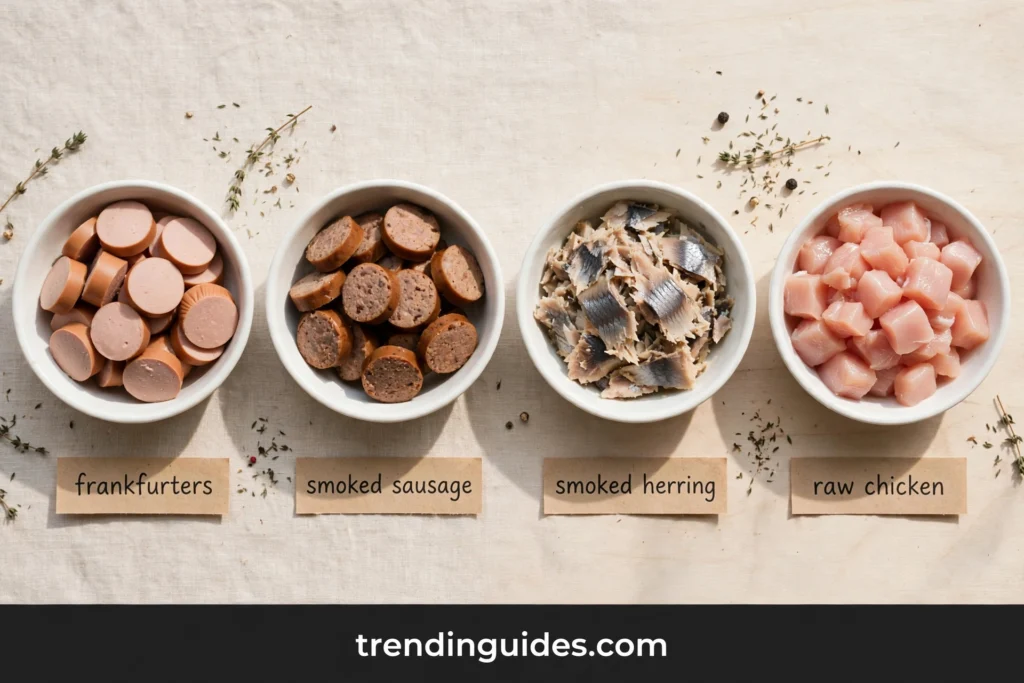
One recipe, four classic proteins. Every Haitian family has a favorite, and each one changes the dish in a real way. Use this comparison to pick yours, then read the short guide for the one you choose.
| Protein | Flavor | Best for | Notes |
|---|---|---|---|
| Hot dogs or frankfurters | Smoky, mild, kid friendly | The classic taste | The traditional pick; slice on an angle for more browning |
| Sausage or kielbasa | Rich, meaty, seasoned | Hearty appetites | Smoked beef or turkey sausage adds deep flavor |
| Smoked herring (aranso) | Salty, fishy, bold | Authentic old school flavor | Must be de salted and deboned first |
| Chicken | Lean, mild, familiar | Lighter meals | Brown well so it does not taste bland |
Classic Hot Dogs
Haitian spaghetti with hot dogs is the version most Haitians grew up on. Food historians link the hot dog habit to the early 1900s, when American products like hot dogs and ketchup entered Haiti and home cooks made them deliciously their own. Slice the frankfurters on an angle so more surface touches the pan, then brown them well. Those caramelized edges are where the flavor lives.
Hearty Sausage or Kielbasa
Haitian spaghetti with sausage is the upgrade pick. Smoked beef sausage, turkey sausage, or kielbasa brings more seasoning and a meatier chew than hot dogs. Because sausage is already flavorful, you can ease back slightly on the bouillon. Brown the slices until the edges crisp, then build the sauce right in the same pan so none of the rendered flavor goes to waste.
Traditional Smoked Herring (Aranso)
Haitian spaghetti with smoked herring, called aranso in Creole, is the old school coastal version. The fish gives a deep salty savor that meat cannot copy. It takes more prep than the other proteins, which is why the next section walks you through it step by step. If you love bold fish flavor, this is the most authentic bowl you can make.
Lighter Chicken
Chicken is the modern lighter option and works well when you want espageti without processed meat. Cut boneless chicken into small bite size pieces and brown them hard in the oil before anything else joins the pan. Pale chicken makes pale flavor, so do not rush this step. A pinch of complete seasoning on the chicken while it browns keeps every bite seasoned.
How to Prepare Smoked Herring Without the Extra Salt
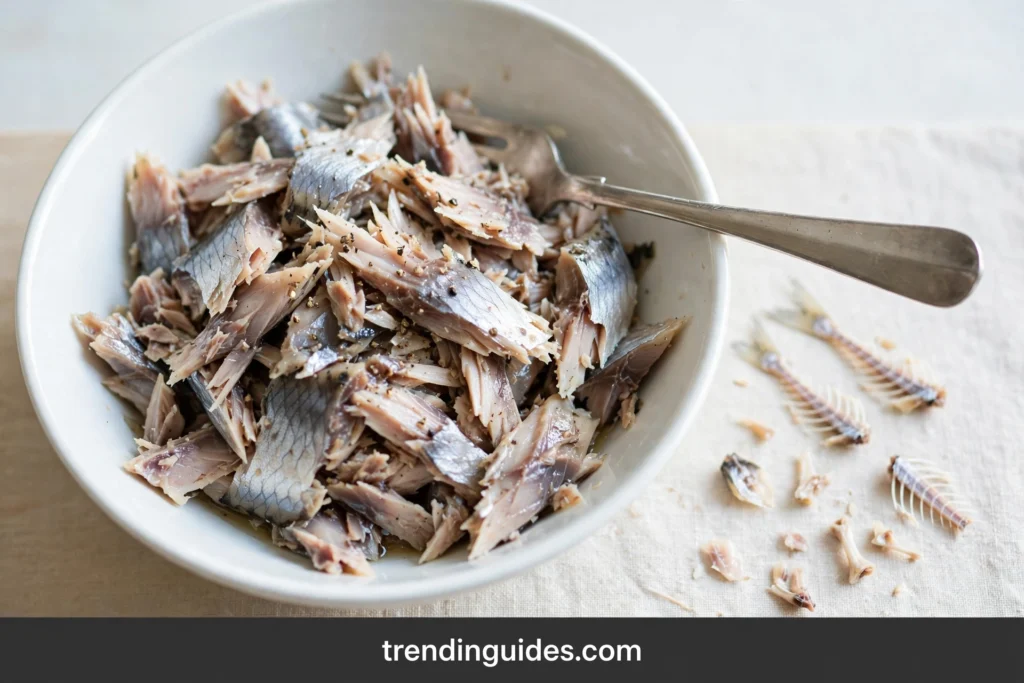
Smoked herring is delicious but very salty, and skipping the prep will ruin your sauce. The fix is simple and takes about 20 minutes. First, rinse the fish under cold water. Then boil it in fresh water for about 5 minutes, drain, and repeat once more. This pulls out most of the excess salt.
Next, flake the fish with a fork and pick out the small bones. The bones are thin, so work carefully and run your fingers through the flakes to catch strays. Canned smoked herring in tomato sauce is a fine shortcut: drain it, give it a quick rinse, and it is ready to use.
Once prepped, treat the herring like the other proteins. Warm it in oil for 2 to 3 minutes to release its smoky flavor, then build your sauce around it. Taste the sauce before adding any extra salt, because the fish still brings its own seasoning to the party.
Ingredients You Will Need
This is a pantry friendly recipe, but a few ingredients do heavy lifting. Here is what to buy and why each one matters.
Spaghetti is the classic noodle, though the source recipe for this guide uses fettuccine and it works just as well. Cook it al dente, because it keeps cooking when you toss it in the hot sauce. Frankfurters are the traditional protein; slice them on an angle for maximum browning. A medium onion, a medium tomato, and a mix of red, green, and yellow bell peppers build the sweet savory base.
Tomato paste is not optional. Fry it until it darkens and it turns sweet and rich instead of tasting raw and tinny. Green seasoning (epis) is the soul of the dish; use the quick homemade version above or a store bought jar. Sazón Goya and complete seasoning add the warm seasoned salt character that makes the sauce taste complete. A scotch bonnet or hot pepper brings heat, so use half for gentle warmth or skip it for a kid friendly pot. Butter stirred in at the end gives the glossy finish, and the boiled egg on top is tradition.
Simple swaps that work: any smoked sausage for frankfurters, tomato sauce for tomato paste (use double the amount and simmer longer), and margarine for butter. Do not swap out the epis or the pasta water. Those two are the difference between good and great.
How to Make Haitian Spaghetti Step by Step
The method has four moves: boil, brown, build, and toss. Master the order and the dish practically cooks itself. The recipe card at the end of this guide (added separately) carries the exact measurements from the source video.
Step 1: Boil the Pasta and the Eggs
Bring a large pot of salted water to a rolling boil and crumble in the bouillon cube. Add the egg first, then the spaghetti, and cook until al dente. Fish out the egg into cold water so it stops cooking, and set it aside for serving. Before you drain the pasta, scoop out about a cup of the starchy cooking water. That cloudy liquid is what turns the tomato paste into a silky sauce that clings to the noodles.
Step 2: Brown the Frankfurters
While the pasta cooks, heat the oil and butter in a large saucepan over medium heat. Add the frankfurter slices and fry until lightly browned on the edges, about 3 to 4 minutes. Do not crowd the pan; the slices need contact with the hot surface to caramelize. Leave every browned bit in the pan. Those browned bits are free flavor.
Step 3: Build the Sauce
Stir the green seasoning and tomato paste into the pan and cook about 1 minute, stirring constantly, until the paste darkens a shade. Add the onion and garlic and sauté about 1 minute, then the tomato and hot pepper until the tomato softens. Add the bell peppers, Sazón, and complete seasoning and mix well. Pour in about a cup of the reserved pasta water, cover, and simmer 2 to 3 minutes so the flavors blend into a light glossy sauce.
Step 4: Toss and Finish
Add the drained spaghetti to the pan and toss with tongs until every strand is coated and the sauce clings instead of pooling. Let it sit over low heat 2 to 3 minutes so the noodles absorb the flavor. Slice the boiled egg and lay it over the top, or chop it and fold it through. Serve hot, straight from the pan.
One Pot or Two Pots: Which Method Is Better?
Haitian spaghetti one pot style cooks the dry pasta directly in the sauce, and it has real fans. You save a pot, the noodles absorb maximum flavor, and the starch thickens the sauce naturally. The catch is control: the pasta can overcook fast, and you must stir often so nothing sticks.
The two pot method in this guide, boiling the pasta separately, gives you more control and a cleaner texture. You nail the al dente bite, and the reserved pasta water still brings plenty of starch to the sauce. For beginners, two pots wins. Once you know the timing by heart, try the one pot version: build the sauce, add dry spaghetti with about 3 cups of water or broth, cover, and simmer, stirring often, until the pasta is tender and the sauce clings.
Easy Variations to Try Next
Once you own the base method, these three twists keep the dish exciting. Each one starts from the same sauce building technique, so nothing here requires relearning.
Vegan Haitian Spaghetti
Vegan Haitian spaghetti is easy because the soul of the dish is already plant based. Swap the frankfurters for sliced vegan sausage or meaty mushrooms, use vegetable bouillon instead of chicken, and finish with vegan butter or a spoon of oil. Check that your epis has no chicken stock powder, or make the quick homemade version above. Skip the egg and serve with avocado for richness.
TikTok Style
Haitian spaghetti TikTok versions made the dish viral for good reason: they lean into the glossy finish. The signature moves are a generous butter finish, a whole scotch bonnet poked with a clove simmered in the sauce (never cut, so it perfumes without exploding heat), and tossing the pasta until it shines. Film the toss if you like. The gloss is the whole point.
Creamy Evaporated Milk Version
Some Haitian families stir a splash of evaporated milk into the sauce for a creamy blush version. Add about 1/4 cup after the pasta water and simmer gently; do not boil hard or it can split. The result is milder, silkier, and excellent for kids or anyone who finds tomato sauces too sharp.
What to Serve with Haitian Spaghetti
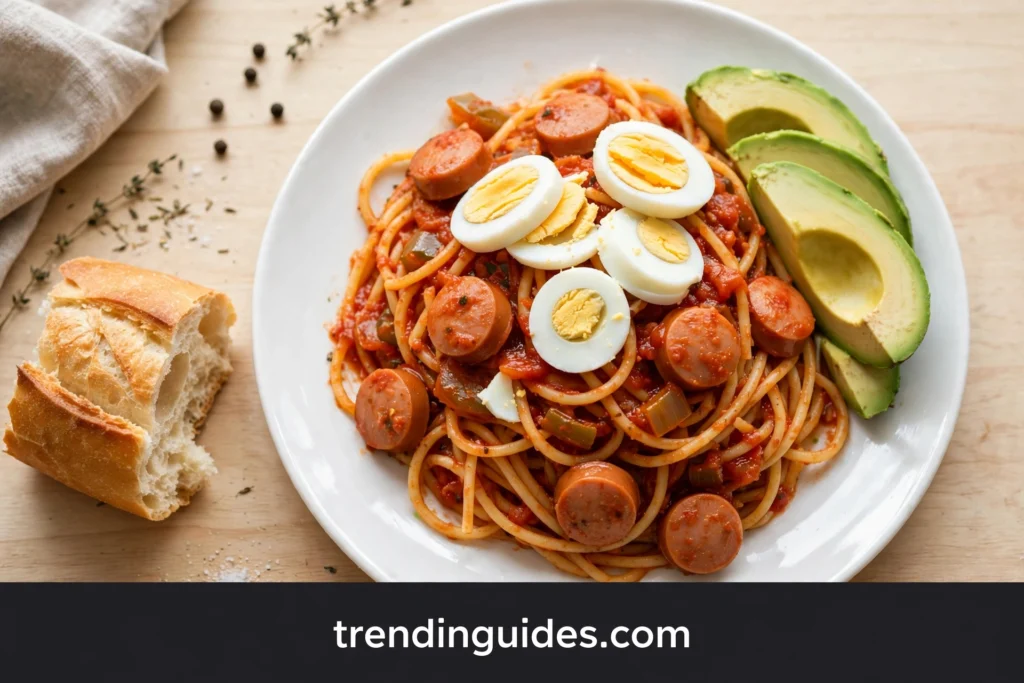
What to serve with Haitian spaghetti is almost as traditional as the dish itself. The boiled egg is the classic partner, and most Haitians consider the plate incomplete without it. Sliced avocado adds creamy coolness that balances the warm spices. Crusty bread is perfect for scooping up any sauce left in the bowl.
For a fuller spread, add fried plantains for sweet contrast or a simple green salad for crunch. Pikliz, Haiti’s spicy pickled vegetable condiment, is the power move: a spoonful cuts through the richness and adds bright heat. And yes, some families drizzle a little ketchup on top. Do not knock it until you try it.
Storage and Reheating
Store leftovers in an airtight container in the fridge for up to 3 days. The noodles keep absorbing sauce as they sit, so they will be drier the next day. That is normal and easy to fix.
Reheat in a skillet over medium low heat with a splash of water, tossing until the sauce loosens and the pasta is hot through. The microwave works in a pinch, but the skillet keeps the texture far better. You can freeze espageti for up to 2 months, though the pasta softens a bit on thawing. Freeze without the boiled egg and add a fresh one when serving.
Troubleshooting
Small problems have simple fixes. Here are the four issues cooks hit most, and exactly how to solve each one.
If the pasta turns out dry, you likely skipped the pasta water or added the noodles to a sauce that was too thick. Splash in warm pasta water a little at a time and toss until glossy. If the dish tastes too salty, the culprit is usually bouillon plus seasoned salt plus salty protein stacking up. Next time, season in layers and taste before the final salt. A squeeze of lime and extra butter can rescue a salty batch.
Mushy pasta means it overcooked in the boil or sat too long in the hot sauce. Cook to true al dente, meaning firm in the center, and remember it keeps cooking during the toss. If the flavor tastes flat or bland, you probably under seasoned or rushed the tomato paste step. Fry the paste until it darkens, be generous with the epis, and finish with butter. Taste and adjust before serving, every time.
Haitian Spaghetti Calories and Nutrition
Haitian spaghetti calories land around 600 per serving for the classic frankfurter version, which makes it a satisfying but not light meal. The numbers shift with your protein choice, so use this table as a guide. Values are estimates per serving for a recipe that serves two.
| Version | Calories (est.) | Notes |
|---|---|---|
| Classic frankfurters | 600 | Balanced; watch the sodium from bouillon and seasonings |
| Sausage or kielbasa | 680 | Richest option; higher fat from smoked sausage |
| Smoked herring | 550 | Bold flavor; sodium varies with how well you de salt |
| Chicken | 520 | Leanest classic; keep the browning generous for flavor |
| Vegan | 480 | Lightest; depends on your sausage substitute |
One honest warning: bouillon cubes, Sazón, and complete seasoning all bring sodium, so the total can climb fast. If you watch salt, use half a bouillon cube and taste before adding more seasoning. The flavor will still shine through the epis and butter.
Frequently Asked Questions
What is Haitian spaghetti made of?
Haitian spaghetti is made of spaghetti tossed in a tomato sauce flavored with epis (Haitian green seasoning), with sliced hot dogs or frankfurters as the classic protein, plus onion, bell peppers, garlic, tomato paste, bouillon, butter, and a boiled egg on top.
What is epis in Haitian spaghetti?
Epis is Haiti’s fresh green seasoning blend of thyme, parsley, scallions, garlic, bell peppers, scotch bonnet pepper, lime juice, vinegar, and oil, pureed together. It is the defining flavor of Haitian spaghetti and much of Haitian cooking.
Why do Haitians eat spaghetti for breakfast?
Spaghetti with egg and avocado makes a filling, affordable morning meal of starch, protein, and fat that fuels a busy day. The tradition reflects Haitian cooking’s genius for turning humble ingredients into satisfying food at any hour.
What meat goes in Haitian spaghetti?
The classic meat is sliced hot dogs or frankfurters. Popular alternatives include smoked sausage or kielbasa, smoked herring (aranso), and chicken. Each protein gives the dish a different character, and families often rotate between them.
Is Haitian spaghetti spicy?
It can be, but it does not have to be. Heat comes from scotch bonnet or hot pepper, and you control it. Use half a pepper for gentle warmth, poke a whole pepper with a clove and remove it for aroma without fire, or skip it entirely for a mild kid friendly pot.
What do you serve with Haitian spaghetti?
Serve it with a boiled egg on top, plus sliced avocado, crusty bread, or fried plantains on the side. Pikliz, Haiti’s spicy pickled vegetables, is the traditional condiment, and some families add a drizzle of ketchup.
Can you make vegan Haitian spaghetti?
Yes. Use vegan sausage or mushrooms for the protein, vegetable bouillon, vegan butter, and an epis made without chicken stock powder. Skip the egg and serve with avocado. The core flavor stays fully intact.
What is the difference between Haitian spaghetti and Italian spaghetti?
Haitian spaghetti uses epis, tomato paste, bouillon, butter, and hot dogs or sausage, with the pasta tossed until the sauce is absorbed. Italian spaghetti uses Mediterranean sauces like marinara or alfredo with Italian herbs, cheese, and different proteins. Same noodle, completely different flavor world.
Final Thoughts
Haitian spaghetti proves that great food does not need expensive ingredients or complicated technique. A box of pasta, some frankfurters, and a spoonful of epis become a dish with real cultural soul: smoky, savory, glossy, and deeply comforting. It works for breakfast, lunch, or dinner, feeds a crowd on a budget, and adapts to whatever protein you love.
Make it once exactly as written, then make it yours. Try the smoked herring version for old school authenticity, the sausage version for a heartier bowl, or the TikTok glossy finish for fun. Each one teaches you something new about how flexible this dish is.
However you serve it, do not skip the boiled egg, and save your pasta water. Those two small habits are what separate a decent plate of espageti from a great one. Some traditions exist for a very good reason, and this is one of them.
Recipe method adapted from “How to Make Haitian Spaghetti | Easy One Pot Recipe” (Magic Finger Style): https://www.youtube.com/watch?v=MlDhOYTUwWc