
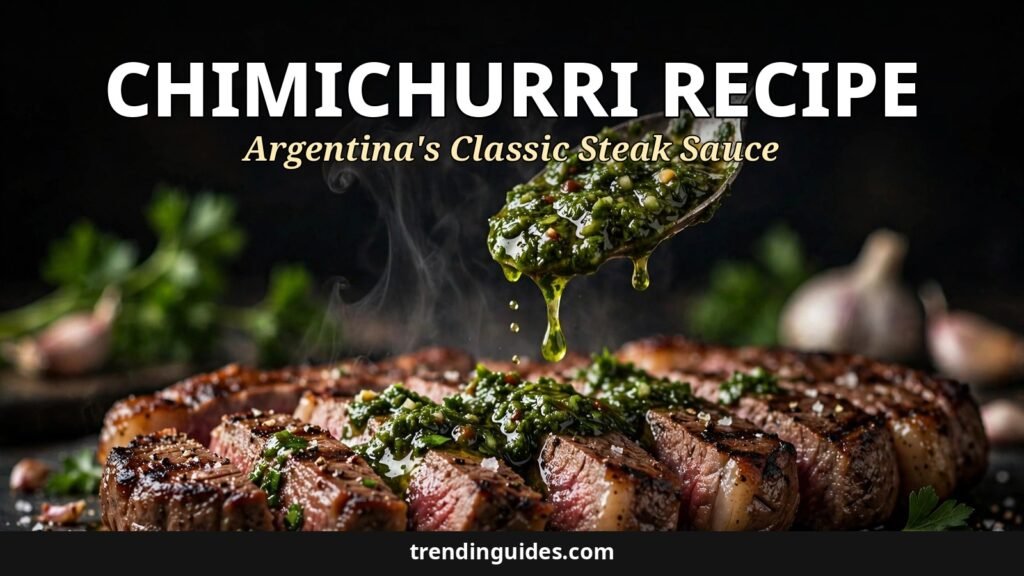

Chimichurri is a fresh, uncooked herb sauce made from parsley, garlic, oregano, red wine vinegar, olive oil, and chili flakes. It is the traditional topping for grilled meat across Argentina and Uruguay. This guide covers the authentic method, three ways to prepare it, the one step most recipes skip, and the mistakes that turn a great sauce into a bland one. It also covers red chimichurri, mint chimichurri, and chef Gordon Ramsay’s actual published version, which differs from almost every “Gordon Ramsay chimichurri” recipe currently ranking online.
Quick reference: 1 cup fresh parsley, 1-2 cloves garlic, 1 tsp dried oregano, 1/3 cup red wine vinegar, 2/3 cup olive oil, salt, pepper, and chili flakes to taste. Chop by hand for the best texture, rest 2-3 hours before serving, and use within 4-5 days.
What Is Chimichurri?
Chimichurri is an oil-based, uncooked sauce made primarily from fresh parsley, garlic, dried oregano, red wine vinegar, and olive oil, and it works as both a marinade and a finishing sauce for grilled meat. Cooks in Argentina and Uruguay treat it roughly the way Italian cooks treat pesto: a handful of fresh ingredients, no cooking required. It’s typically served at room temperature, spooned generously over grilled beef, chicken, or vegetables right before eating. It’s easy to lump chimichurri in with salsa verde or pesto since all three are green, herb-forward, and oil-based, but the details set them apart. Mexican salsa verde is usually tomatillo- or vinegar-based and often cooked. Italian pesto leans on basil, pine nuts, and hard cheese for body. Chimichurri stays raw, cheese-free, and vinegar-forward, built to cut through fatty grilled meat rather than coat pasta.
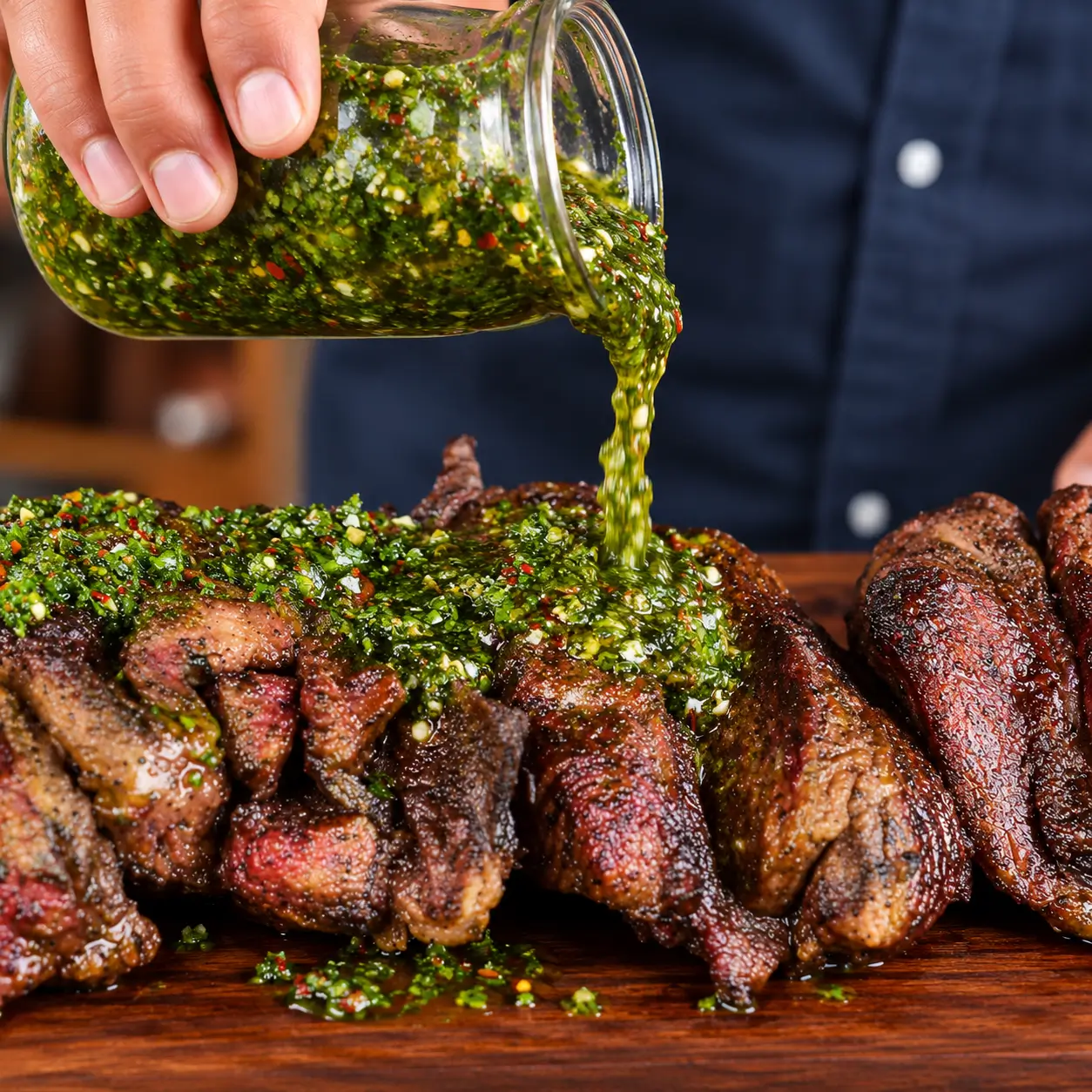
Classic Chimichurri Recipe
Ingredients
Equipment
Method
Notes
- This chimichurri is featured in a recipe pairing it with grilled black angus beef neck (asado style on a Kamado Joe) and a grilled vegetable salad with zucchini, fennel, onion, bell pepper, and mozzarella, drizzled with the same sauce.
- Serve at room temperature rather than straight from the fridge, since cold olive oil dulls the flavor.
- Choose an olive oil with real character. A mild, neutral oil will make the sauce taste flat.
Origin of Chimichurri
Argentina and Uruguay both claim chimichurri as a national condiment, and food historians have never settled the dispute. The sauce grew out of asado culture, the tradition of slow-grilling large cuts of beef over an open wood or charcoal fire on cattle ranches across the pampas. Gauchos needed something that required no cooking and no refrigeration, so fresh herbs, vinegar, and oil got mixed right at the fireside. One popular (if unverified) story traces the name to English-speaking landowners asking Spanish-speaking cooks for “the curry,” which over generations blended into “chimichurri.” Whatever the real origin, the sauce has stayed essentially unchanged for generations and now sits on nearly every Argentine steakhouse table. The two countries do lean slightly different. Argentine versions tend to favor red wine vinegar and a sharper, more assertive garlic presence, while some Uruguayan households make a milder version, sometimes folding in a touch more oil relative to vinegar, or adding finely diced red bell pepper for sweetness, a likely precursor to today’s red chimichurri.
What Does Chimichurri Taste Like
Bright, tangy, and herbaceous, with a garlicky backbone and a mild, adjustable heat from chili flakes. Red wine vinegar delivers sharp acidity that cuts through rich, fatty grilled meat, while olive oil rounds the sauce out and carries the herb flavor. Good chimichurri is never smooth or puréed. The texture should stay chunky, with visible flecks of parsley and garlic suspended in oil and vinegar.
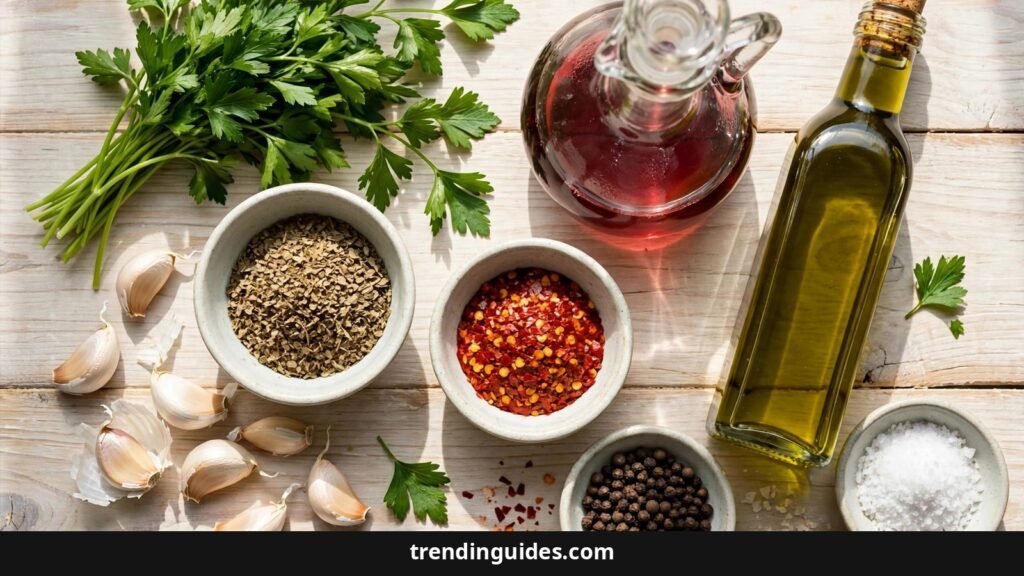
Chimichurri Ingredients (Makes About 1 Cup)
| Ingredient | Amount |
|---|---|
| Fresh flat-leaf (Italian) parsley, finely chopped | 1 cup packed |
| Garlic, minced | 1-2 cloves |
| Dried oregano | 1 tsp |
| Red wine vinegar | 1/3 cup |
| Extra virgin olive oil | 2/3 cup |
| Red chili flakes | 1/2 tsp, to taste |
| Salt | 1/2 tsp, to taste |
| Black pepper | 1/4 tsp, to taste |
Parsley gives the herbaceous backbone. Use flat-leaf, not curly, for a stronger, less bitter flavor. Garlic adds sharp depth but intensifies fast in acidic vinegar, so traditional recipes stay light-handed with it. Dried oregano brings an earthy, slightly bitter counterpoint. Red wine vinegar supplies the defining acidity; balsamic, rice, or apple cider vinegar change the flavor too much to sub in cleanly. Olive oil should be a robust, peppery extra virgin, not a mild neutral one. Chili flakes let you dial the heat up or down.
Substitutions Worth Knowing
Some traditional Argentine recipes use a neutral oil like sunflower oil instead of olive oil, since olive oil wasn’t widely available in Argentina when the sauce first took shape, though most modern versions use olive oil for the flavor. Purists keep it parsley-only, while many home cooks stir in fresh cilantro for extra brightness. Finely chopped shallot or red onion sometimes stands in for part of the garlic, and lemon juice occasionally joins or replaces some of the vinegar in modern versions. None of these are “wrong,” since chimichurri has always varied by household, but fresh parsley and red wine vinegar are close to non-negotiable.
Scaling It Up
The table above makes about 1 cup, enough for four to six people alongside a main dish. For a full asado or a backyard barbecue, the ratios scale cleanly: double every ingredient for roughly 2 cups, or triple for a large gathering. The one exception is garlic and chili flakes. Increase those more conservatively (by about half again rather than in exact proportion), since both intensify as the sauce sits, and an overly garlicky or overly spicy batch is hard to correct after the fact.
How to Make Chimichurri: 3 Methods
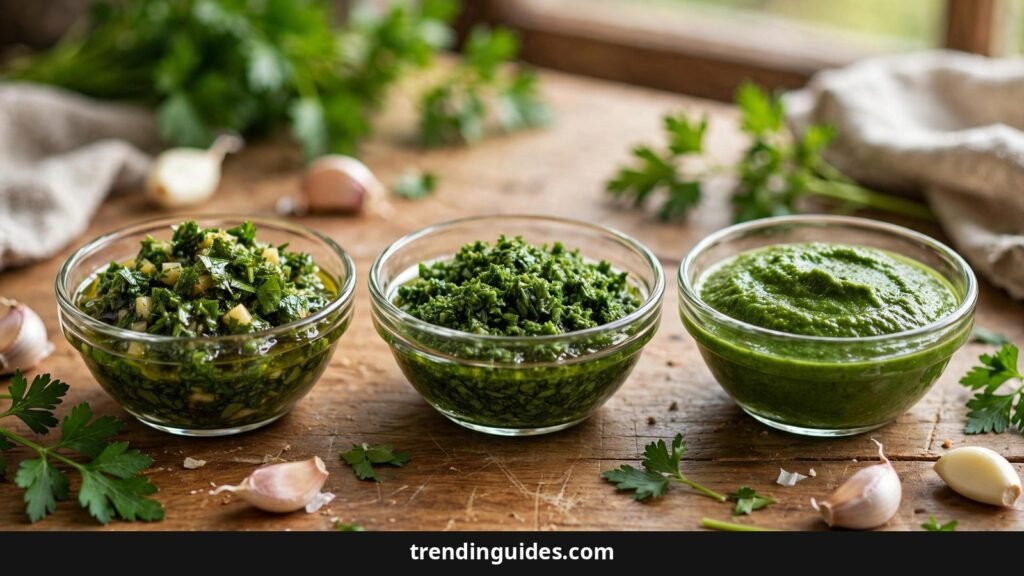
You can make chimichurri three ways: by hand with a knife, in a food processor or blender, or with a mortar and pestle. All three use the same ingredients, but each gives a slightly different texture and flavor, so pick the one that suits the time and tools you have.
Hand-Chopped Method (Most Traditional)
- Strip the parsley leaves from the stems, bundle tightly, and chop as finely as possible with a sharp chef’s knife.
- Mince the garlic separately, just as fine.
- Whisk the vinegar, salt, and pepper together, then slowly whisk in the olive oil to form a loose vinaigrette.
- Stir the parsley and garlic into the vinaigrette, then add the oregano and chili flakes.
This takes a little longer than using a machine, but it keeps the bright green color and chunky bite that define classic chimichurri.
Food Processor or Blender Method
Add the parsley, garlic, and dry ingredients first and pulse in short bursts. Never run it continuously, or the herbs turn into a thin, puréed liquid instead of a chunky sauce. Scrape down the sides between pulses. Add the oil last and pulse a few more times until combined but still visibly textured. Over-processing is the single most common mistake with this method, so stop as soon as the herbs look finely chopped rather than liquefied.
Mortar and Pestle Method
Add the garlic and a pinch of coarse salt to the mortar first, since the salt acts as an abrasive that breaks the garlic down fast. Add the parsley in small batches and grind against the sides until it releases its oils and turns fragrant. Stir in the oregano, chili flakes, vinegar, and oil once the herbs are broken down. It’s more work than the other two methods, but many cooks find the flavor more intense and better integrated. Crushing the herbs (rather than slicing through them with a blade) ruptures more of their cell walls and releases more of the essential oils that carry flavor.
The Secret Step: Let It Rest
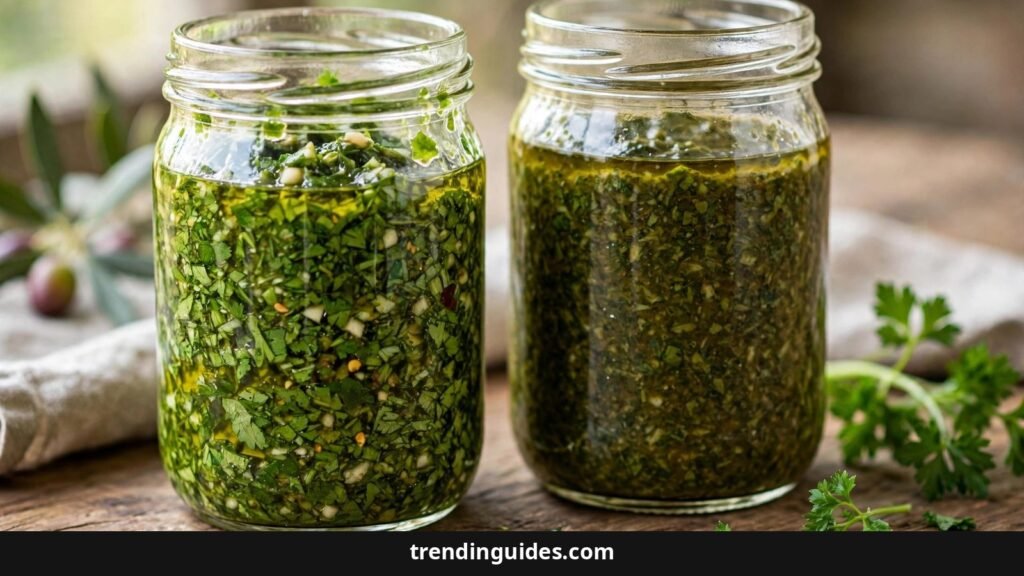
Mix chimichurri and it tastes sharp and disjointed. Let it sit at room temperature for two to three hours and it tastes balanced, because the raw garlic mellows and the dried oregano rehydrates into the oil and vinegar. This matters more than any single ingredient swap. Two other details worth locking in: serve it at room temperature (cold oil solidifies and mutes the flavor, so pull it from the fridge at least 20 minutes before serving), and use fresh garlic rather than garlic powder, which lacks the sharp, aromatic bite the sauce depends on. Taste once it’s rested and adjust salt or vinegar in small amounts until it feels even.
Common Mistakes to Avoid
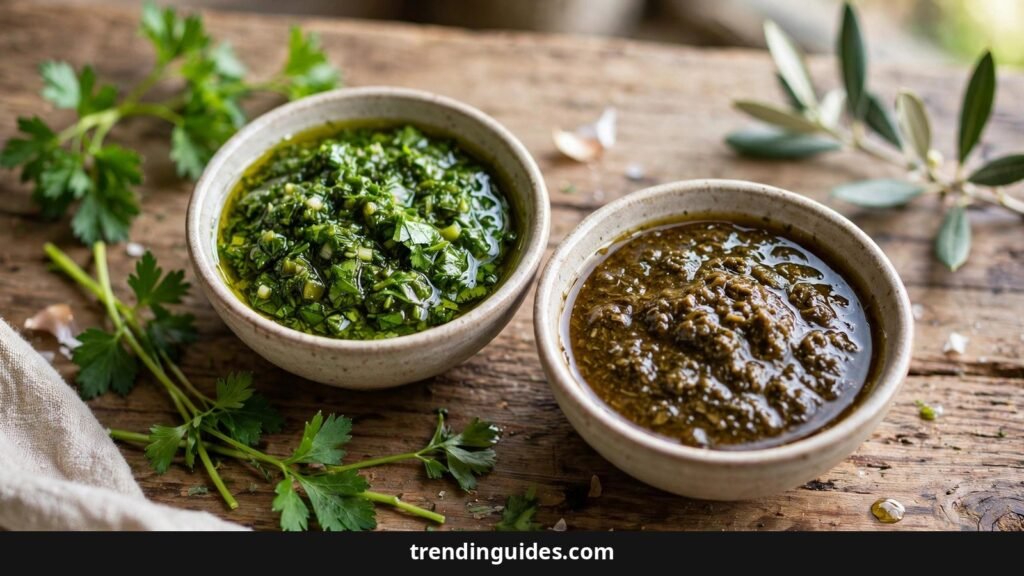
- Over-processing in a blender turns the sauce into a thin purée instead of a chunky one. Pulse, don’t run.
- Serving it cold mutes flavor and thickens the oil. Bring it to room temperature first.
- Skipping the rest leaves the sauce sharp and unbalanced.
- Using the wrong vinegar shifts the flavor away from traditional chimichurri. Balsamic, rice, and apple cider vinegar all do this.
- Too much garlic overpowers everything else. One to two cloves, finely chopped, is enough for a standard batch.
- Dried parsley instead of fresh strips out the bright, grassy flavor that defines the sauce.
- Pre-minced jarred garlic is convenient, but it has a flatter, slightly metallic taste next to fresh cloves, and it’s worth avoiding in a sauce where garlic is doing real work.
- Chopping the herbs too far ahead lets the parsley oxidize and darken on its own, even before it hits the vinegar. Chop it right before combining.
Chimichurri Variations
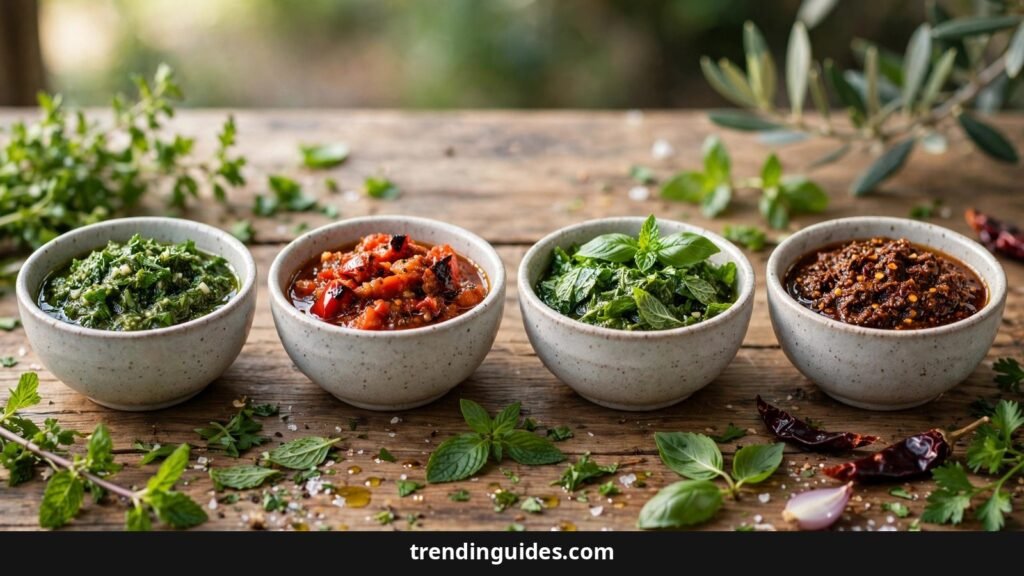
Once you know the classic green version, it’s easy to change the herbs, the peppers, or the acid to suit different meats and tastes. The variations below keep the same raw, oil-and-vinegar idea, but each one shifts the flavor in a different direction.
Red Chimichurri (Chimichurri Rojo)
Red chimichurri swaps some of the parsley for roasted red bell pepper and adds smoked paprika, giving a smoky, slightly sweet flavor and deep red color. It still runs on garlic, red wine or sherry vinegar, and olive oil. It pairs especially well with flank or skirt steak and roasted vegetables, and keeps a bit longer in the fridge than the classic green version thanks to the roasted pepper.
Mint and Basil Chimichurri
This version replaces some or all of the parsley with fresh mint, fresh basil, or both, for a lighter, slightly sweeter sauce. Mint suits lamb especially well, while basil leans more aromatic and pairs nicely with chicken or grilled seafood. Chop both by hand to keep the traditional chunky texture.
Chipotle Chimichurri
Chipotle chimichurri adds chopped chipotle peppers in adobo sauce for a smoky, deeper heat than plain chili flakes give. It works well as a marinade for chicken or pork, not just as a steak topping. The adobo sauce itself adds a subtle tang that complements the vinegar already in the base.
Gordon Ramsay’s Chimichurri
His published version uses fresh mint, basil, and parsley together, plus garlic, sliced chili, red wine vinegar, honey, and lemon zest, a departure from the single-herb Argentine original. (Most recipes online labeled “Gordon Ramsay’s chimichurri” are actually a standard parsley-and-garlic base that never checked his real ingredient list.) The honey balances the vinegar and chili, and the lemon zest brightens the finish. It’s traditionally made with a mortar and pestle and served alongside grilled steak and roasted vegetables. If you’re curious how it tastes next to the classic version, make a half batch of each side by side. The honey and lemon zest make Ramsay’s version noticeably sweeter and brighter, closer to a chutney-adjacent sauce, while the traditional parsley-only version stays sharper and more savory.
What to Serve Chimichurri With
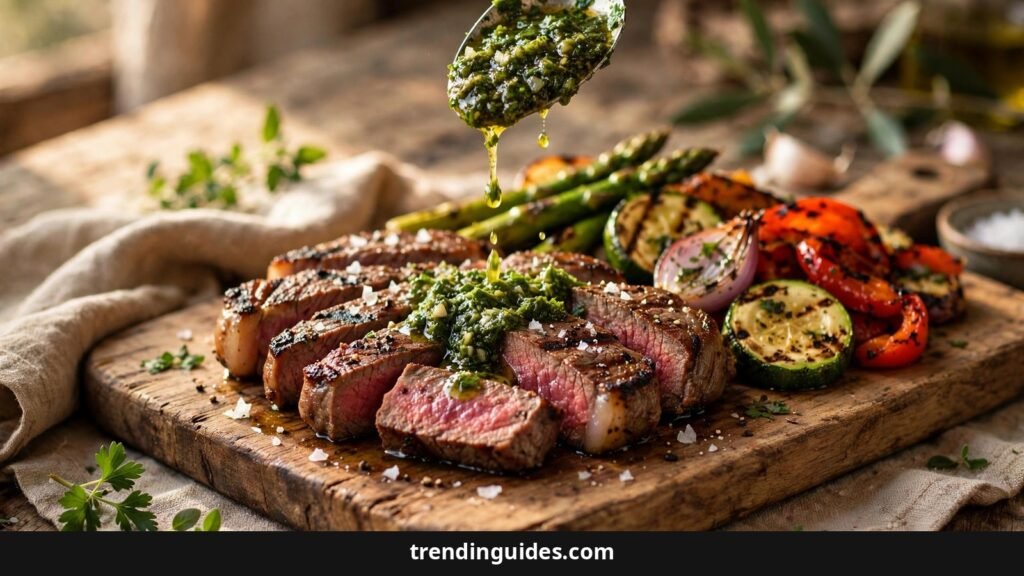
Beef is the classic pairing, but the sauce works just as well over grilled or roasted chicken, brushed onto shrimp or firm white fish, and drizzled over grilled zucchini, peppers, or fennel. It also turns up as a topping for fried or scrambled eggs, a spread inside a steak sandwich, or a dip for crusty bread. As a marinade, its acidity starts tenderizing meat before it hits the grill. As a finishing sauce, which is the more traditional and more common use, it adds a fresh, sharp contrast once the cooking is done.
A few specific pairings worth trying beyond the standard steak: spoon it over grilled chicken thighs instead of a heavier barbecue sauce. Brush it on seared tuna or salmon right after the fish comes off the heat, rather than during cooking, so the acidity doesn’t start “cooking” the fish itself. Toss roasted cauliflower or chickpeas in a spoonful while they’re still warm for a quick vegetarian main. Or thin it slightly with extra olive oil and use it as a punchy salad dressing over a simple tomato and onion salad, a common side at an asado.
How to Store Chimichurri
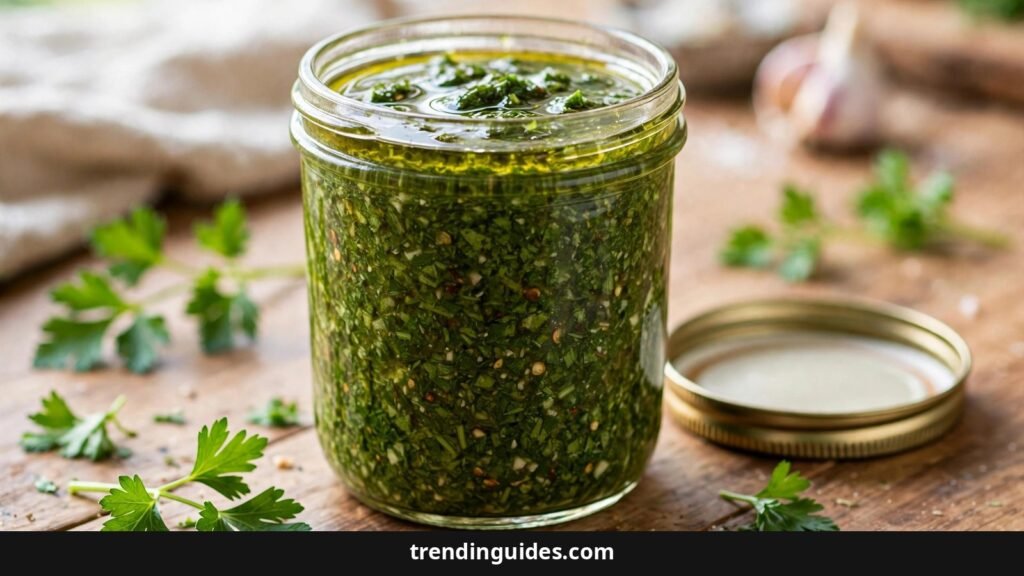
Classic chimichurri keeps for 4-5 days refrigerated in an airtight container, while red chimichurri, thanks to the roasted peppers, keeps closer to two weeks. Flavor peaks around the 12-hour mark after mixing and slowly declines after that. A thin layer of olive oil across the top slows oxidation and keeps the parsley from browning. Skip the freezer for a finished batch, because fresh herbs turn mushy once thawed, even though the flavor mostly survives. If you want to freeze ahead, freeze the oil-and-vinegar base on its own in an ice cube tray, then stir in freshly chopped parsley, garlic, and oregano after it thaws. That keeps the texture intact. Discard the sauce if the color dulls and darkens, the smell turns sour, or it separates and won’t recombine when stirred.
Chimichurri Nutrition (Per 2-Tablespoon Serving, ~8 Servings Per Batch)
| Nutrient | Amount |
|---|---|
| Calories | 150 kcal |
| Total Fat | 16 g |
| Saturated Fat | 2.2 g |
| Sodium | 190 mg |
| Total Carbohydrates | 1.5 g |
| Dietary Fiber | 0.5 g |
| Sugars | 0.2 g |
| Protein | 0.3 g |
Chimichurri is naturally vegan, gluten-free, and dairy-free, and nearly all of its calories come from the olive oil, a heart-healthy source of monounsaturated fat in moderation. The 190 mg of sodium per serving comes mostly from the added salt rather than any single ingredient, so it’s easy to scale back for anyone watching sodium intake. Cut the added salt in the recipe by half and season the finished dish (the steak, chicken, or vegetables) separately instead, which gives more control over the total than salting the sauce itself.
Chimichurri FAQs
Is chimichurri spicy?
The heat is mild and entirely adjustable. It comes only from the chili flakes, so reduce or skip them for a milder sauce.
Can I make it ahead of time?
Yes. It actually tastes better the next day, since the extra time lets the garlic and dried herbs fully infuse into the oil and vinegar.
Is chimichurri the same as pesto?
No. Both lean on fresh herbs and oil, but pesto’s identity comes from basil, pine nuts, and cheese, while chimichurri skips all three and gets its edge from vinegar instead.
Can I use lemon or lime juice instead of vinegar?
Some modern recipes swap in lime juice for part of the vinegar, but red wine vinegar remains the traditional, most common acid.
Where can I find the ingredients outside Argentina?
Flat-leaf parsley, dried oregano, red wine vinegar, and olive oil are standard grocery-store items across the UK, New Zealand, the US, and most other countries.
How much chimichurri per steak?
A good rule of thumb is 2-3 tablespoons per person, enough to coat the meat without drowning it. Set extra on the table in a small bowl rather than pouring it all on at once, since people’s tolerance for the garlic and vinegar varies.
Why did my chimichurri turn brown?
Parsley oxidizes when it’s chopped too far in advance or left uncovered and exposed to air for too long. A thin layer of olive oil on top of the stored sauce, and chopping the herbs close to serving time, both slow this down.
Conclusion
The ingredient list rarely changes: fresh parsley, garlic, dried oregano, red wine vinegar, and olive oil. Technique and resting time decide whether the result tastes sharp and unbalanced or bright and well-rounded. Rest it two to three hours, serve it at room temperature, and don’t over-process the herbs. Once the classic version feels familiar, red, mint, and chipotle chimichurri are easy variations to try next. Start with the hand-chopped method on your next grilled steak, and go from there.


Pingback: Crispy Buffalo Wings Recipe (Fried, Oven or Air Fryer)
Pingback: Butter Chicken Recipe (Easy, Creamy, Restaurant Style)