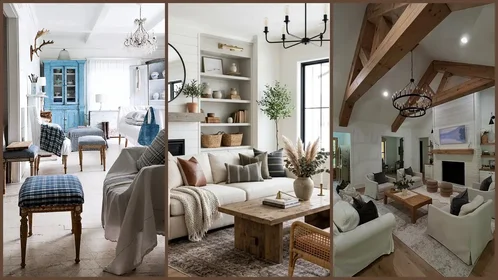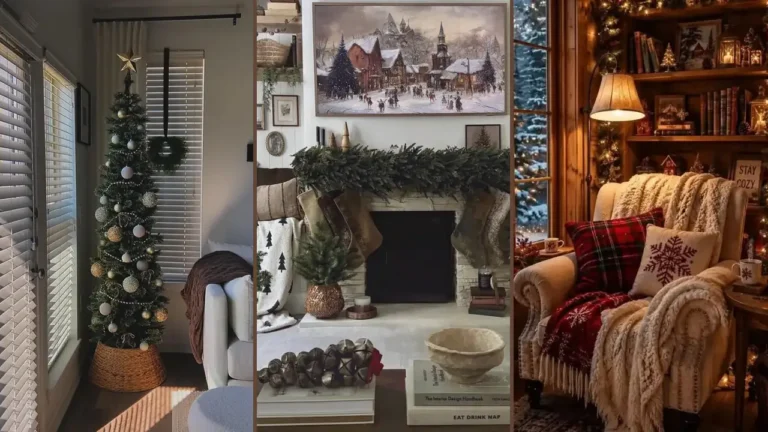
19 Japandi Living Room Decor Ideas for a Calm, Warm, Minimal Space
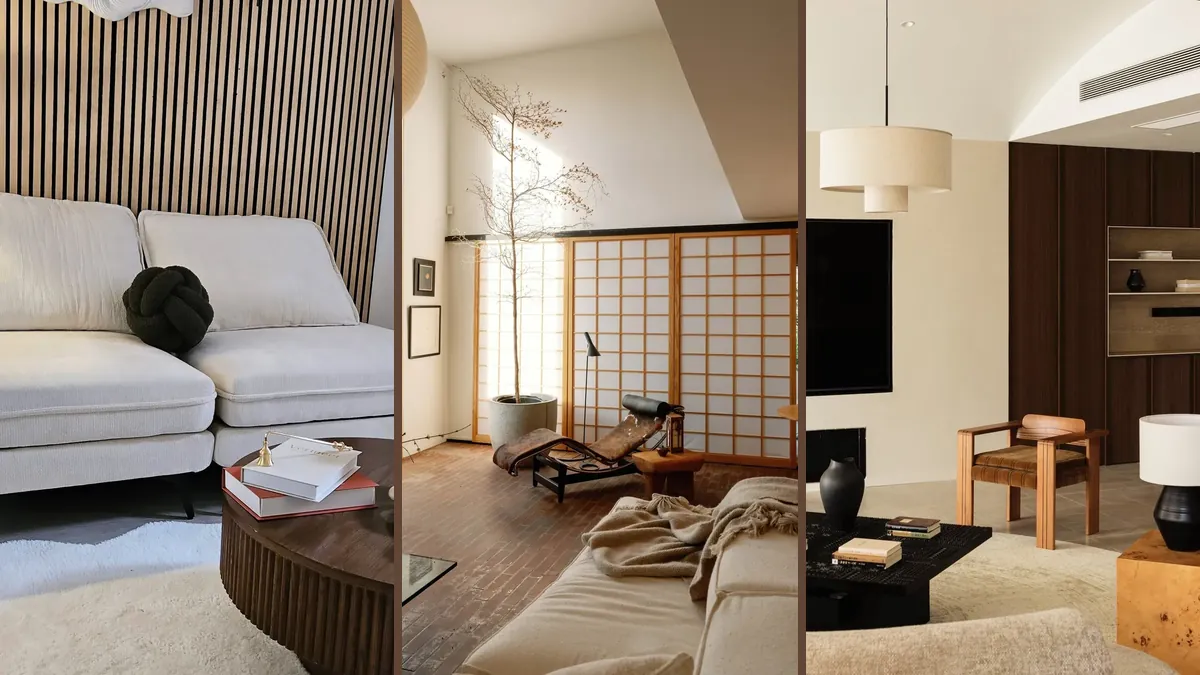
You want to walk into your living room at the end of the day and feel your shoulders drop. Soft daylight, warm wood underfoot, a low sofa that asks you to sit, and nothing on the coffee table but a cup of tea.
Getting there is harder than it looks. Go too minimal and the room feels cold, like a waiting room nobody uses. Add too much and the calm slips away under piles of pillows, baskets, and things you meant to put away last week.
Japandi fixes both problems. It takes the warm, cozy side of Scandinavian design and pairs it with the quiet, careful side of Japanese style. Think natural wood, linen, paper, clay, and plenty of open space.
These japandi living room decor ideas work their way around the room: the sofa, the windows, the floor, the doorways, the shelves, and the corners nobody uses. Each one sticks to simple, easy-to-find materials and comes with clear steps you can copy at home.
1. Pick a Low Sofa in a Soft Neutral
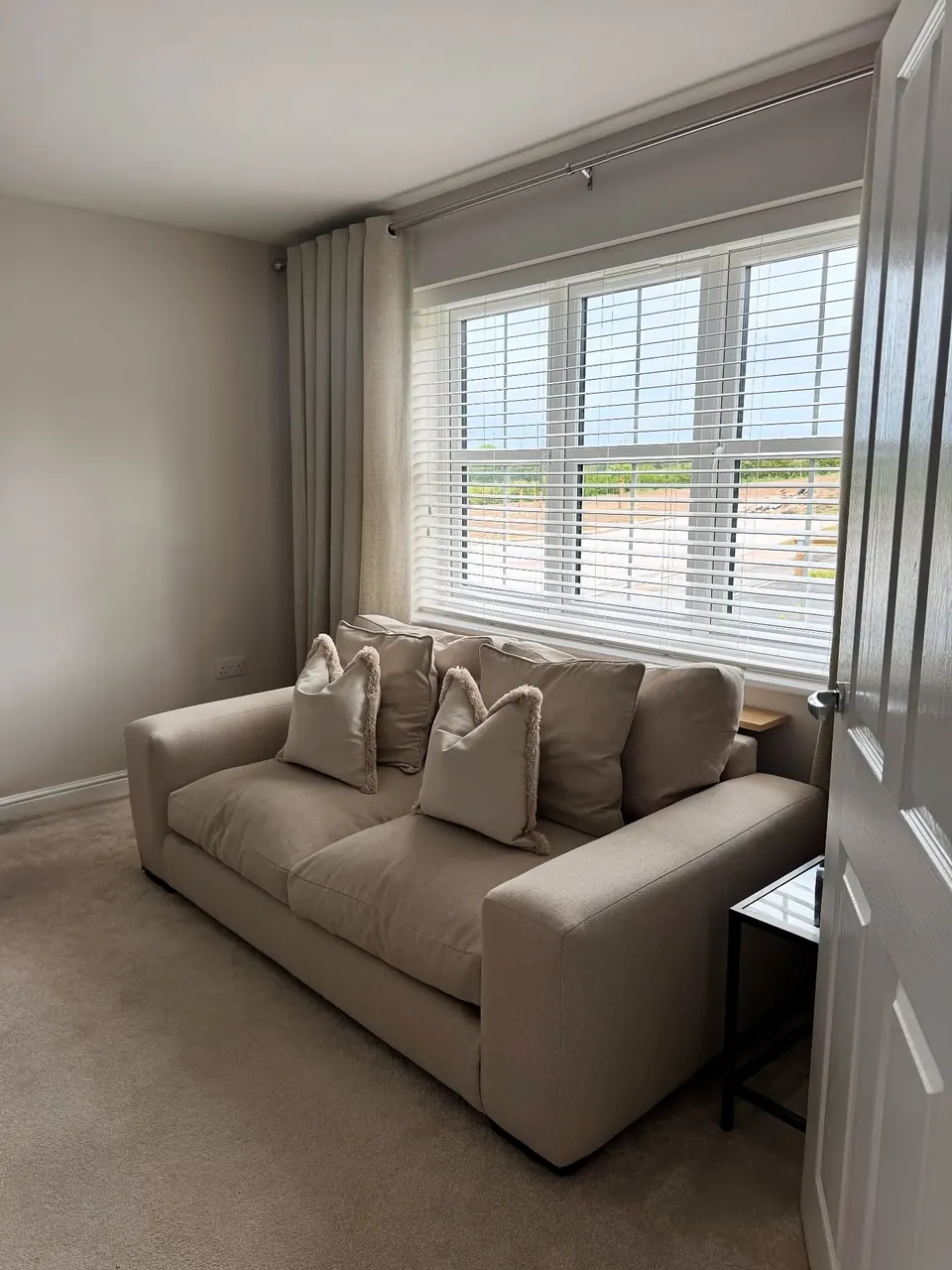
A low profile sofa makes the whole room feel calmer. With the seat closer to the floor, the walls look taller and the window gets more attention.
When you shop, look for:
- Wide, square arms and a deep seat you can tuck your feet into
- Short legs or a solid base that sits nearly on the floor
- A soft neutral like oatmeal, sand, or warm greige
Keep the pillows quiet too. Two or three in creamy shades, with one soft fringed edge, bring texture without adding color.
Then give it a slim side table with a glass top and a thin black frame. It holds a mug and almost disappears next to all that fabric.
| Linen | Bouclé | |
|---|---|---|
| Feel | Smooth and cool, and softer over time | Nubby, loopy, and warm |
| Look | Relaxed, with a few soft wrinkles | Rounded and cozy, like a thick sweater |
| Wear | Creases show, so smooth the cushions now and then | Loops can snag on pet claws and jewelry |
| Cleaning | Some covers come off to wash, so check the label | Usually spot clean only |
| Good choice if | You want a light, airy feel all year | You want the sofa to feel like a hug in winter |
2. Hang Bamboo Shades on the Windows
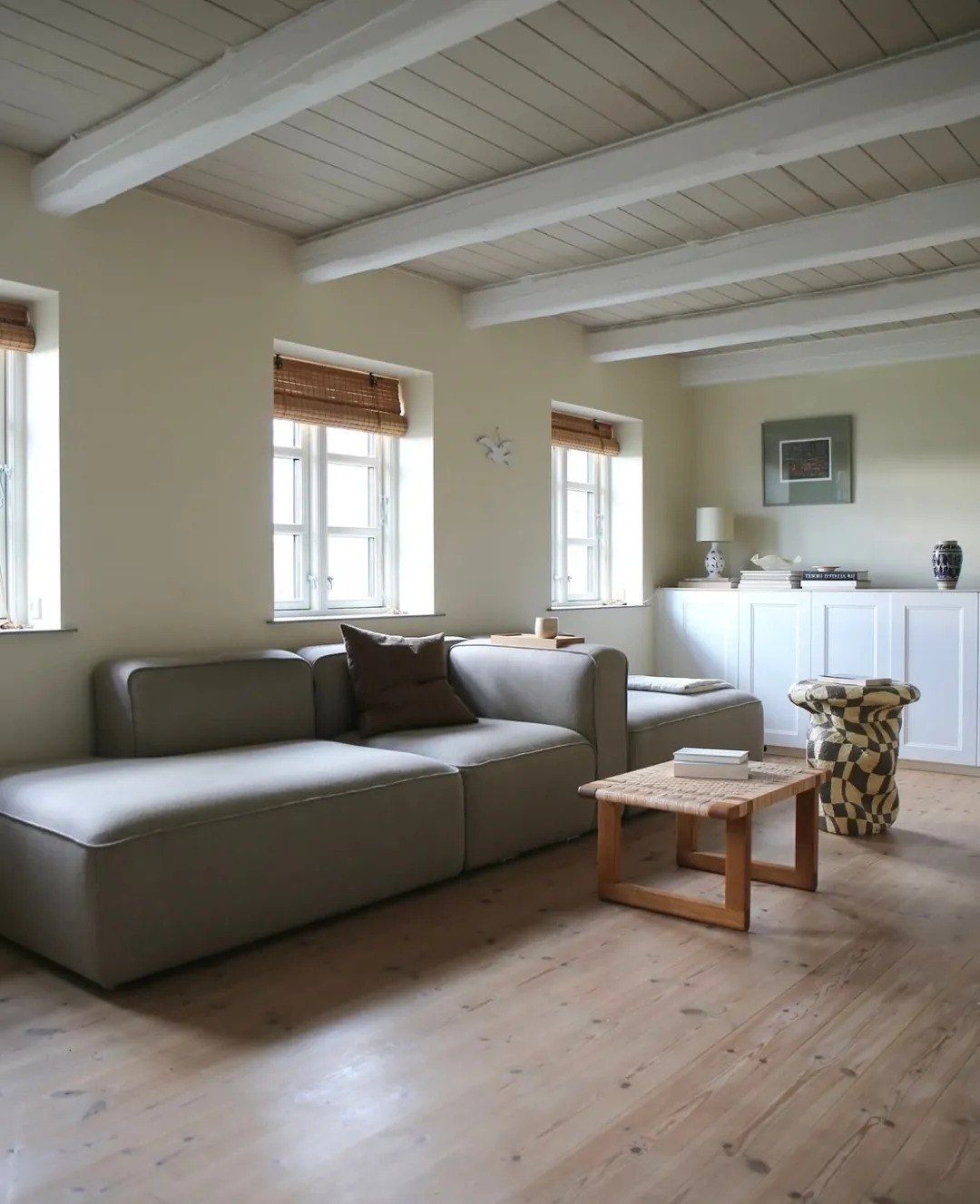
Thin bamboo slats, rolled halfway up, with daylight slipping through the gaps. That’s the softest way to dress a Japandi window.
Bamboo shades share the warm tone of natural wood furniture, and they sit inside the window frame. The wall around each window stays clean, which matters in a room with very little on the walls.
To fit them well:
- Measure inside the frame at the top, middle, and bottom, and order the smallest width.
- Choose honey or tan bamboo that’s close to your floor or table.
- Leave them half rolled during the day for filtered light.
Bamboo softens light but doesn’t block it. Facing a bright streetlight? Order a shade with a privacy liner on the back.
Three shade styles to know
3. Stick to One or Two Wood Tones
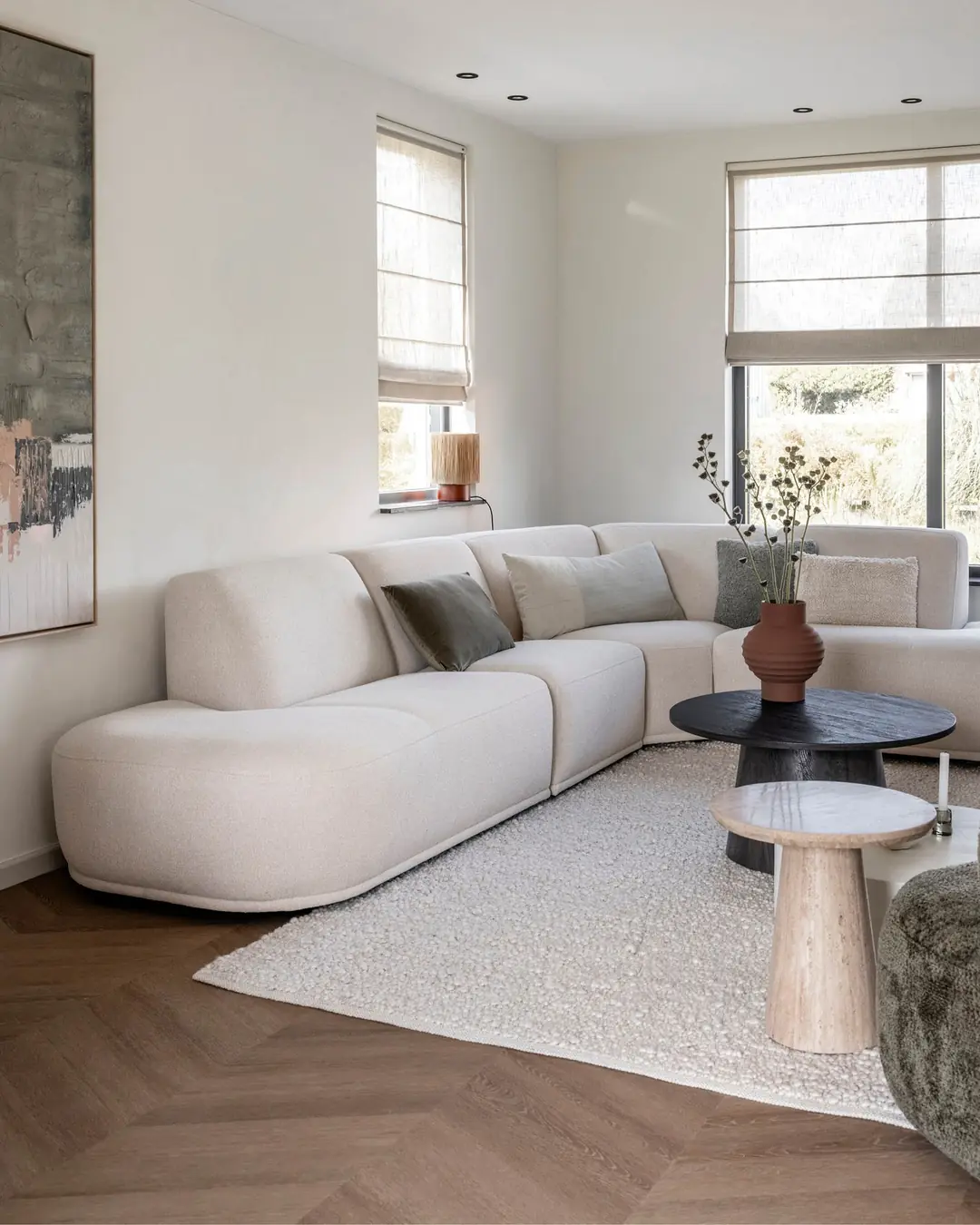
Pick one main wood and one dark accent, then stop.
A Japandi room feels calm partly because the wood isn’t arguing with itself. In this living room, a warm oak herringbone floor sets the main tone. The round coffee table is stained almost black, so it reads as a clear choice instead of a near match.
Nothing else in the room adds a third wood. The side table is pale stone, the vase is terracotta clay, and the sofa and rug stay cream.
That’s the real trick. A room rarely looks off because of wood. It looks off when four browns almost match and none of them quite do.
💡 Quick Tip
Before you buy a wood piece, take a photo of it right next to your floor in daylight. Check the undertone, not just the shade. Warm woods lean golden or red, and cool woods lean gray. If the new piece is close but not quite right, go clearly lighter or clearly darker instead.
4. Build a Low Wood Platform
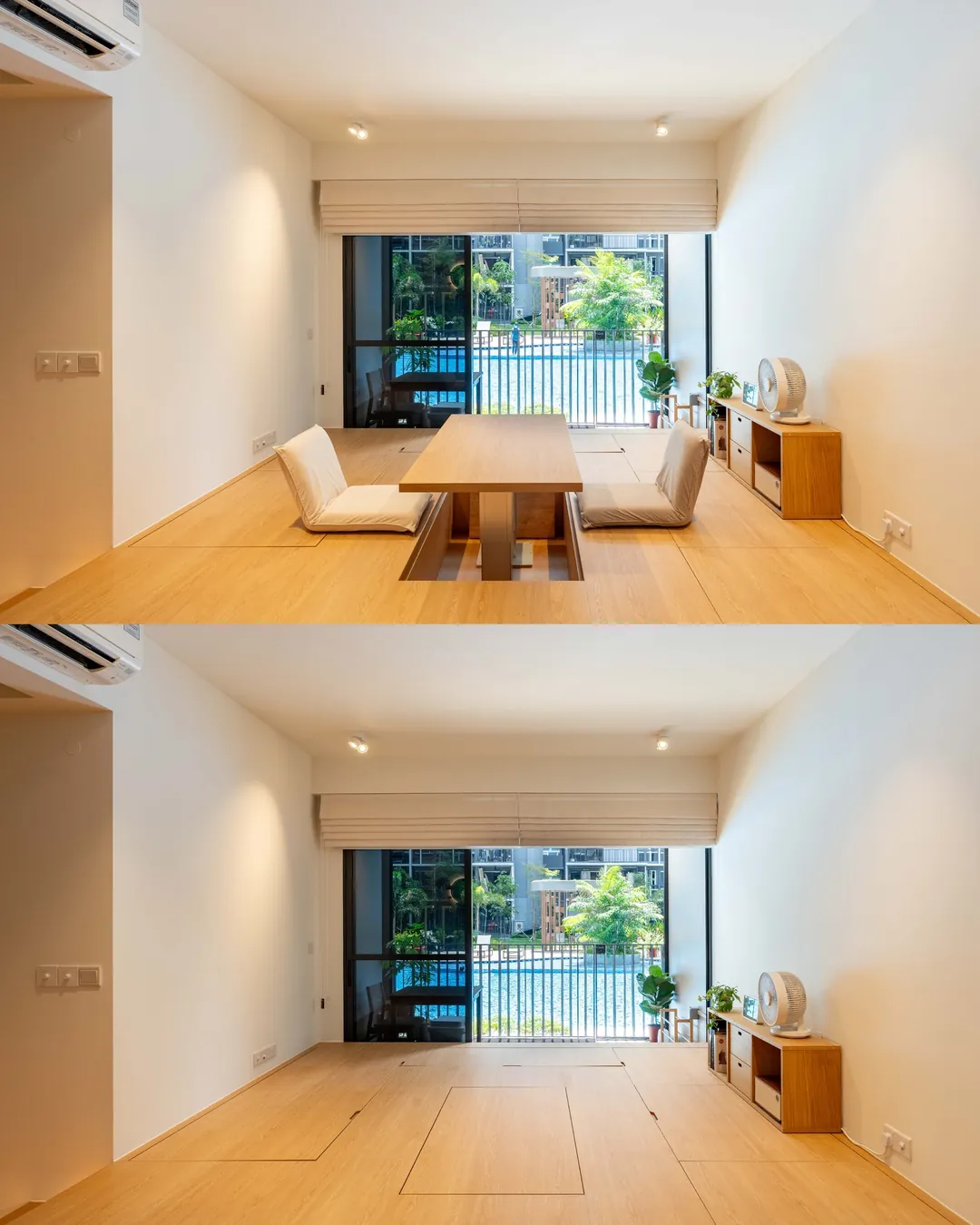
A rug marks off a seating area. A low wood platform builds one.
Raised floors have a long history in Japanese homes as the place for sitting, eating, and resting. In this room, pale oak covers the floor wall to wall. A table sits in a sunken pit with a floor chair on each side, then drops away so hinged panels close over the gap.
You can get the feel without the hidden table:
- Build a platform a few inches high along one wall or under a window
- Use birch plywood or light oak with a matte clear finish
- Set a low table and two floor chairs on top
Hinged lids on the platform can hide spare cushions and blankets underneath.
5. Hang a Fabric Panel in a Doorway
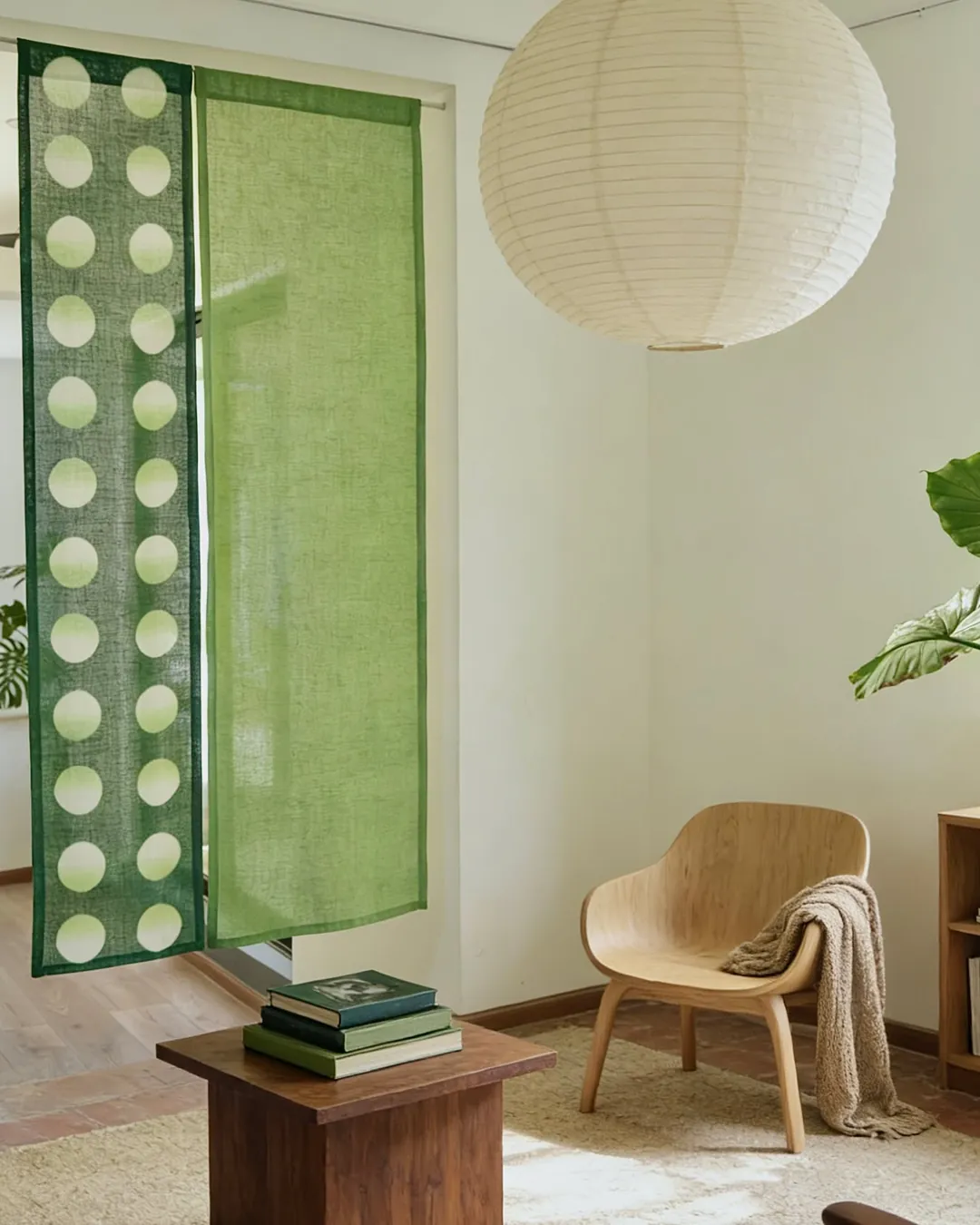
Some doorways show too much. From the sofa, you can see straight into the kitchen sink or the laundry pile down the hall.
A noren softens that view. It’s a Japanese fabric curtain split into panels that hangs across the top of a doorway. You walk right through the split, and the space behind it stays half hidden.
Pick linen or cotton, so light still glows through the weave. One quiet pattern is plenty, like simple circles on one panel and plain fabric on the other.
Color is where it gets fun. The two greens here pick up the green book stack on the walnut side table and the big leaves in the corner. Pull one shade from your room, and the panel looks like it was always there.
Measure the inside width of the doorway near the top of the frame.
Pick a tension rod that fits that width. It twists into place with no screws, which makes it a good choice for renters.
Slide the rod through the pocket at the top of the panels, then set it snug inside the frame.
Walk through it a few times while carrying a bag. If the fabric catches, raise the rod a little or switch to shorter panels.
6. Hang a Paper Lantern Pendant
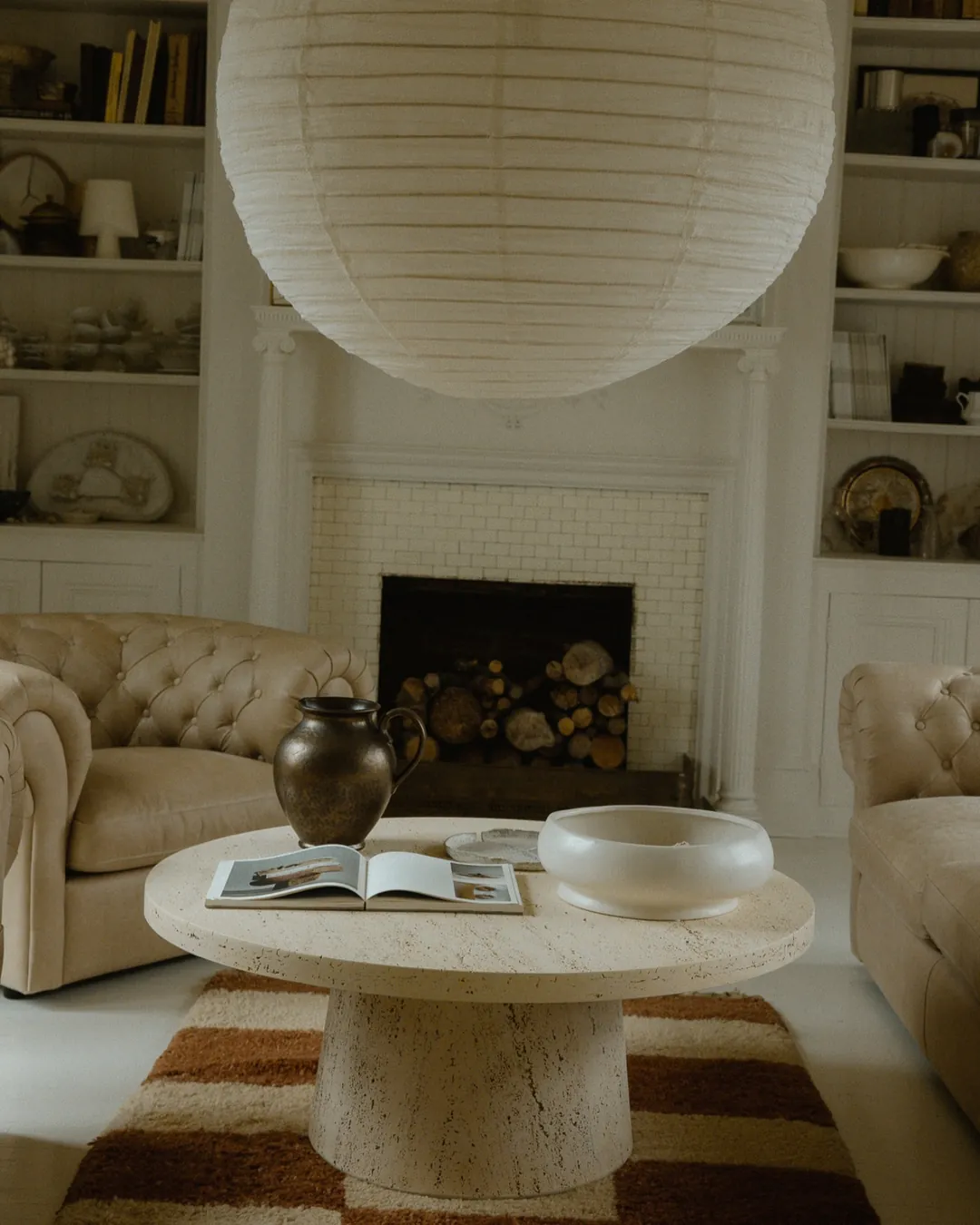
Paper lights have a reputation as the cheap dorm-room pick. Hang one that’s big enough, and it can look like the best thing in the room.
Size matters most. A small paper globe looks lost on the ceiling. A wide one, close to the width of your coffee table, hangs over the seating area like a soft moon. The rice paper spreads the light evenly, so you never see a harsh bulb.
Hang it a little lower than you would a glass fixture, over the coffee table and away from walkways. Here it floats above a round travertine table and two cream tufted chairs, and the whole room glows warm.
Use an LED bulb. It stays cool inside the paper.
A small flush light on the ceiling throws flat, bright light straight down. The corners stay dim, and the seating area feels more like a hallway than a place to settle in.
A wide paper lantern hangs low over the coffee table. The light spreads soft and even, the walls warm up, and the room finally has a clear center.
7. Set Up a Small Tea Corner
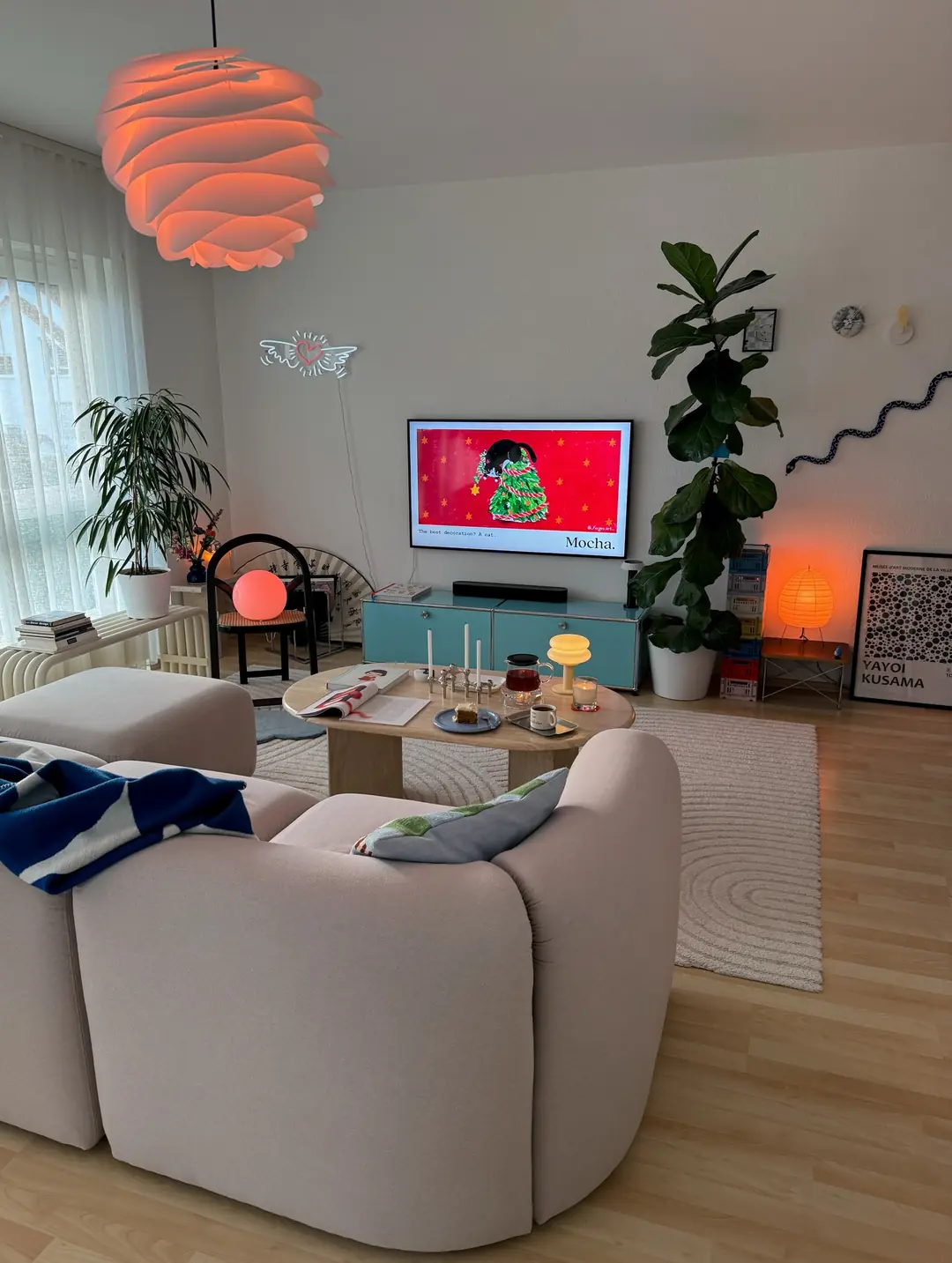
Late afternoon, kettle just off the boil, a glass teapot slowly turning amber on the table. A tea corner is simply a spot that makes that moment easy.
It doesn’t have to be in an actual corner. In this room, it lives on a low oval wood table in front of the sofa, with a paper lantern lamp glowing nearby.
Keep everything on one tray so it clears in a single trip. A glass teapot lets you watch the color deepen, and a few short candles make it feel like a small ritual instead of a snack break.
Store the loose tea, cups, and a cloth in a drawer or lidded box close by. That way nothing sits out between pots.
What to gather
8. Choose a Low, Closed Media Console
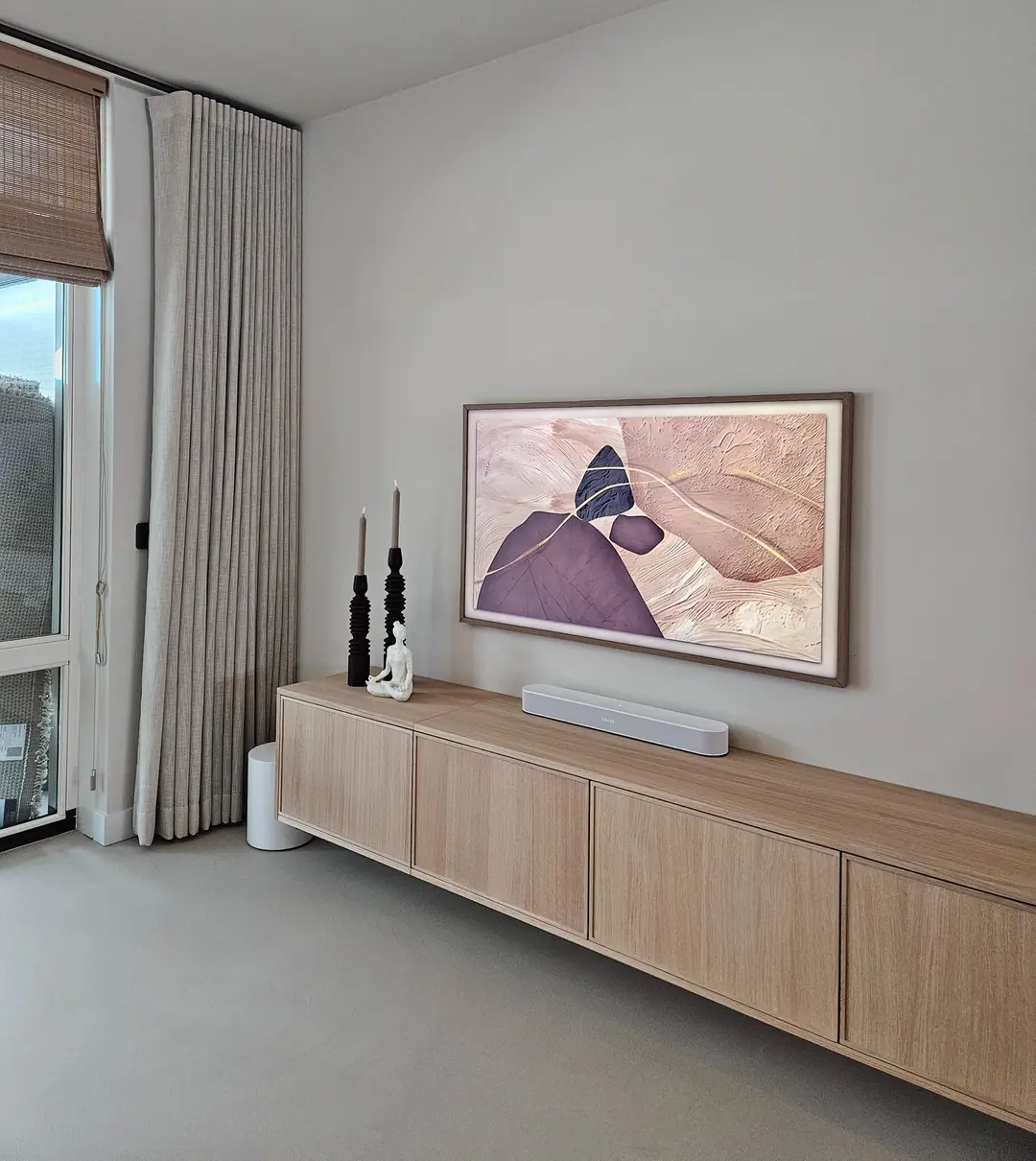
A tall TV stand full of open cubbies is the quickest way to make a calm room look busy. Every game box, cable, and stray remote stays on show.
A low, closed console fixes that. Flat oak doors hide the clutter, and a long floating design keeps the floor clear underneath, so the whole wall feels lighter.
Treat the top like minimalist living room decor and keep it nearly bare:
- A pair of dark wood candlesticks at one end
- One small sculpture beside them
- The soundbar, and nothing else
Does your TV show art when it’s switched off? Pick a soft, earthy piece, and the screen passes for a framed print.
Choose a console noticeably wider than the TV, so the screen doesn’t look top-heavy.
Pick plain fronts with push-to-open doors or slim recessed pulls.
Screw a floating console into wall studs, and drill a cord hole in the back panel.
Glass doors that show every cable and router light.
High-gloss fronts that look harsh next to linen and wood.
A long row of photos and small trinkets across the top.
9. Add Floor Cushions for Extra Seating
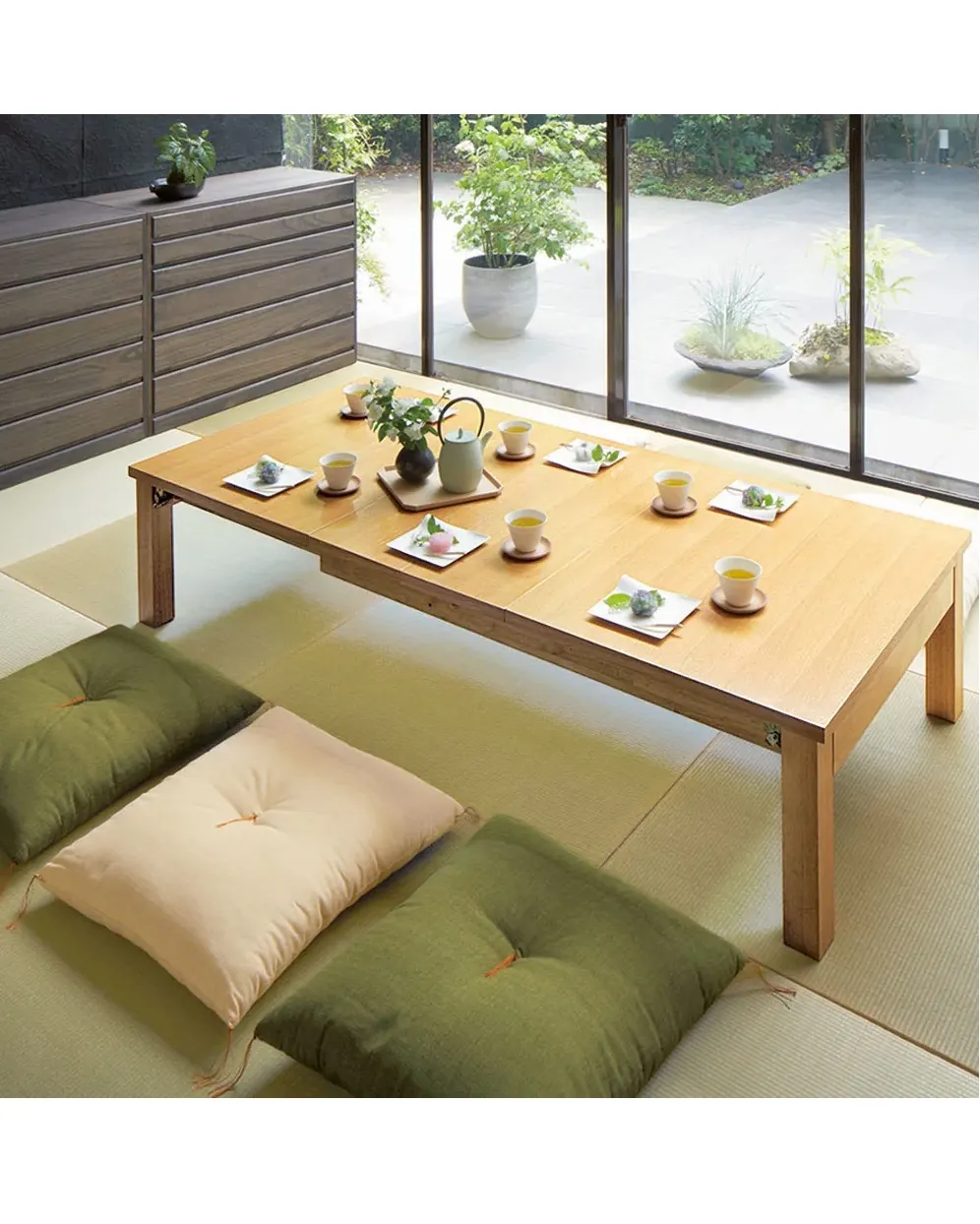
Guests rarely mind sitting on the floor when the cushion is thick enough. The thin ones are what leave everyone shifting around after ten minutes.
Japanese zabuton cushions are made for exactly this. They’re square, firm, and flat, with a tufted center that holds the filling in place. Stacked against a wall, they take up very little room. Pulled around a low table, they turn the living room into a spot for tea or a long, slow dinner.
Mix two calm colors so the set looks chosen. Moss green and cream look soft against light wood, like the low oak table here.
Pick covers that zip off. Cushions on the floor collect crumbs fast.
📌 Good To Know
Floor sitting is hard on some backs and knees. Set at least one cushion against the sofa or a wall so someone can lean back, or add a floor chair with a backrest. Keep spares in a neat stack on a low shelf, and flip them now and then so the filling doesn’t flatten on one side.
10. Group Handmade Ceramics in Odd Numbers
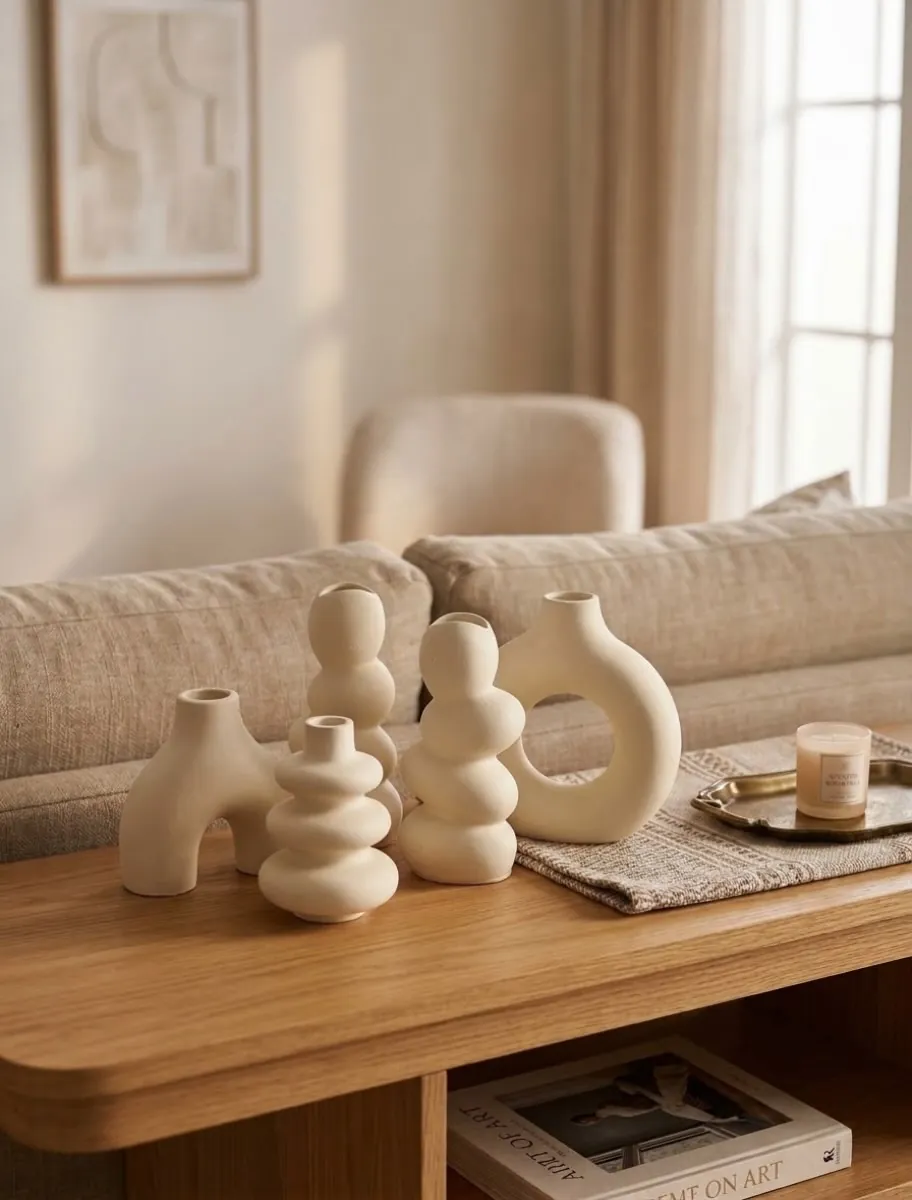
Set the vases in a group of three or five, and let them overlap a little.
Odd numbers look relaxed because the eye can’t sort them into neat pairs. On this light oak table, five cream vases stand close together: a ring, an arch, two bubble stacks, and one short ribbed piece. They’re all one color but five different shapes, and that mix keeps the group interesting without adding anything new to the palette.
Handmade pieces also bring in a bit of wabi sabi decor. Uneven rims, soft lumps, and a chalky matte glaze all show the maker’s hand.
Put the tallest piece toward the back, then slide a woven runner under one side so the group feels tied to the table.
Keep the color the same and let the shapes change. Five cream vases in five shapes look calm and collected. Five colors in the same shape look like a store shelf.
11. Keep One Small Bonsai Tree
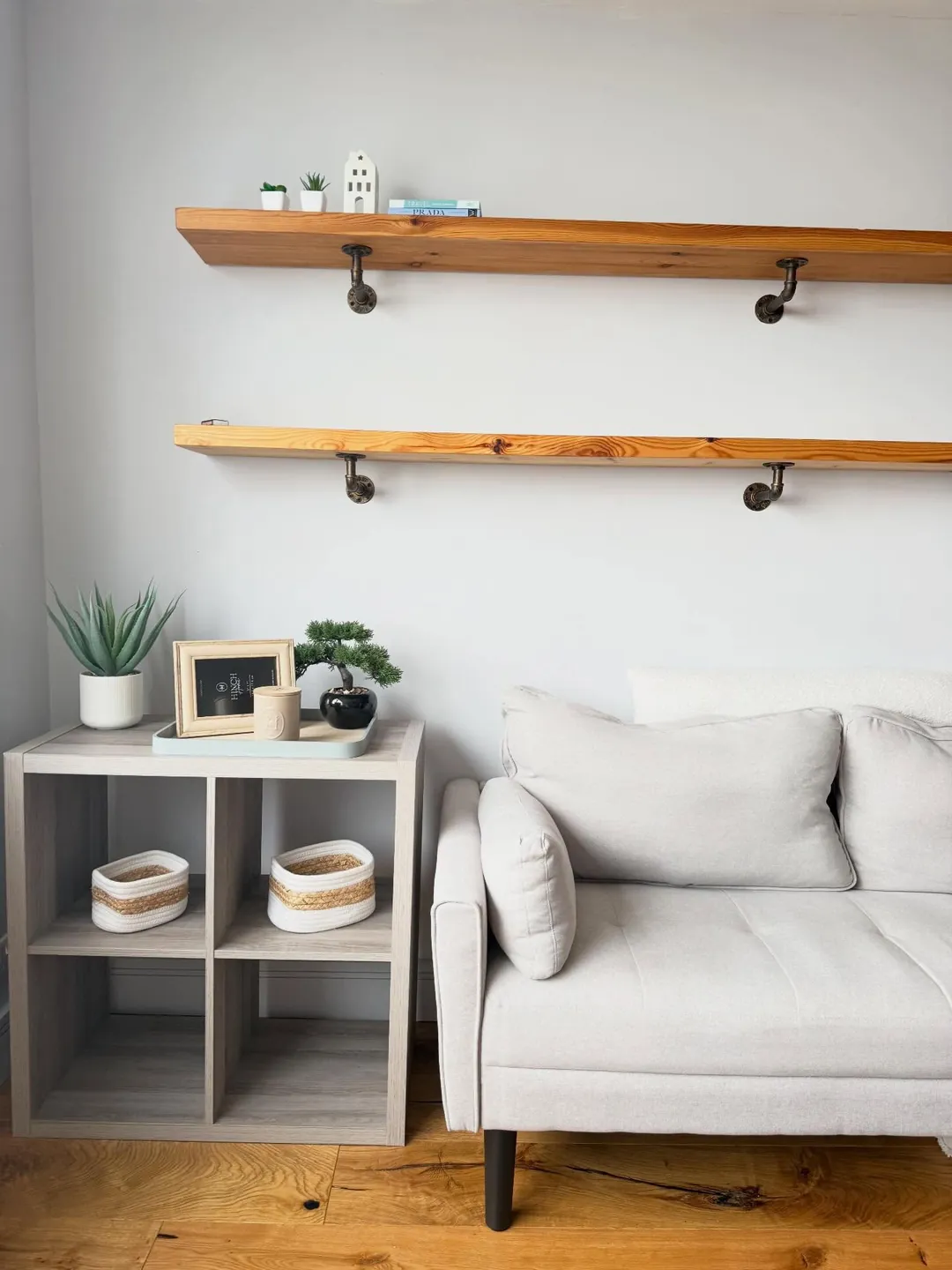
Plenty of people buy a bonsai, set it on a shelf, and watch it fade within a few months. The problem is usually the type of tree, not a lack of skill.
Many classic bonsai, like juniper, are outdoor trees. They need real sun and a cool winter rest. Indoors, pick a tropical type that’s happy at room temperature, such as ficus or jade.
Then give it the brightest spot you have, close to a window. Most indoor bonsai want more light than you’d guess.
Keep the styling small. A little tree in a dark glazed pot, set on a tray with a candle and a framed print, turns a plain cabinet top into a quiet scene.
Low light at home? A good faux bonsai gives you the same look with no guesswork.
| Indoor-Friendly | Outdoor-Only | |
|---|---|---|
| Examples | Ficus, jade, Hawaiian umbrella tree | Juniper, pine, Japanese maple |
| Needs | A bright window and steady room temperature | Outdoor sun and a cool winter rest |
| Indoors | Can live on a sill or shelf all year | Only for a day or two, like when guests come over |
| Watering | When the top of the soil starts to feel dry | Often daily in summer heat, so check the soil |
| Pets | Ficus and jade aren’t safe to chew, so place them up high | Check each type before you buy |
12. Add Slatted Wood Panels to One Wall
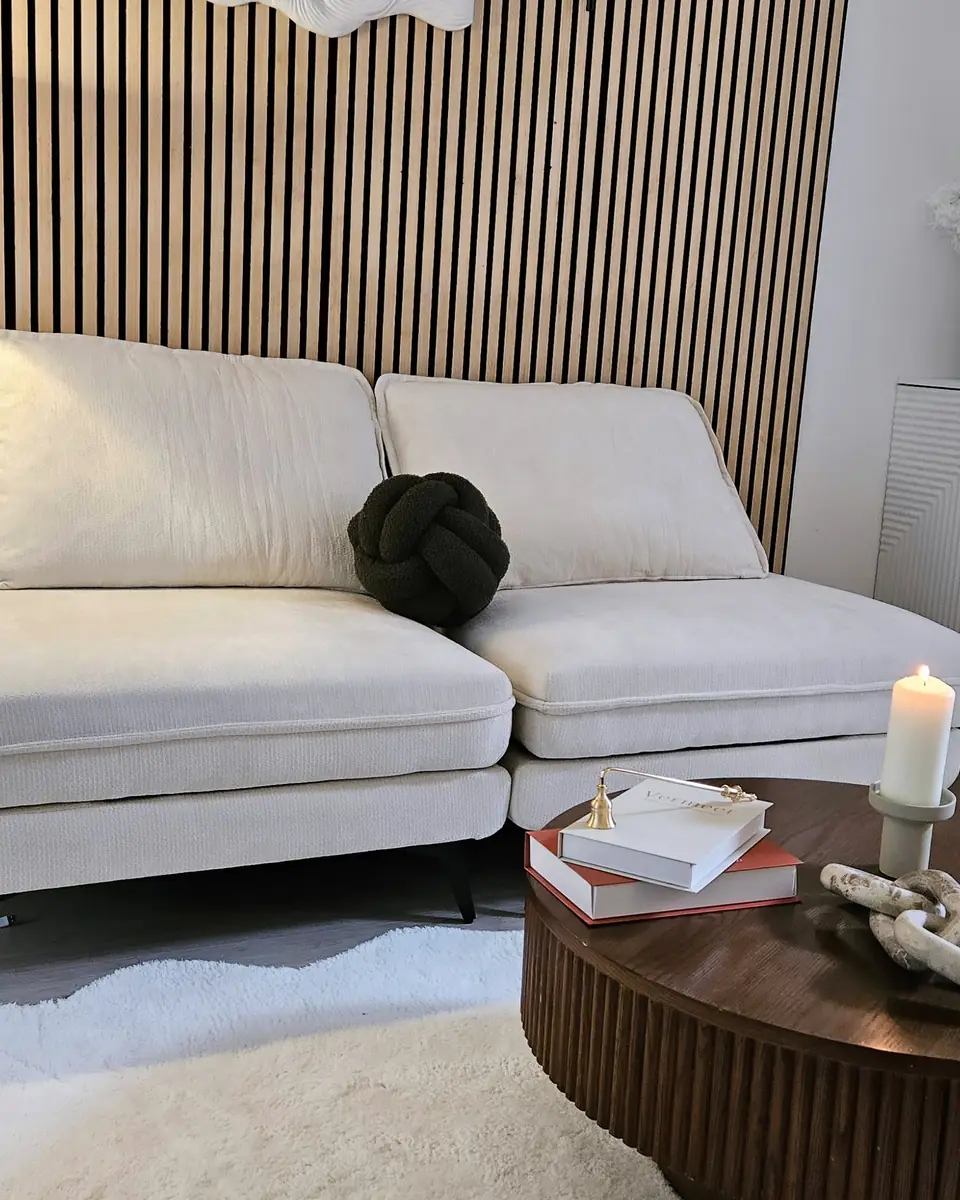
Thin oak slats on a black backing run up the wall behind a cream sofa. Up close you see every line. From across the room, the wall just looks warm.
That’s a big part of why slat panels show up so often in japandi interior design. They bring in natural wood texture with nothing to dust or style, and many ready-made panels have a felt backing that helps soften echo.
To get the most from them:
- Cover a full wall, or at least the full width of the sofa
- Run the slats up and down so the ceiling feels higher
- Keep what sits in front soft and pale, like a cream sofa and a fluffy rug
A dark wood coffee table with ribbed sides echoes the stripes without copying them.
13. Make a Simple Display Nook
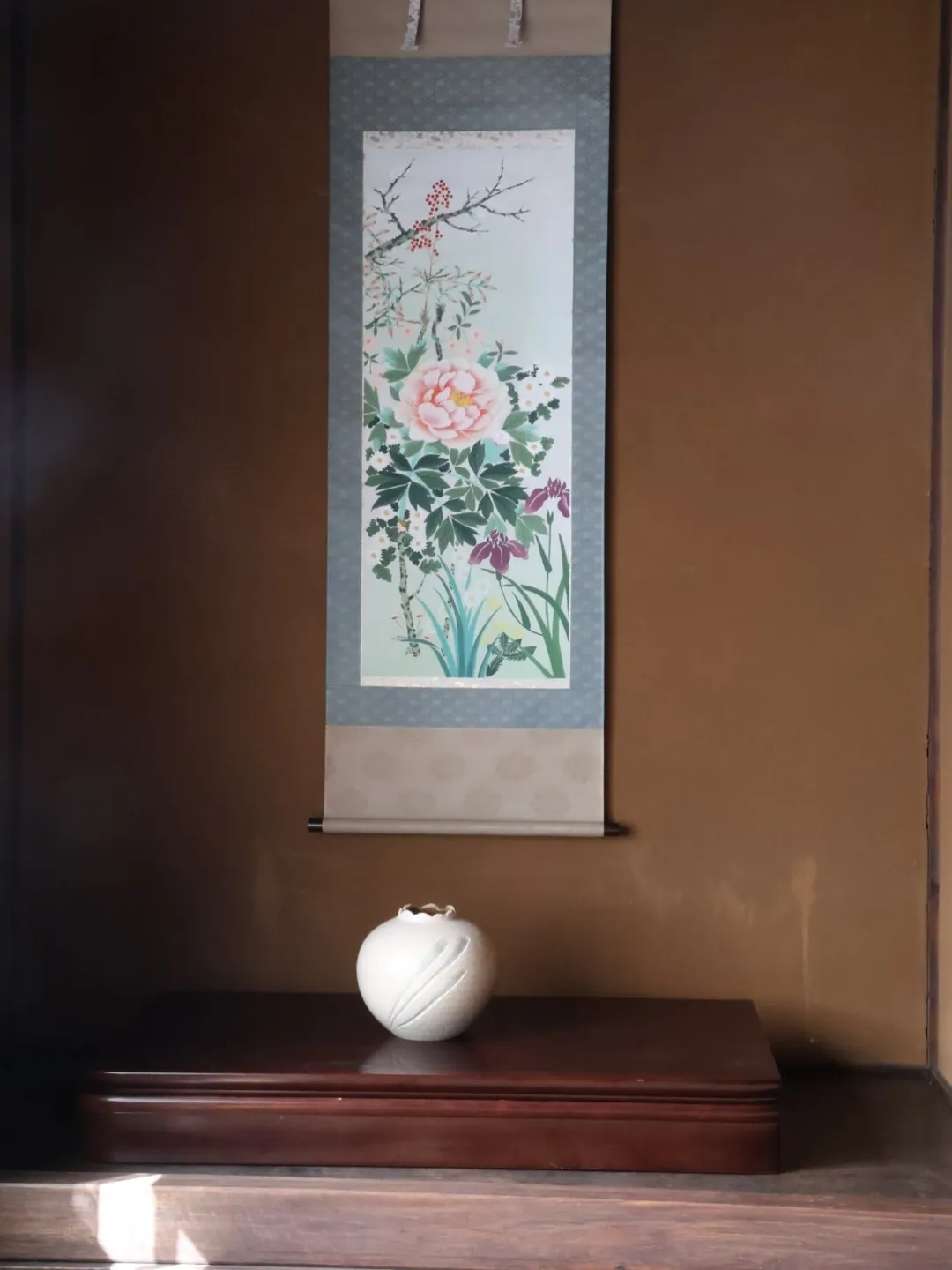
One piece of art, one object, and nothing else.
That’s the idea behind the tokonoma, a shallow nook in traditional Japanese rooms set aside just for display. A hanging scroll goes on the back wall. A single vase or flower arrangement sits below it, often on a low wood stand. The rest stays empty, and that emptiness is what makes you stop and look.
Most homes don’t have a nook like this built in, but the idea travels well. A shallow alcove, the space beside a fireplace, or a quiet stretch of wall with a low shelf can all work.
Here, a peony scroll hangs above a round white vase on a dark lacquered stand. Traditionally, both get swapped as the seasons change.
Pick a spot you see when you walk in or sit down, like an alcove or the end of a hallway wall.
Hang one tall, narrow piece in the center, such as a scroll, a long print, or a framed piece of fabric.
Set one object below it on a low wood board or stand. A vase, a bowl, or a single branch is enough.
Swap the art and the object a few times a year, so the nook follows the seasons.
14. Divide the Room With a Shoji-Style Screen
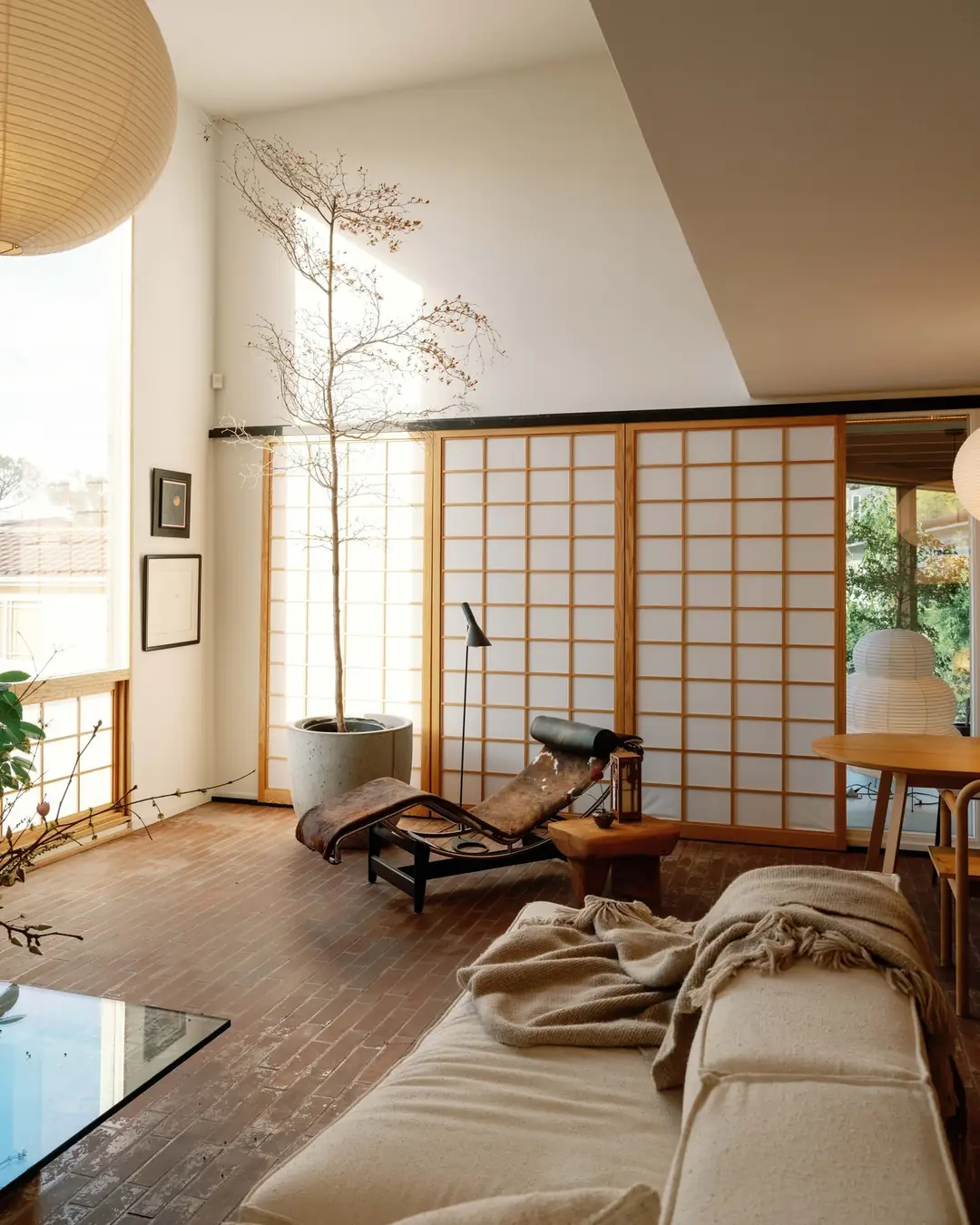
Open-plan rooms are easy to love and hard to make cozy. The sofa, the dining table, and the reading chair all share one big space, with nothing to hold them apart.
Shoji-style screens fix that without putting up a solid wall. Thin wood frames hold panels of white paper or paper-look material, so daylight still glows through. Here, a row of sliding panels runs behind a leather lounge chair and a tall potted tree, softening the view into the next room.
Freestanding folding screens give you the same look with no installation. Sliding panels on a ceiling track feel more built in, but they’re a bigger job.
Real rice paper tears easily. In homes with kids, cats, or dogs, sturdier synthetic panels hold up much better.
One wide open room. The sofa looks straight at the dining table, every corner is on show at once, and nothing feels like its own place to settle.
Paper screens run behind the reading spot. The lounge area feels tucked away, the light stays soft and bright, and you can slide the panels open for guests.
15. Burn Incense in a Clay Holder
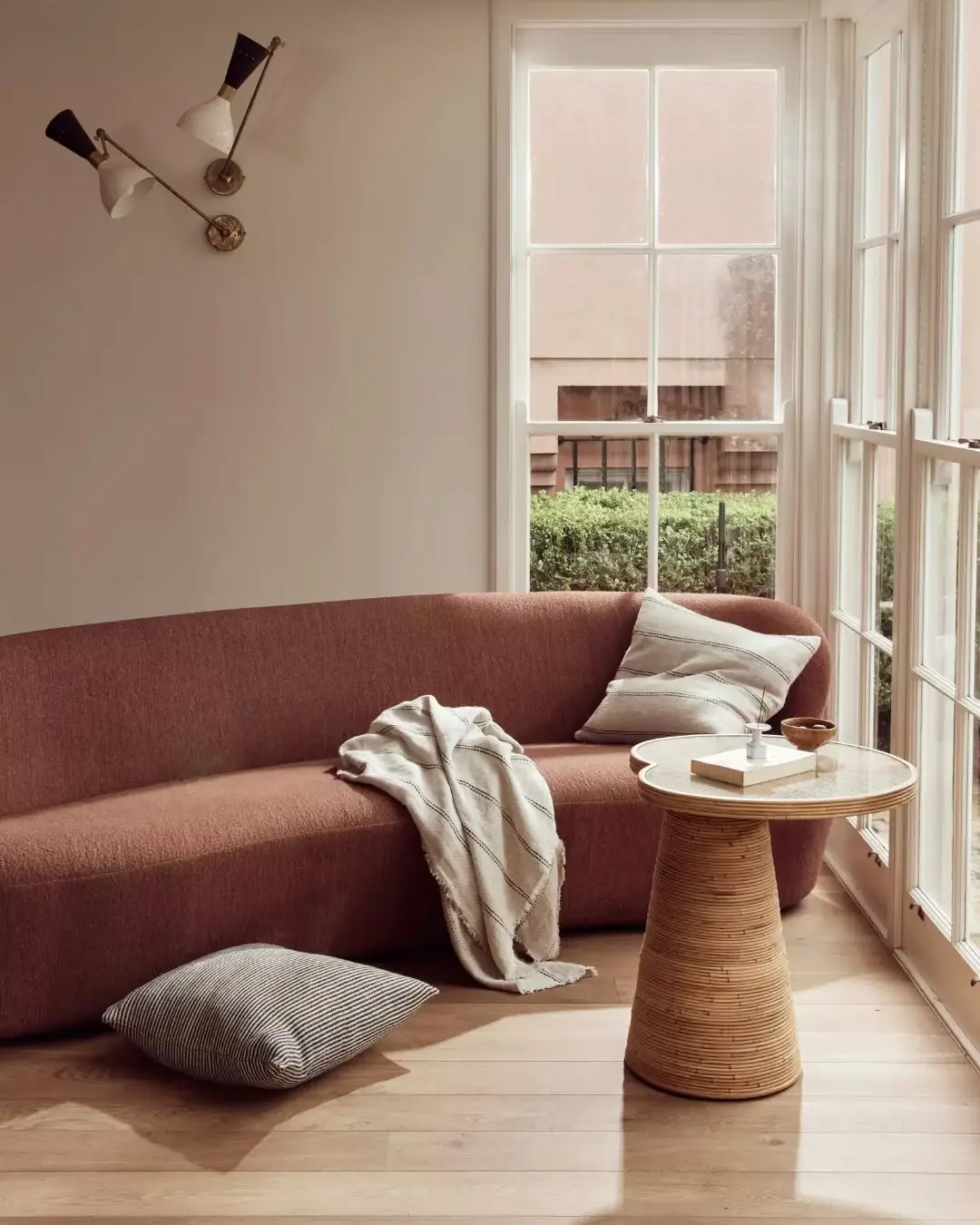
A thin curl of smoke and a soft, woody scent can make a room feel calm before you even sit down.
Incense is a small habit, but it suits a japandi living room well. It’s quiet and simple, and the holder can be as plain as a little clay or ceramic dish.
Keep the setup small. Here, a white holder stands on a rattan side table next to a wood bowl, by a sunny window and a curved rust sofa. Choose gentle scents like sandalwood, hinoki cypress, or green tea over sweet, heavy perfumes.
One stick is plenty for most rooms. Open a window afterward, and the scent lingers softly instead of hanging in the air.
⚠️ Watch Out
Set the holder on a heat-safe dish that catches the ash, well away from curtains, throws, books, and paper lanterns. Never leave burning incense alone or where kids and pets can reach it. If anyone at home has asthma or trouble breathing, skip the smoke and try a reed diffuser or a small bowl of cedar chips instead.
16. Add Natural Stone Pieces
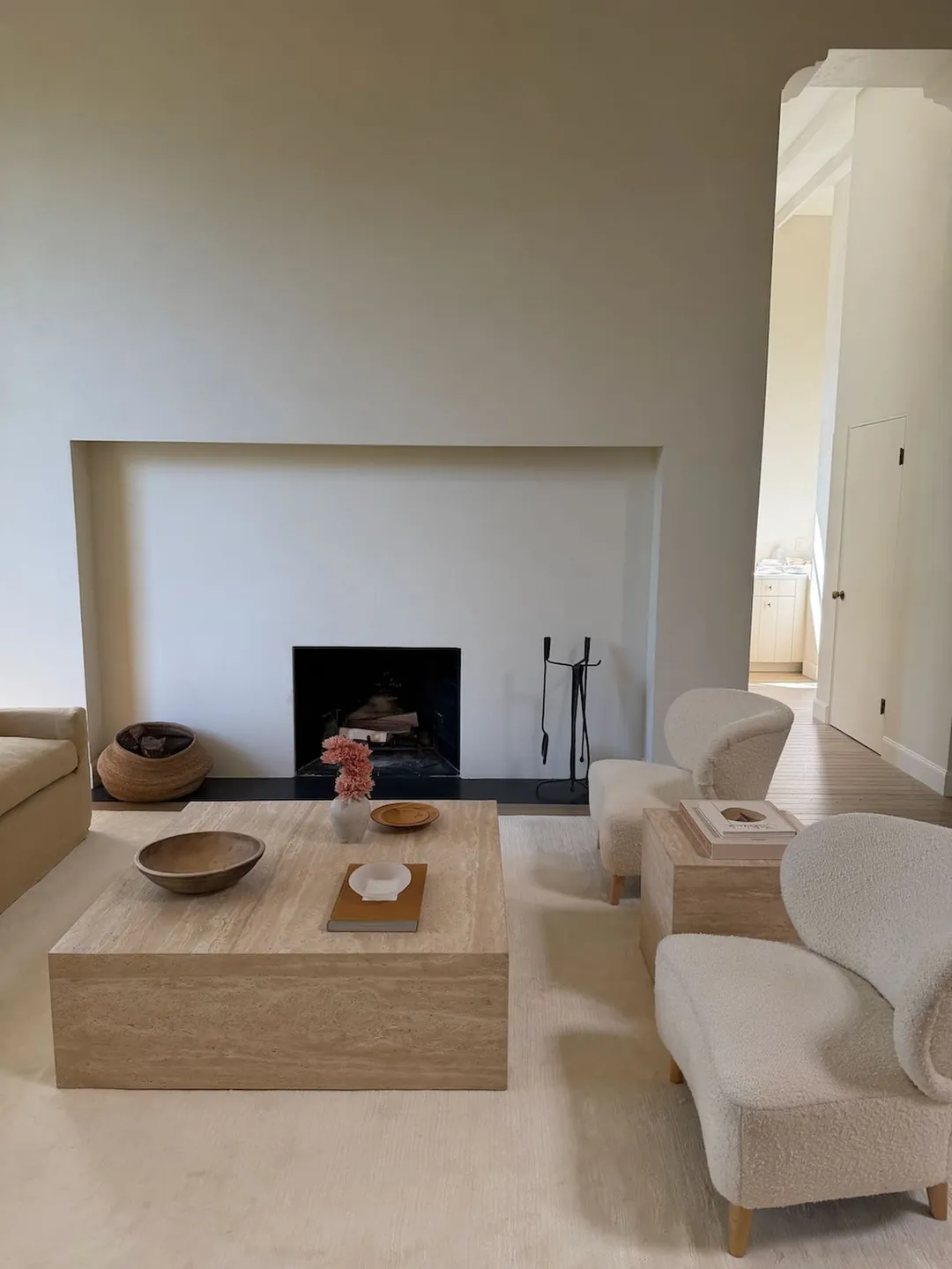
Wood warms a room. Stone steadies it.
Most Japandi spaces lean on wood, but a few stone pieces keep all that grain from feeling one-note. In this living room, a big square travertine coffee table sits low on a cream rug. A matching travertine cube beside the chairs holds a short stack of books. The pitted, soft beige surface looks calm next to bouclé chairs and a plain plaster fireplace wall.
It’s one of the easiest neutral living room ideas to live with, because heavy pieces need very little styling. A worn wood bowl, a few flowers, and one book are plenty.
Before a big piece arrives, measure your doorways. Travertine also stains easily, so seal it and use coasters.
Four stones that suit Japandi
17. Hang a Simple Wood Peg Rail
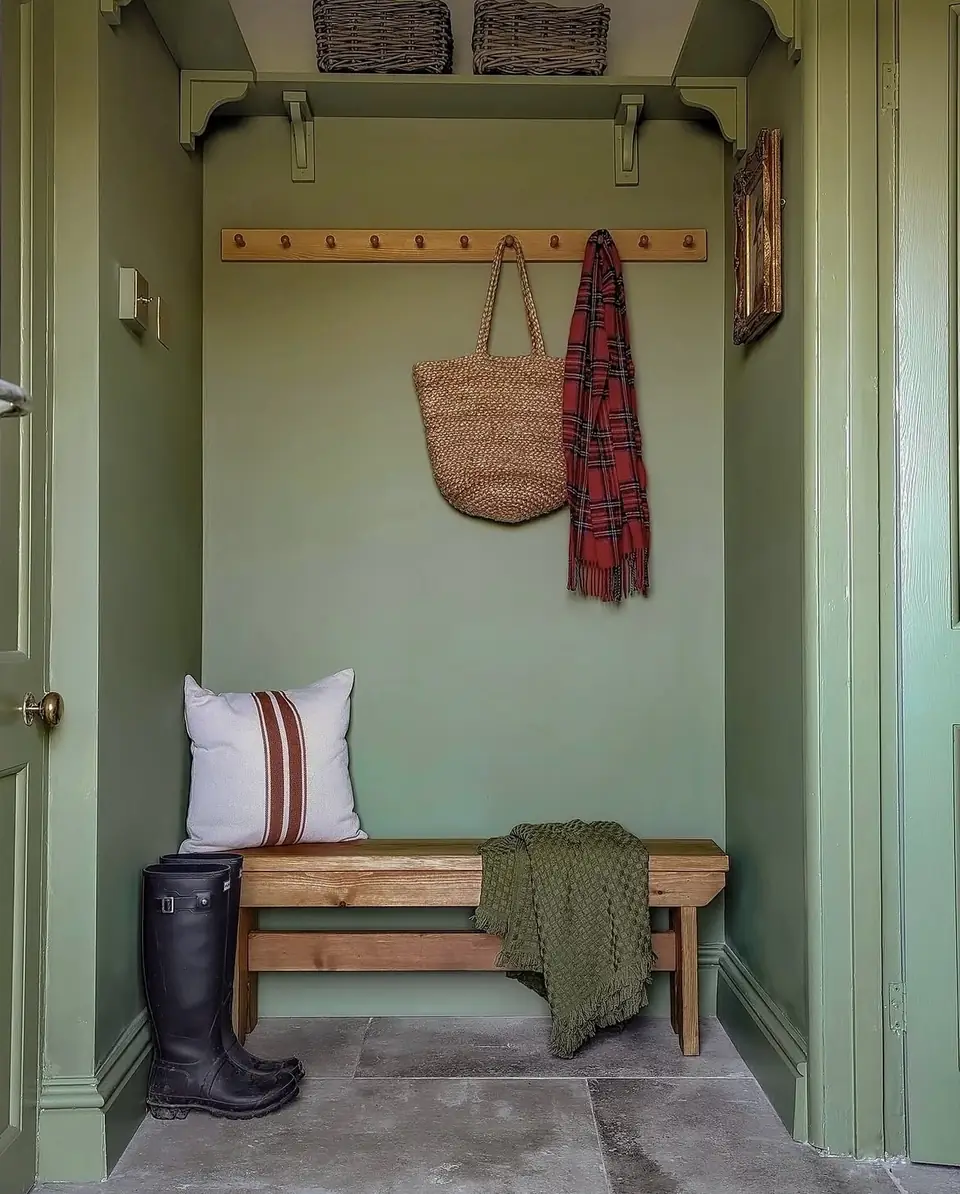
You walk in, drop your bag on the nearest chair, and toss the scarf over the sofa arm. By Friday, the living room is holding everyone’s outerwear.
A plain wood peg rail gives all of that a home. It’s an old, simple idea, just round pegs set into one board. It suits the scandinavian japanese style well because it’s useful and quiet at the same time.
Here, a pine rail runs across a sage green nook above a wood bench, holding a woven tote and a plaid scarf. Hang yours at about shoulder height on a blank wall near the door, and screw it into studs.
Leave half the pegs empty. A rail with every peg full just looks like a coat pile.
What earns a peg
- ▸A woven bag: for your keys, wallet, and the things you grab every morning.
- ▸One scarf or light jacket: the one you’re wearing this week, not the whole closet.
- ▸A small mirror on a cord: for a last look on the way out.
- ▸A dried flower bundle: hung upside down, so one peg stays decorative.
18. Add Small Touches of Matte Black
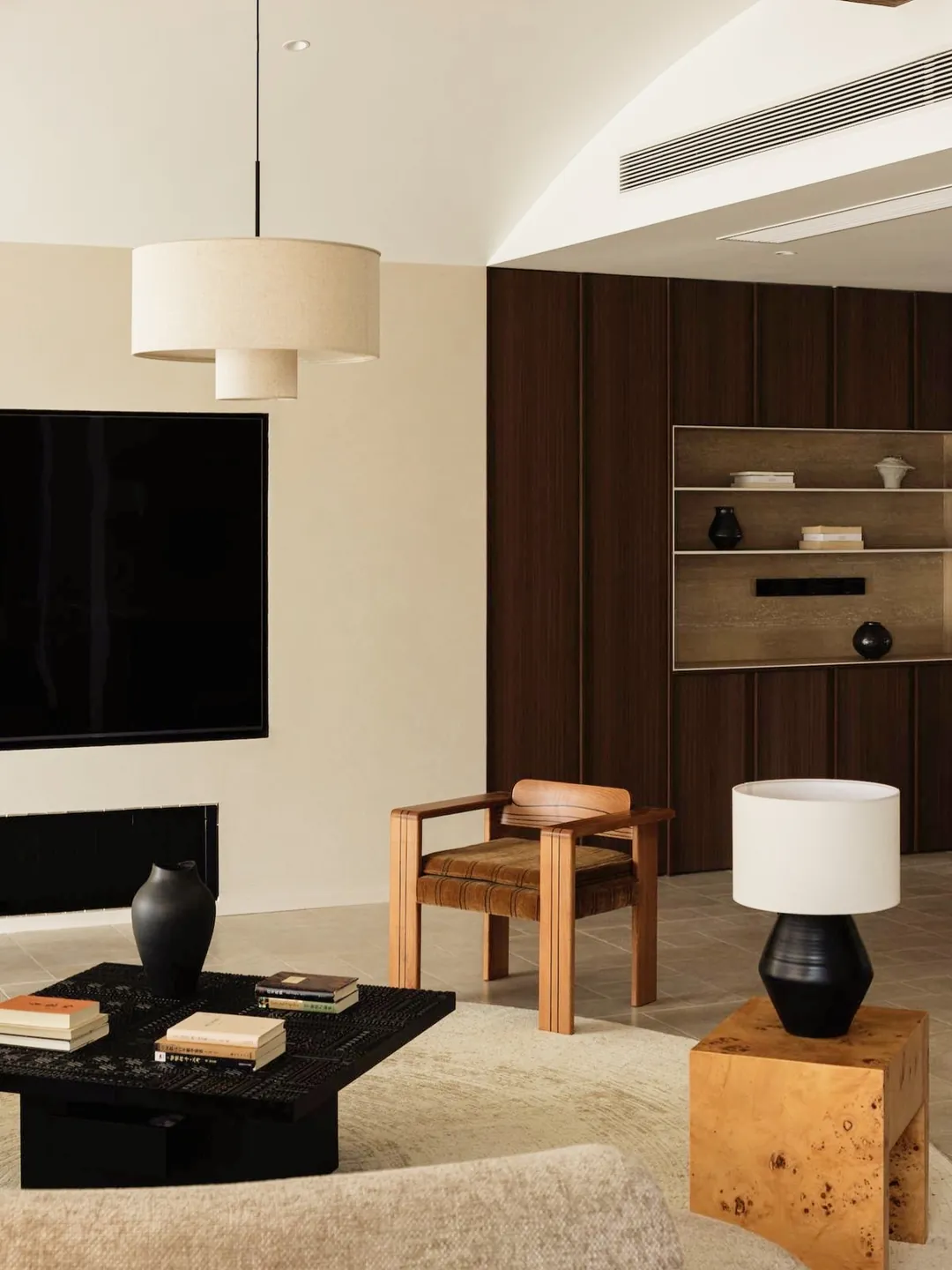
A room with only cream, beige, and wood can start to look washed out, like a photo with the contrast turned down. Most people reach for color to fix it, but a few touches of matte black do the job better.
Black gives the eye a place to land. In this room, it shows up as a carved black coffee table, a dark ceramic vase, a lamp with a black clay base, and small black vessels on the shelves. Each piece is different, but the finish is always soft and matte.
Spread the black around the room so no single corner gets all of it.
Glossy black catches the light and feels harsh here. Matte black feels calm.
Choose black that comes from natural materials, like clay, iron, stone, or stained wood.
Pair each black piece with something pale, like a white shade over a black lamp base.
Place black at different heights: a low table, a lamp at eye level, a vase up on a shelf.
Black plastic, which looks cheap next to clay and linen.
Several big black pieces bunched together on one side of the room.
Black frames, gadgets, and storage boxes everywhere, which can feel like an office.
19. Add a Low Daybed Along One Wall
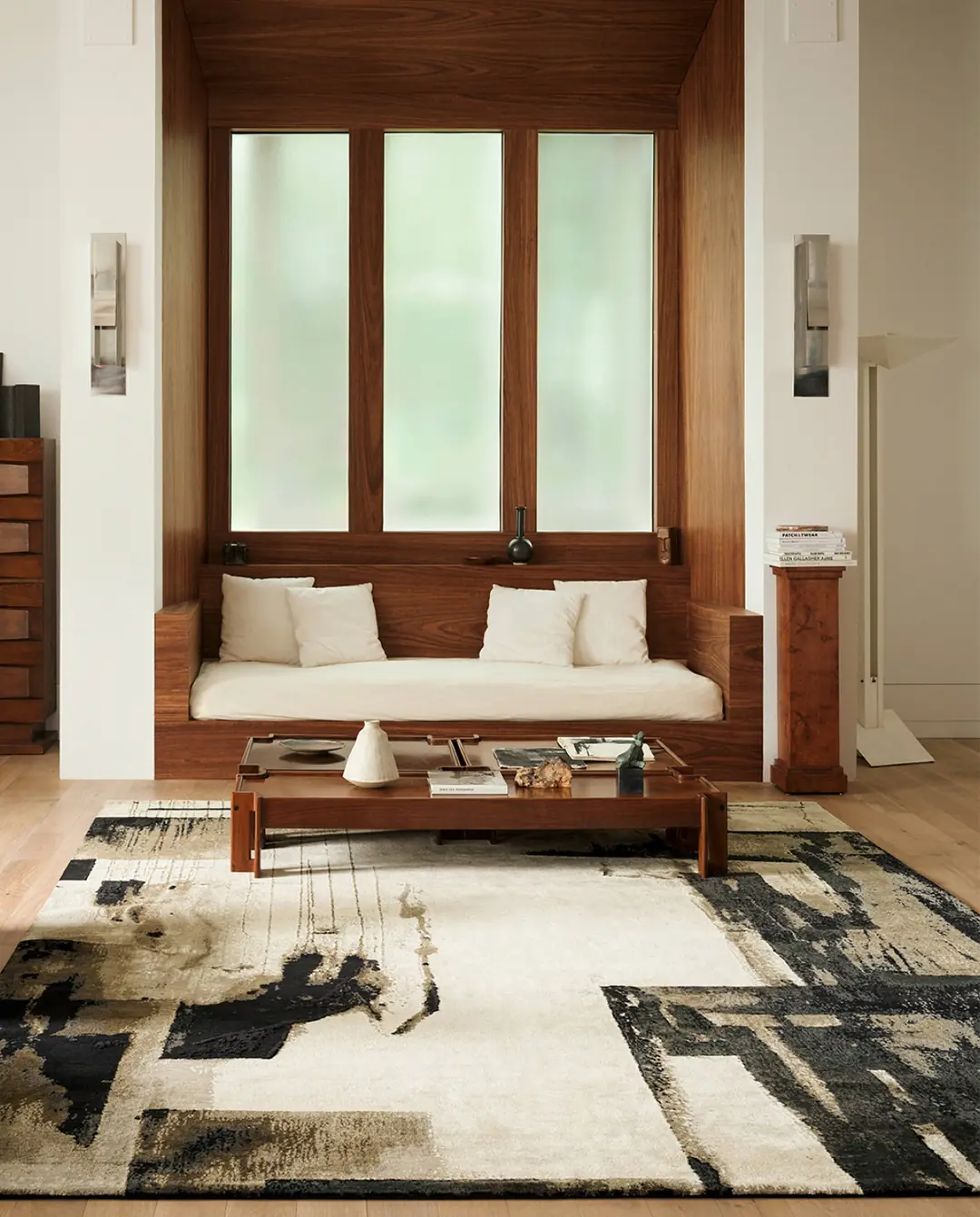
A deep cushion, four soft pillows, and warm walnut on three sides. A low daybed is part sofa, part nap spot, and it makes a long wall feel lived in.
Unlike a second sofa, a daybed has no tall back facing into the room. It sits low and open, so the space keeps its calm. In this room, it’s built into a walnut nook, and frosted windows let in light without showing the view.
A freestanding daybed is easier to add. Push it against a blank wall, top it with a thick cushion in natural cotton, and set a low wood table in front.
Guests staying over? It works as a spare bed, too.
Let the Room Breathe
A Japandi living room doesn’t need a whole new set of furniture. It comes together slowly, from a few honest materials and plenty of open space: a low sofa, warm wood, soft paper light, a handmade vase, and room to breathe between them.
Start with the spot that feels busiest right now. Maybe it’s the TV wall, a bare window, or a doorway that shows too much. Fix that one, live with it for a week, and notice how much calmer the room feels.
The best japandi living room decor ideas are the ones that make you want to slow down at home.
Save this list to your living room board so it’s ready for your next quiet change.