
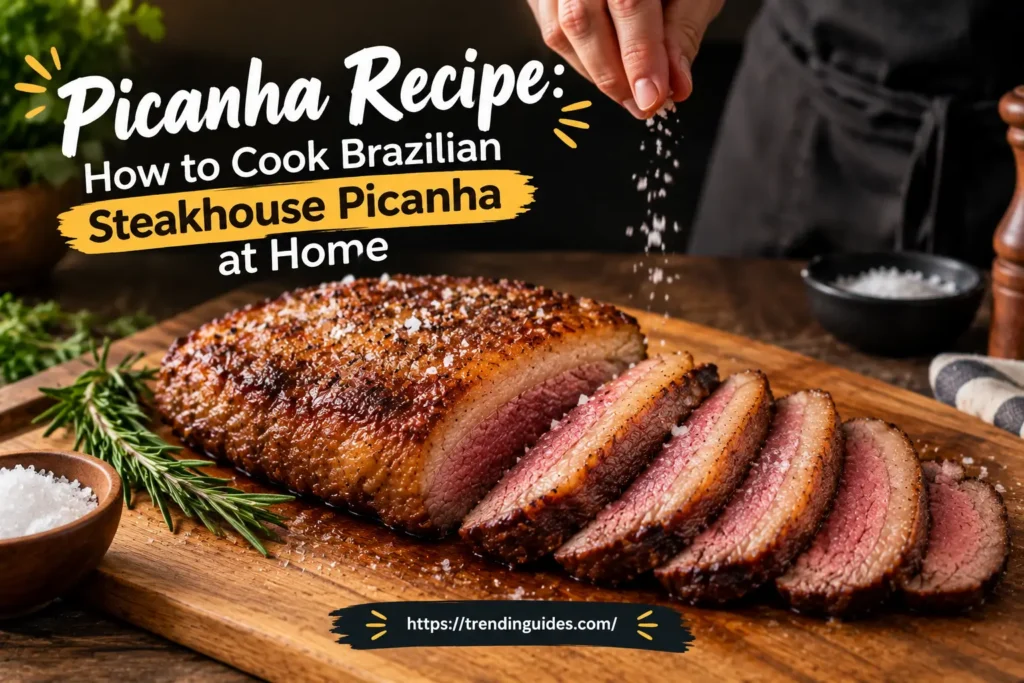

The best way to cook picanha is to slice the whole cut into thick steaks with the grain, season them with coarse salt only, sear them over high heat on every side including the fat cap, then finish over indirect heat until the center reads 125 degrees Fahrenheit. That single method delivers the same juicy, charred, fat capped steak that Brazilian steakhouses like Fogo de Chão serve on long skewers, and you do not need a skewer or a rotisserie to pull it off.
Picanha has become one of the most talked about beef cuts of the last few years, yet most home cooks still ruin their first one. They trim away the fat cap, they slice the roast the wrong direction, or they cook it to well done and wonder why a celebrated cut tastes dry and chewy. None of those mistakes are hard to avoid once you understand how this specific muscle behaves.
This guide covers everything you need. You will learn what picanha actually is and where it sits on the cow, how to buy a good one from a butcher, how to cut it correctly, and how to cook it on a grill, in the oven, in a pan, in a smoker, in a sous vide bath, and on a rotisserie. You will also get exact internal temperatures, resting times, and the six mistakes that ruin picanha most often. By the end you will cook this cut with complete confidence.
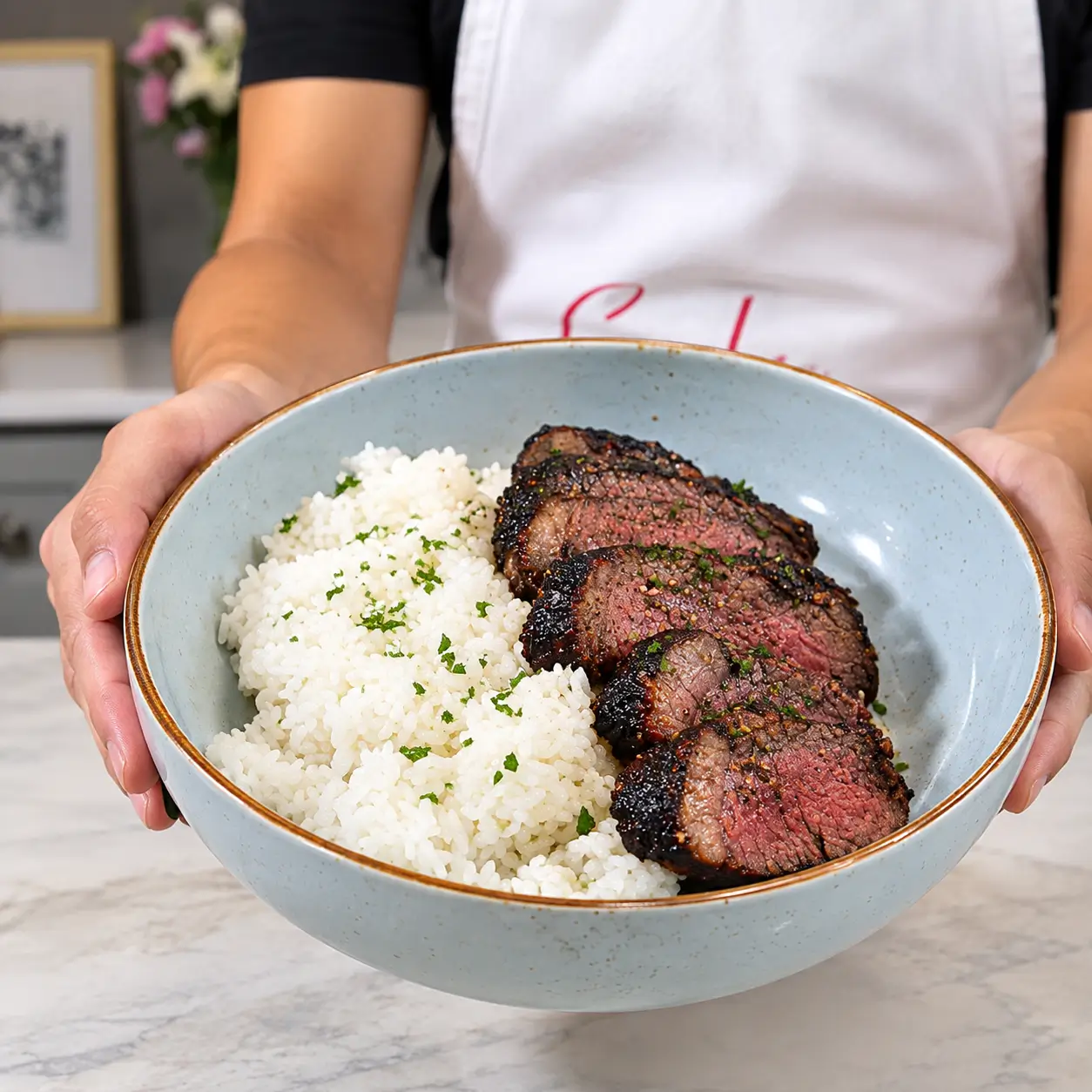
Easy Grilled Picanha Steaks (Brazilian Steakhouse Style)
Ingredients
Equipment
Method
Notes
- How to tell it worked: a dark char on all sides, a fat cap that’s rendered rather than rubbery, and a pink medium interior with a thick band of fat running through each bite.
- The tenderness test: pull a slice apart gently — the muscle fibers should separate with almost no resistance. Despite the sirloin portion being fairly lean, properly cut and rested picanha is very tender.
- Don’t trim the fat cap. It bastes the meat as it cooks and is the whole point of the cut.
- 125°F pull temp gives a medium finish after carryover. For medium-rare, pull closer to 118–120°F; for medium-well, 135°F. Always go by thermometer, not by time — steak thickness and grill output vary.
- Thickness matters. Steaks thinner than 1 inch will overshoot during the sear; cut them a full inch or slightly thicker.
- Serving: traditional accompaniments are farofa, vinagrete, black beans and rice, or chimichurri.
What Is Picanha Made Of?
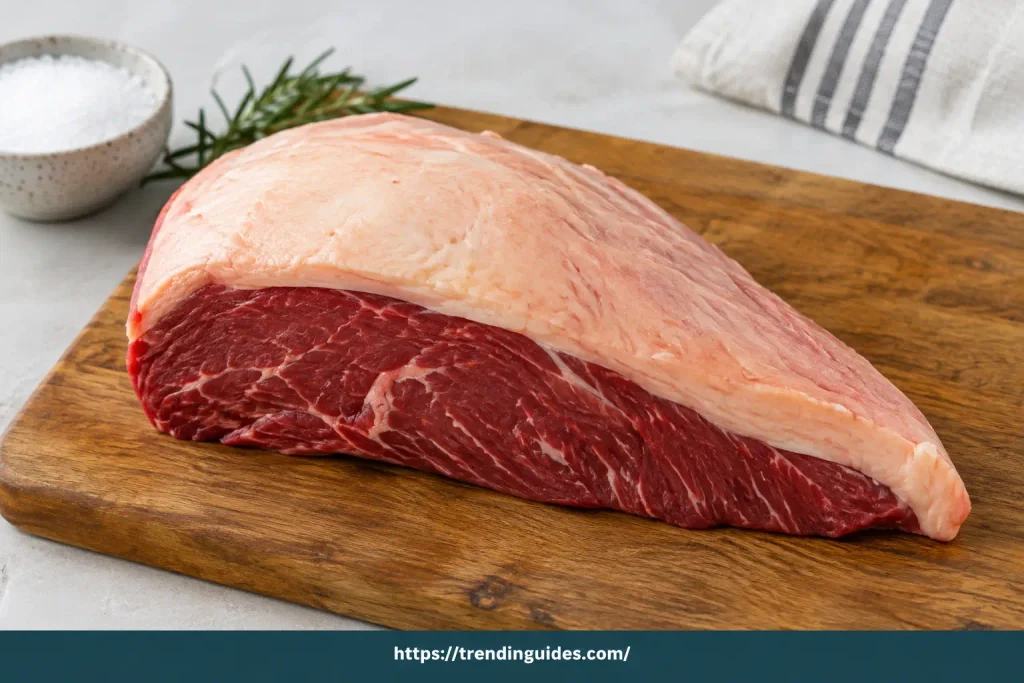
Picanha is a single triangular muscle cut from the top of the rump, with its natural fat cap left attached. Brazilian and UK butchery traditions trace it to the tail end of the biceps femoris muscle in the rump. In the US, it’s more commonly described as the “cap” sitting on top of the top sirloin muscle (the gluteus medius) — which is why American butchers sell it as top sirloin cap or coulotte steak. The naming varies by country, but what matters at the counter is the shape and the fat: a triangular or crescent-shaped piece with a thick external fat layer, separate from the leaner sirloin steaks beneath it. You may also see it labeled rump cover or rump cap.
The cut is one clean muscle rather than a bundle of several, so it cooks evenly and predictably — a real advantage over rump, which mixes muscles with different textures and often refuses to turn tender all the way through.
Picanha is pronounced pee-KAHN-yah. It rose to fame in Brazil and Portugal, and it now anchors menus at churrascarias and rodízio restaurants across Latin America, where it’s often considered the most prized cut of beef.
Where the Flavor Comes From
The flavor of picanha comes almost entirely from its external fat cap rather than from marbling inside the muscle. A ribeye gets its richness from intramuscular fat spread through the meat. Picanha gets it from the thick layer sitting on top, which melts during cooking and bastes the meat beneath it.
This changes how you cook it. You need enough heat and enough time for that fat layer to actually render. When the fat breaks down properly, the outside turns brown and crisp while the inside stays soft and almost buttery. That contrast is the whole reason Brazilian diners eat every last bit of the cap instead of pushing it to the side of the plate.
Picanha Versus Tri Tip and Top Sirloin
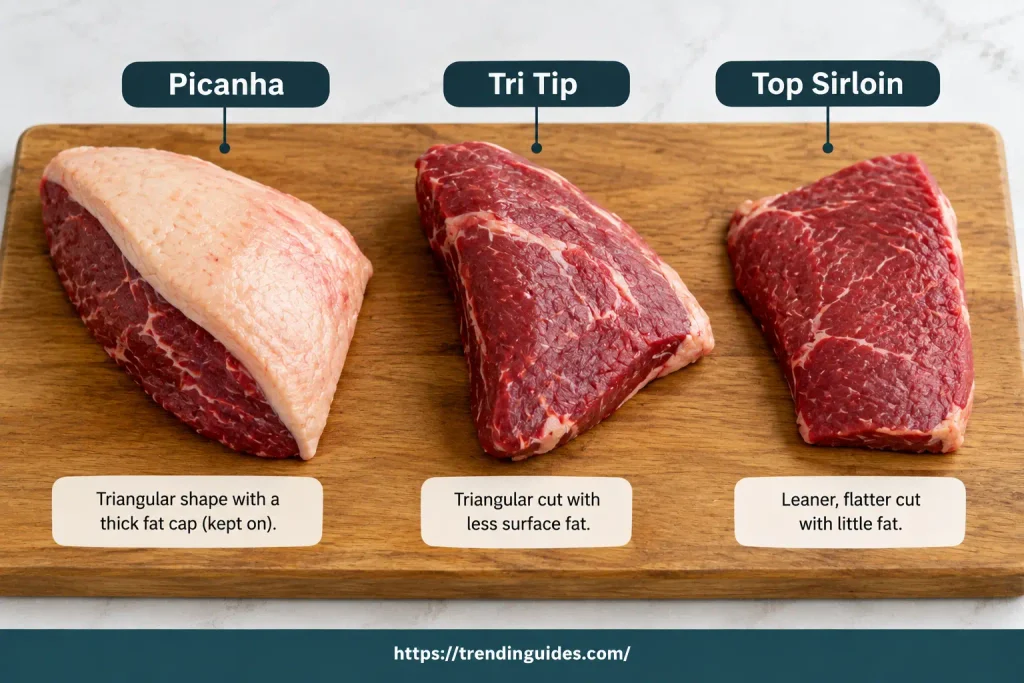
Picanha, tri tip, and top sirloin all come from the same general area, which causes constant confusion at the meat counter. Picanha is the triangular cap on top of the sirloin with a thick fat layer that should stay on. Top sirloin is the larger, leaner muscle sitting directly underneath, usually sold as flat steaks. Tri tip comes from the bottom sirloin, a separate triangular muscle with much less surface fat.
The easiest way to identify true picanha by eye is the combination of a triangular or crescent shape and a solid fat cap running the full length of one side. If the piece you are shown is flat and trimmed clean, it is not picanha.
How to Buy Picanha
Buy picanha from a local butcher or meat market, and ask for the whole piece with the fat cap on and untrimmed. Most American supermarkets do not carry it. American butchers frequently break this section down into round or rump cuts and remove the fat cap while doing it, which destroys what makes the cut special.
Say exactly what you want. Ask for a whole picanha, fat cap on, not trimmed. Many butchers strip the fat automatically because they assume customers do not want it.
A good picanha weighs roughly two to three pounds. Anything much heavier often includes part of a neighboring muscle, which means the grain runs in more than one direction and the piece will not slice cleanly. Look for a fat cap of at least half an inch. Check for some fine streaks of fat inside the muscle as well, not just the cap on the outside, since that intramuscular fat adds flavor.
Price is part of the appeal. Picanha costs noticeably less than ribeye or strip steak while delivering deep, beefy flavor, which is why it earned a reputation as one of the best value cuts you can buy.
How to Cut Picanha the Right Way
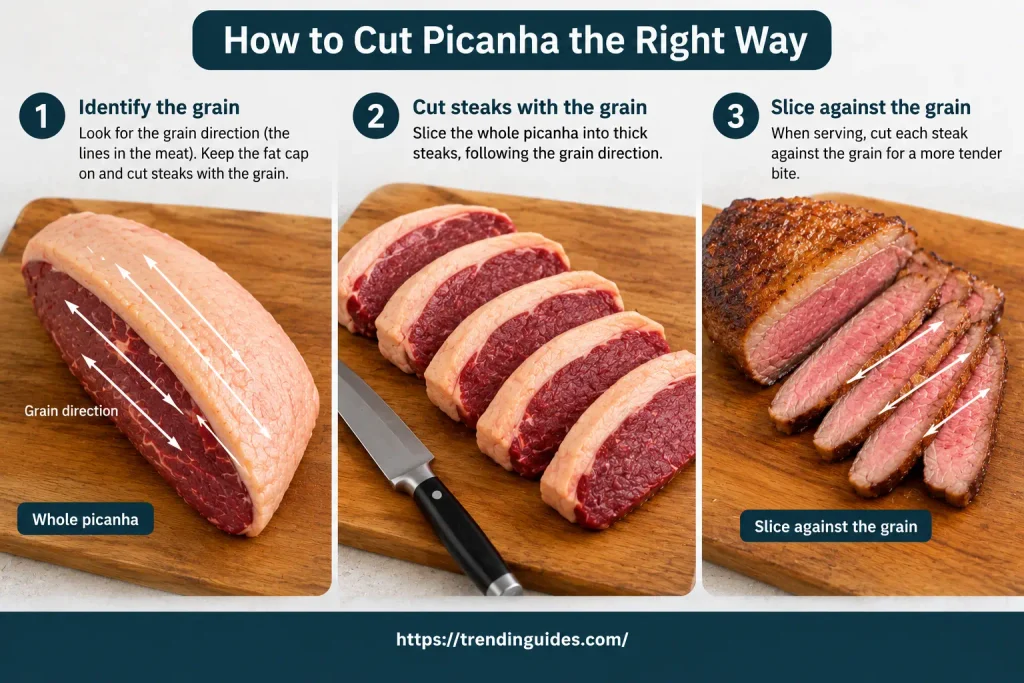
Cut the whole picanha into steaks with the grain, then slice each cooked steak against the grain when you serve it. This sounds backward, and it is the single detail that separates a tender result from a tough one.
Place the piece on a cutting board with the fat cap facing up, or fat side down if that makes slicing easier for you. Look at the surface of the meat and find the long muscle fibers running lengthwise from the wide base toward the narrow tip. Cut parallel to those fibers into steaks about one inch to one and a half inches thick. A two and a half to three pound picanha yields roughly six steaks.
Each steak now carries a strip of fat along one edge and long fibers running its length. After the steak cooks and rests, you turn it and slice across those fibers into strips. Every fiber gets cut short, and the meat gives way easily when you chew it.
Trim any silverskin or membrane from the bottom and sides before cooking, since that tissue never softens. Score the fat cap in a crosshatch pattern with shallow cuts about half an inch apart, cutting into the fat but not into the meat. Scoring helps salt reach the fat and helps it render faster.
Should You Cook It Whole or as Steaks?
Cook picanha as steaks when you want speed, more crust, and easy portioning. Cook it whole as a roast when you want edge to edge pink and a showpiece for the table.
Steaks work best on a grill or in a pan, and they finish in under fifteen minutes. A whole roast suits the oven, the smoker, or a rotisserie, and it takes one to three hours depending on the method. Both approaches follow the same rules about the fat cap, the grain, and the final internal temperature.
Should Picanha Be Marinated Before Cooking?
No, picanha does not need a marinade. Traditional Brazilian churrasco seasons this cut with coarse rock salt and nothing else, because the beef flavor is strong enough to stand alone and heavy marinades cover it up.
Skip garlic powder, paprika, and bottled marinades if you want an authentic picanha recipe. Salt alone draws moisture to the surface, helps build crust, and lets the rendered fat carry the flavor.
If you want to go one step further, dry brine instead of marinating. Salt the steaks generously, set them uncovered on a rack in the refrigerator for four to twenty four hours, then cook them straight from the fridge after a short rest on the counter. The salt dissolves, travels into the meat, and leaves the surface dry, which gives you a better sear than a wet marinade ever will.
Those who still want extra flavor should add it after cooking rather than before. Chimichurri, a Brazilian vinagrete of chopped tomato, onion, and vinegar, or a simple garlic butter spooned over the sliced steak all deliver flavor without masking the beef.
Picanha Recipe Oven Method
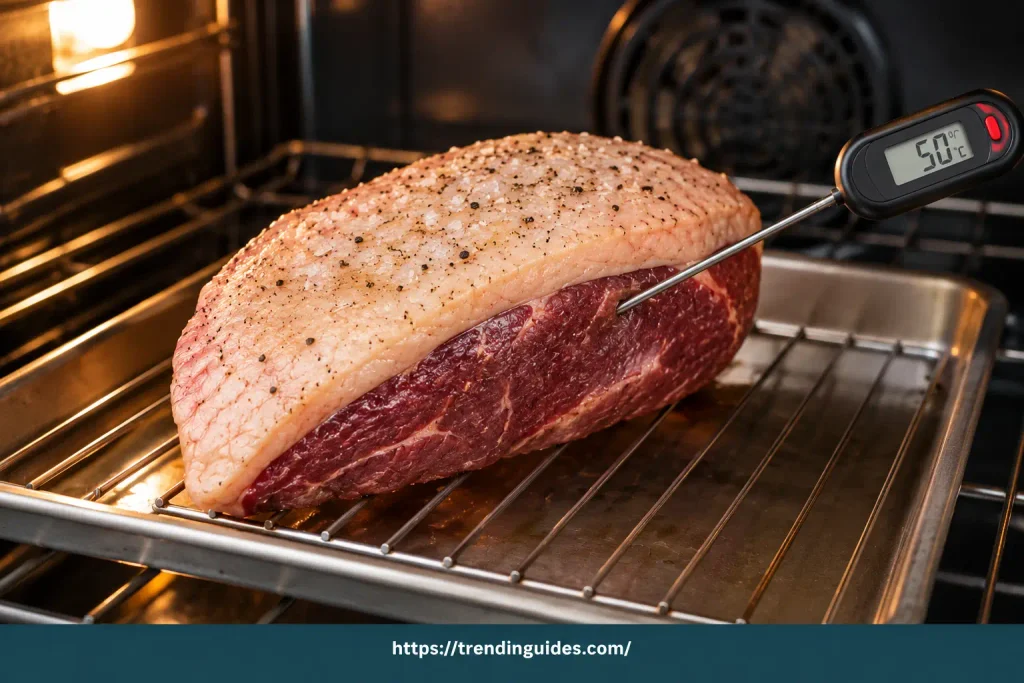
Roast a whole picanha in the oven using the reverse sear method, which means slow roasting first and browning the fat cap last. This gives you an evenly pink interior from edge to edge with no gray band.
Set the oven to 285 degrees Fahrenheit. Place the whole seasoned picanha fat side up on a rack over a sheet pan, and roast until the internal temperature reaches 118 degrees Fahrenheit (medium-rare), which takes roughly 70 to 90 minutes for a three pound piece. Rest the roast for up to 30 minutes, then slide it under a very hot broiler for no more than three minutes to crisp and brown the fat cap. Watch it closely, because the fat browns fast and burns faster.
Carve the rested roast into steaks with the grain, then slice each steak against the grain to serve. An oven roast handles a dinner party well because the long, slow phase gives you time to finish side dishes while the meat cooks unattended.
Picanha Recipe Pan Method
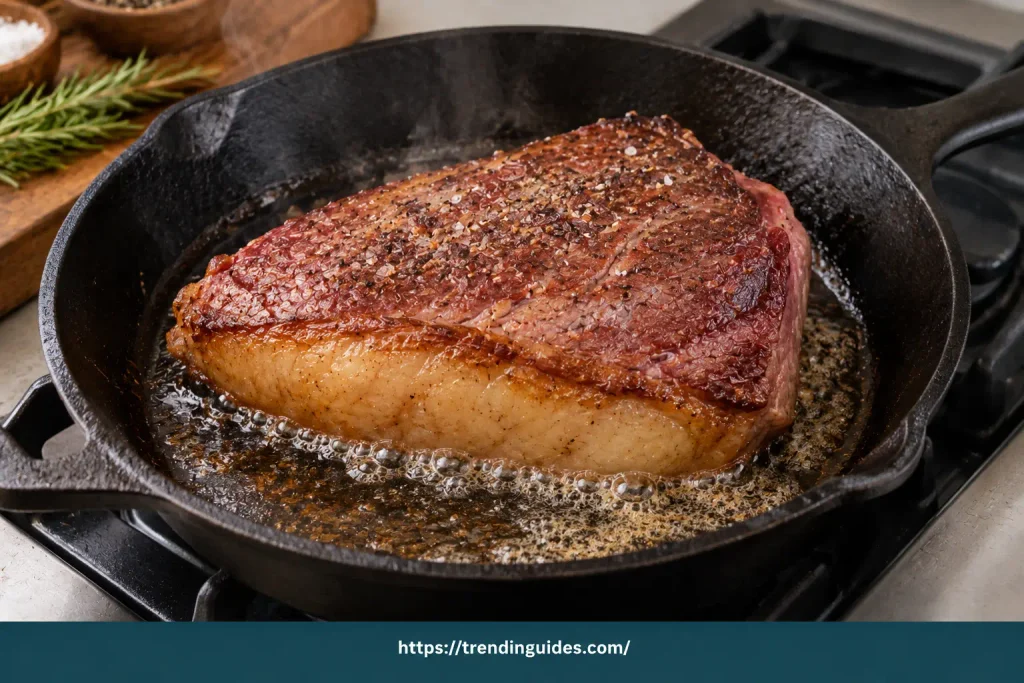
Cook picanha in a cast iron skillet by searing it fat side down first with no added oil. The fat cap releases enough beef fat to cook the rest of the steak.
Heat a heavy cast iron pan over medium high heat. Stand the steak on its fat edge, or lay a whole piece fat side down, and let it render until the surface turns deep golden and crisp. Pour off some of the fat as it collects, but keep it in a bowl. Turn the meat and sear both faces, basting with the reserved fat as you go.
For thick steaks or a whole piece, transfer the pan to a 350 degree Fahrenheit oven and cook until the center reads 120 degrees Fahrenheit (medium-rare), which takes about 30 minutes for a whole roast. Rest for fifteen to twenty minutes before slicing. This method suits apartments, winter, and anyone without a grill.
Picanha Recipe Smoker Method
Smoke a whole picanha at 250 degrees Fahrenheit for two to three hours until it reaches 128 to 130 degrees Fahrenheit inside (medium to medium-well). Smoking adds a layer of flavor that grilling cannot produce, and the low temperature renders the fat cap slowly.
Trim any silverskin, then season the whole piece heavily with a coarse black pepper and salt rub, pressing it into the surface. Place the picanha in the smoker and mix equal parts apple cider vinegar and water in a spray bottle. Spritz the meat every twenty minutes, but stop after five spritzes so the bark can dry out and firm up.
When the center hits temperature, wrap the meat tightly in foil or butcher paper and rest it in a cooler for 30 to 45 minutes. Slice against the grain and serve. Many cooks finish smoked picanha with a quick sear over open flame to sharpen the crust.
Picanha Recipe Sous Vide Method
Cook picanha sous vide at 129 degrees Fahrenheit for two hours for a medium-rare result, or raise the bath to 135 degrees Fahrenheit for medium. Sous vide removes all guesswork, since the meat cannot climb past the water temperature — but because it equilibrates to the exact bath temperature with no resting carryover, these numbers run a few degrees higher than the pull temperatures used for the other methods below.
Cut the picanha into one and a half inch steaks, salt them generously, and vacuum seal them roughly two steaks per bag. Drop the bags into the water bath and cook for two hours.
Remove the bags, set the steaks on a wire rack, and pat them completely dry. Moisture is the enemy of a good crust. Sear each steak for about 45 seconds per side in a ripping hot cast iron pan with beef tallow, over a hot grill, or with a culinary torch. Slice into half inch strips against the grain and serve immediately.
Picanha Recipe Rotisserie Method
Spin picanha on a rotisserie to copy the churrascaria experience at home, cooking over medium high heat until the center reaches 125 to 128 degrees Fahrenheit for a medium result once it rests. The constant rotation lets the fat cap baste the meat continuously as it renders.
Cut the picanha into sections about two inches wide with the grain. Fold each section into a C shape with the fat cap on the outside curve, then thread it onto the rotisserie spit or a metal skewer. Two or three pieces fit on one skewer without crowding.
Set the rotisserie over your heat source and let it turn. Once the meat reaches temperature, shave thin slices from the outside in the traditional Brazilian style, or pull the whole piece and cut thicker slices across the grain for a meatier bite.
What Internal Temperature Should Picanha Reach?
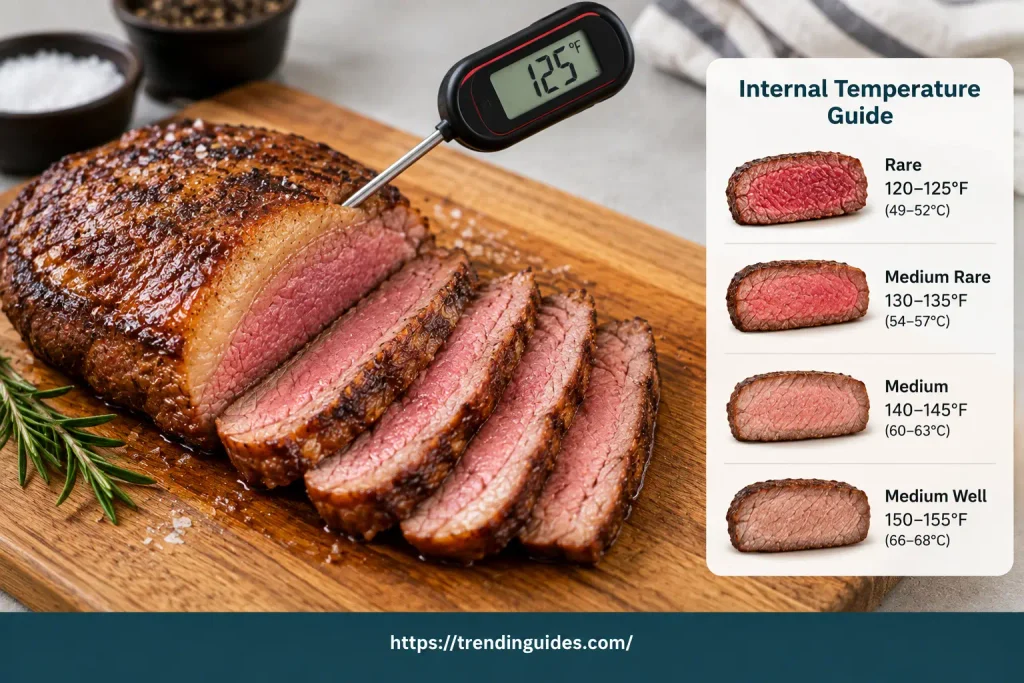
Pull picanha off the heat about five to seven degrees below your target, because carryover cooking continues while the meat rests. Use these numbers as pull temperatures for grilled, oven-roasted, pan-seared, smoked, or spit-roasted picanha (sous vide works differently — see that section above).
For rare, pull at 115 degrees Fahrenheit. For medium rare, pull at 118 to 120 degrees Fahrenheit. For medium, pull at 125 degrees Fahrenheit. For medium well, pull at 135 degrees Fahrenheit. Picanha tastes best between medium rare and medium, where the fat has rendered but the muscle has not tightened.
Published temperatures vary across sources, and that confusion trips up beginners. Some charts list 120 degrees as medium rare while others call 130 degrees medium rare. The difference almost always comes down to whether the number refers to the moment you pull the meat or the temperature after resting. Trust your own thermometer and treat the numbers above as pull temperatures.
Rest steaks for five minutes and whole roasts for fifteen to thirty minutes. Resting lets juices redistribute so they stay in the meat instead of flooding the cutting board.
What Are Common Mistakes When Cooking Picanha?
- Six mistakes account for nearly every disappointing picanha, and all six are easy to avoid.
- Removing the fat cap is the most serious error. That fat keeps the meat juicy and carries the flavor, and cutting it off leaves you with a lean, dry piece of beef. Trim it only if it exceeds one inch, and never strip it completely.
- Failing to render the fat ruins the best part of the cut. Fat that does not get enough heat or enough time comes out chewy and rubbery, which is exactly why some diners refuse to eat it. Start fat side down and give it real time before you touch it.
- Flipping too early is the habit behind unrendered fat. The fat pops, steam rises, and every instinct tells you to move the meat. Leave it alone. That extra time with the fat pressed flat against the heat decides whether you get a crisp crust or a rubbery layer.
- Slicing with the grain at the table turns tender beef into rope. Cut the roast with the grain into steaks, then cut each steak against the grain to eat.
- Overcooking dries picanha out quickly because its interior is fairly lean once you set the cap aside. Use a thermometer rather than a timer.
- Over seasoning buries the beef. Heavy spice blends and marinades compete with the natural flavor that makes this cut worth buying.
What to Serve With Picanha
Serve picanha with the traditional Brazilian churrasco spread, which balances the richness of the fat with acid, starch, and crunch. Farofa, which is toasted cassava flour cooked with butter, onion, and egg, is the classic partner and soaks up the beef juices.
Vinagrete brings the acidity, made from finely chopped tomato, onion, bell pepper, vinegar, and olive oil. Black beans and white rice round out a full plate. Pão de queijo, the warm cheese rolls served at every churrascaria, work as a starter.
Simpler options work just as well on a weeknight. A green salad, crusty bread, and a glass of red wine let the steak carry the meal. Chimichurri suits picanha beautifully even though it comes from Argentina rather than Brazil, since the garlic and vinegar cut cleanly through the rendered fat. Grilled asparagus or roasted sweet potatoes make solid side dishes for an oven or reverse sear preparation.
Nutrition
Approximate values per 100g cooked, well-trimmed picanha (will vary with how much fat cap is included and how it is seasoned):
| Nutrient | Amount | % Daily Value |
|---|---|---|
| Calories | ~250 kcal | — |
| Protein | ~26 g | 52% |
| Total Fat | ~16 g | 21% |
| Saturated Fat | ~6.5 g | 33% |
| Cholesterol | ~80 mg | 27% |
| Iron | ~2.6 mg | 15% |
| Zinc | ~5 mg | 45% |
| Vitamin B12 | ~2.5 mcg | 100%+ |
Values are typical estimates for beef top sirloin cap; leaving more of the fat cap on will raise the fat and calorie counts.
FAQs
Is picanha the same as rump cap?
Yes, rump cap, top sirloin cap, and coulotte are all names for the same cut in different countries.
Can I cook picanha without the fat cap?
You can, but you will lose most of what makes the cut distinctive. The fat is the main flavor source, not marbling, so a trimmed picanha eats more like a lean, plain roast.
Why isn’t picanha at my regular supermarket?
American butchers typically break this section down into round or rump cuts and remove the fat cap in the process. You will usually need to ask a butcher counter or specialty market for it by name.
What’s the ideal internal temperature for picanha?
Pull it at 118 to 125 degrees Fahrenheit for medium-rare to medium, which is where most people find the best balance of rendered fat and tender meat.
Is picanha a healthy cut of beef?
It is high in protein, iron, zinc, and B12, similar to other beef cuts. Because more of its fat sits externally rather than marbled through the meat, you can control fat intake more easily by trimming the cap after cooking, without losing much flavor during cooking.
How long should picanha rest before slicing?
About five minutes for individual steaks, fifteen to thirty minutes for a whole roast.
Conclusion
Picanha rewards cooks who respect three rules. Keep the fat cap on and give it enough heat and time to render into a crisp crust. Cut the whole piece with the grain into steaks, then slice each finished steak against the grain so every muscle fiber comes apart easily. Pull the meat at 125 degrees Fahrenheit for a juicy medium and rest it before you cut.
Everything else is a matter of equipment. The oven gives you edge to edge pink, the pan gives you a weeknight steak, the smoker gives you bark and smoke, sous vide gives you precision, and the rotisserie gives you the churrascaria show. Every method follows the same three rules.
Find a butcher this week and ask for a whole picanha with the fat cap on. Keep a thermometer beside you, and you will cook a better steak than most restaurants serve.


Pingback: Neapolitan Pizza Dough Recipe: 4 Ingredients, Perfect Crust
Pingback: Brazilian Lemonade Recipe: Creamy, Tangy & Ready in 5 Minutes!
Pingback: Packet Ramen with Egg: 7 Easy Methods, Timing, and Safety Tips
Pingback: French Onion Pasta Recipe (Easy One Pot, Extra Creamy)