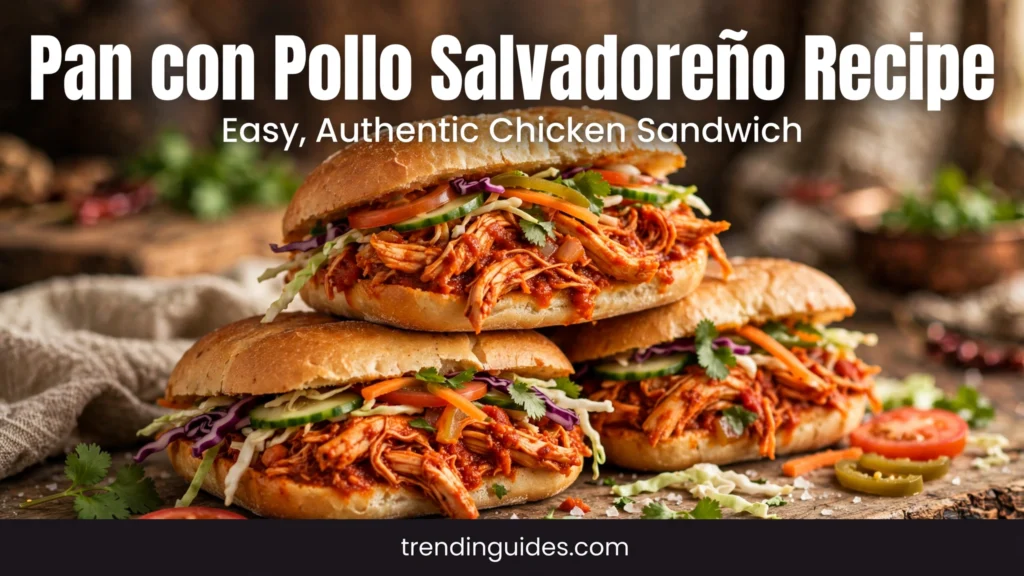

Pan con pollo is a Salvadoran chicken sandwich made with mustard marinated chicken stewed in a rich tomato relajo sauce, piled into soft rolls with fresh vegetables. It is the sandwich El Salvador serves when something is worth celebrating, from Christmas Eve to birthdays to big family Sundays. The chicken turns fall apart tender in a sauce built from toasted spices, the bread gets a protective layer of mayo and lettuce, and every bite mixes warm savory chicken with cool crisp vegetables.
If you have never made Salvadoran food before, this is a wonderful place to start. The steps are simple, the ingredients are affordable, and one pot of chicken feeds a crowd. This pan con pollo salvadoreño recipe follows the traditional method: a whole chicken marinated in mustard and orange juice, a homemade relajo sauce blended smooth, and the classic assembly with escabeche and fresh toppings.
In this guide you will learn exactly what pan con pollo is, how it differs from its turkey cousin, and what the mysterious relajo spice blend really contains. You will get a clear step by step method, five rules that keep the bread from turning soggy, a bread comparison table, and a party timeline for feeding a crowd. By the end, you will know how to make a Salvadoran chicken sandwich that tastes like it came from a family kitchen in San Salvador.
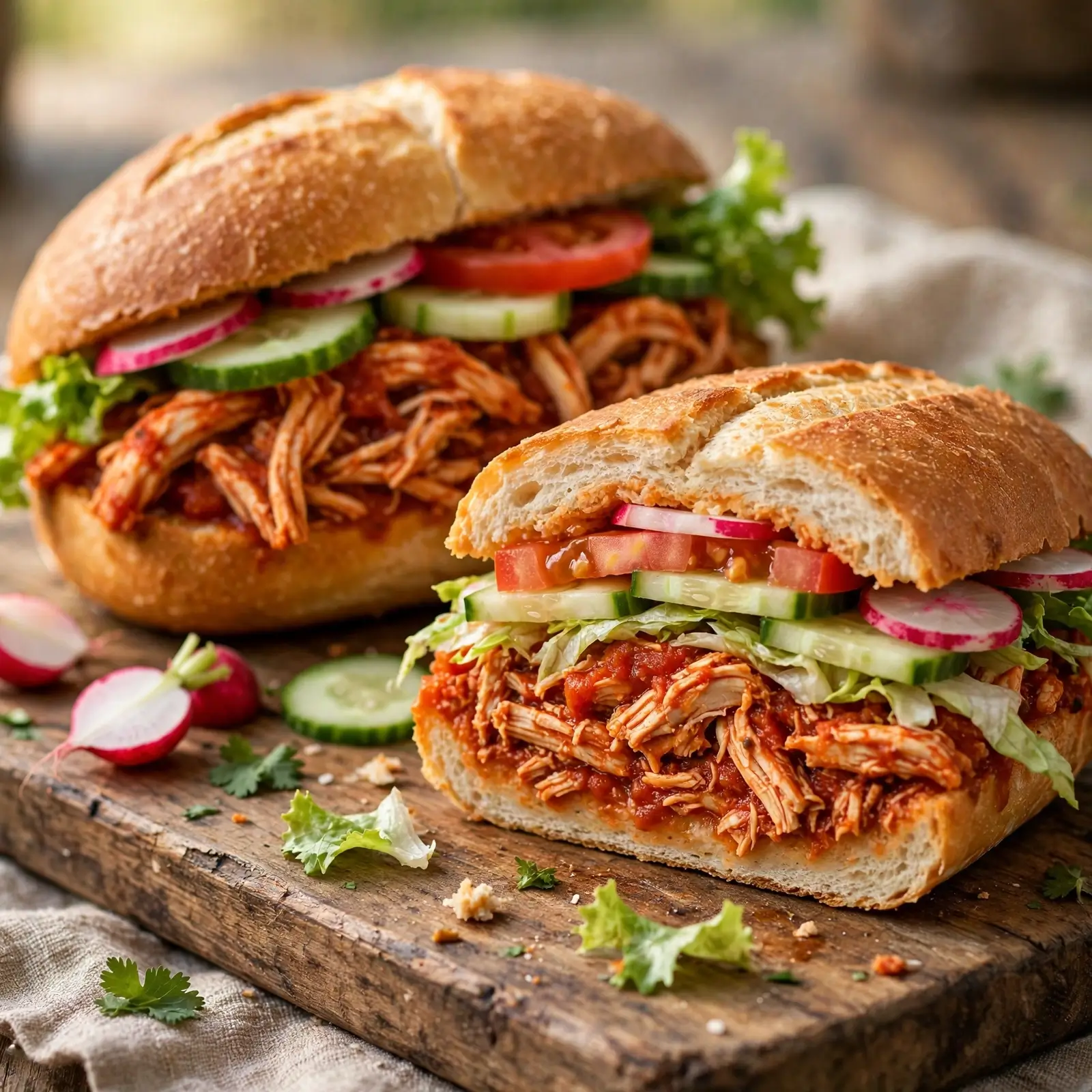
Pan con Pollo Salvadoreño (Salvadoran Chicken Sandwich)
Ingredients
Equipment
Method
- Rub the chicken pieces all over with the orange juice, mustard, garlic powder, cumin, black pepper, all purpose seasoning, and salt. Cover and rest 30 minutes so the flavors sink in.
- Heat the oil in a large pot over medium high heat. Sear the chicken a few pieces at a time until browned on all sides. Set aside.
- In the same pot, add the tomatoes, garlic, green pepper, California chiles, and onion with enough water to cover. Simmer until everything is soft, about 15 minutes. Meanwhile toast the relajo mix in a dry skillet until fragrant, about 1 minute, stirring constantly so it does not burn.
- Blend the softened vegetables with the toasted relajo, the uncooked rice, and 2 cups of water until completely smooth. Pour the sauce back into the pot over the chicken, add salt, and simmer covered on low heat about 1 hour, until the chicken is fall apart tender.
- Lift the chicken out, pull the meat from the bones, and return the shredded meat to the sauce. Keep warm.
- For the escabeche, pour boiling water over the shredded cabbage and carrot, drain well, and toss with the onion, cilantro, salt, pepper, and enough mayonnaise and mustard to coat lightly.
- Slice the rolls open from the side without cutting all the way through. Toast them lightly until golden. Spread the inside with mayonnaise and mustard.
- Line each roll with a lettuce leaf to protect the bread. Add a generous scoop of chicken with sauce, then the escabeche, cucumber, tomato, beet, watercress, and egg if using. Serve right away while the chicken is warm.
Notes
- Assemble just before serving. The bread soaks up sauce fast and turns soggy if it sits.
- Toast the relajo gently. Burned spices turn the whole sauce bitter.
- The rice in the sauce thickens it naturally as it cooks. If the sauce is still thin, simmer uncovered a few minutes more.
- For a party, set everything out buffet style and let guests build their own. Keep the chicken and sauce warm in the pot.
The first time I made this, I toasted the bread too dark and it overpowered the chicken. Medium toast is the sweet spot.
What Is Pan con Pollo?
So what is pan con pollo exactly? The name means bread with chicken: a warm sandwich, not a plated meal. Four parts make it complete. First comes the chicken, marinated in mustard and stewed in a spiced tomato sauce called recaudo. Second comes the sauce itself, rich and spoonable, which soaks into the meat. Third comes the bread, a soft roll that holds everything together. Fourth come the fresh toppings, lettuce, cucumber, tomato, radish, and watercress, which add coolness and crunch against the warm chicken.
This Salvadoran chicken sandwich recipe belongs to celebrations. Families make trays of these for Christmas, New Year, birthdays, and baptisms. The chicken cooks in one big pot, the vegetables get sliced fresh, and guests build their own at the table. Once you taste warm spiced chicken with crisp vegetables in soft bread, you will understand why one sandwich is never enough.
Pan con Pollo vs Pan con Pavo vs Panes Rellenos
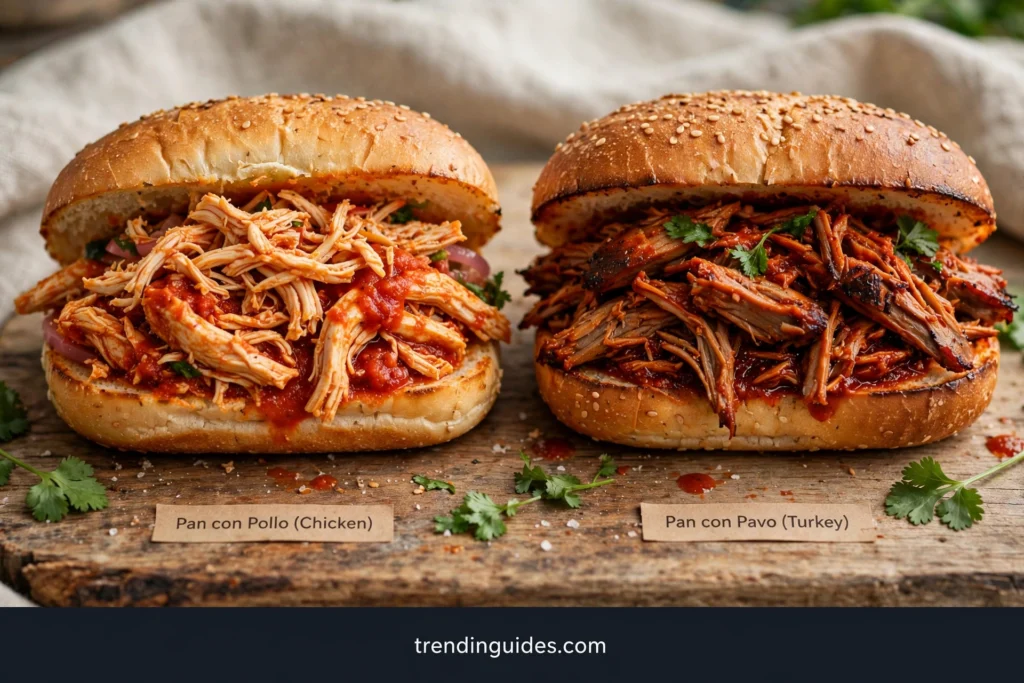
The names confuse almost everyone at first, so here is the simple map. All of these dishes belong to the same family, but the protein and the occasion change the name. Use this table and you will never mix them up again.
| Dish name | Protein | Format | Occasion |
|---|---|---|---|
| Pan con pollo | Chicken | Warm sandwich in a roll | Parties, birthdays, gatherings |
| Panes con pollo | Chicken | Same sandwich, plural | Same, just more of them |
| Pan con pavo | Turkey | Warm sandwich in a roll | Christmas leftovers, holidays |
| Panes rellenos | Chicken or turkey | Stuffed bread, same idea | General term for the filled rolls |
| Pavo en relajo | Whole turkey | Roasted centerpiece, not a sandwich | Christmas dinner table |
The pan con pollo vs pan con pavo question comes down to the bird. Chicken versions appear all year at parties. Turkey versions show up after the holidays, when the Christmas turkey becomes next day sandwiches. Panes rellenos salvadoreños is the broader name some families use for the same stuffed rolls. And pavo en relajo is a whole different dish, a full roasted turkey in relajo sauce that sits at the center of the Christmas table. Same flavors, different format.
The Story: El Salvador’s Celebration Sandwich
Pan con pollo is Salvadoran christmas food at its happiest. In the weeks before Christmas, Salvadoran kitchens fill with the smell of toasted spices and simmering tomatoes. Families cook huge pots of chicken in relajo sauce on Christmas Eve, then pile the meat into rolls for the midnight celebration. The next day, whatever turkey remains from the holiday roast becomes pan con pavo, the turkey version of the same beloved sandwich.
Birthdays run on the same logic. In many Salvadoran homes, a birthday means trays of panes con pollo with bowls of vegetables and sauce so everyone builds their own. The cooking becomes a group activity: one person shreds chicken while another slices cucumbers and a third toasts rolls.
The roots are humble: chicken, cabbage, tomatoes, and bread. But the relajo spice blend gives it a depth that tastes anything but simple. That contrast is why this sandwich earned its place at every important table in El Salvador.
What Is Recaudo (and Relajo)?
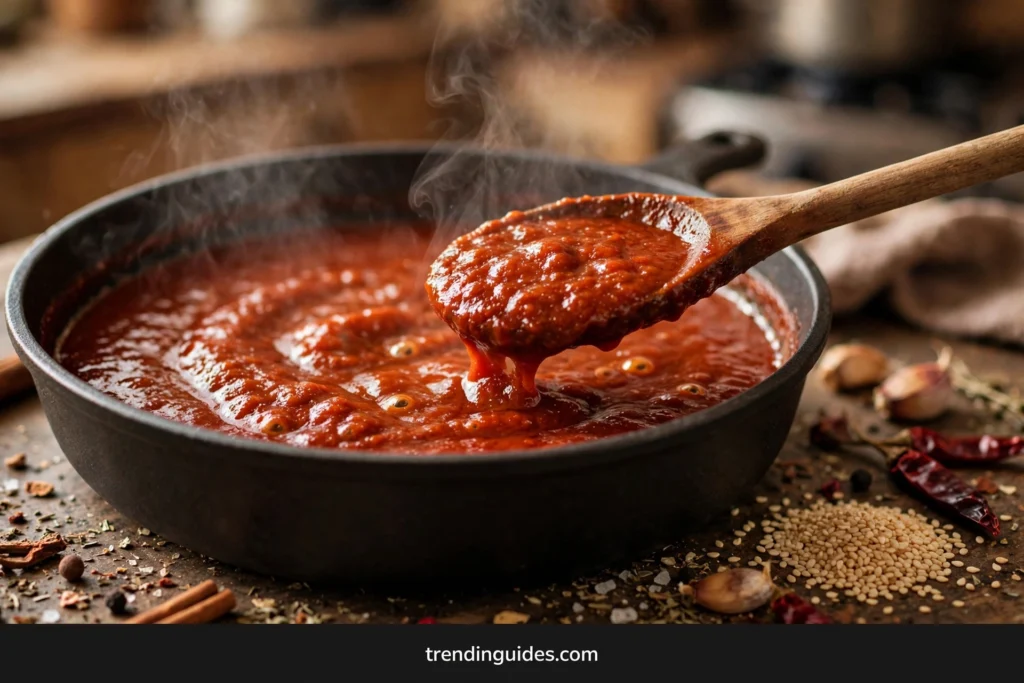
Here is the secret most recipes skip. Relajo is a spice blend, not a sauce. It is a dry mix of toasted seeds and warm
spices that goes into the tomato base. The tomato base plus the relajo blend becomes the recaudo, the actual sauce. So chicken in recaudo means chicken simmered in a tomato sauce flavored with relajo.
You can buy relajo in small bags at Latin markets, but homemade takes ten minutes and tastes fresher. This recaudo sauce recipe starts with the blend below. Toast everything in a dry skillet until fragrant, then grind or blend it smooth.
| Ingredient | Amount | Toasting order |
|---|---|---|
| Sesame seeds | 2 tablespoons | First, they toast fastest |
| Pumpkin seeds | 2 tablespoons | With the sesame seeds |
| Peanuts | 2 tablespoons | With the seeds |
| Dried California chiles | 2, stemmed | Second, 30 seconds per side |
| Bay leaves | 3 | Third, with the spices |
| Whole cloves | 4 | Third, with the spices |
| Cinnamon stick piece | 1 small piece | Third, with the spices |
| Dried oregano | 1 teaspoon | Last, 15 seconds only |
| Achiote powder | 1 teaspoon | Stir in off the heat |
If you make this blend at home, skip the separate California chiles when you build the sauce below, since the blend already includes them.
One warning matters most. Toast gently and never leave the skillet. Burnt seeds and scorched chiles turn the whole sauce bitter, and there is no fixing it. If you smell sharp smoke instead of warm nuttiness, start over.
Pan con Pollo Ingredients
Good pan con pollo starts with the right pan con pollo ingredients, and most are simple supermarket finds. The magic lives in the spice blend and the marinade, not in anything exotic.
For the chicken, get one whole chicken of 3 to 4 pounds, cut into pieces. Bone in pieces stay the most tender in the long simmer. For the marinade you need the juice of 1 to 2 oranges, yellow mustard, garlic powder, ground cumin, black pepper, all purpose seasoning, and salt. The mustard tenderizes the meat and melts into the sauce, so you never taste it as mustard later.
For the recaudo sauce you need 5 large tomatoes, 4 garlic cloves, half a green bell pepper, 2 dried California chiles, half an onion, the homemade relajo blend or one small bag of store bought relajo, 1 cup of uncooked rice, water, and salt. The rice is the quiet trick: it blends in and thickens the sauce so it clings to the chicken.
For the escabeche you need half a cabbage shredded, half a carrot grated, a quarter onion sliced, fresh cilantro, salt, pepper, mayonnaise, and mustard. For assembly you need 8 bolillo or pan francés rolls, lettuce, watercress, 1 cucumber, 2 tomatoes, 1 cooked beet, and 2 hard boiled eggs if you like. The bread table below will help you choose.
How to Make Pan con Pollo Salvadoreño Step by Step
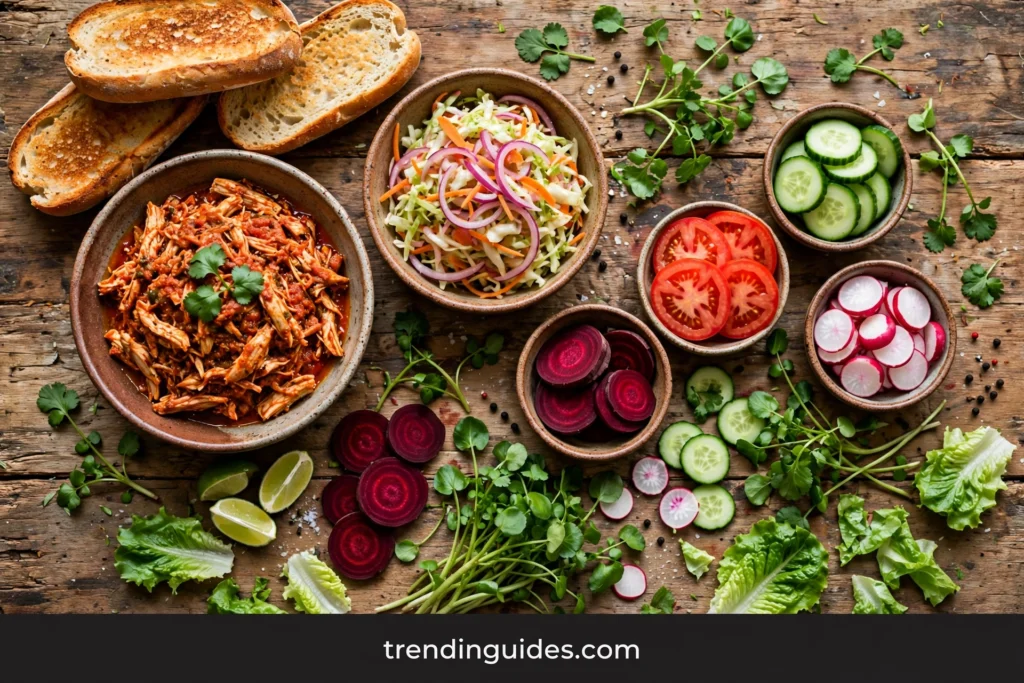
This pan con pollo salvadoreño recipe follows the traditional stovetop method with a whole marinated chicken and a homemade relajo sauce. Read through once before you start so the rhythm feels familiar. Recipe inspiration: “PANES CON POLLO SALVADOREÑOS el procedimiento completo!” by Sol Cocina Salvadoreña, PANES CON POLLO SALVADOREÑOS el procedimiento completo!
Marinate the Chicken
Rub the chicken all over with the orange juice, a generous spoon of mustard, the garlic powder, cumin, black pepper, all purpose seasoning, and salt. Coat every piece well with your hands. Cover and rest 30 minutes at room temperature, or up to 2 hours in the fridge. This rest lets the mustard and citrus start tenderizing the meat. Longer than that and the acid can make the texture mushy.
Make the Recaudo Sauce
While the chicken rests, cover the tomatoes, garlic, green pepper, California chiles, and onion with water in a pot. Simmer until completely soft, about 15 minutes. Meanwhile, toast the relajo blend in a dry skillet over medium heat, stirring constantly until fragrant, about 1 minute. Keep the heat gentle so nothing burns.
Blend the softened vegetables with the toasted relajo, the uncooked rice, and 2 cups of water until completely smooth. If your blender struggles with the seeds, strain the sauce and press the solids with a spoon. It should look thick and brick red.
Stew the Chicken
Heat 2 tablespoons of oil in a large pot over medium high heat. Sear the chicken a few pieces at a time until browned on all sides. Do not crowd the pot, or the chicken will steam instead of brown. Leave the browned bits on the bottom; that is flavor.
Pour the recaudo over the chicken and salt to taste. Cover and simmer on low about 1 hour, until the chicken is fall apart tender. Lift it out, pull the meat from the bones with two forks, and return the shredded meat to the sauce. Keep warm on the lowest heat.
Toast the Bread and Assemble
Slice each roll open from the side, cutting almost but not all the way through so it opens like a book. Toast lightly until golden at the edges. Spread the inside with mayonnaise and a thin line of yellow mustard.
Build in this order. Lay a lettuce leaf inside first to shield the bread. Add a generous scoop of chicken with plenty of sauce. Spoon on escabeche, then cucumber, tomato, beet, watercress, and egg if using. Serve immediately while the chicken is warm and the vegetables are crisp. This is how to make pan con pollo the traditional way, and the warm cool contrast in each bite is the whole point.
5 Rules for No Soggy Bread
A soggy roll ruins an otherwise perfect sandwich, and this sandwich is extra juicy by design. These five rules keep every roll sturdy from the first bite to the last.
Rule 1: Use the lettuce barrier. Lay a lettuce leaf inside the roll before the chicken goes in. It works like a raincoat between the wet filling and the bread. Romaine leaves are the sturdiest choice.
Rule 2: Spread mayo on both sides. A thin layer of mayonnaise inside the roll adds a fat barrier that slows soaking. Mix it with a little mustard for the classic flavor.
Rule 3: Toast the rolls. Lightly toasted bread resists moisture far better than soft bread. Golden edges are enough. You want structure, not crunch.
Rule 4: Use the hinge cut. Slice the roll from the side without cutting all the way through. A connected roll holds together better and keeps the filling inside.
Rule 5: Assemble last and serve sauce on the side. Build sandwiches right before eating, never ahead. For parties, keep the warm chicken in the pot and let guests build their own. Extra sauce belongs in a bowl on the table.
Pan Francés and the Best Bread to Use
The bread can make or break this sandwich. Pan frances recipe searches are popular because pan francés is the traditional roll, soft with a thin crust that toasts beautifully. Bolillo bread recipe searches run close behind, since the bolillo is its sturdier Mexican cousin. Here is how they compare.
| Bread | Texture | Sturdiness | Where to find it |
|---|---|---|---|
| Pan francés | Soft with thin crisp crust | Good, the traditional pick | Salvadoran and Latin bakeries |
| Bolillo | Chewy crust, soft inside | Excellent, holds the most sauce | Mexican bakeries and many supermarkets |
| Hoagie roll | Soft all over | Fair, can get soggy fast | Any supermarket bakery |
| Baguette | Very crisp crust | Good but fights back when you bite | Any supermarket bakery |
If you have a Latin bakery nearby, buy pan francés the same day. If not, bolillos from a Mexican bakery are the next best thing and hold up even better under saucy chicken. Hoagie rolls work in a pinch, but toast them well and be generous with the lettuce barrier.
Escabeche vs Curtido vs Pickled Vegetables
Three different topping traditions show up on pan con pollo, and they are not the same thing. Picking the right one changes the character of your sandwich. This table puts them side by side so you can choose with confidence.
| Topping | What it is | Flavor | Effort |
|---|---|---|---|
| Escabeche | Warm blanched cabbage and carrot tossed with onion, cilantro, mayo and mustard | Creamy, mild, comforting | Low, just blanch and mix |
| Curtido | Shredded cabbage slaw cured in vinegar with oregano, no oil | Tangy, sharp, refreshing | Low, just mix and rest |
| Pickled vegetables | Cucumber, radish, and onion quick pickled in vinegar | Bright, crunchy, acidic | Low, ready in 30 minutes |
The escabeche salvadoreño recipe in this guide is the warm creamy version, the most traditional partner for pan con pollo at parties. Curtido recipe fans will recognize the pupusa slaw, which works here if you prefer a sharper bite. Pickled vegetables are the simplest option with the most crunch. The ensalada para pan con pollo, the fresh salad of lettuce, tomato, cucumber, radish, watercress, and beet, goes on top no matter which you choose.
I tested the escabeche with both white vinegar and apple cider vinegar. White keeps the crunch brighter.
Easy Variations
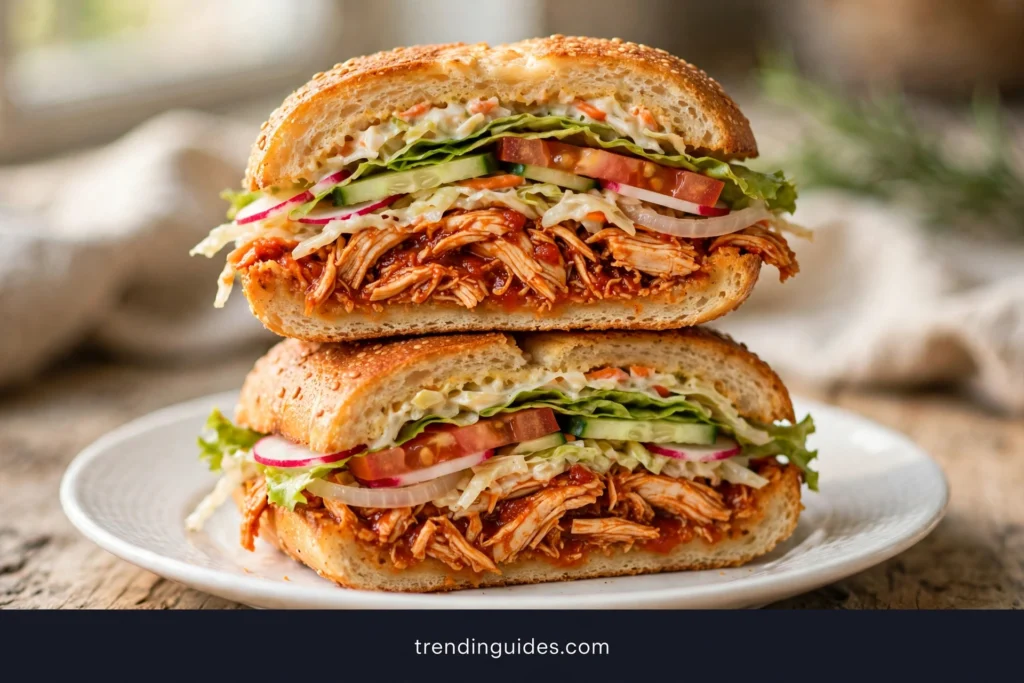
Once you master the classic, these twists keep things interesting. Each one starts from the same method with small smart changes. These panes con pollo salvadoreños variations cover the most requested versions.
Pan con Pavo Turkey Version
The pan con pavo salvadoreño recipe is the holiday sequel to pan con pollo. After Christmas dinner, shred leftover turkey and simmer it in the same recaudo sauce for 15 to 20 minutes. The Salvadoran turkey sandwich you build tastes even richer than the chicken original. Everything else, the bread, the escabeche, the vegetables, stays exactly the same.
Rotisserie Chicken Shortcut
Buy a rotisserie chicken, pull the meat from the bones, and shred it. Make the recaudo sauce as described, then simmer the shredded chicken in it for 10 to 15 minutes. You skip the marinating and the hour long stew, and the whole project takes about 30 minutes. The flavor is slightly less deep, but for a weeknight it is remarkably close.
Spicy Version
Pan con pollo is traditionally mild, with warmth from spices rather than heat. If you like fire, add 2 or 3 dried chiles de árbol to the relajo as you toast it, or blend a fresh jalapeño into the recaudo. Serve pickled jalapeños on the side so each person controls their own heat. Start small, since toasted chiles release more heat than you expect.
Make Ahead and Storage
This sandwich rewards planners, as long as you store the parts separately. Cooked chicken in its sauce keeps 3 to 4 days in the fridge in a sealed container, and the escabeche keeps just as long. Slice fresh vegetables the morning you serve and keep them wrapped in damp paper towels. Buy rolls the same day if you can.
For longer storage, freeze the chicken and sauce together for up to 3 months. Thaw overnight in the fridge and reheat gently, adding a splash of water if the sauce thickened. Never freeze assembled sandwiches. The bread turns gummy and the lettuce turns to mush.
For parties, follow this timeline. The day before, marinate the chicken, make the relajo blend, and prepare the escabeche. The morning of, stew the chicken and slice the vegetables. An hour before guests arrive, set up an assembly line: warm chicken in the pot, toasted rolls in a basket, toppings in bowls. Guests build their own and you enjoy your party.
What to Serve with Pan con Pollo
The sandwiches are the main event, but the right sides turn the meal into a feast. A bowl of curtido adds tangy crunch that cuts through the rich chicken. Fried plantains bring sweet caramel edges that pair beautifully with the relajo sauce. Yuca frita is another Salvadoran classic that belongs on this table, and crispy fries make everyone happy.
For drinks, keep it simple and cold. Horchata cools the palate between bites, and fresh lemonade or tropical juice works just as well.
Leftover Chicken and Recaudo Ideas
A whole chicken means leftovers, and that is good news. The chicken and recaudo taste even better the next day. Shred the meat into tacos with onion, cilantro, and lime. Roll it into enchiladas, cover with extra sauce, and bake until bubbly. Stuff it into burritos with rice and beans. Spoon it over white rice with a ladle of sauce. Or fill halved bell peppers with the chicken and rice, top with cheese, and bake. One pot can feed your family three different ways.
Pan con Pollo Calories and Nutrition
Here is an honest look at pan con pollo calories per sandwich. These are estimates, since exact numbers depend on your roll size and how generously you scoop the chicken.
| Version | Calories | Protein | Fat |
|---|---|---|---|
| Classic chicken | About 450 | About 32 g | About 18 g |
| Turkey version | About 430 | About 34 g | About 16 g |
| Rotisserie shortcut | About 470 | About 30 g | About 20 g |
The sandwich earns its calories honestly: a full portion of protein, real vegetables, and a sauce built from whole ingredients. Lighten it by using less mayo, choosing a smaller roll, or loading extra vegetables. The whole batch costs about $16, a rough estimate, so each sandwich lands near $2.
Frequently Asked Questions
What is pan con pollo?
Pan con pollo is a Salvadoran chicken sandwich. Mustard marinated chicken gets stewed in a spiced tomato sauce called recaudo, then piled into soft rolls with escabeche and fresh vegetables like lettuce, cucumber, tomato, radish, and watercress. It is party food, served warm and built just before eating.
What is the difference between pan con pollo and pan con pavo?
The protein is the difference. Pan con pollo uses chicken and appears at parties all year. Pan con pavo uses turkey and shows up mostly around the holidays, made from leftover Christmas turkey simmered in the same recaudo sauce. The bread, sauce, and toppings are the same.
What bread is used for pan con pollo?
Pan francés is the traditional roll, a soft French style roll from Salvadoran bakeries. Bolillo rolls are the closest easy substitute and hold up even better under the saucy chicken. Hoagie rolls and baguettes work in a pinch if you toast them well.
What is in the recaudo sauce?
Recaudo is a smooth tomato sauce flavored with relajo, a toasted spice blend. The base blends softened tomatoes, onion, garlic, bell pepper, and dried chiles with toasted sesame seeds, pumpkin seeds, peanuts, bay leaves, cloves, cinnamon, oregano, and achiote. Rice blended into the sauce thickens it naturally.
Can I make pan con pollo ahead of time?
Yes, with one rule: store everything separately. The chicken in its sauce and the escabeche keep 3 to 4 days in the fridge, and the chicken and sauce freeze for up to 3 months. Slice vegetables the morning you serve. Never assemble the sandwiches ahead, or the bread turns soggy.
What do you serve with pan con pollo?
Serve curtido on the side for tangy crunch, plus fried plantains, yuca frita, or crispy fries. Horchata or fresh lemonade makes the ideal cold drink alongside. Keep the sides simple, since the sandwich brings plenty of flavor on its own.
Is pan con pollo spicy?
Traditionally it is mild, with warmth from toasted spices rather than real heat. The relajo blend adds depth, not fire. If you want heat, add chiles de árbol to the sauce or serve pickled jalapeños and hot sauce on the side so each person decides.
Can I use turkey instead of chicken?
Absolutely, and that dish has its own name: pan con pavo. Simmer shredded leftover turkey in the recaudo sauce for 15 to 20 minutes until it absorbs the flavor, then assemble exactly like the chicken version. It is the classic way to use up holiday turkey.
Final Thoughts
This pan con pollo salvadoreño recipe gives you more than a sandwich. It gives you the centerpiece of a celebration, the smell of toasted spices filling the kitchen, and a table where everyone builds their own perfect bite. The method is forgiving, the ingredients are affordable, and one pot feeds a crowd for about $16.
Remember the three habits that matter most: marinate the chicken so the mustard and citrus can work, toast the relajo gently so it never turns bitter, and assemble at the last minute so the bread stays sturdy. Get those right and the rest takes care of itself.
Make it for your next gathering, set everything out buffet style, and watch the tray empty. Then save the leftovers, because tomorrow’s tacos will thank you. Few recipes work this hard and ask so little in return. This is the sandwich El Salvador celebrates with, and now it can be yours too.